
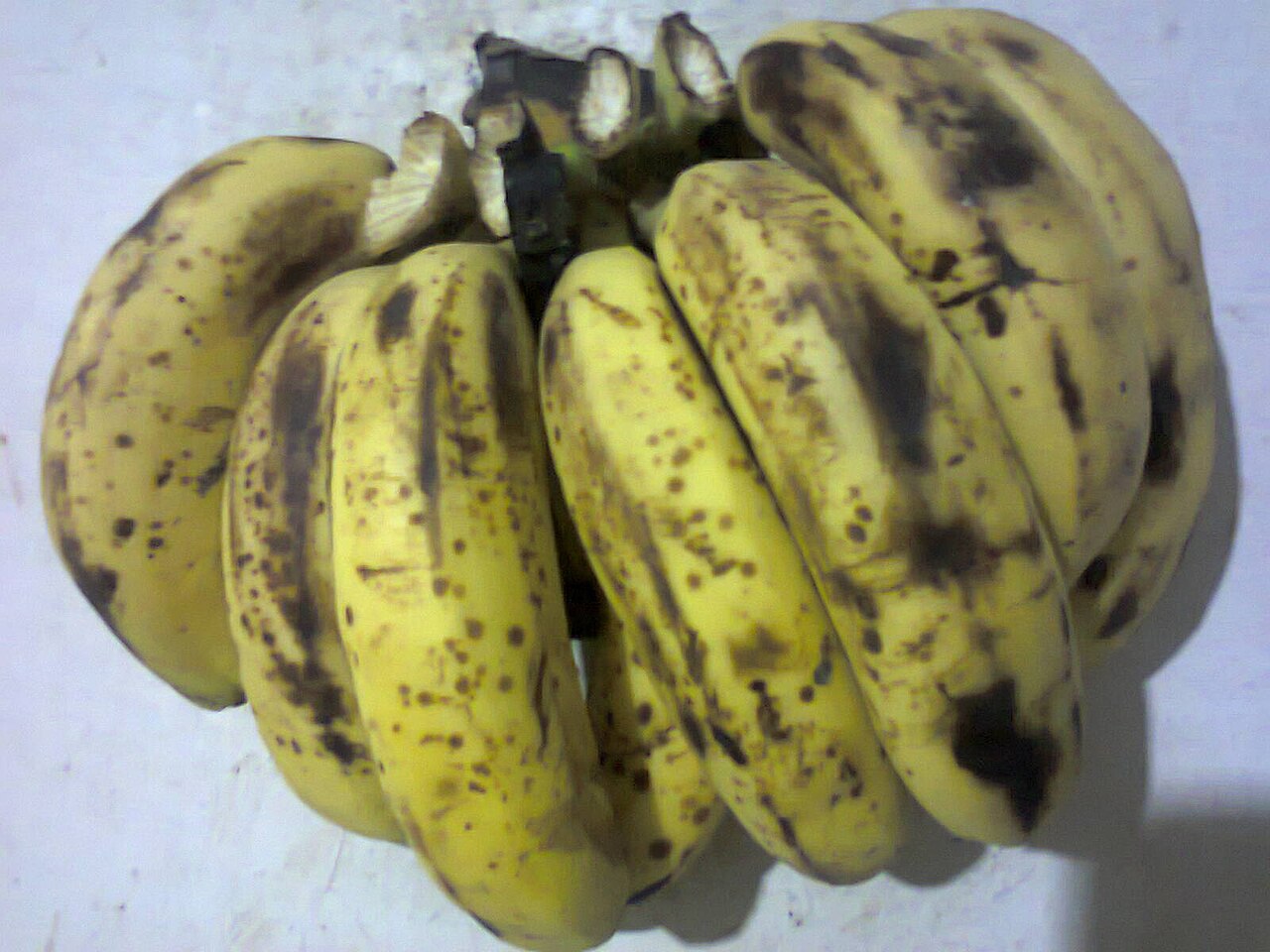
A spotless bright-yellow banana in the market makes many shoppers wonder whether it ripened naturally or was ripened with chemicals. Citing a report by the Indian broadcaster TV9, Ittefaq lists six signs of chemically ripened bananas. The report itself warns that no single sign is conclusive proof of chemical use.
The first sign is a peel without spots. Many naturally ripened bananas develop small brown speckles, although not every ripe banana does. Second, a peel of perfectly even bright yellow with no variation in colour may point to artificial ripening, though colour also varies with variety and stage of ripeness.
Third, a green or unripe stalk on an otherwise yellow fruit calls for caution. Fourth, if the peel is yellow but the flesh is firm, astringent or tastes unripe, the fruit may have been sent to market before it was fully ripe.
The fifth sign is smell. Naturally ripe bananas usually have a sweet, familiar aroma; its absence is a reason for caution, though it does not prove chemicals were used. Sixth, if every banana in a bunch ripens at the same moment to exactly the same colour and condition, artificial ripening is possible.
The report says that fruit ripened with unapproved or contaminated chemicals, especially calcium carbide carrying harmful impurities, can cause vomiting, stomach pain and diarrhoea, headache, dizziness and effects on the nervous system. India's food safety regulator, FSSAI, has banned calcium carbide for ripening fruit and has long warned of its health risks.
Shoppers are advised not to judge by colour or shine alone, but to look at the fruit's natural smell, texture and ripeness together.
Photo: Rangbaz / Wikimedia Commons (CC BY-SA 4.0)
Source: Ittefaq

Comments
(0)