
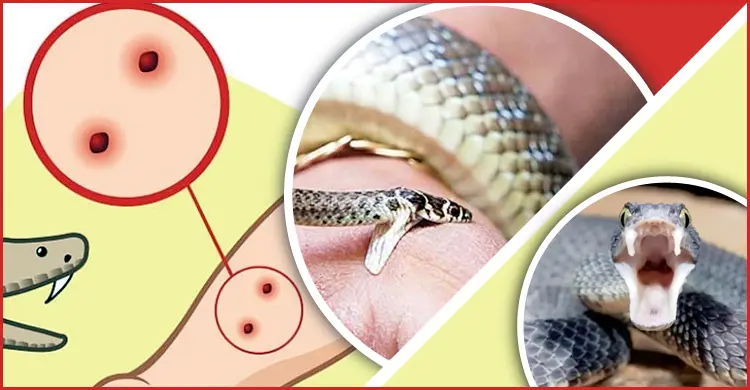
Snakes become far more of a menace in the monsoon. They are seen less often near homes at other times of year, but in the rainy season, with water all around, they turn up far more often. That is why news of deaths from snakebite is so common at this time. Not every snake is venomous, however, so not every snakebite kills.
Most victims die for lack of first aid, so certain steps must be taken quickly after a snakebite. First, try to work out which snake has bitten. Knowing what kind of snake it was makes treatment easier.
Some signs show whether a snake was venomous. The victim's eyelids droop shut, there is intense burning pain at the bite, vision blurs, swallowing becomes difficult, the throat tightens and the body swells.
What to do quickly after a snakebite
- Reassure the victim. Most snakebite patients believe their death is certain, so give them courage urgently and arrange to take them to hospital as quickly as possible.
- Do not cut the bite site. Only wipe the wound with a wet cloth or an antiseptic lotion.
- Tie a gamchha or cloth with just one knot above the bite, towards the body, neither too tight nor too loose (so that a finger can be slipped under it with a little effort).
- Do not move the bitten part much, because muscle contraction spreads the venom through the body quickly.
- Take the patient to hospital quickly. Do not let the victim walk on the way; carry them on the shoulders, on a cot or in a sling.
- If possible, take the snake along so its species and whether it is venomous can be identified.
- If there are no urgent symptoms, examine the bite for fang marks. Fang marks may appear as two punctures about half an inch apart, or just as scratches. If two fang marks are clearly visible, the snake was most likely venomous, but the absence of fang marks does not mean the snake was not venomous.
- The skin at the bite may change colour, darken, swell, blister or rot, or there may be no change at all. First aid itself can also cause changes at the site.
What not to do after a snakebite
- Do not panic.
- Do not waste time waiting for an ojha (traditional healer) or chanting.
- Do not eat anything until a doctor has seen the patient.
- Do not apply any ointment, massage or plant juice.
- Do not cut the bite with a sharp knife to make it bleed.
- Do not tie very tight knots in several places.
- Do not tie the bite tightly, as blood can pool and the victim may be crippled.
- Do not burn the bite with chemicals such as carbolic acid.
- Do not use any method to induce vomiting.
- Do not pour anything into the ears or eyes.
Source: Jagonews24. First published in Bengali on The Agro News.
Comments
(0)