
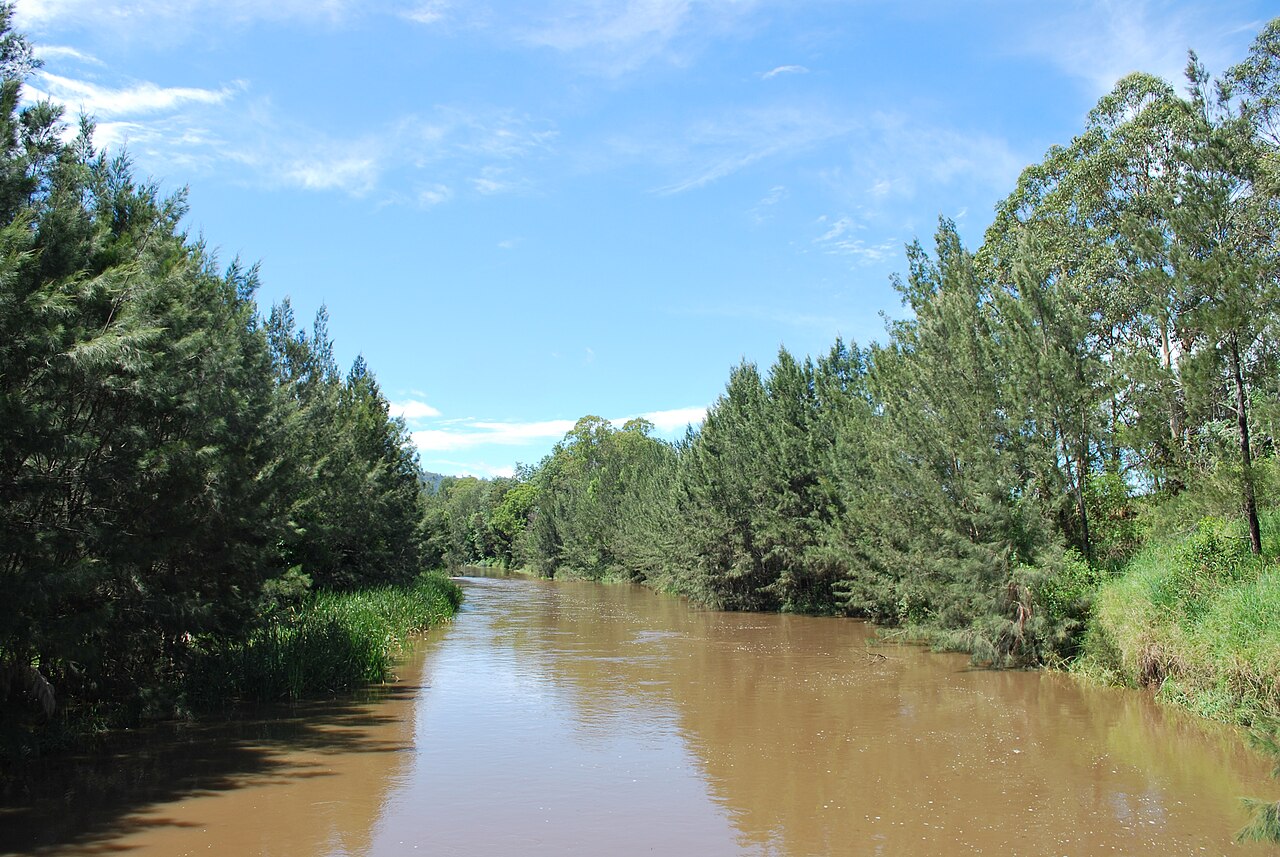
Farmers and a community catchment group have spent three decades repairing south-east Queensland's Mary River, which was described after 1990 as one of the most degraded rivers on Australia's east coast, ABC Rural reports.
The 310-kilometre river drains a 9,595-square-kilometre catchment into the Great Sandy Strait, the southernmost part of the Great Barrier Reef. In the 2022 flood, sediment plumes smothered seagrass, and an estimated 66% of that sediment came from stream-bank erosion that cut away hundreds of hectares of farmland.
Dairy farmers Peter and Elke Watson at Cambroon began planting trees and fencing cattle off erodible banks in the 1980s, with off-stream troughs to keep dung out of waterways. The Mary River Catchment Coordinating Committee now works with landholders on more than 850 projects.
A newer tool is the pile field: eroded banks are reshaped, rows of untreated hardwood poles driven in and native plants replanted. Sixteen have been installed at the worst sites, and the committee says they keep 27,000 tonnes a year of fine sediment from the reef. Vern Gilbert said his creek bank no longer loses land in every flood.
Seqwater funds the Upper Mary Rivercare programme with dairy farmers to upgrade effluent systems and cut nutrient and sediment run-off. The Watsons collect effluent twice a day and spray it back onto rested pasture to lower fertiliser bills, and operations manager Brad Wedlock said nutrients downstream fell a thousandfold across some floods. The report is by Jennifer Nichols.
Photo: Mattinbgn / Wikimedia Commons (CC BY-SA 3.0)
Source: ABC Rural
Comments
(0)