Rui, catla and mrigal; shing, magur and pabda; chital, hilsa, shol, mola and the featherback: eighteen of the native fish that once filled every beel and canal in Bangladesh, photographed. Many are vanishing; some survive thanks to fish farmers and researchers.
Before first light, fishermen at a market on the edge of a beel lay out their baskets. Climbing perch flip and jump, stinging catfish and walking catfish twist their dark bodies, and barbs and mola flash silver. Not long ago almost every canal, beel, river and paddy field in Bangladesh teemed with fish like these, and native fish on the rice plate was an everyday thing. That picture has changed. Many of the country's traditional native fish are vanishing from the waters where they were once abundant, and a large share of those that survive do so thanks to Bangladesh's fish farmers. Here, photograph by photograph, are eighteen of them, with who they are and how they are holding on.
Bengalis describe themselves with an old saying, machhe bhate Bangali: fish and rice make a Bengali. It speaks of a way of life as much as a diet. In a land of rivers and wetlands, generation after generation caught fish with bamboo traps in flooded paddy, set basket traps in the canals and dropped lines in the ponds. Every fish carries a recipe, a festival or a memory with it, and when a fish disappears, a piece of that culture goes with it.
When the beels were full of fish
Bangladesh holds a remarkable wealth of freshwater fish. In its 2015 Red List of Bangladesh, the International Union for Conservation of Nature (IUCN) assessed 253 freshwater fish species. It found 64 of them threatened, nearly one in four: 9 critically endangered, 30 endangered and 25 vulnerable. A red list is a scientific assessment of how close each species is to extinction.
Researchers have long pointed to the reasons. Beels and wetlands are being filled in; rivers and canals are silting up and growing shallower; beels are pumped dry in the dry season to catch every last fish; pesticide from the paddy fields washes into the water. In the spawning season, brood fish and tiny fry are caught indiscriminately in fine-meshed nets. The natural routes that once let fish move from rivers into beels and floodplains in the monsoon have been cut in many places by roads and embankments. The environmental news site Mongabay has highlighted habitat destruction and climate change as major threats to the country's native fish.
A new life in the farmer's pond
Even as native fish declined, the country's total fish output grew, driven by pond farming. One analysis, citing the Department of Fisheries' annual statistics, reports that Bangladesh produced about 4.9 million tonnes of fish in 2022-23, more than 58 percent of it from aquaculture. In other words, more than half the fish on Bangladeshi plates now comes from ponds and farms, not rivers or beels.
The bright side of this shift is that many native fish that grew scarce in the wild have found new life in farmers' ponds. Pabda, shing, magur, koi and gulsha are now farmed in many areas, and the Department of Fisheries encourages the farming of these nutrient-rich native species. But farming cannot fully restore nature's variety; many native fish still breed only in natural waters.
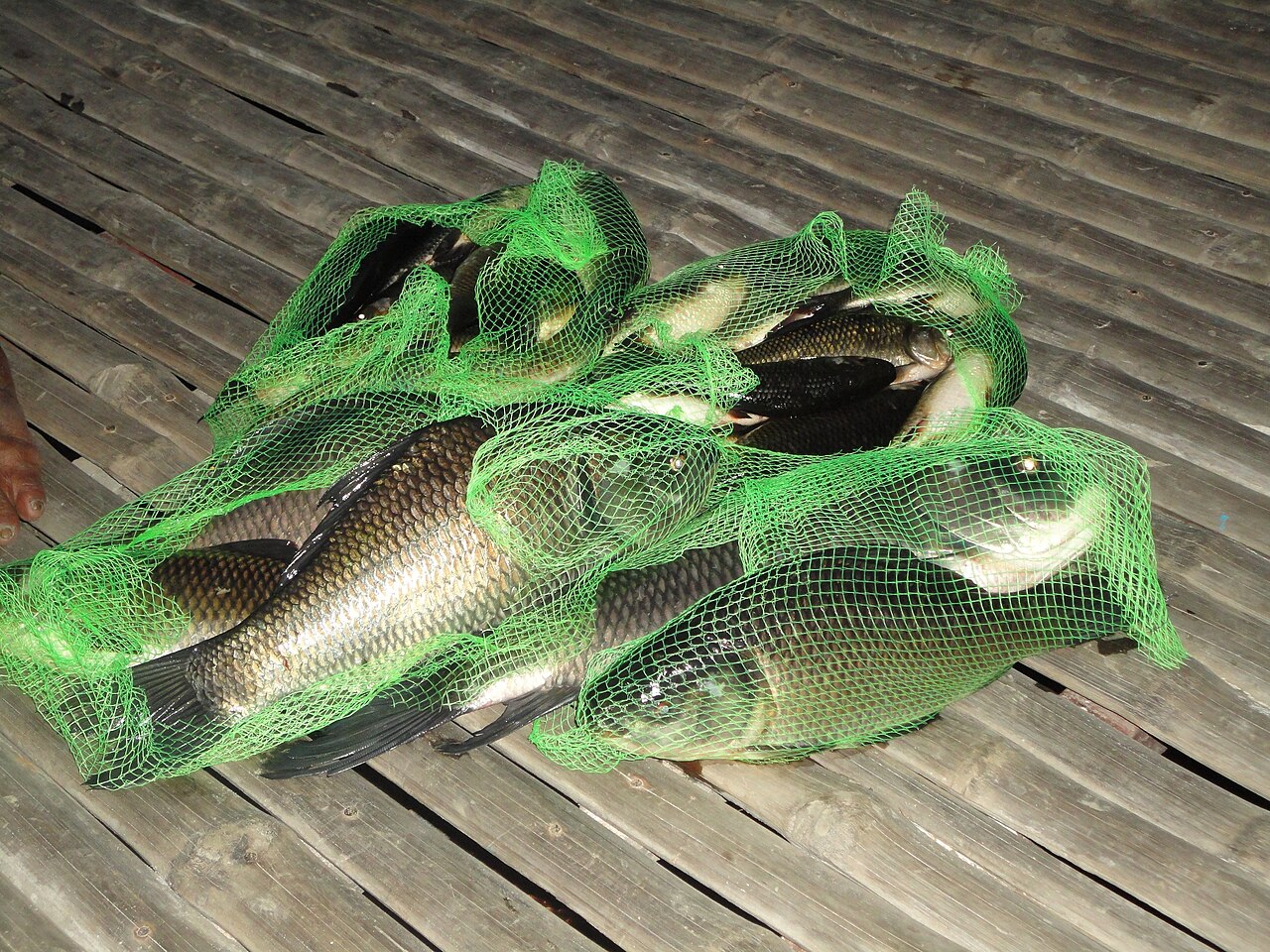
The photograph above shows a catch from Arial Beel in Munshiganj. This large wetland in the centre of the country fills with water in the monsoon, when a wide range of native fish breed and grow there. Beels like this are the natural nurseries of native fish; the healthier the beel, the more fish in the rivers and canals around it. From here, the gallery introduces the familiar native fish one by one.
Rui, catla and mrigal: three familiar faces of the pond
Rui, catla and mrigal sit at the top of the Bengali fish list. Together they are known as the major carps. In nature they breed in the country's big rivers, spawning in the monsoon; their eggs and hatchlings were once collected from the rivers to stock ponds. Today hatcheries produce their fry through induced breeding, and these three make up a large part of the fish farmed in Bangladesh's ponds.
The Halda river in Chattogram is famous as a natural spawning ground for these carps. On particular days in the monsoon, after thunderstorms and hill floods, the brood fish release their eggs there, and local fishermen collect them from their boats.
There is a neat logic to farming the three together in one pond. Catla feeds near the surface, rui in the middle layers and mrigal close to the bottom, so they do not compete for food and the whole pond is put to use. Fish farmers call this polyculture. The pictures below show rui first, then catla and mrigal.
The three look alike but can be told apart. Catla has a head large for its body and an upturned mouth, suited to feeding near the surface. Rui has a longer body with a reddish tinge to its scales. Mrigal is slimmer and silvery, often with a reddish tint to the tail fin.
Hatchery fry have put carp farming within everyone's reach, but researchers add a warning. Breeding again and again from the same parents weakens the fish's genetic quality and slows growth. Protecting the rivers' wild fish and natural spawning grounds such as the Halda therefore matters for the future of farmed fish too.
Koi, shing and magur: fish that breathe air
Villagers know koi, shing and magur as tough fish. Besides gills they have an extra breathing organ that lets them surface and take oxygen straight from the air. That is why they survive in shallow ditches, muddy drains and oxygen-poor water. Because they can be carried home alive from the market, they have always been prized.
Koi is called the climbing perch in English, from the long-held belief that in the monsoon it can travel a short way over wet ground. Shing has to be handled with care: the spines of its pectoral fins carry venom, and a sting is intensely painful. Magur has long whiskers and a slippery body. Shing and magur have long been known in Bangladesh as food for the sick and for new mothers.
Koi and shing are now farmed on a large scale. Much of the big koi seen in markets is a fast-growing form of the same species brought from abroad, known as Thai koi. Native koi is smaller and darker and valued for its taste. With magur it is worth knowing the difference between the native fish and the foreign African magur: the African fish is predatory and a threat to native fish in natural waters, and farming it is banned in Bangladesh.
Pabda and tengra: flavours coming back
With soft, nearly boneless flesh and a fine flavour in curry, pabda has long been a favourite. But it declined so far in natural waters that the IUCN's 2015 list classed it as endangered. The Bangladesh Fisheries Research Institute (BFRI) developed techniques for its artificial breeding and farming. Since then pabda farming has spread across the country, and farmed pabda is again regularly found in the market.
Pabda's recovery shows how an innovation from the laboratory can reach the field and save a fish. Hatchery fry, training for farmers and a good market price together have made pabda a profitable crop for many fish farmers.
Tengra is a small fish with long stripes along both sides and whiskers around its mouth. It lives in beels, canals and rivers, and tengra curry is a familiar dish in rural Bengal. The picture below shows tengra.
Tengra has several close relatives, including gulsha. Gulsha has now joined the list of farmed fish, and farmed gulsha tengra is regularly seen in markets.
Sarputi and chital
Sarputi, the olive barb, is the largest of the barbs, silvery with a faint red or yellow tinge on its fins. Once plentiful in rivers and beels, it is now rare in many areas. A report in The Daily Star lists sarputi among the native fish for which BFRI has developed breeding techniques.
Chital, the clown knifefish, is unmistakable: a humped back, a body as flat as a knife blade, and rows of round spots towards the tail. Muithya, dumplings made from chital flesh scraped off its many bones, is a celebrated dish of Bengali cooking. The IUCN's 2015 list classes chital as endangered, and it too is on BFRI's list of fish bred artificially.
Chital and foli are both carnivores, living on small fish, shrimp and aquatic insects. Large chital fetch high prices, which puts heavy pressure on it in natural waters. Now that hatcheries can produce fry, some farmers raise chital in ponds alongside other fish.
Hilsa: the national fish
Hilsa is Bangladesh's national fish and, as a single species, the largest contributor to the country's fish production, at about 12 percent of the total according to research and government figures. According to the Department of Fisheries, hilsa was registered in 2017 as a Geographical Indication of Bangladesh, recognised internationally as the country's own product.
Hilsa grows up in the sea but runs up the rivers to spawn. To protect that journey, fishing for hilsa is halted for a set period in the spawning season, and catching juvenile hilsa, known as jatka, is banned. The Department of Fisheries and the international research organisation WorldFish have worked together with coastal fishing communities to protect the hilsa. Unlike most other native fish, hilsa cannot be farmed in ponds; its future depends entirely on the health of the rivers and the sea.
The hilsa effort holds a lesson for other native fish. Halting fishing in the spawning season, sparing young fish and keeping migration routes open let nature recover a great deal on its own. In the hilsa's case, fishers receive food assistance during the bans so that they can afford to obey them.
Shol and taki: fish of the paddy field
Among the fish most often seen in flooded paddy and ditches in the monsoon are shol and taki. Both are snakeheads, named for their snake-like heads, and like koi and magur they can breathe air, so they survive in little water. Shol, the striped snakehead, is the larger. After spawning, shol parents guard the shoal of fry, which is uncommon among fish, and the reddish clouds of young shol are a familiar sight in the villages.
Taki, the spotted snakehead, is smaller and blotched. Mashed taki, taki bhorta, is one of the best-known dishes of rural Bengal. The pictures below show shol, then a taki photographed at Mohanganj in Netrokona.
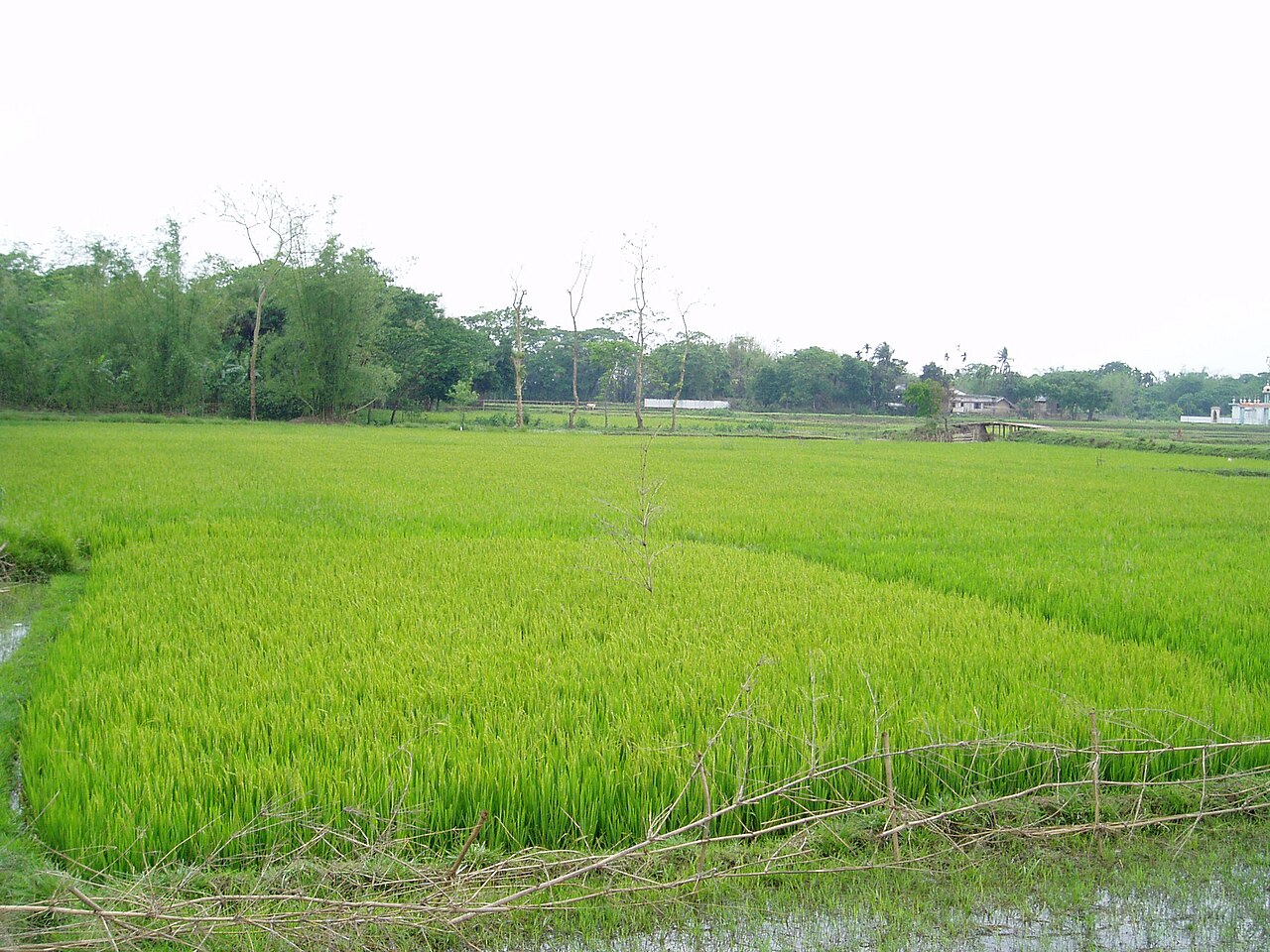
Shol and taki matter to the ecosystem as well. They eat small creatures, tadpoles and insects in paddy fields and ditches, helping keep these waters in balance. As pesticide use in the paddy fields has risen, their breeding has suffered, because they spawn and raise their young in the flooded paddy in the monsoon.
Mola: a small fish with big nutrition
Mola belongs to a group researchers call small indigenous fish species: native fish that grow to a maximum length of about 25 centimetres. Mola, dhela, barbs, glassfish, batasi and kachki all belong to it. These small fish are a major source of nutrition for poor rural families, because they are cheap and are eaten whole.
Mola may be no longer than a finger, but in nutrition it outdoes many larger fish. Published research on the nutrient content of small native fish found that mola contains more than 2,500 micrograms of vitamin A, measured as retinol equivalents, per 100 grams of raw edible parts, while many small fish contain less than 100. Vitamin A is vital for eyesight and for resisting disease.
Because mola is eaten whole, head and bones included, it also supplies calcium, iron and zinc. WorldFish nutrition scientist Shakuntala Haraksingh Thilsted and her colleagues have shown that raising mola in household ponds can be a low-cost way to close vitamin A gaps in rural families.
Many cooks cut off the heads of small fish like mola. Nutritionists point out, however, that much of mola's vitamin A is in the head and eyes, so cooking and eating the whole fish is best. Raising mola alongside rui and catla in a household pond does little harm to the growth of the larger fish, while giving the family a regular supply of small fish.
Ayre and baim
Ayre, the long-whiskered catfish, is a large fish of the big rivers. The IUCN's 2015 list classes it as vulnerable, and The Daily Star reports that BFRI has succeeded in breeding it artificially. Baim is long and snake-like, with a wavy pattern along its body, and hides in mud and water weeds. The species pictured, the tyre-track eel also known as shal baim, is listed as endangered by the IUCN, and shal baim is among the fish BFRI has bred successfully.
Baim hides by day in mud or among stones and comes out at night to feed. When beels dry up or the mud is dug out of a pond bed, its shelter is destroyed, so habitat loss is a serious threat. Ayre lives in the deep stretches of big rivers; shallower rivers and the capture of brood fish have reduced its numbers.
Foli: a silver knife of a fish
Foli, the bronze featherback, is a close relative of chital but smaller. Its body is flat and silvery bronze, shaped much like a knife blade. The IUCN's 2015 list classes foli as vulnerable, and it too is on BFRI's list of fish bred artificially.
Bringing lost fish back
The Bangladesh Fisheries Research Institute is playing the largest role in bringing native fish back. According to The Daily Star, the institute has developed breeding and farming techniques for 41 native species, 20 of them in the last ten years. The list includes pabda, boirali, bata, chital, mahseer, foli, dhela, gajar, shing, magur, ayre, gania, puti, bheda, sarputi, titputi, piali, batasi, shal baim, kakila and kursha. Once a hatchery can produce fry, farmers can raise the fish in ponds, and it becomes possible to release them into natural waters.
In 2020 the country's first live gene bank opened at BFRI's headquarters in Mymensingh. Threatened and small native fish are kept there alive, so that if a species vanishes from the wild it can be brought back. According to The Daily Star, 102 of the country's 143 small native fish species have been placed in the bank. The same report says production of small native fish has risen by 73 percent over the past 15 years.
Work is also under way to return rescued fish to nature. Fish sanctuaries are set up in parts of beels and rivers where fishing is banned. There brood fish can spawn in safety, and in the monsoon the fry spread into the surrounding waters. Such sanctuaries work best when local people are involved in protecting them.
Laboratories and ponds cannot save every fish on their own. Without protecting the habitats of beels and rivers, halting fishing in the spawning season, giving up fine-meshed nets, setting aside parts of beels as sanctuaries and cutting pesticide use in paddy fields, the natural stock of native fish will not return.
Ordinary people have a part to play too. Not buying egg-bearing brood fish or tiny fry in the market, not scooping up fry from the paddy in the monsoon, and not filling in the ditches and ponds around the home are small decisions that help protect native fish. If the habit of draining a beel to catch every last fish cannot be stopped, the fish will not come back the following year.
Keeping native fish on the plate
Every fish in these eighteen photographs was once everyday food for ordinary village families. Today many of them reach the market from farmers' ponds. When fish farmers take a chance on native species and buyers ask for native fish, the path to survival widens. Native fish are not just a matter of taste; they are part of the nutrition, livelihoods and nature of a river country.
The encouraging news is that, through the efforts of researchers, the government and farmers, fish such as pabda, shing, magur, chital and shal baim are appearing in markets again. That is proof that fish on the brink can be brought back. The rest of the work belongs to all of us: to keep the beels, rivers and ponds in a state where the fish in these pictures live in the water, not only in photographs.

Comments
(0)