
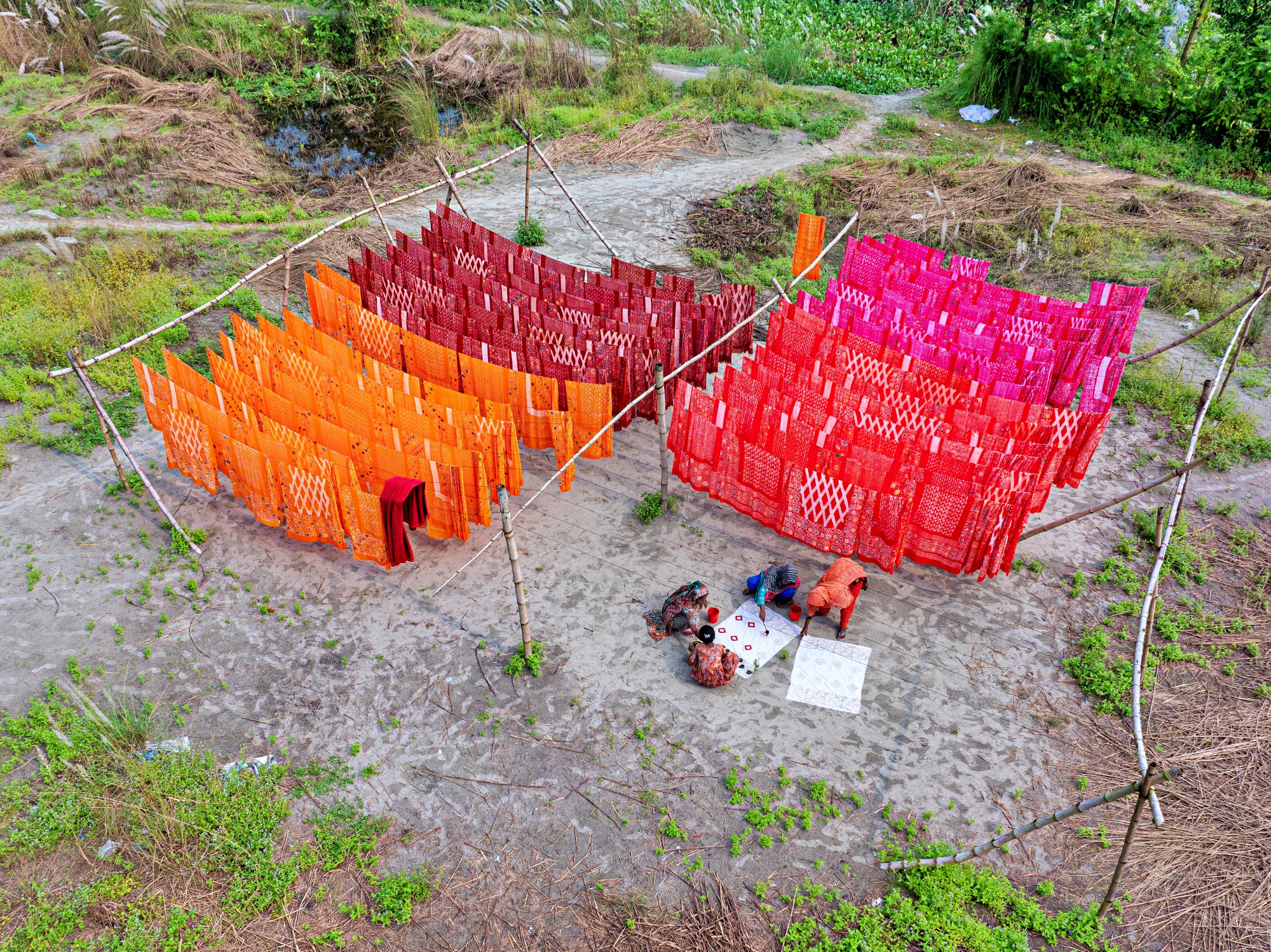
In October 2021 Prothom Alo published a photo story by Mansura Hossain on the yarn dyeing workers of Furinda village, Kanthaltala, in Araihazar upazila of Narayanganj district. Years of handling dye had coloured their hands, feet and faces, but, as the paper put it, their lives were not colourful in that sense.
From rejected yarn to gamchhas and lungis
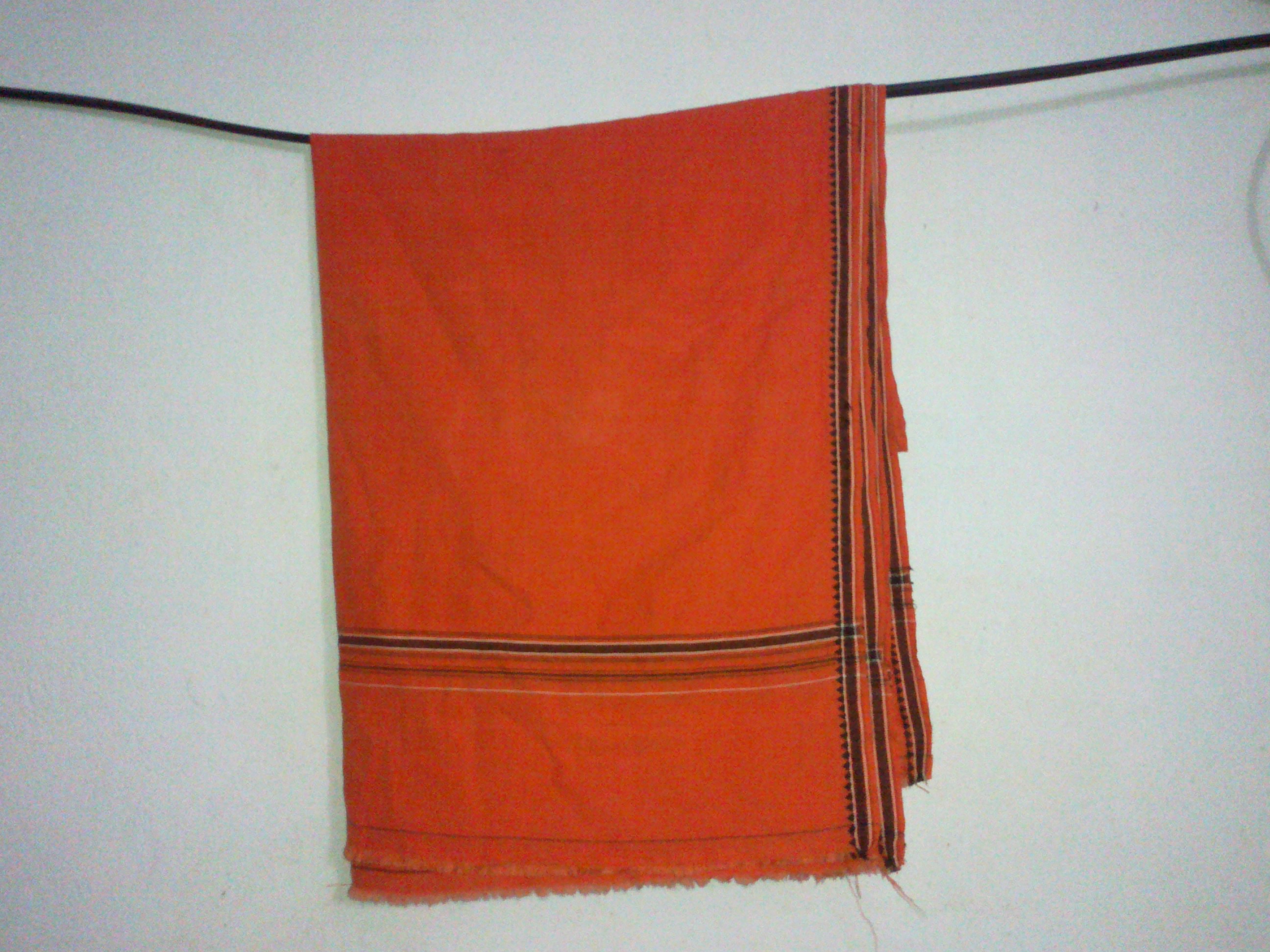
According to the report, yarn that Narayanganj factories bought for various uses but did not need, or rejected, was handed by the factory owners to mahajans, local middlemen. Re-dyed in new colours, it was woven into gamchhas (thin cotton towels), lungis and three-piece sets. The mahajans hired workers who came from different parts of the country, paid for their food and lodging, and paid them Tk 10,000 to 12,000 a month.
The workers mixed chemicals, boiled the yarn over open fires in whatever colours the factory owners ordered, dried it in the sun and sent it back to the owner. The photographs showed cooking and dye-boiling done side by side, workers wrapping plastic around their feet against the dye, and skeins drying along the highway. The captions also noted that older workers were finding less and less work.
The cost to the workers' health
Prothom Alo reported that after years of the work the dye never left the workers' hands and feet, food tasted bitter when they ate, and breathing problems and other illnesses were common. Some captions described eyes stinging from the chemicals.
In August 2022 Arab News reported from the dye houses of Purinda village in Araihazar, about 20 km from Dhaka. One worker, Mohammed Hasan, spent 12 to 14 hours a day with his hands in chemical dye mixtures and earned about Tk 22,000 a month. Mohammed Shafikul Islam, who had dyed yarn for more than 50 years since his teens, had chronic skin lesions. Dr ASM Mushiur Rahman, Narayanganj's chief government health official, told the outlet that "Starting from infections with the lungs it may end up with lung cancer", and that tuberculosis, bronchitis and chronic cough were more common among the workers.
Arab News found that the dye houses were not officially recognised businesses, which kept them outside industrial monitoring, and that workers lacked protective clothing. Rafiqul Islam, the chief administrative officer of Araihazar, said "the administration didn't know of these type of business entities earlier" and that inspections happened only on complaint. Selim Mahmud, president of the Garments Sromik Front, said: "They don't have any safety at their workplaces."
Araihazar and a shrinking handloom trade
Araihazar is an upazila of Narayanganj district in Dhaka Division, covering 181.07 square kilometres with 467,547 people at the 2022 census, organised in two municipalities and 11 unions, and known for its woven cloth. Prothom Alo reported that with the coronavirus outbreak and other causes, factories were closing and demand for yarn dyers was falling.
The wider handloom sector was shrinking too. The Handloom Census 2018, released in April 2019, counted 116,006 handloom units, down 36.79 percent from 183,512 in 2003, with 301,157 people working in the sector. The census blamed increasing mechanisation, lower income, lack of capital and marketing problems.
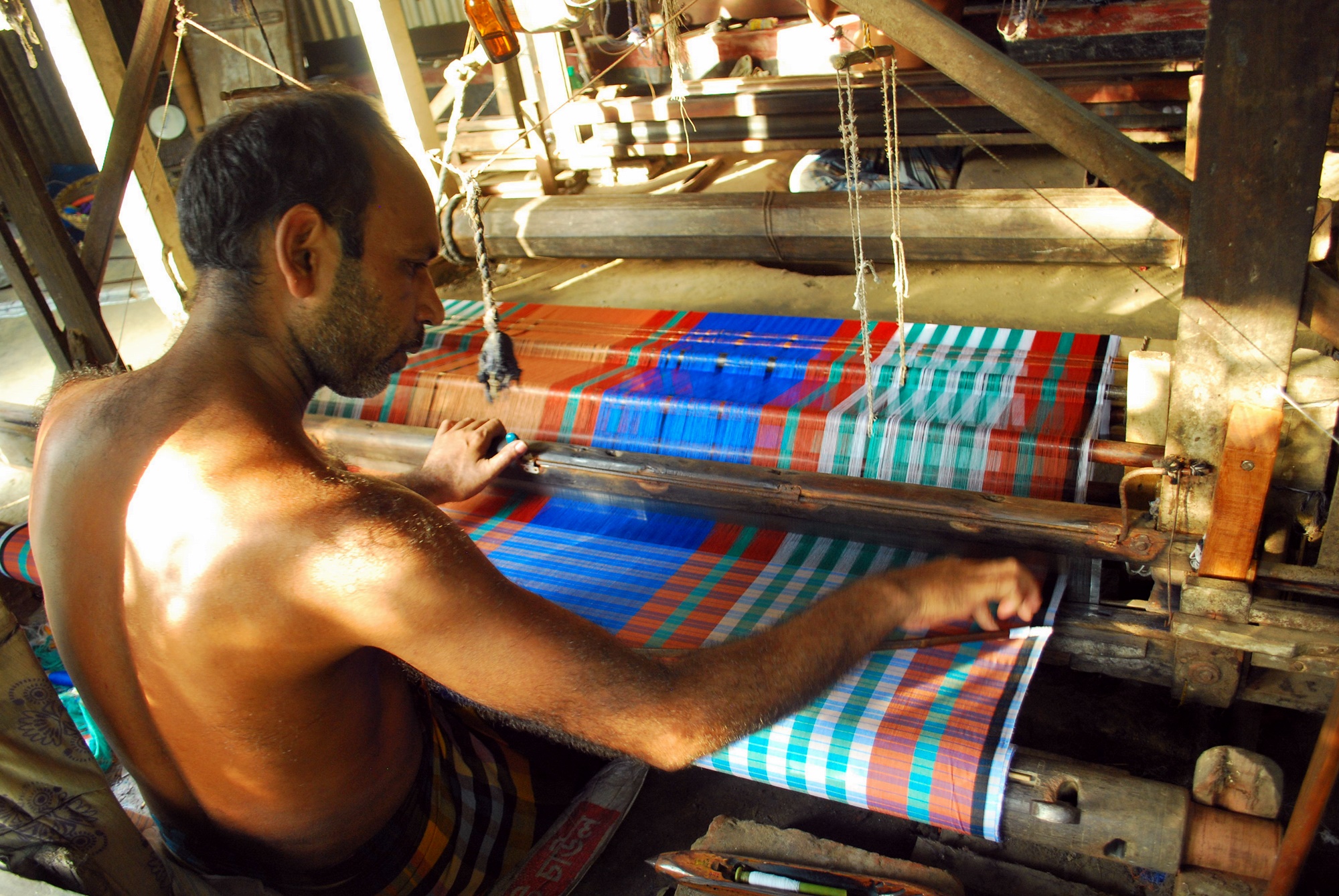
Photo: Pinu Rahman / Wikimedia Commons (CC BY-SA 4.0)
Sources: Prothom Alo, Arab News, The Daily Star, Wikipedia (Araihazar Upazila)



Comments
(0)