
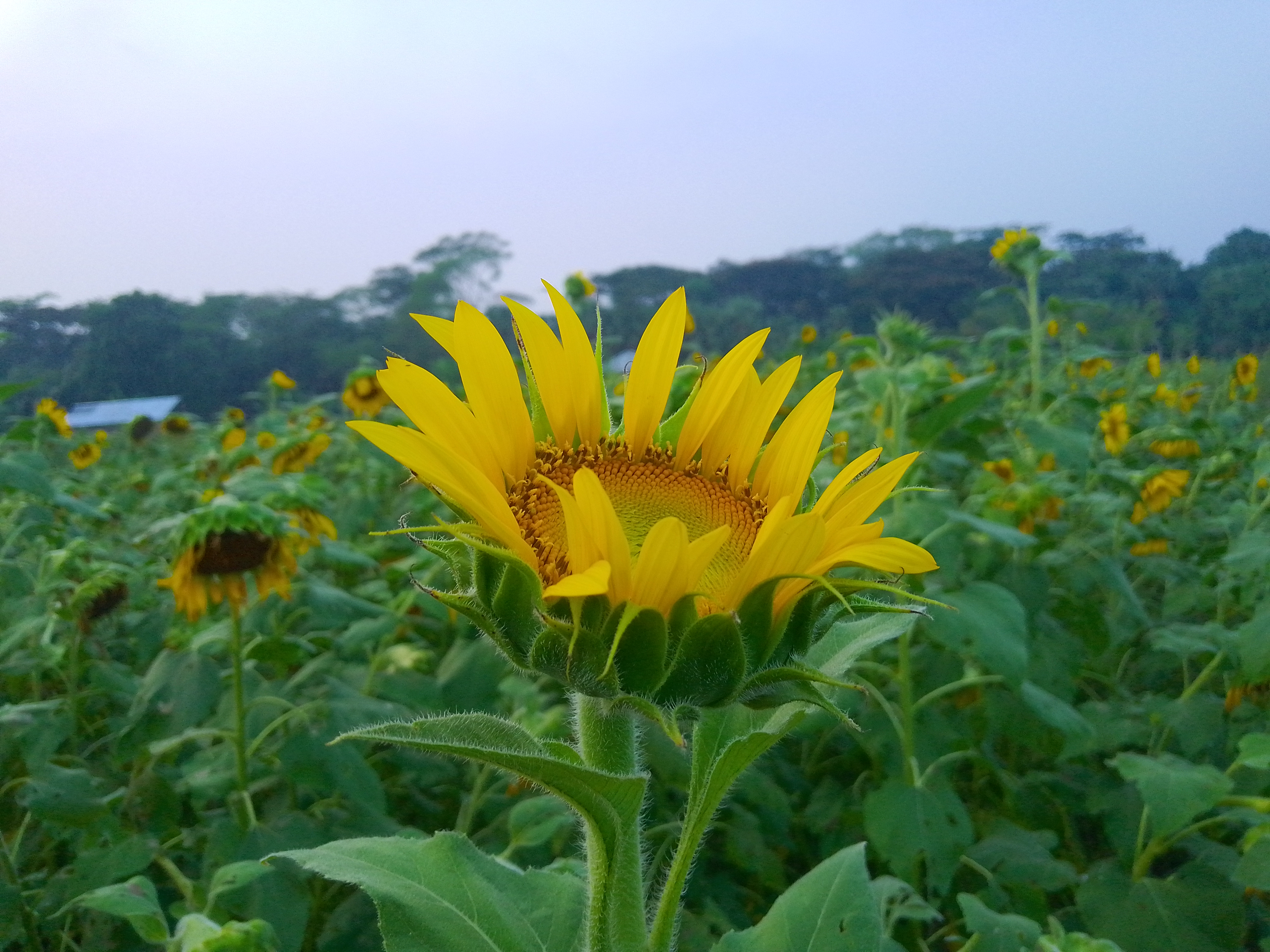
In February 2024 sunflowers were in bloom across Khulna's coastal belt. The Department of Agricultural Extension (DAE) counted 3,100 hectares under the crop that season in Khulna, Bagerhat, Satkhira and Narail, and a farmer in Batiaghata told the state news agency BSS that he had sown one bigha of fallow land and that "the yield has been good". A few weeks earlier, in January 2024, a DAE project director had told Mongabay that sunflower grown on fallow, saline land could help the country meet up to 26 per cent of its cooking-oil demand.
This crop profile explains what the sunflower is, why Bangladesh grows it for oil, what its cake, heads and stalks are used for, and how the varieties of the Bangladesh Agricultural Research Institute (BARI), Kironi and BARI Surjomukhi-2, compare, along with the newer BARI Surjomukhi-3. It also sets out the soil, season, seed rate and care that BARI and university trials describe, the costs and returns researchers recorded, and where a farmer can get advice. Every figure is given as its source states it, as of March 2025.
The sunflower plant and where it came from
The sunflower is Helianthus annuus, a member of the daisy family, Asteraceae. A plant guide from the United States Department of Agriculture's Natural Resources Conservation Service (USDA NRCS) explains that the genus name comes from the Greek helios and anthos, "sun flower", and that annuus means "annual". It describes the plant as an erect, coarse annual with a taproot and rough, hairy stems, with yellow ray flowers around a reddish-brown disk.
Banglapedia, the national encyclopedia of Bangladesh, says the flower heads, with their yellow rays, sometimes reach 30 cm across, and that the cultivated sunflower probably originated in Mexico. The USDA guide adds that North American Indians domesticated the plant and, over the last 3,000 years, increased its seed size by about 1,000 per cent by repeatedly choosing the largest seeds. The sunflower probably travelled from Mexico to Spain and on to the rest of Europe. Russian growers later developed the Mammoth Russian, or Russian Giant, type, whose seed was reintroduced to the United States in 1893.
In Bangladesh the sunflower began as a garden plant. According to Banglapedia, some dwarf varieties were introduced in the 1980s to grow it as an oilseed crop, and it came to be grown in both the kharif and rabi seasons in some central and northern districts. Banglapedia puts the yield at about 760 kg per hectare and the time to harvest at about 90 to 110 days. A 2023 study in the EBAUB Journal, citing earlier research, says small-scale farmers in Bangladesh began growing sunflowers from 1975.
Why Bangladesh grows sunflower for oil
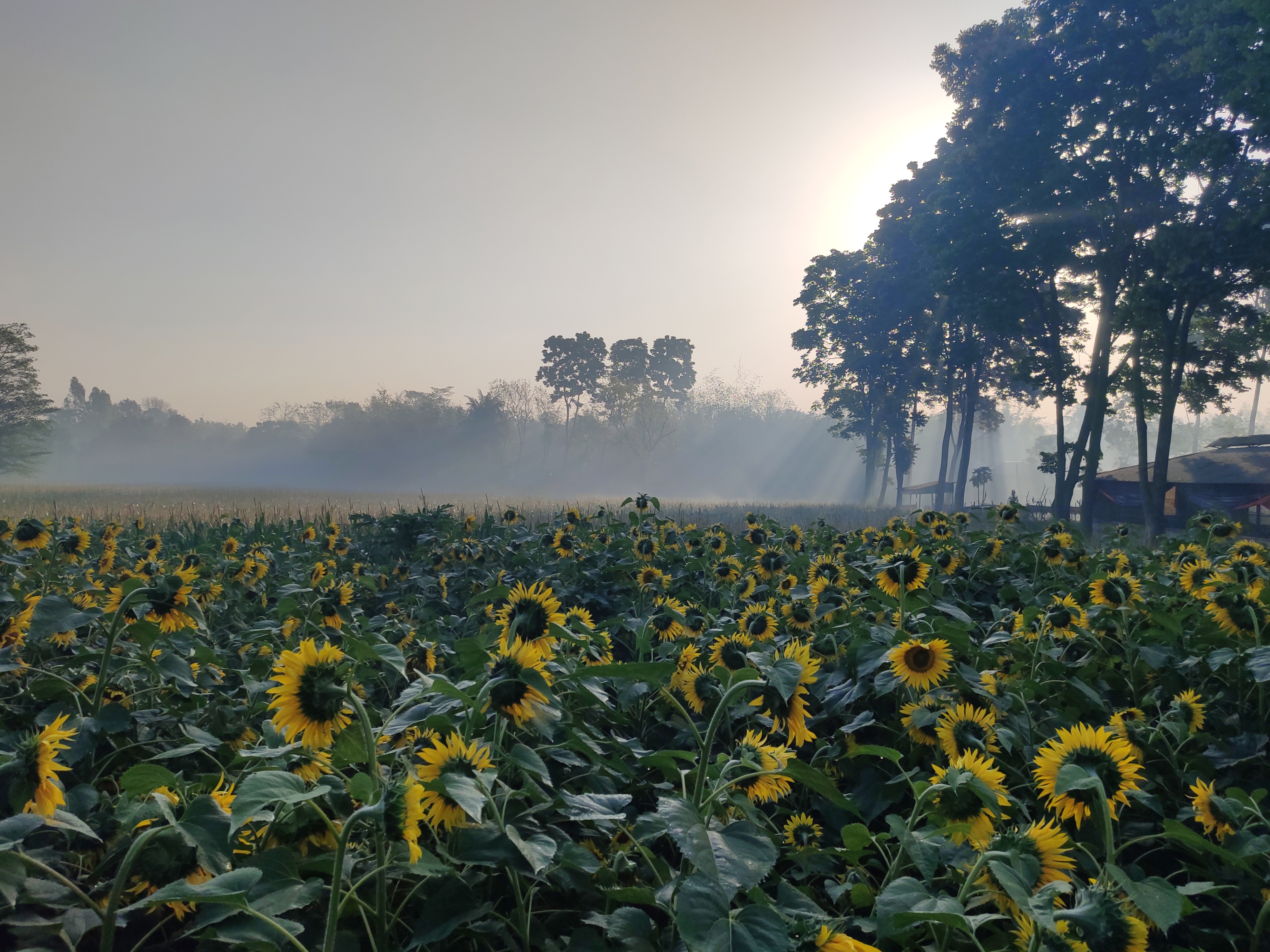
The case for sunflower in Bangladesh is the country's edible-oil gap. The EBAUB Journal study, by researchers at EXIM Bank Agricultural University Bangladesh in Chapainawabganj, published in January 2023, cites earlier work that put domestic production at 0.358 million tonnes of edible oil against an annual demand of 1.6 million tonnes, with the remaining 1.242 million tonnes met through imports. The same paper reports that per capita consumption of edible oil reached 18.4 kg in 2020, up from 15.3 kg in 2016, that 92 per cent of the country's 30.3 lakh tonnes of oils and fats was imported, and that Bangladesh imported 27.73 lakh tonnes of edible oil, fats and oilseed worth 2.12 billion dollars in the 2019-20 fiscal year.
Mongabay, reporting on 31 January 2024, said local production met only about 10 per cent of the country's edible-oil demand and that around 800,000 hectares of oilseeds produced about 1.2 million tonnes. Jashim Uddin, director of the DAE's cooking-oil crops project, told the outlet: "If we can produce good quality oilseed from sunflower, then we can also reduce the import amount of edible oil. Already, 10% of the demand is produced locally, and if we can produce 16% more, we can meet 26% of the edible oil demand."
The seed itself is rich in oil. The original profile gives BARI's figure of 42 to 44 per cent oil in the seed of both its main varieties, and Mongabay put sunflower seed's oil content at 40 to 45 per cent. The EBAUB paper, citing published reviews, says one kilogram of sunflower seed yields 500 to 600 grams of oil and that sunflower oil has a high level of unsaturated fatty acid, with up to 60 per cent polyunsaturated fatty acid. The original profile notes that the seed contains linoleic acid. Banglapedia adds that the oil can replace groundnut oil in making vanaspati, the vegetable ghee, and that it contains vitamins A, D and E. Anyone with heart disease or another health condition should ask a doctor before changing the cooking oil or diet.
More than oil: cake, heads and stalks
Very little of a sunflower crop goes to waste. After the oil is pressed out, the remaining oilcake is an excellent feed for cattle and buffalo, the original profile says, and Banglapedia also lists the decorticated pressed cake as a livestock feed and the seeds as poultry feed. Once the seeds have been removed, the empty heads can also be fed to cattle.
The dry plants and flower heads are used as fuel. The USDA plant guide records the same uses in other countries: sunflower stalks have served as fuel, fodder for livestock, food for poultry and silage, and in the former Soviet Union the ashes of burnt stalks were returned to the soil. The seeds are also eaten as snacks and sold as bird food, and the plant is grown as an ornamental for its blooms, which is how it first arrived in Bangladesh. In April 2023 the Dhaka Tribune reported visitors coming to a sunflower farm in Fakirhat, Bagerhat, just to see the field.
BARI sunflower varieties: Kironi, Surjomukhi-2 and Surjomukhi-3
The original profile describes the two sunflower varieties that BARI released first. The figures below are BARI's variety descriptions as the profile gives them.
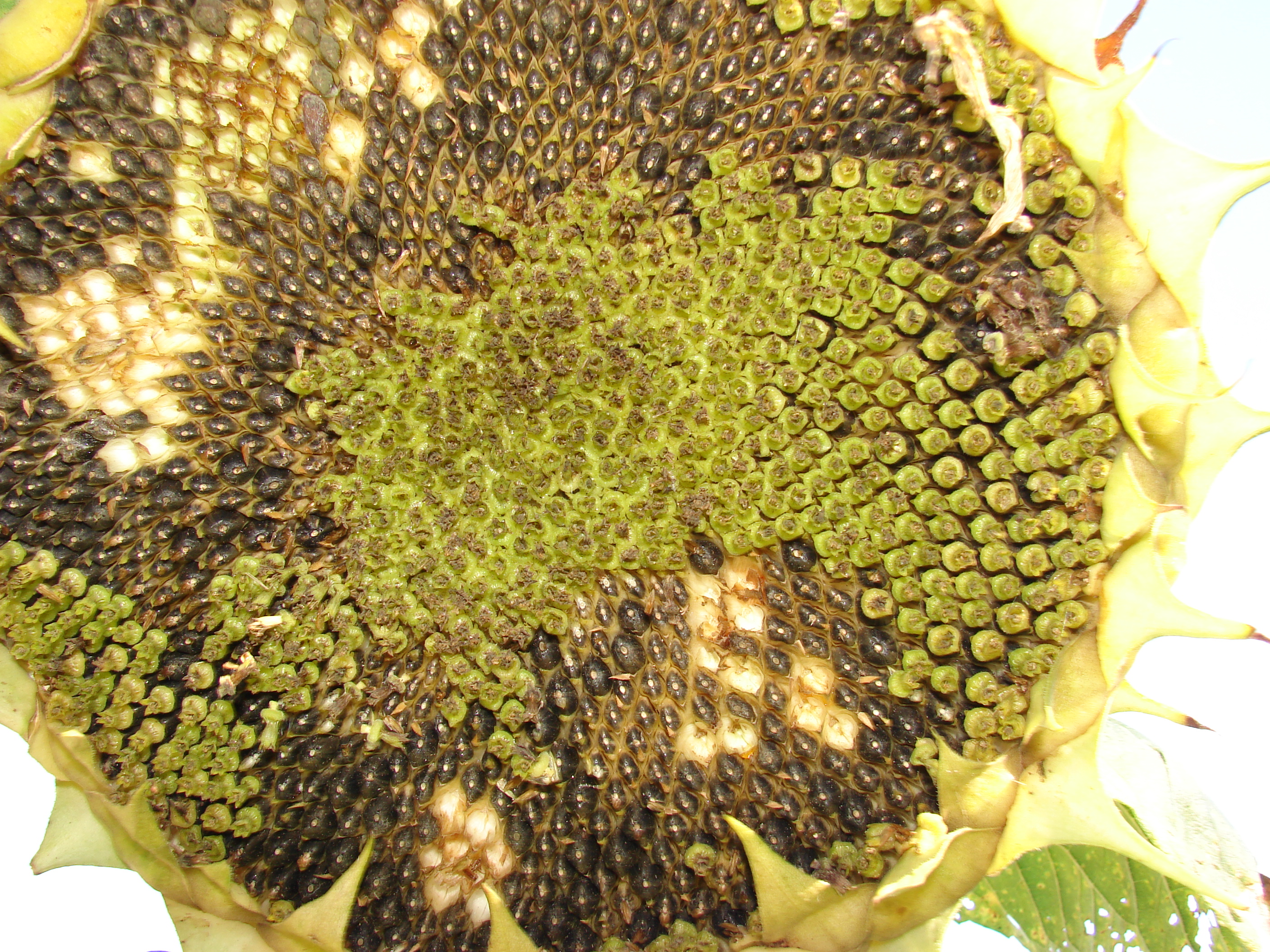
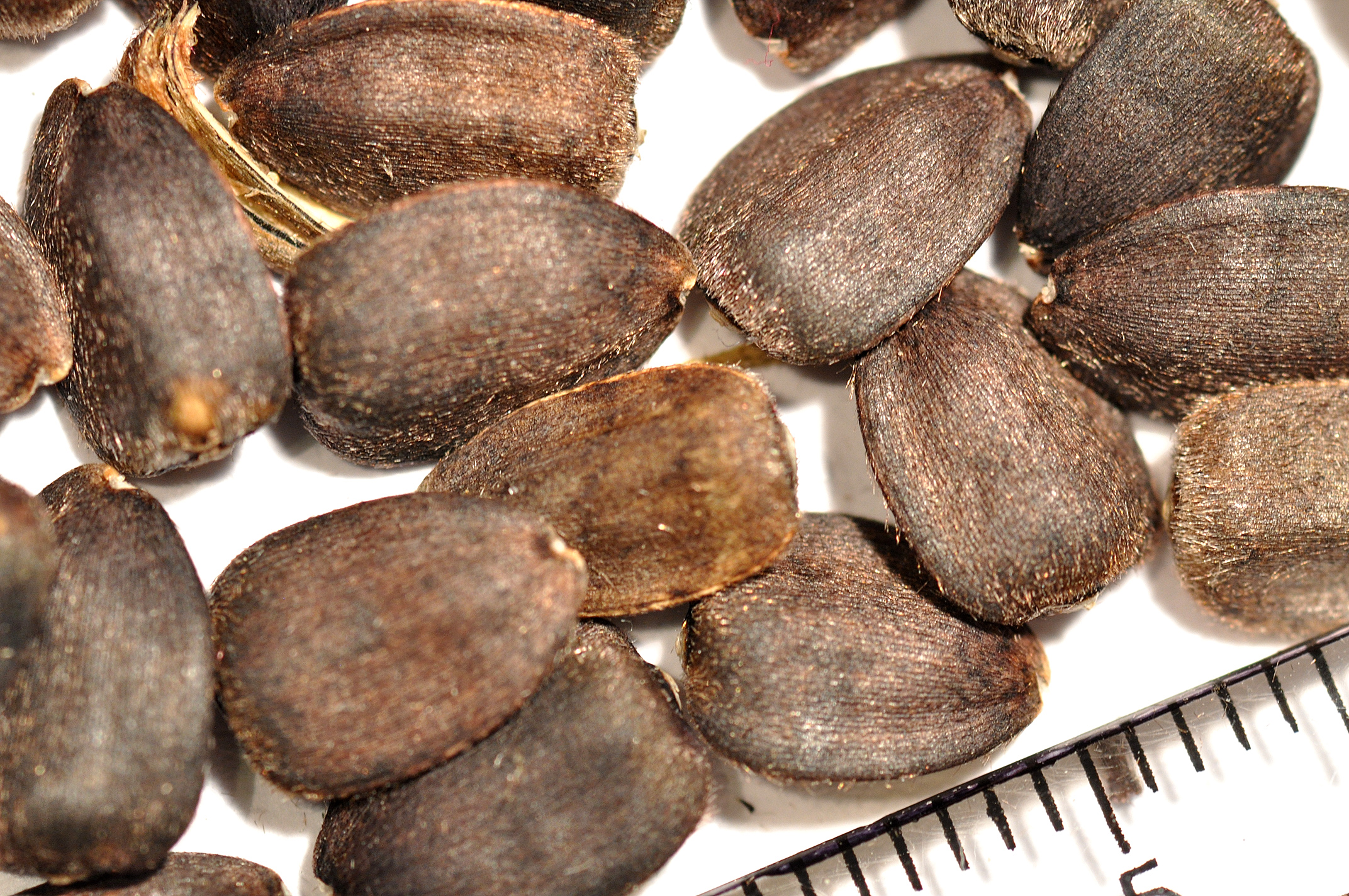
- Kironi (DS-1): approved in 1992 and developed through selection. Stem diameter 1.5 to 2.0 cm; mature flower head 12 to 15 cm across; 400 to 600 seeds per head; black seed; 1,000 seeds weigh 68 to 72 g; 42 to 44 per cent oil in the seed. Moderately tolerant of Alternaria blight. Crop duration 90 to 110 days; yield 1.6 to 1.8 tonnes a hectare.
- BARI Surjomukhi-2: stem diameter 2.0 to 2.4 cm; mature flower head 15 to 18 cm across; black seed; 1,000 seeds weigh 65 to 70 g; 450 to 650 seeds per head; 42 to 44 per cent oil. Crop duration 95 to 100 days in the rabi season and 90 to 95 days in kharif; yield 2.0 to 2.3 tonnes a hectare in rabi and 1.5 to 1.8 tonnes in kharif.
BARI Surjomukhi-2, with its bigger head and higher rabi yield, has been the variety most used in field research. In trials at BARI's farm in Joydebpur, Gazipur, and its Regional Agricultural Research Station at Hathazari, Chattogram, in the 2012-13 rabi season, published in the Bangladesh Agronomy Journal in 2015, BARI Surjomukhi-2 sown on 20 November gave plants 172.13 cm tall, heads 18.33 cm across, 66 g of seed per head, a 1,000-seed weight of 68 g and a yield of 2.5 tonnes a hectare.
In farmers' fields in the Sylhet region in 2017-18 and 2018-19, BARI scientists found that BARI Surjomukhi-2 performed better than the existing cultivars under the region's acidic soils and climate, according to a 2020 paper in the same journal.
BARI Surjomukhi-3 and hybrid seed
The profile's line that BARI has developed only two sunflower varieties was out of date by 2025. A third, BARI Surjomukhi-3, is described as a high-yielding variety (HYV) in the January 2023 EBAUB Journal study. Its researchers grew it in the rabi season on the Barind tract in Chapainawabganj, with seed collected from Kurigram district, alongside DS 275, a hybrid whose seed came from Naogaon.
In that trial BARI Surjomukhi-3 flowered at 61 days after sowing and matured at 103 days, earlier than the hybrid, which flowered at 78 days and matured at 112. It grew 105.72 cm tall against the hybrid's 198.73 cm, with a head 18.27 cm across and a 1,000-seed weight of 61.92 g, both larger than the hybrid's. The hybrid filled far more seeds per head, 1,711 against 561, and yielded more: 8.20 maunds a bigha against 6.83.
Hybrid seed is also part of the picture on saline land. A trial in non-saline and saline soils of southern Bangladesh after T. Aman rice, published in the Bangladesh Agronomy Journal in 2018, compared the hybrid Hysun-33, a genotype called KU-SL-1 and BARI Sunflower-2, and concluded that Hysun-33 could be considered best for saline soil and KU-SL-1 for non-saline soil. In coastal trials published in November 2023 by scientists from BARI, IRRI's Bangladesh office and the Bangladesh Wheat and Maize Research Institute, BARI sunflower 2 gave 10 to 15 per cent more seed than the variety SVS 00901.
Land, soil and season
Sunflower grows in almost every soil, but loam suits it best, the original profile says. The USDA guide adds that the plant needs full sun. In Bangladesh it is grown in both seasons: BARI gives BARI Surjomukhi-2 different durations and yields for rabi and kharif, and the rabi crop yields more.
Sowing date matters. In the 2012-13 BARI trials at Joydebpur and Hathazari, five dates from 10 November to 20 December were tested. Sowing on 20 November gave the highest yield, 2.5 tonnes a hectare, and the authors concluded it was the best time; sowing on 20 December gave the lowest, 1.83 tonnes. In Sylhet, UNB reported in March 2019 that BARI had run trials for three years before farmers took up the crop, and that the seed had to be sown by 15 November.
Sunflower also fits land where little else grows in the dry season. Mongabay noted in January 2024 that about 53 per cent of the coastal belt is directly affected by salinity, and that the tidal surges of cyclones Sidr (2007) and Aila (2009) raised the salt in coastal soils. The EBAUB paper says coastal farmers grow sunflower as a way of coping with climate change, often after transplanted Aman rice. The November 2023 coastal study found that the best management practices sharply reduced soil salinity during the cropping period and gave 25 to 30 per cent more seed than moderate management and 35 to 42 per cent more than poor management.
Sowing and caring for the crop
The original profile gives BARI's seed rate of 8 to 10 kg a hectare. Beyond that, the sources describe these practices:
- Sow in rows. The EBAUB trial was sown in rows and kept weed-free through integrated weed management, with irrigation, mulching and pest management as needed.
- Fertilise by the official guide. The EBAUB researchers applied fertiliser according to the Fertilizer Recommendation Guide of the Bangladesh Agricultural Research Council (BARC, 2012) for their agro-ecological zone; their costs list urea, DAP, MoP, gypsum, magnesium sulphate and borax. The right doses depend on the soil, so ask the upazila agriculture office.
- Water carefully. Sylhet growers told UNB in 2019 that the crop needed two irrigations and a single application of fertiliser; the USDA guide says young sunflowers need watering until they are established.
- Protect the heads. Birds and small mammals eat both the seed and the young seedlings, the USDA guide warns, and netting or a scarecrow may be needed.
- Harvest on time. In the EBAUB trial, the crop was harvested at full maturity, when 80 per cent of the head had turned yellowish.
BARI describes Kironi as moderately tolerant of Alternaria blight, a leaf disease. For any disease or pest in the field, and for the dose of any fertiliser or pesticide, the safe course is to show the problem to the sub-assistant agriculture officer of the block or the upazila agriculture officer before spraying.
Costs and returns
The EBAUB study gives one of the few published cost sheets for sunflower in Bangladesh. On the Barind tract the total cost of cultivation came to Tk 80,851 a hectare, of which the variable cost was Tk 58,441. Land use was the biggest cost, at 27.72 per cent, followed by labour (14.78 per cent), fertiliser (13.39 per cent) and seed (13.32 per cent). HYV seed cost Tk 150 a kilogram, hybrid seed Tk 880.
At a price of Tk 100 a kilogram, BARI Surjomukhi-3 yielded 273.33 kg a bigha and earned a net return of Tk 16,511, a benefit-cost ratio of 2.52; the hybrid DS 275 yielded 328 kg a bigha, earned Tk 21,978 and had a ratio of 3.03. Both, the authors concluded, were profitable at farm level.
Field reports gave similar pictures. In Sylhet in 2019, UNB said the crop sold at Tk 2,400 to 3,000 a maund. In Khulna in February 2024, the DAE's additional director Mohon Kumar Ghosh told BSS that "about 8 maunds of sunflower seed is produced from one bigha of land" and that initiatives were under way to create a market for the seed. Mongabay reported that a farmer in Patuakhali harvested about 75 maunds from three acres and earned about Tk 170,000.
Where sunflower is spreading
By the 2023-24 season the crop had moved well beyond the central and northern districts that Banglapedia names. BSS reported in February 2024 that the Khulna region had 3,100 hectares under sunflower against a target of 3,265, with a production target of 7,451 tonnes:
- Khulna: 1,809 hectares, production target 4,822 tonnes.
- Bagerhat: 1,048 hectares, production target 2,051 tonnes.
- Satkhira: 138 hectares, production target 338 tonnes.
- Narail: 105 hectares, production target 240 tonnes.
In Fakirhat upazila of Bagerhat, the Dhaka Tribune reported in April 2023 that sunflowers covered 150 hectares of fallow land after the paddy harvest, 137 hectares of it under government incentives, with 1,030 farmers given seed, fertiliser and training. Mohon Kumar Ghosh said in 2024 that the crop "got much popularity as it is lucrative and less expensive".
The NGO BRAC supported more than 2,000 farmers growing sunflower on 2,170 acres in 2023-24 and expected about 1,680 tonnes of seed, Mongabay reported; its climate-change programme manager Bashir Ahmed described the crop as turning barren land into "a golden sea of flowers". In the north-east, BARI senior scientific officer Dr Mahmudul Islam Nazrul told UNB in 2019: "We're optimistic about the potential of commercial sunflower farming in Sylhet."
Where to get help
- Upazila agriculture office (DAE): the upazila agriculture officer and the block's sub-assistant agriculture officer advise on variety, sowing time, fertiliser doses, pests and diseases, and on government seed and fertiliser support for oil crops.
- BARI Oilseed Research Centre, Joydebpur, Gazipur: BARI's centre for oil-crop research, whose scientists have taken part in sunflower trials such as the 2023 coastal study.
- Fertilizer Recommendation Guide (BARC): the official guide to crop-wise fertiliser doses by agro-ecological zone; the agriculture office can explain the right dose for a particular field.
Photo: Yahya / Wikimedia Commons (CC BY-SA 4.0)
Sources: The Agro News (Staff Correspondent), Banglapedia, USDA Natural Resources Conservation Service, Bangladesh Agronomy Journal, EBAUB Journal, Acta Universitatis Agriculturae et Silviculturae Mendelianae Brunensis, BSS, Mongabay, UNB, Dhaka Tribune
Comments
(0)