
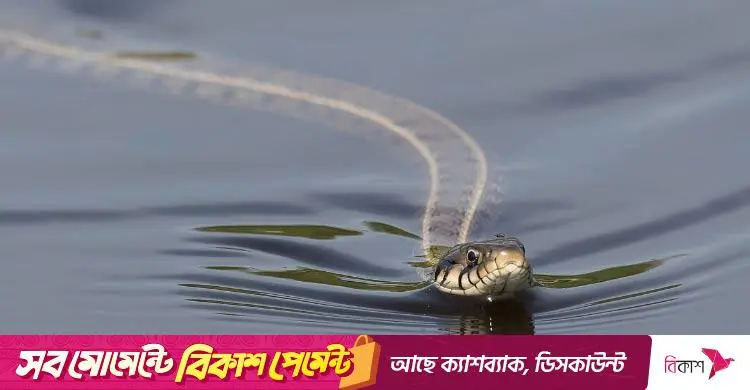
As the rain intensifies in the monsoon, water collects in many areas and some places flood. Floods bring insects and, with them, snakes. This is not only a village picture: in the rainy season snakes get into many homes in towns too.
People who go to forests or hills during the rains also often run into snakes. Snakebites have risen alarmingly across the country in recent years. Not all snakes are venomous, and not every bite from a venomous snake is immediately fatal. But without the right knowledge, many people cannot handle the situation and do things that put the victim's life at greater risk. Here is what to do after a snakebite, and what you must never do.
What to do
A person bitten by a snake should be taken to hospital as quickly as possible. Local health centres keep medicine for the venom of snakes known in their area. On the way, a few things can be done straight away to save the victim.
People who are bitten become extremely frightened, and in that state a wrong decision can be fatal. So reassure the victim and ease their fear. Bites from non-venomous snakes do not kill, so find out what the snake looked like. There are very few venomous snakes in Bangladesh, and most of the time they fail to inject enough venom into their victim. So rather than panicking, focus on getting to a doctor.
The bitten limb must be kept still, with as little movement as possible. Try to take the person to hospital half-lying and still, protected from walking or jolting.
Bandage the wound with light pressure. This first aid is called pressure immobilisation. If the hospital is far away, it is better to bandage the victim this way before setting off. A gamchha or a scarf-like cloth can be used instead of a bandage.
Check whether the patient is breathing. If not, give mouth-to-mouth breathing immediately.
Wash the bite with soap to disinfect it and wipe it gently with a damp cloth. Remove any jewellery, watch, cord or amulet the victim is wearing, as these can obstruct blood flow.
What never to do
A Prothom Alo report in June 2024 said that 61 per cent of snakebite victims still go to a snake charmer, most of whom give the wrong treatment. So do not waste time taking the victim to a snake charmer. If the snake is venomous, that lost time could cost the person's life.
Do not put any herbal medicine, plant seeds, saliva, cow dung, mud or stones on the bite. They do no good and can cause harm.
Many people, influenced by snake films, believe that sucking the venom out of the bite by mouth will cure the patient. But venom actually spreads through the lymph and blood, and it is impossible to remove it this way. It is also harmful for the person who puts their mouth to the wound.
An old practice is to tie a tight band or knot near the bite. Because venom spreads through the blood, the limb is tied tightly a little above the bite to stop it spreading. There is no scientific basis for this. Instead it blocks blood flow, and the lack of circulation can lead to rotting of tissue, or necrosis.
Do not scratch the bite with a knife or blade. Many people do this to draw out the venom, but for that a specialist must be consulted; venom cannot be removed by cutting at random.
Do not give aspirin-type medicine to relieve the pain of a snakebite. Nor is it right to apply any chemical to the bite or use one to apply heat to it.
Victims sometimes have trouble swallowing food or saliva, or speaking, and may develop a nasal voice, vomiting or excess salivation. As a remedy, many people try to feed them something to make them vomit. This is dangerous and wrong.
There are several effective ways to give immediate first aid to someone bitten by a snake, so ignore the misconceptions and superstitions about drawing out venom or easing pain that are common in society. Try to take the victim to hospital as quickly as possible. With proper treatment, their chances of survival rise greatly.
The report was sourced from UNB.
Source: Jagonews24. First published in Bengali on The Agro News.

Comments
(0)