
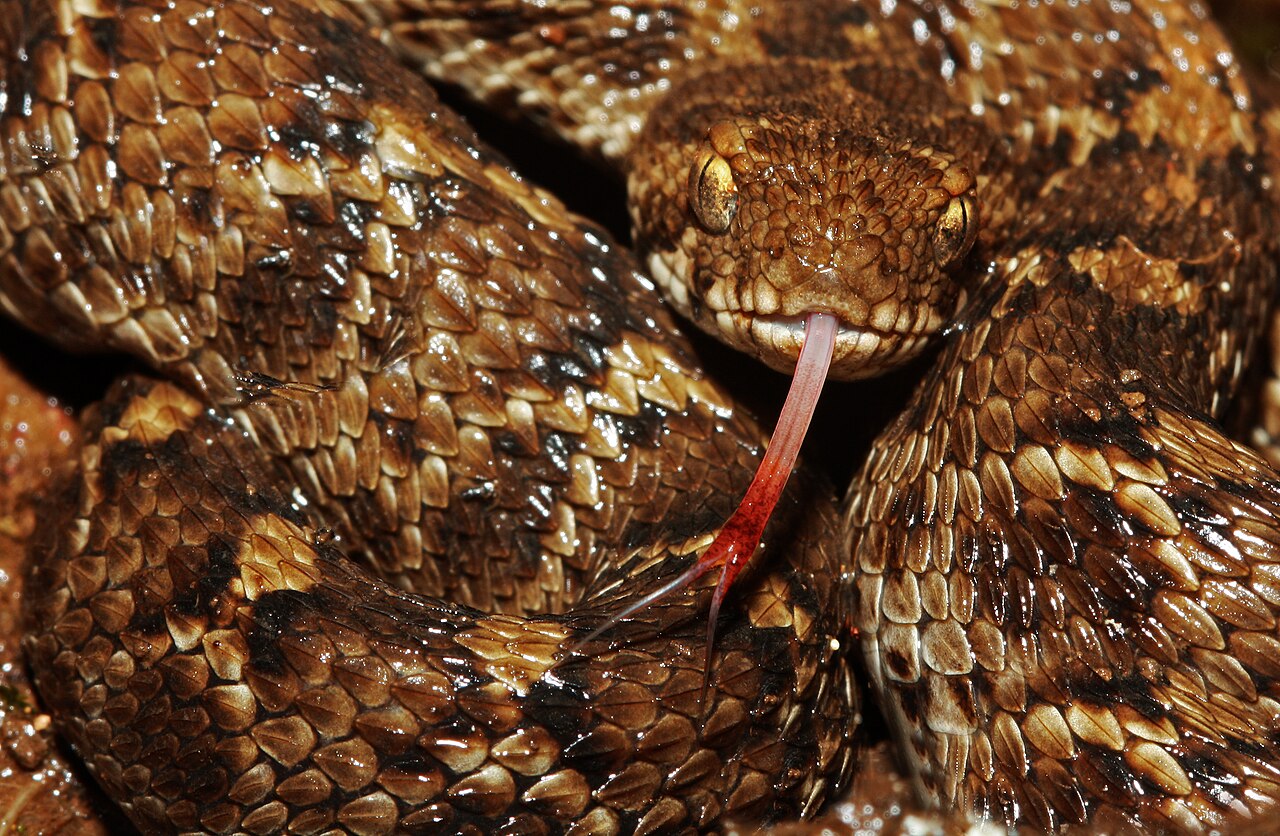
Snake envenoming is a far bigger public health crisis than official statistics show, according to researchers who have mapped its global burden. Writing in Down To Earth, the authors, including Dileepa Ediriweera, a health data scientist at the Liverpool School of Tropical Medicine, say more than half the countries with dangerous snakes do not count bites at all.
Many victims in rural sub-Saharan Africa and South Asia live hours from a clinic, lack transport or go to traditional healers, so their cases never reach national statistics. The team reviewed studies from 79 countries published up to 31 March 2025, updating their 2008 global estimate, and filled the gaps with a geostatistical model that combines real data with climate, the number of snake species and social and economic conditions.
They estimate that at least 2.1 million people a year are envenomed, and possibly as many as 7 million, with 274,000 to 513,000 deaths once under-reporting is accounted for. More than 800,000 survivors a year are left with lasting disabilities, including amputations, which cut household income and push farming families deeper into poverty.
Sub-Saharan Africa accounts for 45 percent of envenomings and deaths, and people there are envenomed and die at nearly three times the rate in South Asia. Nigeria, the Democratic Republic of Congo and Ethiopia carry a heavy burden because of dense rural populations and exposure in farm fields. Farm workers labour in open fields without protective boots and walk unlit paths at night, and once bitten face long journeys and costly or missing antivenom; similar conditions exist in parts of Asia, the researchers write.
The World Health Organization aims to halve snakebite deaths and disability by 2030. The authors say mapping high-risk hotspots would let governments stockpile antivenom where it is needed, train primary health workers in high-burden rural areas and improve emergency transport.
Photo: Tanmay Haldar / Wikimedia Commons (CC BY-SA 4.0)
Source: Down To Earth



Comments
(0)