
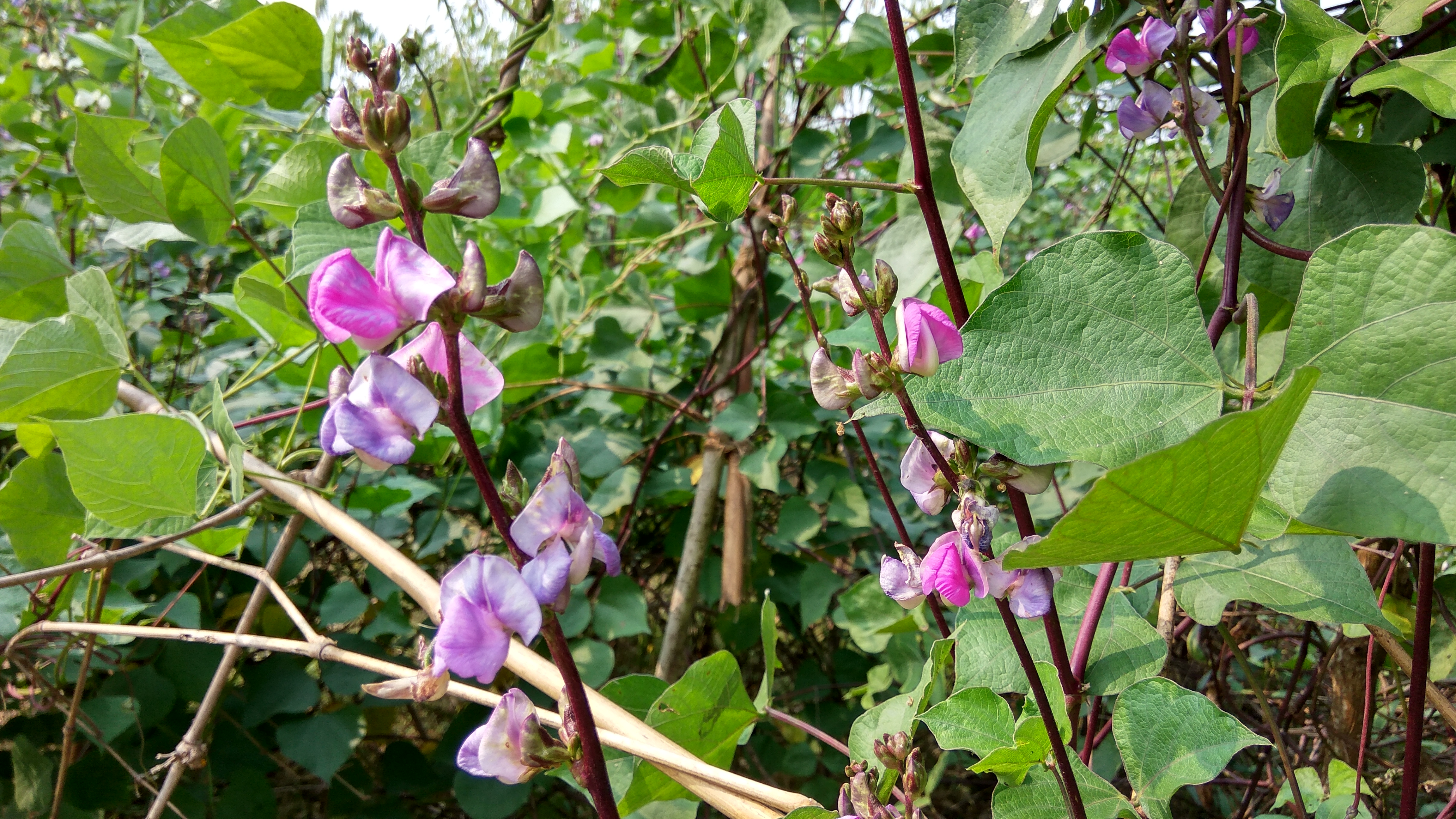
Mohi Uddin, a 35-year-old farmer from Middle Banshbaria village in Banshbaria union of Sitakunda upazila, Chattogram, had made his name in October 2023 by growing the purple-podded summer bean known locally as Rupban on hill land. Jagonews24, which reported his story on 24 October 2023, said he had sold beans worth Tk 8 lakh in the season and hoped to sell another Tk 4 lakh worth over the next two months. By his own account and that of the local agriculture office, he sold Tk 2 lakh 96 thousand worth of beans in a single market.
Mohi Uddin is the son of Abdur Rahman. He told Jagonews24 that he had turned to the hills three years earlier because the farmland he once worked on the plains had largely been bought up for industry. In 2023 he grew Rupban beans on about 250 decimals of hill land, along with bottle gourd, yardlong beans, ridge gourd, snake gourd, okra and other vegetables.
Tk 2.96 lakh of beans in one market
"I sold Tk 2 lakh 96 thousand of beans in one market," Mohi Uddin told Jagonews24. At the start of the harvest his beans fetched Tk 170 a kilogram wholesale; by late October he was selling them wholesale at Tk 130 a kilogram. He said he did not have to carry the crop to a distant town to find buyers. "My beans are sold by mobile phone. Big wholesalers from Dhaka and Chattogram get the news and wait at the foot of the hill, then take the beans away by truck," he said.
Mohammad Abul Monsur, the sub-assistant agriculture officer responsible for Banshbaria union, confirmed the figure. He described Mohi Uddin as the most hard-working farmer in Banshbaria and said that in the 2023 season he had sold Tk 2 lakh 96 thousand of beans in one market. Bringing that harvest down from the hill to the road had taken three days, the officer said.
The prices Mohi Uddin described matched what the upazila agriculture office and several other farmers told Jagonews24. Growers had sold Rupban beans wholesale at Tk 160 to 170 a kilogram when picking began, and in late October were still getting Tk 130 to 140. Because the plots lie in remote hilly ground, the office said, production costs are somewhat higher than on the plains.
From the plains to the hills
Mohi Uddin's path to the hills was shaped by what happened to the land around him. "At first I grew various vegetables on flat land, alongside a timber and drumstick business," he told Jagonews24. "Industrial owners have bought up the land in the area, so there is hardly any cropland left. That is why, on the advice of several people, I started farming on the hills three years ago."
Hill farming, he said, takes a great deal of labour. Three people work in his fields all twelve months of the year, and he said each is paid Tk 20,000 a month. At picking time and for other care of the crop he sometimes hires 10 to 12 more labourers. He also said that the rising prices of fertiliser, pesticide and other inputs had made his costs higher. According to Mohi Uddin, after all costs he made a profit of Tk 5 lakh from Rupban beans in the previous year, 2022.
Sub-assistant agriculture officer Abul Monsur told Jagonews24 that Mohi Uddin's experience was not unusual. Cropland on the plains of Banshbaria was shrinking day by day as industrial owners bought it, he said, and many farmers had been forced to move their cultivation onto the hills.
Seventy-five acres and 300 farmers
According to the upazila agriculture office, as reported by Jagonews24, Rupban beans were grown on 75 acres in Sitakunda upazila in 2023 by about 300 farmers. The beans are sown every April; picking starts about 60 days later, and sales continue until December.
Prothom Alo, reporting from the hills of Kumira union on 27 September 2023, gave the same picture in its own figures. Citing the upazila agriculture department, it said summer beans had been grown on 25 hectares of Sitakunda in 2021, on the same area again in 2022, and on 30 hectares in 2023. It too put the number of growers at about 300. Most of the Rupban crop was in the hill areas of Kumira, the paper said, with more in Banshbaria, Saidpur and Bariadhala unions and in Sitakunda municipality.
Agriculture officials and farmers told Prothom Alo that the summer bean is planted in April and that farmers begin picking after about 60 days, from June, and keep selling until December. In December production falls off because water runs short, while the winter beans begin reaching the market from the end of November.
Rupban: Sitakunda's summer bean
Sitakunda is famous for beans, but for most of its history that meant winter beans. Prothom Alo described the upazila as known for local winter types such as churi, loitta and bata, which in winter are planted across the fields and even on the ridges between plots. Rupban is different. Its pods are purple, and because it is planted in the hot months of Baishakh and Jyoishtho (April to early June) it is also called the summer bean, according to a Prothom Alo report of 31 October 2021. Picking begins in the month of Srabon (mid-July to mid-August).
The appeal of the variety, the upazila agriculture office told Prothom Alo in 2021, is its price: it reaches the market when beans are out of season. That year, the office said, Rupban, IPSA-1 and IPSA-2 beans had been grown on 25 hectares of the upazila, most of it in Bariadhala and Saidpur unions; the Teriail block of Bariadhala alone had 10 hectares, farmed by 100 growers. A sub-assistant agriculture officer told the paper that they expected about six tonnes a hectare, and that although Rupban yields somewhat less than other beans, its higher price meant growers did not make a loss.
Farmers in Teriail described to Prothom Alo in 2021 how the crop behaves. Picking can be done twice a week, they said, and a single planting keeps bearing for about a year. When the winter beans arrive, however, the price of Rupban drops sharply, and many growers then stop picking the green pods and collect the seeds instead.
Prothom Alo's 2023 report added detail from the fields of Kumira. The variety bears for a longer period than the winter beans, farmers said, which makes it more profitable. On the hill slopes east of the old railway TB hospital area, at least three hills had been planted, with trellises made of bamboo stakes running down the slope from the crest and three bean plants set at the foot of each stake. The upazila agriculture officer told the paper that because the crop yields over a long period and sells for more than winter beans, farmers were turning to it and the area under it grew every year.
The name is not unique to Sitakunda. In Atghoria upazila of Pabna, known locally as a 'bean sea', Prothom Alo reported in September 2020 that an early bean called Rupvan was grown on 450 hectares out of 1,550 hectares of beans that season, alongside varieties called Auto and Chocolate. Farmers there said the name came from the beauty of its purple flowers and reddish pods, and wholesale prices at the time were Tk 150 to 170 a kilogram.
Why farmers grow it on the hills
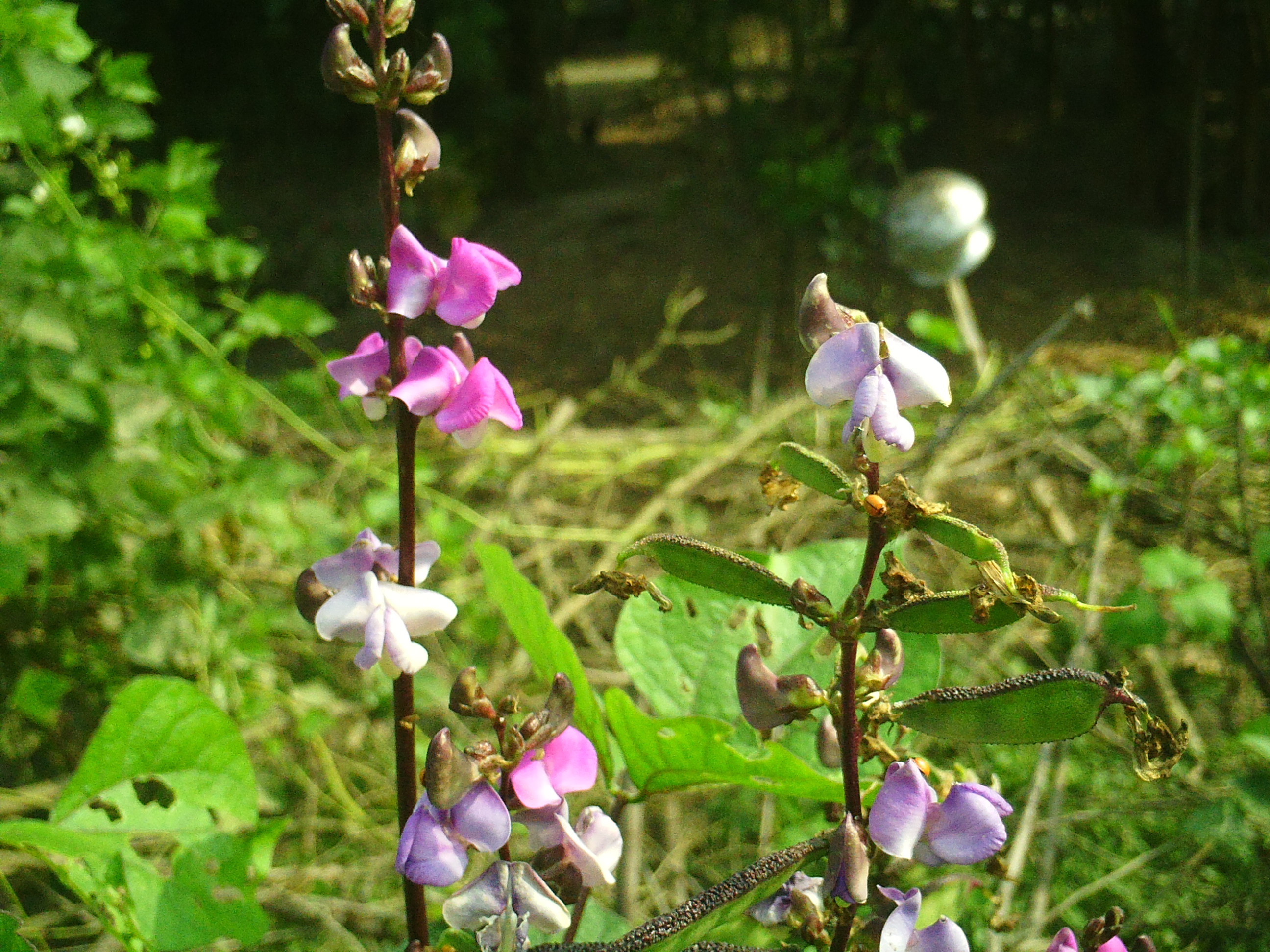
Prothom Alo's September 2023 report explained one of the main reasons the summer bean is grown on hill slopes in Sitakunda. During the monsoon, heavy rain on the plains leaves water standing in the fields, and waterlogging can rot the bean vines. On the hills water does not stand, so the plants are not lost in the same way. The spread of bean farming on the hills was also bringing previously uncultivated land into use, the paper said.
This matches what is known about the plant. A plant guide on lablab published by the United States Department of Agriculture's Natural Resources Conservation Service says the species grows in soils from sand to clay, across a pH range of 4.5 to 7.5, but does not grow well in saline or poorly drained soils. It grows better than most legumes under acidic conditions, can keep growing in drought or shade, and is more drought-resistant than the common bean or cowpea, with roots that can reach water about six feet down.
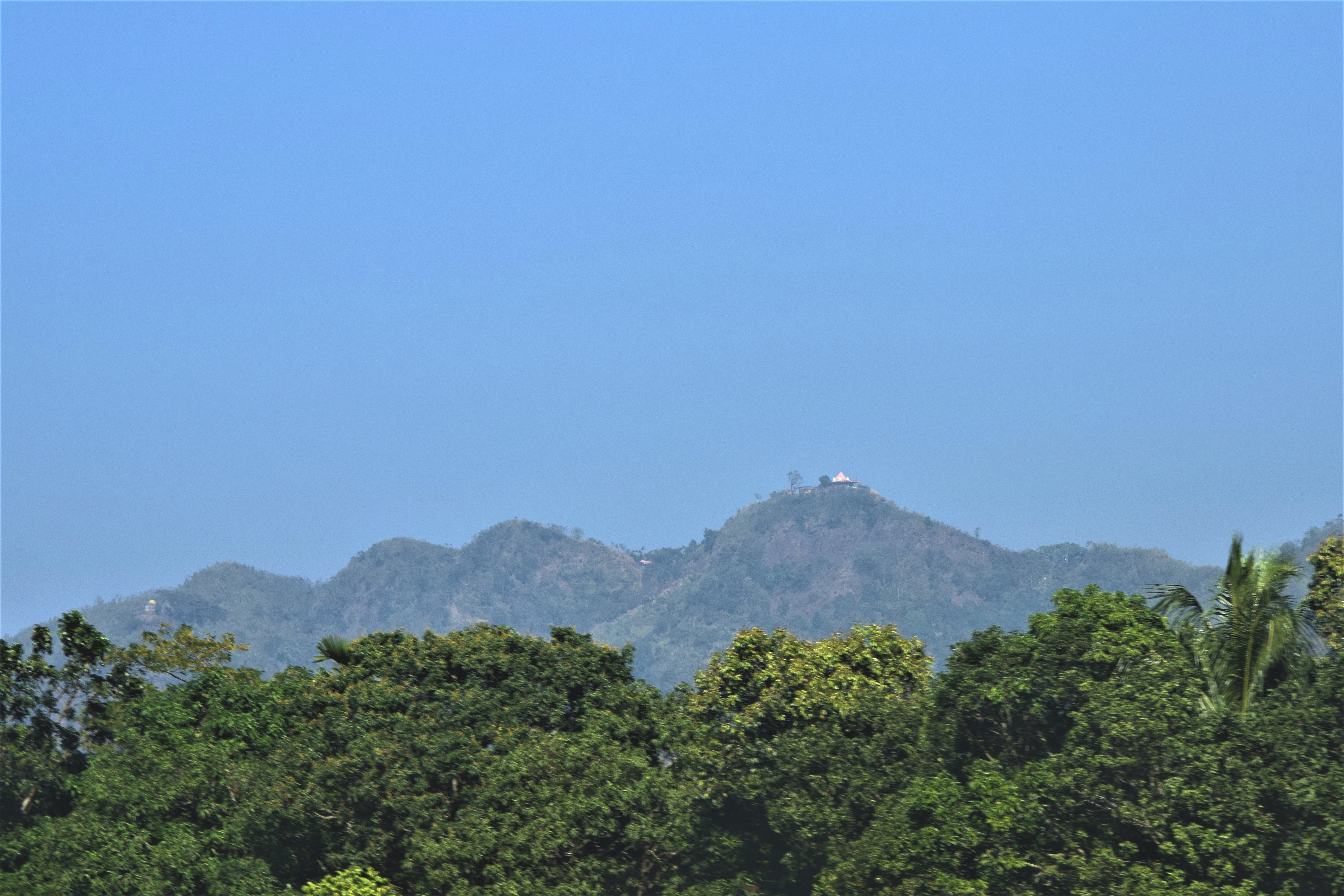
The hills themselves are part of the Sitakunda range, a ridge about 32 kilometres long that runs through the middle of the upazila. Its highest point, Chandranath or Sitakunda peak, stands 352 metres above sea level and is the highest peak in Chattogram district. Part of the upazila is covered by these low hills, while the rest lies on the floodplain between the ridge and the Sandwip Channel.
Farming on the slopes has its costs. Jagonews24 noted that production costs in the remote hill areas are somewhat higher. Mohi Uddin needed three days to carry one market's harvest down, and paid a year-round crew. Farmers told Prothom Alo in 2023 that rain at flowering time can make the flowers drop, a risk that can cut the harvest. The Kumira union's sub-assistant agriculture officer said his team visits the hills and advises farmers, in particular on the treatments used to keep the flowers on the plant. Neither report named the products, and growers should take such advice, with doses, from their union's sub-assistant agriculture officer or the upazila agriculture office.
Off-season prices and the market
The money in the summer bean comes from timing. According to Prothom Alo in September 2023, farmers in Sitakunda were selling winter beans at Tk 30 to 40 a kilogram at farm level in the season, while summer beans were fetching Tk 110 to 150, because they reach the market when beans are not in season. Growers had sold at Tk 160 to 170 a kilogram at the start of the 2023 harvest and were still getting Tk 140 in late September, with traders from Dhaka, Chattogram and other parts of the country coming to buy.
The volumes were large. The sub-assistant agriculture officer for Kumira union told Prothom Alo that on every market day, held twice a week, farmers from his union alone sold at least 15 tonnes of beans, worth Tk 15 to 18 lakh at the prices then. A trader from Chattogram city's Reazuddin Bazar told the paper he had bought 785 kilograms at Tk 110 a kilogram to sell on to retailers in the city's markets, and said traders set their prices according to supply.
Prices had followed the same pattern two years earlier. In October 2021 farmers in Teriail told Prothom Alo that beans were selling at Tk 100 to 140 a kilogram, so high that they were picking them early before the seeds formed. Within a month of the first harvest, they said, they had earned back what they had spent.
Mohi Uddin's account in October 2023 fits this pattern. He said his price fell from Tk 170 to Tk 130 a kilogram over the season, and he expected to keep selling for about two more months, until the winter beans arrive and the Rupban season closes in December.
The bean plant: Lablab purpureus
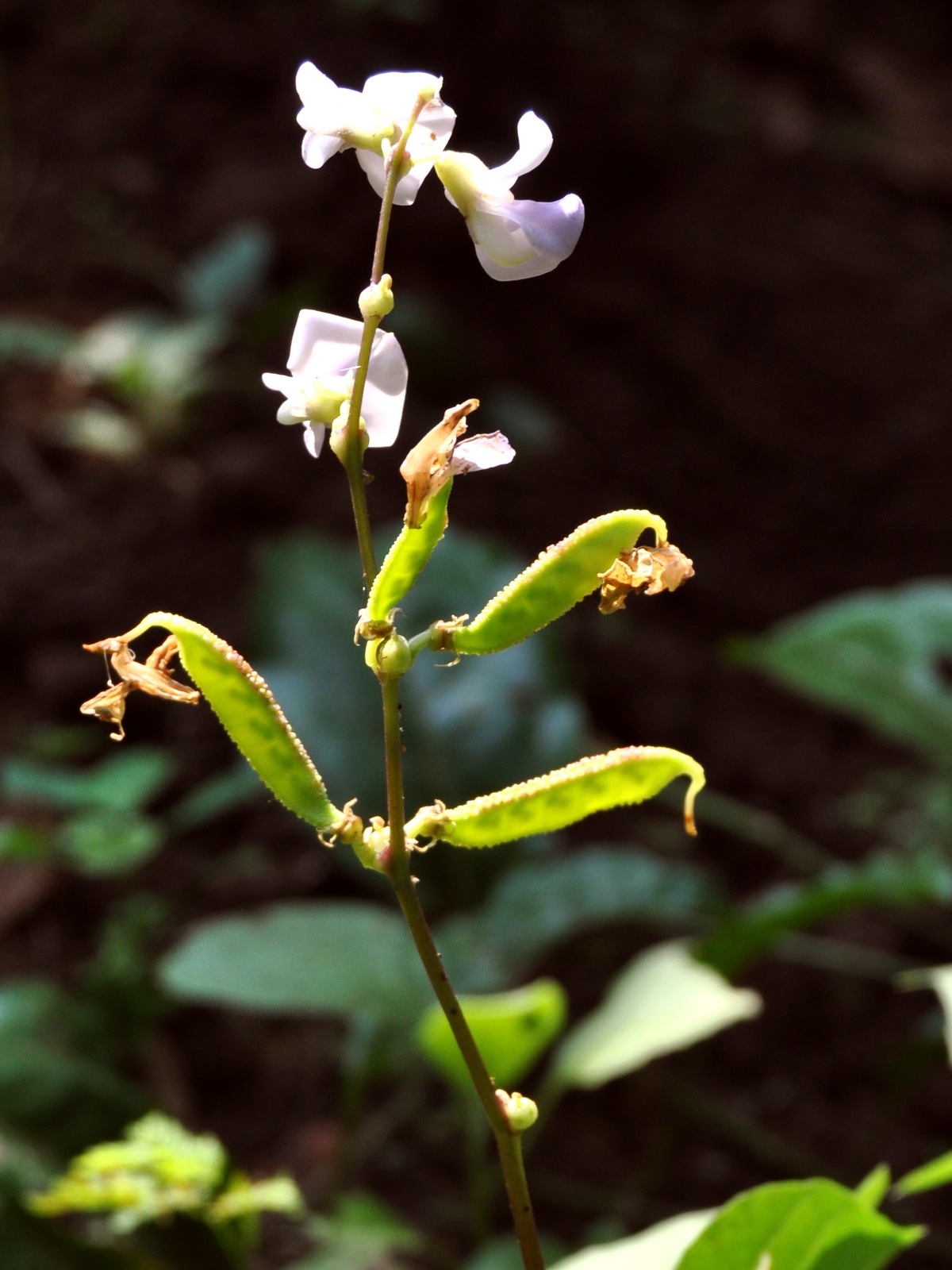
The country bean of Bangladesh, deshi shim, is the hyacinth bean or lablab, Lablab purpureus (also listed under the older name Lablab niger), a member of the legume family. Banglapedia, the national encyclopedia, describes it as a winter vegetable grown throughout the country, rich in calcium, phosphorus, protein and vitamin C. In the usual winter crop, seedlings 15 to 20 days old are transplanted to the field between June and August and are ready to harvest after 80 to 90 days; the average yield is 10 to 12 tonnes of pods a hectare. The bean is grown mainly for its pods, which are cooked as a vegetable, and the dry seeds are used in various dishes.
The USDA plant guide describes lablab as a climbing, warm-season annual or short-lived perennial with a vigorous taproot, whose vines can stretch to about 25 feet. Its leaves have three leaflets, and its flowers, borne in clusters, may be white, blue or purple depending on the variety. The pods are smooth, flat and pointed and hold two to four seeds, which may be white, cream, brown, red, black or mottled. The plant grows best where average daily temperatures are between 64 and 86 degrees Fahrenheit.
Like other legumes, lablab fixes nitrogen from the air through bacteria in its root nodules, and the USDA guide notes that it is used elsewhere as a green manure to improve soil, with an extensive root system that improves the soil's physical condition. The same guide says the seeds contain tannins and trypsin inhibitors, so they must be soaked or cooked before people eat them.
Research institutes in Bangladesh have bred many types of the bean. In May 2021, for example, Prothom Alo reported that Professor A K M Aminul Islam of Bangabandhu Sheikh Mujibur Rahman Agricultural University in Gazipur had developed two dwarf varieties, BU Khat Shim 8 and BU Khat Shim 9, approved by the seed board, which can be grown like a field crop without trellises or stakes.
Sitakunda: farmland beside industry
Sitakunda upazila covers about 484 square kilometres on the coast north of Chattogram city, bounded by Mirsharai and Fatikchhari upazilas to the north, Pahartali thana of Chattogram city to the south and the Sandwip Channel to the west, according to Banglapedia. At the 2011 census it had 387,832 people in one municipality and nine unions. Banshbaria union, Mohi Uddin's home, covers 6,795 acres; its population in 2011 was 11,041 men and 10,809 women. Kumira union, where much of the Rupban crop is grown, covers 8,534 acres.
Banglapedia lists paddy, betel leaf, ginger, turmeric, onion, rubber and vegetables as the upazila's main crops, and watermelon, rubber, betel leaf and vegetables among its main exports to other areas. Agriculture was the main source of income for 24.12 per cent of households, and 64.63 per cent of households owned no agricultural land.
The same coast is also one of the most industrial strips of Bangladesh. Banglapedia's list of noted factories in the upazila includes rice, flour, jute and textile mills, steel re-rolling mills, a shipyard, brick fields, a motor car assembly plant and cement, glass and oxygen factories. Along the coast, the Sitakunda ship-breaking yards, centred near Faujdarhat about 20 kilometres north-west of Chattogram city, became one of the largest ship-breaking industries in the world and supply much of the scrap steel that local re-rolling mills process. Economic development in Sitakunda has been driven largely by the Dhaka-Chattogram highway and the railway, both of which run the length of the upazila.
It is on that flat land that Mohi Uddin and other farmers of Banshbaria once grew their vegetables. Both he and the union's sub-assistant agriculture officer told Jagonews24 in October 2023 that industrial owners had been buying the farmland, leaving many farmers with little choice but to farm on the hills. The upazila's 483.97 square kilometres include 61.61 square kilometres of forest, much of it on the ridge.
Photo: কামরুল ইসলাম শাহীন / Wikimedia Commons (CC BY-SA 4.0)
Sources: Jagonews24, Prothom Alo, Banglapedia (Asiatic Society of Bangladesh), USDA Natural Resources Conservation Service, Wikipedia
Comments
(0)