
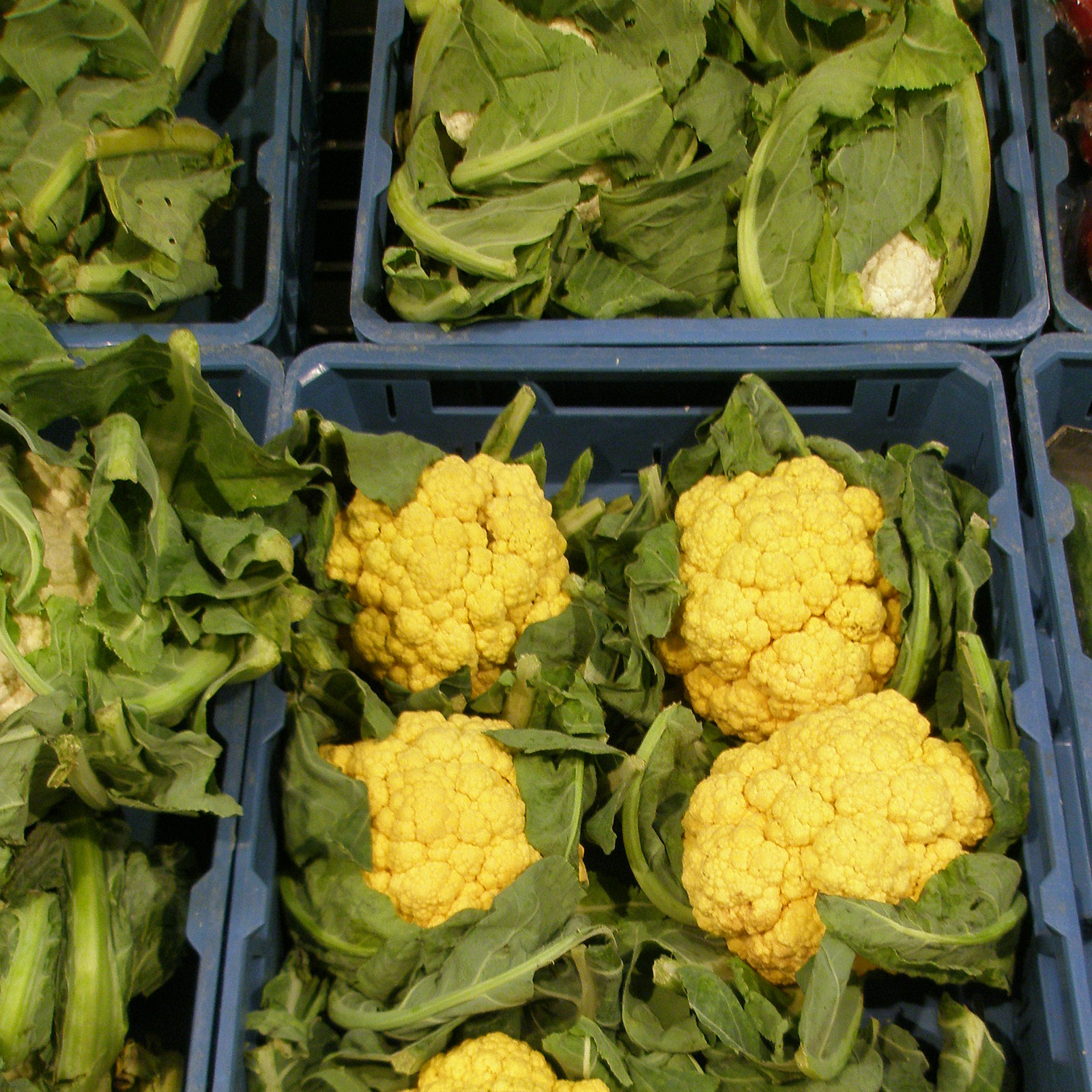
Farmers in Sitakunda upazila of Chattogram grew coloured cauliflowers for the second season running in the winter of 2023-24, and on a much larger scale than in their first attempt. Jagonews24 reported on 4 February 2024 that about 12,000 coloured cauliflowers had been planted in the upazila that season, against 1,200 the year before, and that the number of growers had risen from 15 to 45. The crop was grown in the Fouzdarhat area of Salimpur union with financial support from the Department of Agricultural Extension's (DAE) Programme on Agricultural and Rural Transformation for Nutrition, Entrepreneurship and Resilience, known as PARTNER.
According to the report, coloured cauliflower takes a little less time to grow than the familiar white kind, and that was one reason farmers' interest in it was rising. Besides Fouzdarhat, the crop had been planted in Nunachhara, Teriail, Fultala and other parts of the upazila. The upazila agriculture office said cauliflower as a whole had been grown on 95 hectares in Sitakunda in the 2023-24 fiscal year.
A tenfold rise in one year
The figures given to Jagonews24 showed how quickly the crop had spread in a single year. In the 2022-23 season, 15 farmers in Sitakunda grew a total of 1,200 coloured cauliflowers. In 2023-24 the count rose tenfold to 12,000, and 45 farmers took part. The plants were grown under the PARTNER programme, whose support reached the growers through the upazila agriculture office.
One of them was Md Jahangir Alam, a farmer in Fouzdarhat. He told the paper: "Last year I grew a small amount of coloured cauliflower and earned well. This year, with the help of the agriculture office, I have grown 2,000 coloured cauliflowers. I hope each one will sell for Tk 100. I always get advice and other support from the upazila agriculture office."
Two officials explained why the agriculture office was promoting the crop. Suparna Barua, a sub-assistant agriculture officer in Sitakunda upazila, said: "Coloured cauliflower suffers less from disease. Insects on this cauliflower can be controlled by organic means. Farmers do not have to use extra pesticide." The upazila agriculture officer, Md Habibullah, said: "The only difference between coloured and white cauliflower is the seed. Everything else in the growing method is the same. But the market price of coloured cauliflower is Tk 20-25 higher than that of white cauliflower."
The first season in 2022-23
Sitakunda's first coloured cauliflowers had been reported a year earlier. On 27 January 2023 bdnews24.com wrote that yellow, purple and pink cauliflowers, looking like ordinary white ones except for their colour, were drawing buyers' attention in the upazila, where farmers were growing them for the first time. That season 15 farmers in Nunachhara, Sonaichhari, the Hafiz Jute Mill area, Baraiyardhala and Fouzdarhat had planted the crop. The yellow heads were already being harvested, while the purple and pink plants were just starting to form their heads.
Jahangir Alam was one of those first growers. He farmed 20 decimals of land taken from another owner on a sharecropping basis, with cauliflower, cabbage, leafy greens and other vegetables, and had planted yellow cauliflower on two decimals at the front of the plot. He told bdnews24.com that this was his first time with the crop, that the upazila agriculture officer had brought the seedlings from Jamalpur, and that he had grown about 250 yellow cauliflowers and planted pink and purple ones on another plot. Many people came to see the crop and some bought it; he was selling each head for Tk 100 and wanted to grow more the following season if he could get seedlings.
Md Habibullah told the same paper that coloured cauliflower had been grown elsewhere in the country before but not in Chattogram, and that the office had given seedlings to 15 farmers as a trial, all of whom had harvested a good crop. He said the seedlings of these foreign varieties had come from a nursery in Jamalpur, that about 2,000 seedlings had been collected, and that the yellow heads had reached 1.5 to 2 kilograms. He added that the seed of the white cauliflower grown in Bangladesh is usually imported by companies from Japan, the United Kingdom and India, and that coloured cauliflower is also a foreign variety.
The officer also gave bdnews24.com some practical comparisons. No extra fertiliser or pesticide was needed, he said. On a piece of land that takes 120 white cauliflower plants, 150 yellow cauliflower plants could be planted, and the crop took the same time to yield. The coloured heads, he said, could sell for Tk 15 a kilogram more than white ones. He put Sitakunda's cauliflower area at about 160 hectares a year. His 2023 remark that the crop took the same time as white cauliflower differs from the 2024 report's statement that it takes a little less time; both are given here as each report carried them.
How coloured cauliflower reached Bangladesh
The Jagonews24 report traced the crop in Bangladesh back to 2021. It said that Bangladesh Agro Composite Industries Limited, set up on one acre in Jamalpur, raises vegetable seedlings without soil in a coco-based growing medium, and that the company had brought some coloured cauliflower seeds from India for trial cultivation and raised about 2,000 seedlings there in the rabi (winter) season.
Other reports from early 2023 described the same origin. The Daily Star wrote on 27 January 2023 that the director of the Crop Intensification Project in Mymensingh had first seen coloured cauliflower during a visit to Jamalpur in 2021, where a local nursery had grown it from Indian seed, and that a farmer in Barhatta in Netrokona had then grown it with good yields. The same report said the DAE had succeeded in growing coloured cauliflower on an experimental basis, with 60 farmers in 60 upazilas across six districts of the Mymensingh region receiving seedlings, pesticide and advice. Red, yellow, pink, purple and green heads were mentioned.
The Daily Star's Bengali edition described one of those trials in Bhuapur upazila of Tangail. A vegetable grower there planted about 400 seedlings brought from India on 15 decimals, with yellow and pink varieties on half of the plot. The local agriculture office supplied seedlings, organic fertiliser, pesticide and advice, no chemical fertiliser was used, and the crop was ready about 80 days after planting. Villagers bought the heads in the field, medium heads selling for Tk 50 each. The upazila agriculture officer said the crop was grown like ordinary cauliflower, with similar cost and labour, and that coloured cauliflower is eaten as a salad in countries such as Australia and China.
What cauliflower is and where the colours come from
Cauliflower, Brassica oleracea var. botrytis, belongs to the Cruciferae family. Banglapedia describes it as a plant grown for its compact, fleshy head, which is eaten cooked as a vegetable and sometimes used in pickles. Plant scientists call the edible head the curd.
The white curd has almost no pigment. The orange and purple types each come from a single natural mutation that was later bred into commercial varieties, and both mutations were explained by researchers at Cornell University in the United States, working with the United States Department of Agriculture's Agricultural Research Service laboratory there.
Orange cauliflower carries a spontaneous mutation in a gene named Orange (Or). In a 2006 paper in The Plant Cell, the researchers showed that Or makes the normally colourless curd store high levels of beta-carotene, turning it orange. The gene encodes a protein in the plastids, the small structures inside plant cells, that triggers their change into chromoplasts, the plastids that hold carotenoid pigments; it does not switch on the genes that make beta-carotene. Plants with one copy of the mutation grow normally, with curds 15 to 20 centimetres across, while plants with two copies are stunted and produce curds of only 3 to 5 centimetres. The paper noted that hybrid orange cauliflower with large amounts of beta-carotene was already sold commercially, and that when the researchers put the Or gene into potatoes, the tubers turned orange-yellow.
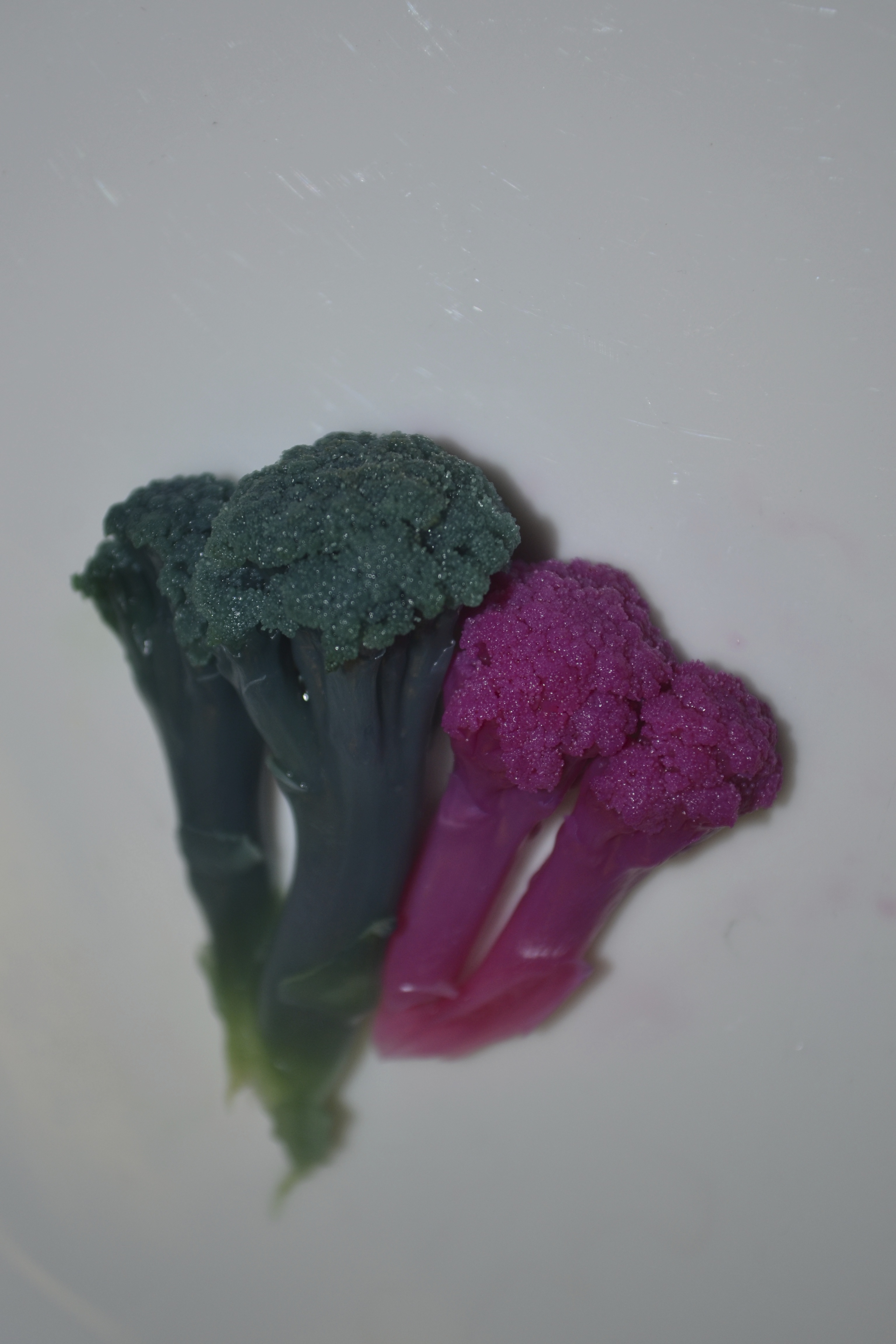
Purple cauliflower owes its colour to anthocyanins, the same group of pigments that colours many flowers, fruits and vegetables. A 2010 paper in Plant Physiology by the same Cornell group reported that the purple type arose from a spontaneous mutation found in a cauliflower field about 20 years earlier. The mutation, in a gene named Purple (Pr), switches on a regulatory protein of the MYB family that in turn activates the genes for anthocyanin production in the curd. The researchers traced the change to a piece of mobile DNA, a transposon, inserted just upstream of the gene. Working with the commercial purple variety Graffiti, they measured about 3.75 milligrams of anthocyanin (as cyanidin diglucoside equivalent) per gram of fresh curd, a level they described as comparable to that in blueberries, while white cauliflower had no detectable anthocyanin.
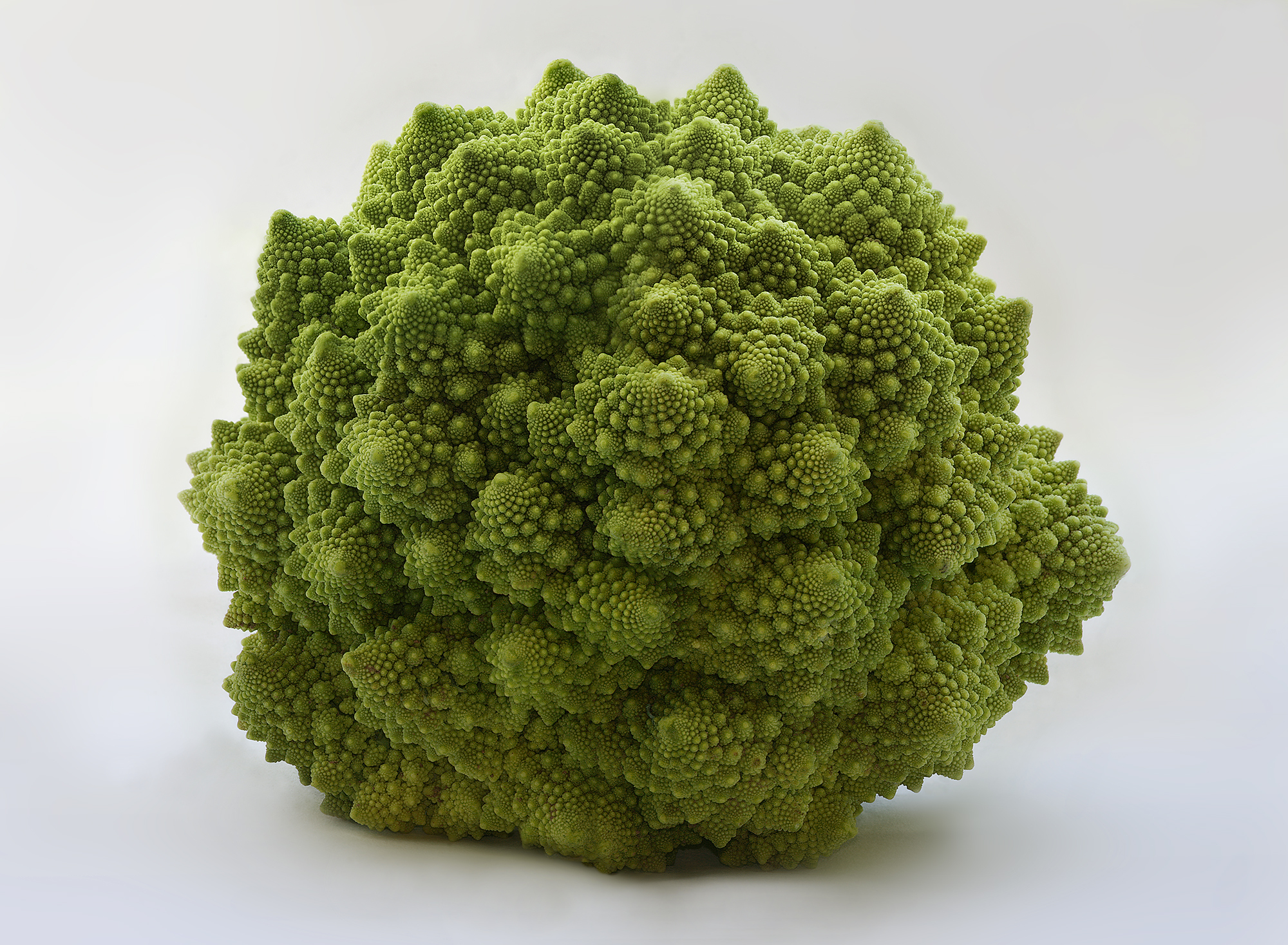
Green cauliflower includes both ordinary-shaped green curds and the spiralled Romanesco type; the University of Georgia Extension lists the green Veronica Romanesco as a cauliflower variety.
What the nutrient tables show
Officials quoted in Bangladeshi reports in 2023 said coloured cauliflower is more nutritious than white. The published laboratory data give a more precise picture. In the United States Department of Agriculture's FoodData Central database (SR Legacy), 100 grams of raw white cauliflower contains 25 kilocalories, 92.1 grams of water, 1.92 grams of protein, 2.0 grams of dietary fibre, 48.2 milligrams of vitamin C, 299 milligrams of potassium, 22 milligrams of calcium and 57 micrograms of folate, and no beta-carotene.
The same database lists raw green cauliflower separately. Per 100 grams it contains 31 kilocalories, 2.95 grams of protein, 3.2 grams of fibre, 88.1 milligrams of vitamin C, 33 milligrams of calcium, 300 milligrams of potassium and 93 micrograms of beta-carotene. The database has no separate entry for orange or purple cauliflower; for those, the research papers above show the main difference: beta-carotene in the orange curd and anthocyanins in the purple one, pigments that the white curd lacks.
The 2006 Plant Cell paper notes that plant carotenoids are the main dietary source of provitamin A, the form of vitamin A that the body makes from beta-carotene. Beyond these measured differences, a coloured head is still a cauliflower, and anyone with a particular dietary need should take advice from a doctor or a qualified nutritionist.
Growing the crop: season and method
Cauliflower is a winter crop in Bangladesh. Banglapedia says 30-day-old seedlings are suited to transplanting in October and November. The Bangladesh Bureau of Statistics (BBS), in its Statistical Yearbook 2022 published in June 2023, gives the sowing period as late October to mid-November and the harvest as early January to early March, with 105 to 117 grams of seed or 8,000 to 10,000 seedlings needed for an acre.
Banglapedia groups the white varieties grown in the country by season. Early varieties include Kartica, Patnai and Tropical-55; mid-season ones include Agrahani, Poushali, Snowball and Rupa, a high-yielding variety released by the Bangladesh Agricultural Research Institute (BARI) in 1998; late varieties include White Mountain, Maghi and Rakhusi Late.
The Sitakunda officer's point that only the seed differs matches extension advice from abroad. A 2015 guide from the University of Georgia Extension in the United States said cauliflower comes in four colours, purple, white, green and orange, and in two floret shapes, standard and spiralled. It said the crop grows best in rich soil with organic matter mixed in, at a soil pH of 6.5 to 6.8, and needs at least six to eight hours of sunlight a day. Heads are harvested when they are 6 to 8 inches (about 15 to 20 centimetres) across, cut at the base with a sharp knife.
One difference in handling concerns blanching. White varieties are often blanched: a layer of leaves is tied over the head when it is about the size of a baseball, to keep sunlight off and preserve the white colour and flavour. The Georgia guide listed the coloured varieties it recommended as self-blanching, needing no tying:
- Snow Crown, white, about 50 days to harvest, must be tied
- Imperial, white, about 60 days to harvest, must be tied
- Cheddar, orange, about 68 days to harvest, self-blanching
- Graffiti, purple, about 75 days to harvest, self-blanching
- Veronica Romanesco, green with spiralled florets, about 80 days to harvest, self-blanching
Those days to harvest were given for conditions in Georgia and will differ in Bangladesh. On pests, the Sitakunda officers said insects on the crop could be controlled by organic means without extra pesticide. Doses of any fertiliser or pesticide should come from the upazila agriculture office, which can advise on the local soil and the pests seen in the area.
Cauliflower output in Bangladesh
Cauliflower is one of the country's main winter vegetables. The BBS Statistical Yearbook 2022 put national cauliflower production at 342,000 tonnes in 2021-22, up from 295,000 tonnes in 2020-21 and 268,000 tonnes in 2014-15. In the same table, cabbage production in 2021-22 was 395,000 tonnes and tomato production 442,000 tonnes.
Diversifying what farmers grow is also a stated aim of government and donor programmes. The World Bank's programme appraisal document for PARTNER, dated April 2023, noted that fruit and vegetable consumption in Bangladesh was only 204 grams per person per day, well below the minimum of 400 grams per person per day set by the Food and Agriculture Organization (FAO) and the World Health Organization (WHO), and that the demand for fruits, vegetables, meat, eggs and fish was expected to rise by more than 50 percent by 2030.
The PARTNER programme behind the Sitakunda crop
PARTNER, the Programme on Agricultural and Rural Transformation for Nutrition, Entrepreneurship and Resilience, is a national agriculture programme of the Ministry of Agriculture financed in part by the World Bank. The World Bank's Board approved US$500 million for it on 27 April 2023, as a credit from the International Development Association (IDA) with a 30-year term including a five-year grace period. The International Fund for Agricultural Development (IFAD) added US$43 million in co-financing. Bangladesh and the World Bank signed the financing agreement on 7 June 2023.
Its stated objective is to promote diversification, food safety, entrepreneurship and climate resilience in the country's agri-food systems. The appraisal document put the total programme cost at US$1,483 million, with US$800 million from the government, US$500 million from IDA, US$43 million from IFAD and US$140 million from the private sector. It was to run from 2023 to 2028 across the whole country, and was the first Program-for-Results operation, a loan that pays out against agreed results, in Bangladesh's agriculture and food sector.
Seven agencies implement it: the DAE, the Department of Agricultural Marketing, the Bangladesh Agricultural Development Corporation, the Bangladesh Agricultural Research Council, BARI, the Bangladesh Rice Research Institute and the Barind Multipurpose Development Authority. Its programme coordination unit is hosted at the DAE. The work is organised in three result areas: promoting sustainable and nutritious food production; increasing entrepreneurship and access to services along value chains; and modernising institutions and policies for agricultural transformation. Among the targets set in the appraisal document were:
- 300,000 hectares of fruits and vegetables under good agricultural practices (GAP) certification, with 1 million farmers and 1,500 staff trained in GAP certification
- 200,000 hectares of new area under non-rice cereals, pulses, oil crops, fruits and vegetables
- 200,000 hectares of new area under high-yielding rice varieties
- 100,000 hectares of new area under efficient irrigation technologies
- 5 million farmers receiving extension, input subsidy and credit support through the Krishak Smart Card
- 20,000 young and women entrepreneurs trained in commercial agriculture, agribusiness and agricultural services
Crop diversification, one of these result areas, covers stress-tolerant and nutrient-dense varieties of non-rice cereals, pulses, oilseeds, spices and horticultural crops, the category that includes vegetables such as cauliflower. The Sitakunda planting was one local example of that support reaching farmers' fields in the programme's first winter season.
Sitakunda upazila
Sitakunda is an upazila of Chattogram district. According to Banglapedia, it covers 483.96 square kilometres and is bounded by Mirsharai and Fatikchhari upazilas to the north, Pahartali thana to the south, Fatikchhari, Hathazari and Panchlaish to the east, and Sandwip upazila and the Sandwip Channel to the west. It has nine unions: Kumira, Banshbaria, Barabkunda, Bariadyala, Bhatiari, Muradpur, Salimpur, Saidpur and Sonaichhari. Banglapedia gives its population as 387,832.
Its main crops, in Banglapedia's list, are paddy, betel leaf, ginger, turmeric, onion, rubber and vegetables. Agriculture is the main source of income for 24.12 percent of households, behind service at 28.76 percent, and about 35 percent of residents own farmland. Banglapedia lists Faujdarhat Cadet College, founded in 1958, among the upazila's noted educational institutions, and the Chandranath temple and hill among its tourist spots.
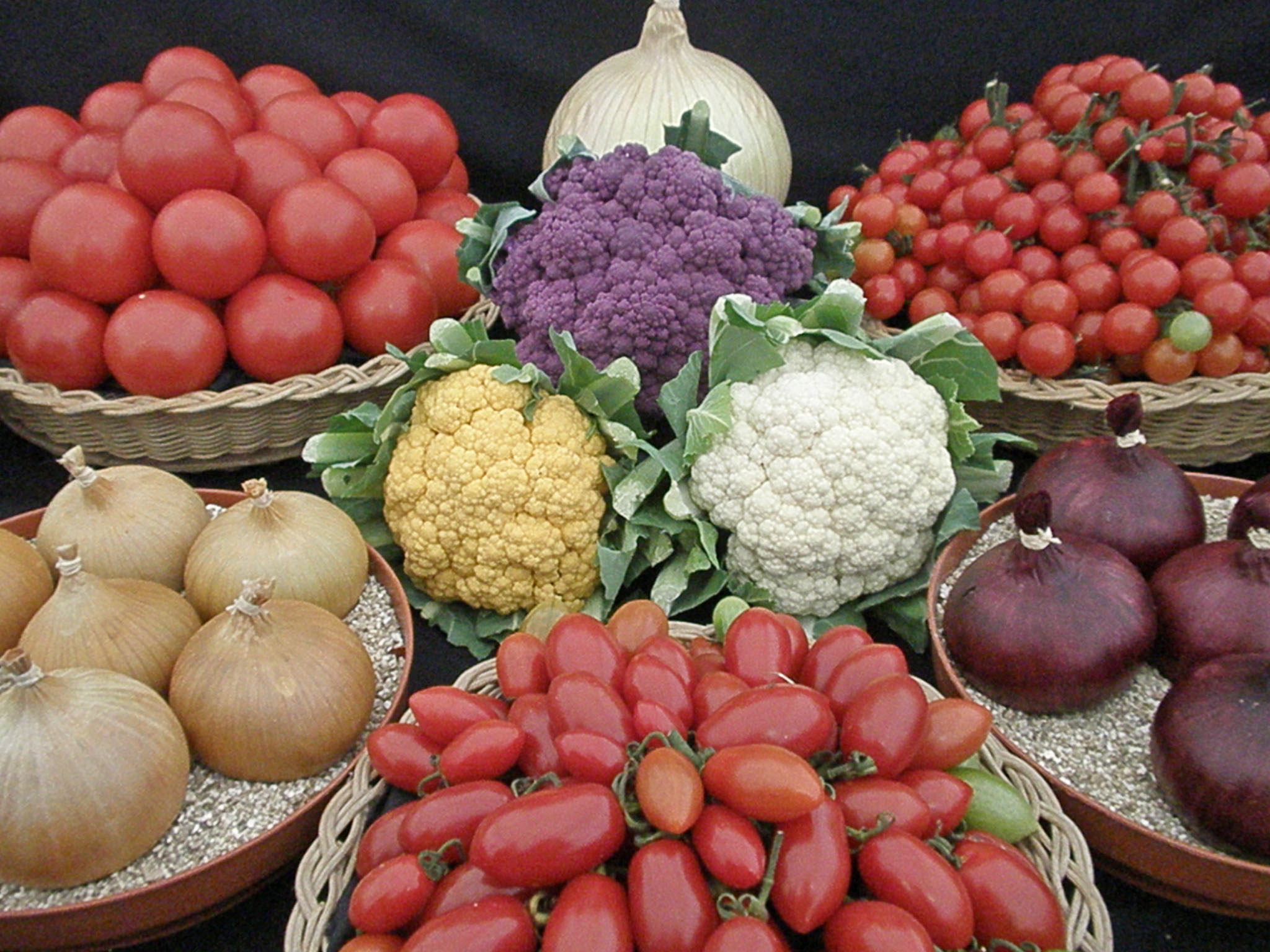
Photo: Amanda Slater / Wikimedia Commons (CC BY-SA 2.0). The top picture shows coloured cauliflowers at the Malvern Autumn Show in England in 2012, as background.
Sources: Jagonews24 (4 February 2024), bdnews24.com (27 January 2023), The Daily Star and The Daily Star Bangla (27 January 2023), World Bank (PARTNER programme information and appraisal documents, December 2022 and April 2023; press release, 7 June 2023), Dhaka Tribune (28 April 2023), Bangladesh Bureau of Statistics (Statistical Yearbook 2022), Banglapedia, The Plant Cell (Lu et al., 2006), Plant Physiology (Chiu et al., 2010), USDA FoodData Central, University of Georgia Extension (2015)
Comments
(0)