
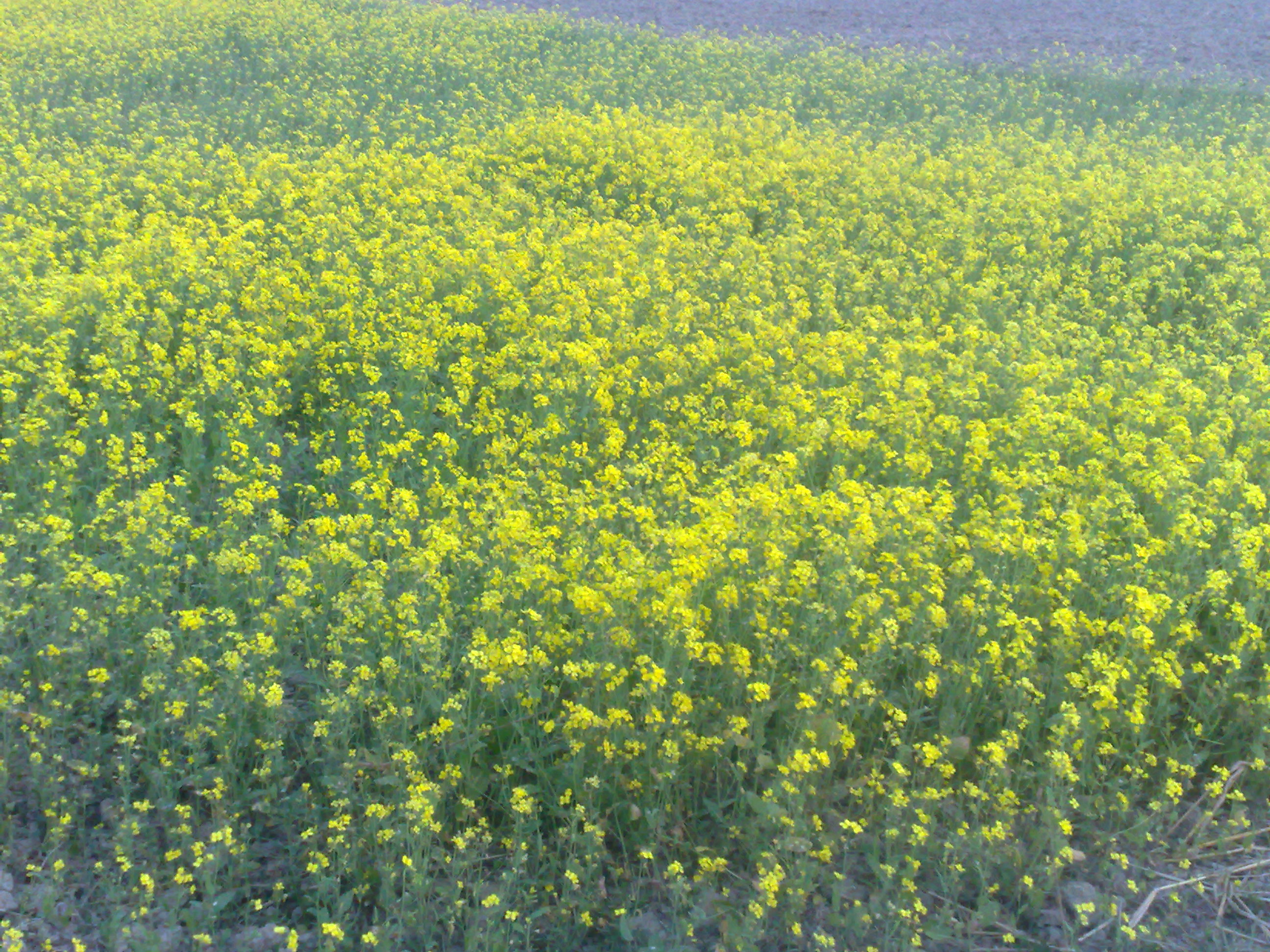
In Sirajganj, mustard in flower covered the fields as far as the eye could see at the end of December 2025, swaying in the biting cold wind of the Bengali month of Poush. The district's agriculture department set a target of collecting 404 tonnes of honey from these flowers in the 2025-26 season, Jagonews24's Sirajganj district correspondent reported on 31 December 2025. To meet it, more than 500 beekeepers had set up the hive boxes of their farms beside mustard fields in the district's nine upazilas, and the department expected the bees' pollination of the flowers during honey collection to raise the mustard yield as well.
According to the district agriculture department, mustard was sown on 90,550 hectares of the district that season, and the 404-tonne honey target was set against that crop. Beekeepers told the paper that to keep honey production going and to save the bees, farmers urgently needed to be made aware of the need to stop unnecessary pesticide use on mustard flowers.
Tarash and Ullapara: thousands of boxes beside the fields
Sharmistha Sen Gupta, agriculture officer of Tarash upazila in the Chalan Beel area, said mustard had been grown on 10,470 hectares in the upazila that season and the whole field was covered with yellow flowers. About 5,000 bee boxes had been placed there to collect honey, and preparations were under way to place more, she said.
Subarna Yasmin Sumi, agriculture officer of Ullapara upazila, said mustard had been grown on 24,605 hectares there that year. Besides local beekeepers, many had come from elsewhere to collect honey from the mustard flowers, she said.
The two upazilas lie side by side in the west of the district. Banglapedia, the national encyclopaedia published by the Asiatic Society of Bangladesh, lists mustard among Ullapara's main crops and among its main exports, together with jute, sesame, onion, chilli and vegetables. Ullapara covers 409.06 square kilometres and is bounded by Raiganj upazila on the north, Shahjadpur on the south, Kamarkhanda and Belkuchi on the east, and Bhangura and Tarash on the west. Its rivers include the Karatoya, and its best-known markets include Ullapara Hat, Salanga Hat, Gaihatta Hat and Mohanpur Hat. According to the census figures the encyclopaedia cites, agriculture was the main source of income for 59.03 per cent of Ullapara's people.
Tarash covers 300.07 square kilometres. In the same census figures, agriculture was the main source of income for 84.75 per cent of its people, against 51.14 per cent for Sirajganj district as a whole. The encyclopaedia lists 22 hats and bazars in Tarash, among them Tarash Hat, Baruhas Hat and Gulta Bazar, and records that about a tenth of the whole area of the Chalan Beel belongs to this upazila.
What the district's agriculture officials said
Mohammad Rezaul Haque, additional deputy director (crops) of the district office of the Department of Agricultural Extension (DAE), explained how the two harvests are linked. Bees pollinate the crop as they fly from flower to flower collecting nectar, he said, and this raises crop production by 15 per cent, so that both the beekeepers and the farmers benefit. Large companies in the country bought the honey straight from the field and marketed it, he said, and honey was selling at Tk 300 to Tk 350 a kilogram.
AKM Manjure Maula, deputy director of the DAE in Sirajganj, said mustard had been sown on more land than the target that season, and good yields were expected because farmers were using seed of improved varieties. At the same time, he said, the department was working in coordination with the upazila administrations so that the beekeepers collecting honey from the mustard flowers did not run into any local problems.
The DAE is the government's agricultural extension department, with an office in every district and upazila. Banglapedia's entry on apiculture notes that the DAE periodically organises beekeeping training at upazila level and, in such programmes, gives trainees beehives as well as training in bee management, so that they can produce honey at a profit.
Sirajganj and the Chalan Beel
Sirajganj district, in Rajshahi division, covers 2,402.05 square kilometres. It is bounded by Bogra district on the north, Pabna and Manikganj on the south, Tangail and Jamalpur on the east, and Pabna, Natore and Bogra on the west. Its main rivers are the Jamuna, the Ichamati, the Baral and the Hurasagar. Sirajganj was made a subdivision of Pabna district in 1885 and became a district in 1984; it has nine upazilas, of which Ullapara is the largest and Kamarkhanda the smallest. Banglapedia's entry on mustard names Sirajganj among the districts with a comparatively large area under the crop, together with Chittagong, Sylhet, Dhaka, Tangail, Jessore, Bogra and Pabna.
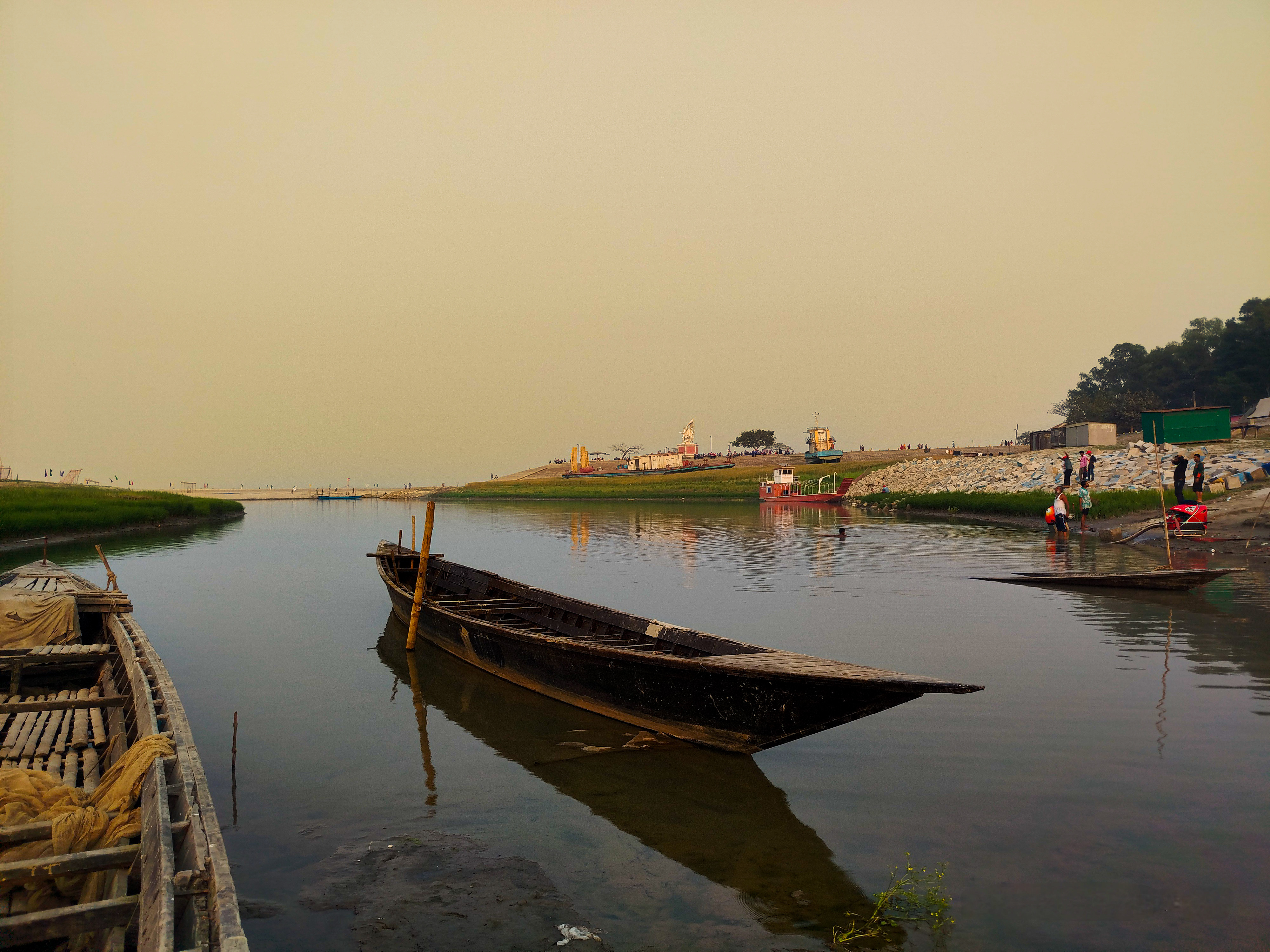
The Chalan Beel, which the original report mentions in describing Tarash, is a large wetland. Banglapedia describes it as a series of depressions joined by channels that become more or less one continuous sheet of water in the rainy season. It extends over four districts, Rajshahi, Pabna, Sirajganj and Natore, and its major parts lie in Raiganj upazila of Sirajganj and Chatmohar upazila of Pabna. A survey by the Public Works Department in 1909 found that the beel, about 1,088 square kilometres when it formed, had shrunk to about 368 square kilometres, the rest having been reclaimed for farming or settlement.
In the dry season the greater part of the beel dries up, leaving only a shallow core. The two rings of land around that core dry up entirely between December and June, and the outlying land is farmed with boro and high-yielding rice in the dry season, the encyclopaedia says. Land in the beel is still being reclaimed, and new villages are growing up alongside it.
Earlier seasons: from 300 tonnes to 400
The honey target has been part of Sirajganj's mustard season for several years, and earlier reports show how both the crop and the target have grown. On 18 January 2022 the Daily Ittefaq reported that mustard had been grown on 54,655 hectares in the district's nine upazilas, Sirajganj Sadar, Kamarkhanda, Chauhali, Belkuchi, Shahjadpur, Ullapara, Kazipur, Raiganj and Tarash, and that beekeepers had collected 288 tonnes of honey from these fields by Monday, 17 January 2022, according to the district DAE. Across the wider Chalan Beel area, including parts of Natore and Pabna, the paper put the honey collected that season at 369 tonnes. Visiting beekeepers from Satkhira told the paper that the weather had been favourable and honey was selling at Tk 350 a kilogram in the field. The Rajshahi regional office of the Bangladesh Small and Cottage Industries Corporation (BSCIC) told the paper that it had trained 18,000 beekeepers, with the aim of raising incomes and reducing poverty through honey production.
In the next season, on 22 December 2022, the same paper reported that the honey collection target had been set at 300 tonnes, that mustard had been sown on 61,350 hectares and that more than 300 beekeepers had already set up boxes beside the fields. Honey was then selling at Tk 250 to Tk 300 a kilogram. The DAE's deputy director in the district said the department was putting its emphasis on mustard as part of a plan to raise oil production in the district by 40 per cent over three years. Ullapara's agriculture officer said the upazila's mustard area was about 1,750 hectares above its target and that free seed of high-yielding mustard and chemical fertiliser had been given to many small and marginal farmers as incentives. A former president of the district's beekeepers' association said that in the previous season farmers hoping for a bigger crop had sprayed hormone-type pesticide on mustard flowers, that many bees had died and that many beekeepers had suffered losses, and he called on the agriculture department to act quickly to stop such spraying.
On 4 February 2025 the Daily Star's Bangla edition reported that mustard in Sirajganj had risen to 87,125 hectares that season from 85,170 hectares the year before, and that about 400 tonnes of honey were expected, against a little over 382 tonnes collected in the previous season, according to the district's DAE deputy director. He said the high-yielding variety BARI Sarisha-14 was the farmers' favourite because it grew well in the local soil. A DAE extension officer in the district told the paper that many farmers still regarded bees as a threat to their crop, although pollination by bees could raise the yield by 15 per cent.
Against these earlier figures, the season reported on 31 December 2025 stood at 90,550 hectares of mustard and a target of 404 tonnes of honey, with the deputy director saying that the sown area had gone beyond the target.
How bees raise the mustard yield
The 15 per cent figure the officials gave is close to what field research in Bangladesh has found. In a study at Nagarpur in Tangail from November 2016 to February 2017, published in the Journal of Biodiversity Conservation and Bioresource Management, researchers grew the mustard variety Tori-7 in three treatments: open plots, plots netted with honey bees inside, and plots netted without bees. They found that the honey bee Apis mellifera was the main insect pollinator during the flowering season. Bees increased the number of pods per plant by 14 per cent and the number of seeds per pod by 11 per cent, and netting with honey bees raised the mean seed yield per plant by 15 per cent, though it shortened the flowering period by six days.
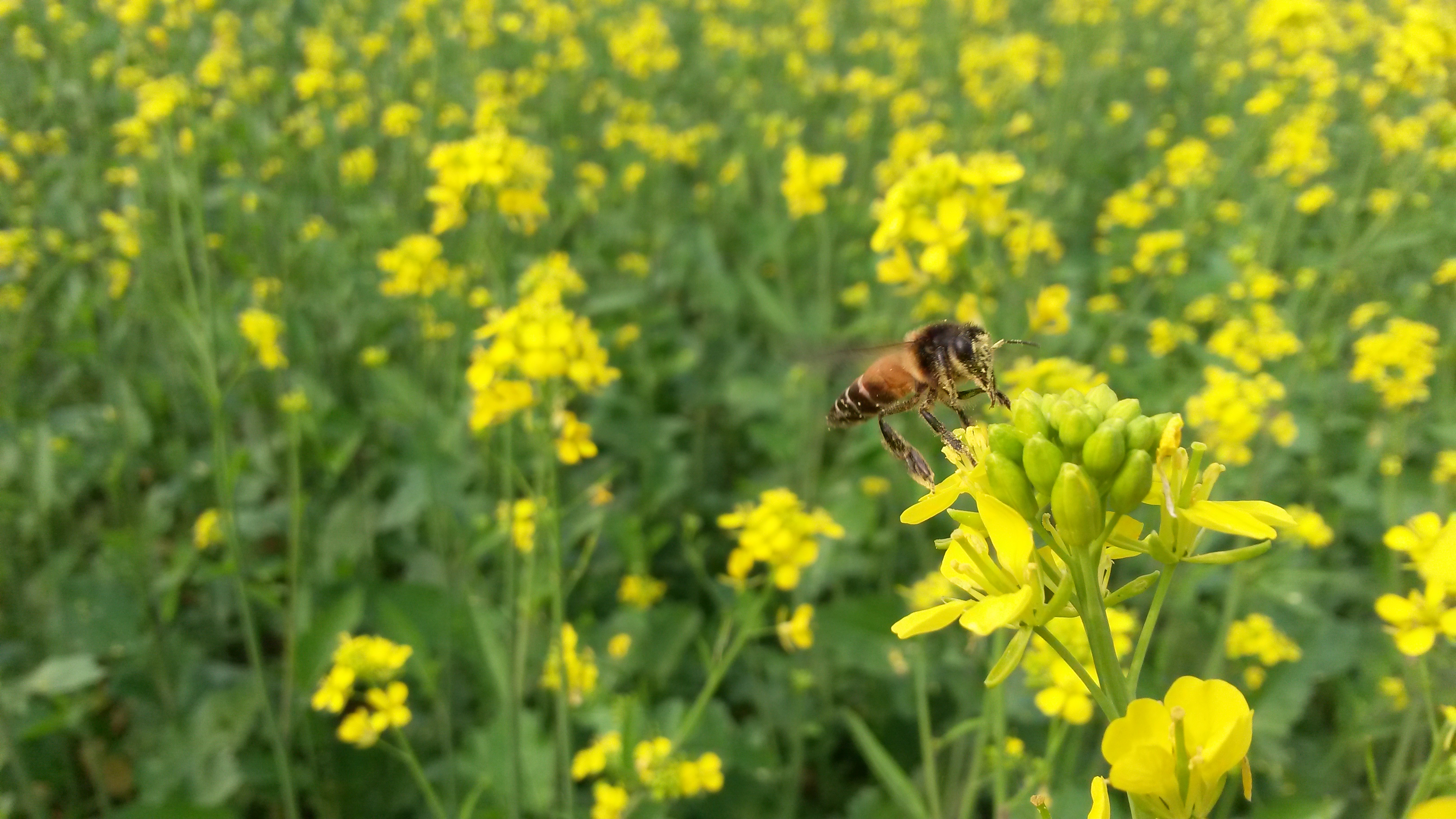
A second experiment, at the research farm of Sher-e-Bangla Agricultural University in Dhaka over the same winter and published in the Journal of Biological Research in 2018, used the variety BARI Sarisha-8. The honey bee was the most abundant pollinator among the hymenopteran insects (bees, wasps and their relatives) in the field. Plots netted with a hive inside gave the highest seed yield, 2.45 tonnes a hectare, while plots netted without bees gave the lowest, 1.67 tonnes a hectare; the weight of 1,000 seeds was highest with bees, at 3.50 grams, and lowest without them, at 2.68 grams. The authors concluded that placing honey bee colonies in flowering mustard can contribute substantially to the yield.
The Food and Agriculture Organization of the United Nations (FAO) set out the wider picture when it marked World Bee Day on 20 May 2019. Bees and other pollinators such as birds and bats affect 35 per cent of the world's crop production, increasing the output of 87 of the leading food crops worldwide, and about two-thirds of the crop plants that feed the world rely on pollination by insects or other animals to produce healthy fruits and seeds, FAO said. It warned that bees and other pollinators were declining in many parts of the world, largely because of intensive farming practices, mono-cropping, excessive use of agricultural chemicals and higher temperatures associated with climate change.
Pesticides on mustard flowers
The beekeepers' plea in the December 2025 report, that farmers stop unnecessary pesticide spraying on mustard flowers, repeats a concern raised in Sirajganj in earlier seasons, as the beekeepers' association leader's account of bee deaths in 2022 shows. Research explains why timing matters. A review by French bee scientists published in Frontiers in Ecology and Evolution in February 2023 examined how farmers could judge whether bees were absent from a flowering crop before spraying. It concluded that the criteria commonly used, such as air temperature, how attractive the crop is to bees, or distance from the edge of the field, cannot guarantee that foraging bees will not be exposed, and that spraying at night would be the most effective way to help farmers avoid poisoning bees by accident.
The same review notes that in Europe the rules on the sustainable use of pesticides say that sprays should not be applied during the crop's flowering or during the bees' foraging period. It also cautions that night spraying does not stop nectar and pollen from being contaminated, which can still expose bees through what they carry back to the hive and can lower the quality of hive products, and that about 80 per cent of bee species nest in the ground and may be affected even by night spraying.
In Sirajganj, the deputy director's account in the original report was that the DAE was working with the upazila administrations so that beekeepers would not face local problems. Farmers who think their mustard needs a pesticide while it is in flower should ask the upazila agriculture office which product to use, at what rate and at what time of day.
Box hives, bee species and training
Commercial honey from mustard comes from bees kept in wooden box hives that are carried from field to field. Banglapedia's entry on apiculture explains that such a box holds several removable frames set about one centimetre apart, the "bee space" through which bees can pass without building a bridge of wax between two surfaces. The removable frame lets the beekeeper examine the colony and take honey without destroying the comb. When the combs are full and capped, the frames are lifted out and the bees removed, the thin wax capping is shaved off with a sharp knife, and the frames are spun at high speed in an extractor so that the honey is thrown out by centrifugal force. The empty combs then go back into the hive for the bees to fill again.
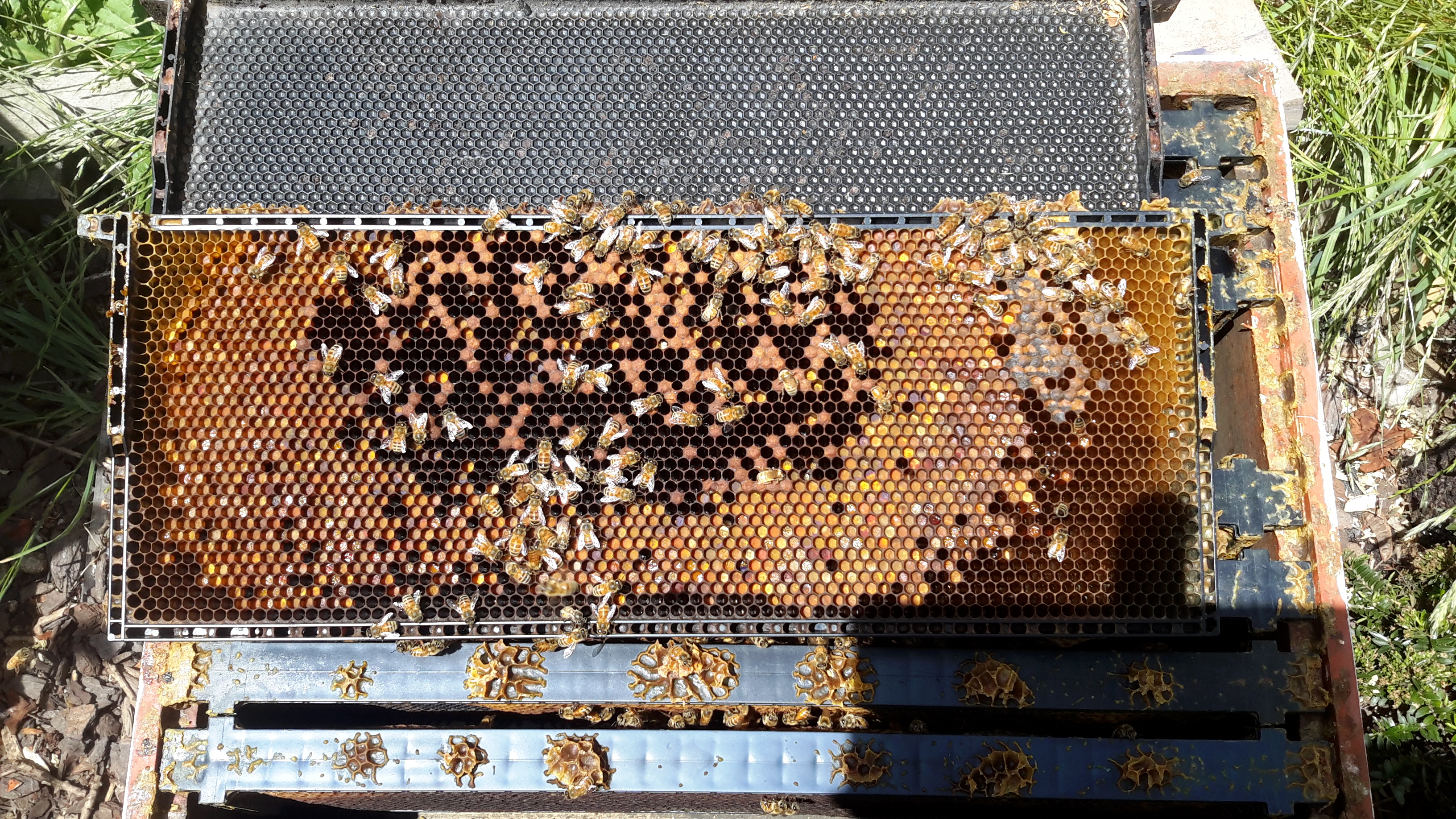
The encyclopaedia says the best-known honey of Bangladesh is mustard honey, and that some successful beekeepers move to the areas where nectar-producing plants are plentiful, as beekeepers from other districts did in Ullapara in December 2025. The commercially most important honeybee in Bangladesh, it says, is Apis cerana indica, while the wild giant honeybee Apis dorsata builds open combs in forests, on large trees near homes and even under the cornices of buildings, and is hunted for honey by professional collectors, especially in the Sundarbans and Madhupur. In the Tangail mustard study of 2016-17, the main pollinator in the mustard fields was the western honey bee, Apis mellifera.
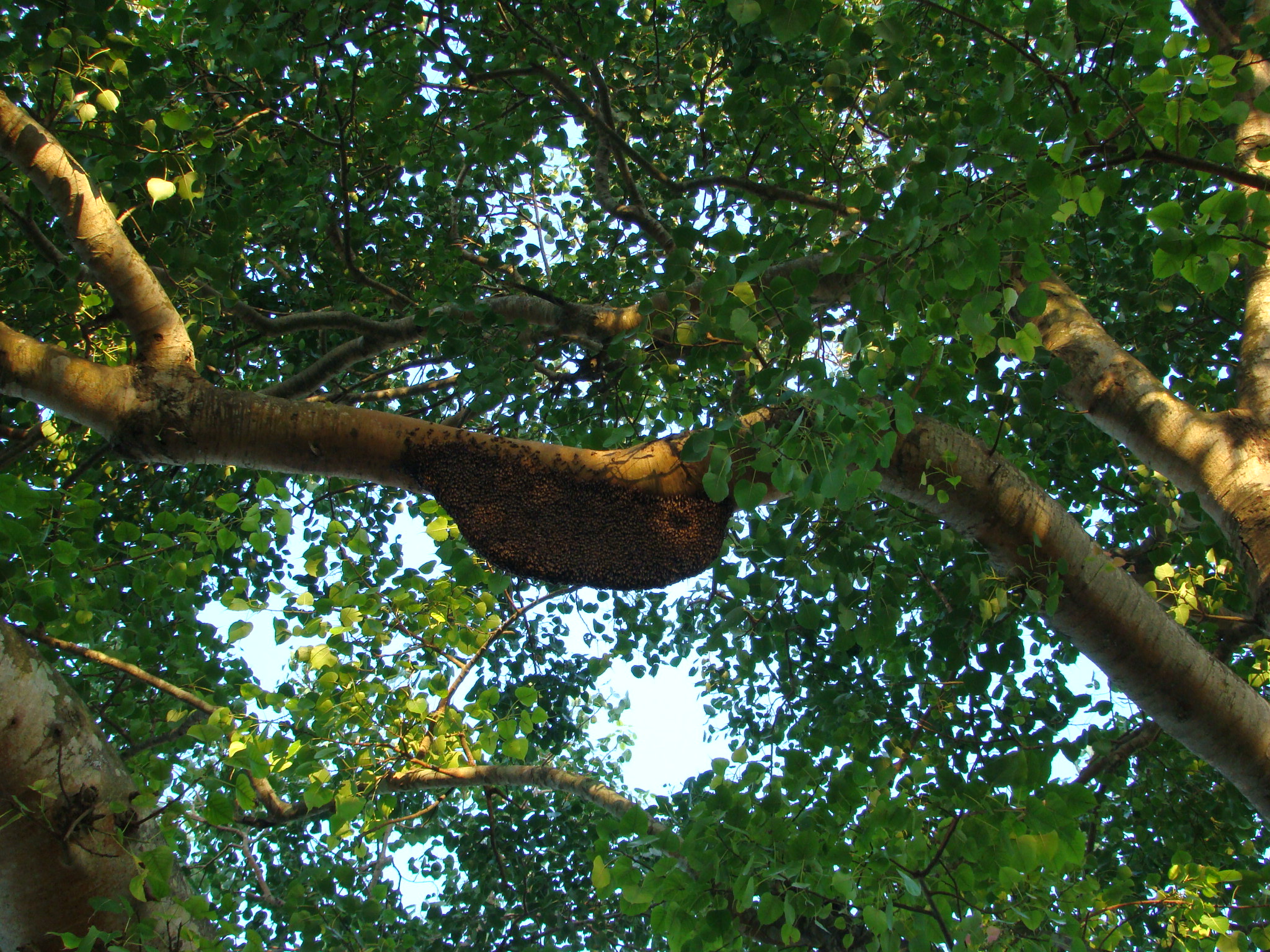
Beekeeping training in Bangladesh is offered by the DAE, the Bangladesh Small and Cottage Industries Corporation and the Bangladesh Institute of Apiculture, according to Banglapedia, which adds that the BSCIC and the institute organise practical mobile beekeeping during the winter in the main mustard-growing areas, both for pollination and for honey. The entry lists some of the management problems: crowded and overheated hives tend to swarm, which can be prevented with ventilation, more room in the hive and young queens; American and European foulbrood are serious diseases of bees in Bangladesh; and ants, wax moths, birds and mice can damage combs. Beekeepers who need advice on a sick colony should contact the upazila agriculture office.
Honey itself, as Banglapedia defines it, is the sweet, viscous fluid that bees produce from the nectar of flowers and store in their hives as food. Its colour, taste and smell depend on the nectar the bees collect, and its main constituents are the sugars fructose and glucose. Besides the honey of the Sundarbans, the encyclopaedia lists mustard-type honey among the important single-flower honeys of the country, together with mango-type and Indian jujube-type honey.
Mustard and honey in the national picture
The DAE also plans honey collection at the national level. According to the DAE figures reported by the Daily Star's Bangla edition in February 2025, the target for mustard cultivation in the 2024-25 fiscal year was 1,164,576 hectares across the country, and arrangements for honey collection had been made on 125,171 hectares of it. That season 93,478 bee boxes had been placed, and specialists hoped they would yield 1.5 million kilograms of honey. The same report cited several reports and agricultural surveys estimating that the country produced 30,000 to 40,000 tonnes of honey a year and used about 25,000 to 30,000 tonnes, an average of about 100 grams per person a year. It put the number of farmers and beekeepers directly producing honey at an estimated 10,000 to 20,000, and the number involved across the whole supply chain at about 90,000.
Mustard matters for more than honey. Banglapedia recalls that only a few decades ago mustard oil was the only cooking oil in Bangladesh, pressed from the seed in a traditional mill called a ghani, often turned by a bullock. Domestic mustard oil meets only a fraction of the country's cooking oil needs, and large quantities of soybean and sunflower oil are imported, the encyclopaedia says. Mustard is a rabi, or winter, crop, grown in almost every district.
Research has also looked at bringing mustard into land that used to lie fallow between the transplanted aman rice harvest and boro planting. In trials by the Bangladesh Agricultural Research Institute (BARI) in Kushtia from 2013-14 to 2015-16, published in the Bangladesh Journal of Agricultural Research in 2019, a mustard-boro-aman pattern using BARI Sarisha-14 gave a rice-equivalent yield of 13.98 tonnes per hectare per year, 34 per cent more than the existing fallow-boro-aman pattern, which gave 10.47 tonnes. A similar trial at Pirganj in Rangpur and Domar in Nilphamari in 2015-17, published in Progressive Agriculture, introduced BARI Sarisha-14 in the fallow period and found a higher yield and gross return from the pattern with mustard.
Photo: Hopeoflight / Wikimedia Commons (CC BY-SA 3.0)
Sources: Jagonews24, The Daily Ittefaq, The Daily Star (Bangla), Banglapedia, Food and Agriculture Organization of the United Nations (FAO), Journal of Biodiversity Conservation and Bioresource Management, Journal of Biological Research, Frontiers in Ecology and Evolution, Bangladesh Journal of Agricultural Research, Progressive Agriculture
Comments
(0)