
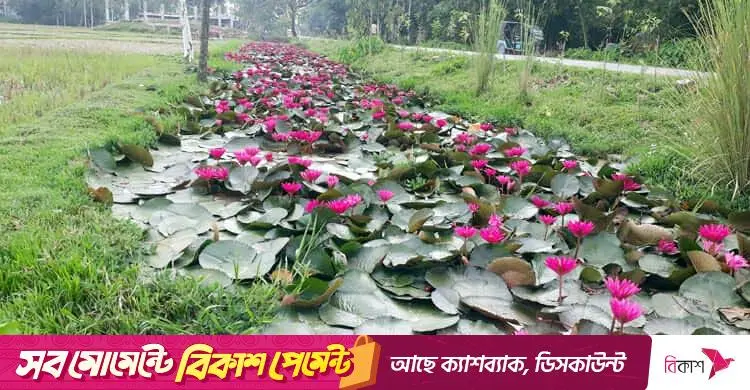
Surprised by the headline? That is understandable, because we are used to seeing shapla grow naturally in canals, beels and ponds during the monsoon. But shapla can also be cultivated, in a courtyard or nearby. Here is how.
Seed or root
Shapla is usually planted from seed or root, so the first step is to collect seeds or roots. Shapla roots spread up to 15 feet, so make sure there is enough space around.
Choosing the site
First choose a suitable site, which should be at least 6 to 8 feet in size. A pool is made there with soil and water, in a place that gets enough sunlight and where water can easily be supplied.
Making the pool
Besides digging a pit in the ground, you can make a pool with soil and water in a suitably sized tank, tub or cement container. The depth should be at least 1 to 2 feet, and the container should be reasonably deep. Organic fertiliser can be mixed into the soil of the pool.
Planting
Plant the shapla seeds or roots in the pool.
Care
Supply water regularly, and make sure the water does not get too hot: in strong sun, warm water can turn shapla leaves yellow. Regular watering and care are needed after planting. Clear weeds when necessary. Until the pot fills with shapla leaves, buds and flowers, you can float a few water lettuce (topa pana) plants on the water, which will keep it from overheating in the sun.
Fertiliser
Apply a small amount of fertiliser if needed. Watch the plant's growth regularly and take the necessary steps.
Shapla usually flowers for up to five years, and its roots keep spreading during that time. So once planted, it can produce flowers, and its tubers (nail) can be collected, for up to five years.
Source: Jagonews24. First published in Bengali on The Agro News.

Comments
(0)