
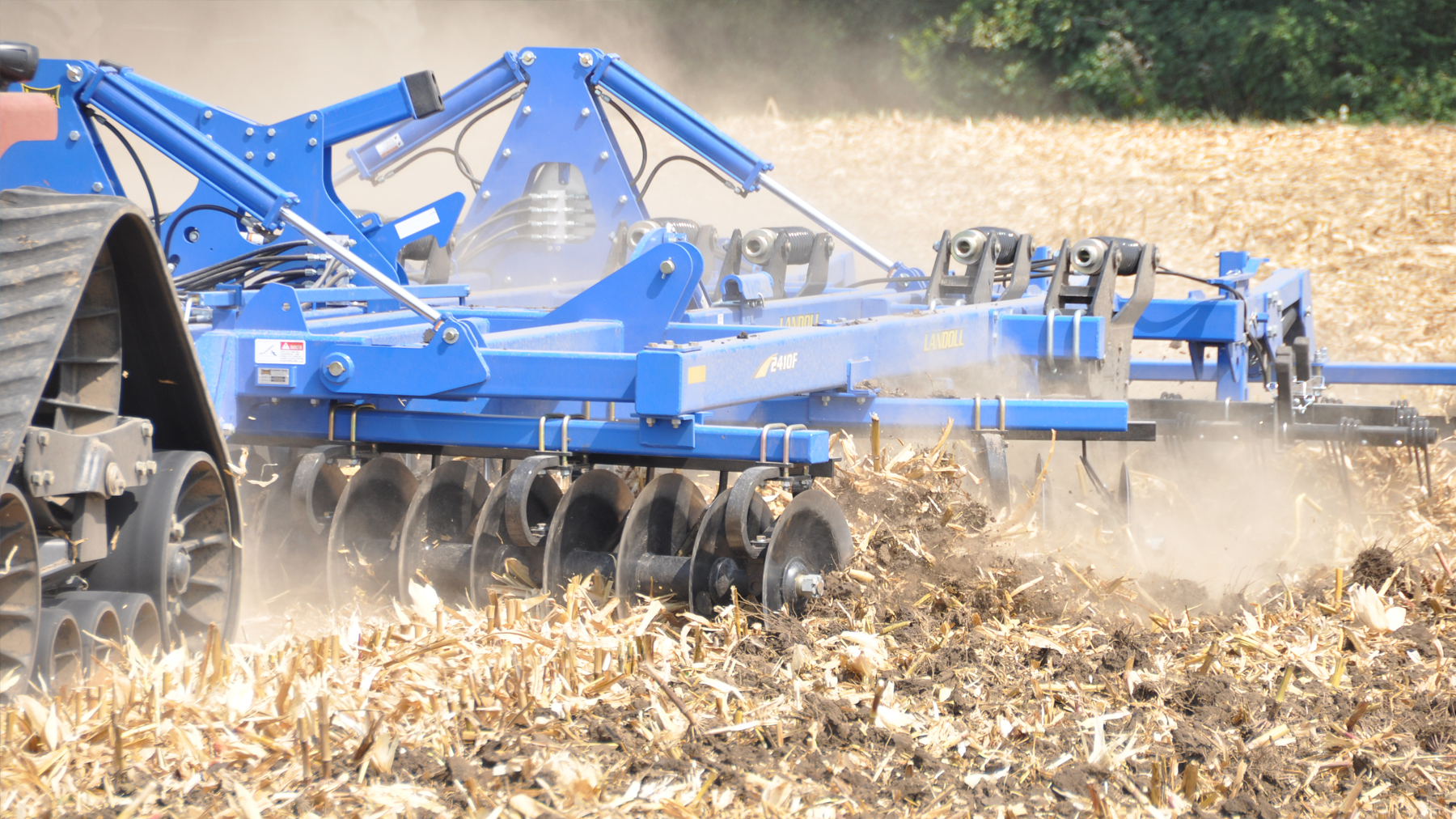
As combines move across the Midwest, Iowa State University Extension is asking farmers to answer one question before hitching the chisel plough: what problem is the tillage meant to fix? In a Farm Progress column, ISU field agronomist Virgil Schmitt lists seven questions that should come first, and says that when no specific problem can be named, the recommendation generally favours leaving the soil alone.
Legitimate reasons include a documented compaction problem, unusually heavy residue, preparing a seedbed, incorporating manure or setting up strip-till zones. Ruts, he notes, are best dealt with by shallow tillage limited to the damaged area rather than working the whole field. Working wet ground destroys structure, and tilling wet soil to cure compaction can make it worse.
Ground cover is the next test. Residue softens raindrop impact, slows runoff, cuts wind speed at the surface and traps moving soil particles. Iowa State's conservation goal is at least 30% residue cover at planting, which means leaving 40% to 45% cover immediately after autumn tillage. Disks and some vertical-tillage tools should be used sparingly because they pulverise soil and create a dense layer.
The economics are stated plainly: reducing tillage saves $15 to $50 an acre depending on fuel, maintenance and labour, and research shows intensive tillage lowers rain infiltration, raises bulk density and reduces organic matter. Lost topsoil limits productivity, and crusting after heavy rain at planting can cut emergence.
On yield, ISU's long-term trials at seven to eight research farms compared no-till, strip-till, chisel ploughing, deep ripping and mouldboard ploughing in corn-soybean and corn-corn-soybean rotations. Soybean yield was not significantly affected by the tillage system. Corn is more sensitive: where it follows soybeans on well-drained soils, no-till and strip-till were as competitive as conventional tillage, but corn yields can be lower with no-till on poorly drained, cold soils. In that case, Schmitt suggests, the long-term question is whether to keep tilling every autumn or to improve the field's drainage.
Where corn follows corn, light tillage with a rotary harrow or vertical-tillage implement may be needed, along with properly adjusted row cleaners. The column closes with four questions: is there an agronomic reason to till, is the soil dry enough, what is the least disturbance that still does the job, and can erosion be avoided.
Source: Farm Progress


Comments
(0)