
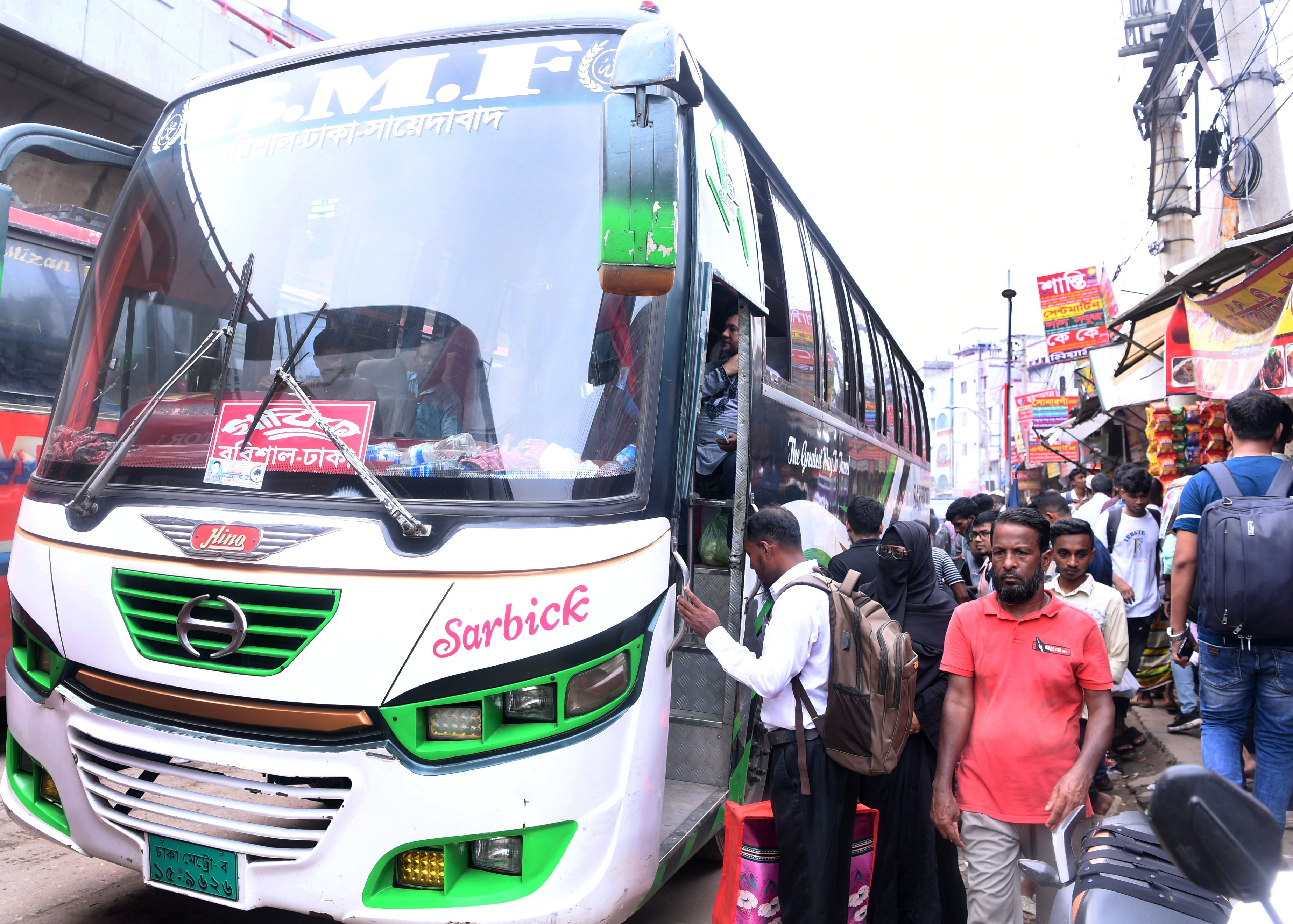
A day before Eid-ul-Azha, on Wednesday 27 May 2026, the Sayedabad bus stand in Dhaka's Jatrabari area was packed with people heading home to their villages for the festival, and in the middle of the rush roadside lychee sellers were doing brisk trade. Calling out "honey, honey" and "bursting with juice", sellers on vans and makeshift stalls along the pavement offered 100 lychees for Tk 250 to Tk 600, depending on size and variety, Jagonews24 reported that day. Many travellers bought a few hundred to take to families in villages where, as one buyer put it, lychees are hard to find.
A fruit market among the buses
People were still leaving the capital on the eve of Eid. Bus horns blared, and travellers hurried towards the buses in CNG auto-rickshaws and on foot. Conductors' whistles, the noise of the crowd and knots of people were everywhere. Amid this, fruit sellers had set up mobile stalls on the edge of the pavement, with lychees piled on their vans, and kept calling to passers-by.
Each had a call of his own. Some cried "honey, honey", some "bursting with juice, Dinajpur lychee", and some simply shouted a price: "three hundred" or "three hundred and fifty". Others advertised Rajshahi lychees at Tk 450 a hundred, and "China" and "Bombay" lychees at Tk 450, Tk 500 and even Tk 600.
"Taste this delicious lychee first, then buy. Come along, or you may not get to taste lychee later. The price is low, it is good lychee, check it, there are no worms," the sellers called, trying every trick to draw buyers. Customers were seen tasting a fruit, haggling and then buying. Prices that day were slightly higher than on the previous two days, the report said.
The lychees were sorted into small, medium and large bundles. Depending on the grade, 100 lychees sold for Tk 250, Tk 300, Tk 350, Tk 400, Tk 500 and even Tk 600.
Three days of brisk sales
Sellers told Jagonews24 that they had sold a great many lychees on Wednesday, and even more on the two days before, Monday and Tuesday. Some said they had sold 5,000 lychees, some 4,000 and some 3,000. One said he had sold Tk 50,000 worth of lychees in a day.
Afroza, travelling to Bagerhat, bought lychees for Tk 380. Going home with her sister, she bought 200 lychees for the family. "There are no lychees in the village. Even if you want to buy them, you have to go a long way. You do not find lychees like this in the village, so I bought them," she told Jagonews24.
Two brothers, Jihad and Russel, bought lychees and hurried off to catch a bus to Dashmina in Patuakhali. They were not alone: over the previous two days people of all ages from Shanir Akhra, Sayedabad, Jatrabari and nearby areas had been buying lychees to take to their village homes. Many also bought mangoes, black plums, apples, oranges and grapes, while some bought only lychees. On Wednesday, the reporter saw families on their way to the buses stopping to buy.
One buyer said he was setting out for his village home. "There are small children at home, but there is no lychee tree, so I took a few hundred lychees," he said. The seller first asked Tk 400 a hundred, then came down to Tk 380 and finally Tk 360; after bargaining, the buyer paid Tk 350.
Seasonal sellers and the risks of the trade
A regular fruit trader told Jagonews24 that he sold oranges, malta, apples and grapes, and the local lychee in its season, all year round. "Just look around: most of the sellers here are not regular fruit traders. Most of them are lychee sellers," he said. "With the big fruit wholesale market nearby, they do not have to go far. They can bring lychees cheaply to Jatrabari and the Sayedabad stand, so selling them is no problem." Monday had been his best day: apart from oranges, malta and apples, he said, he had sold Tk 50,000 worth of lychees.
With Eid a day away, seasonal fruit sellers were using the chance to make a little profit. One of them, Forkan, said he had sold lychees on Monday and Tuesday. "I work in a private job. I am selling lychees before going home for Eid in the hope of earning a little extra," he told Jagonews24.
He said he had sold 3,000 lychees between 6am and 9:30am. "The profit is fair. But I had to sell a bit cheaper, because in several bundles at the bottom of the basket the lychees had rotted. Once customers see that, they do not want to pay the price. So I have to balance higher and lower prices across the whole basket to make a profit," he said.
Moinul Islam, who normally sells fish packets and shopping bags, said he had started selling lychees two days earlier, as a pastime before Eid. An elderly seller said he too had been selling for two days. "Today I bought 1,200 lychees, but sales are not good because of the rain. Maybe it will be better after the rain," he said.
The Eid-ul-Azha journey home
The date of the festival had been settled nine days earlier. On 18 May 2026 the National Moon Sighting Committee, meeting at the Islamic Foundation at Baitul Mukarram in Dhaka, announced that the moon of Zil Hajj, the last month of the Hijri year 1447, had been sighted in Bangladesh's skies, so Eid-ul-Azha would be observed on 28 May, Bangladesh Sangbad Sangstha (BSS) reported. The festival falls on the 10th day of Zil Hajj, and Muslims mark it with Eid prayers and the sacrifice of animals in remembrance of the devotion of Hazrat Ibrahim (AS).
The homeward rush had begun days earlier. Dhaka Post reported on Monday 25 May that from the morning hundreds of homebound people were waiting by the roadside at Sayedabad and Jatrabari as long-distance buses left one after another for different districts, with local buses also running on various routes. Many who had not been able to buy advance tickets were seen travelling standing in local buses, or sitting on the engine cover. Passengers buying tickets on the spot alleged that they were being charged Tk 200 to Tk 300 above the usual fare, the paper reported; its report did not carry a response from the bus operators.
For the lychee sellers, those days of the homeward rush were the market. They also fell in the lychee season: the Bengali months of Baishakh and Jyoishtha are known as the honey months (madhumas), when the country's summer fruits come to market.
From Old Dhaka's wholesale market to the roadside
The trader at Sayedabad did not name the wholesale market he meant. One of the capital's big wholesale fruit markets is Wiseghat in Old Dhaka. In a report from Dhaka on 22 May 2026, BSS described Wiseghat, on the bank of the Buriganga river, as one of the country's largest wholesale fruit markets and one of its oldest, famous for local fruit. With the honey months, it said, the market was busy with Himsagar, Guti, Gopalbhog and Gobindabhog mangoes, Pabna lychees, Tangail pineapples, Rangamati jackfruit and palm fruit from Barishal.
Bombai and China-3 lychees were arriving at Wiseghat from Pabna, BSS reported. In the wholesale market a thousand Bombai lychees sold for Tk 2,000 to Tk 3,000. In the retail market, 100 Bombai lychees cost Tk 250 to Tk 300, and 100 China-3 lychees Tk 500. Traders expected supplies to grow in the days ahead, and a resident of Old Dhaka who had come to buy mangoes and lychees told the agency that prices were a little high but that he hoped they would fall within a few days.
Those prices, reported on 22 May, are close to the range at Sayedabad. As Prothom Alo explained in a report on 22 May, in Dhaka lychees are sold by the 50 or the 100, but in the orchards they are sold by the thousand. Once in the capital, the fruit changes hands several more times. At Karwan Bazar, for example, after the lychees are unloaded from the trucks, they pass from the commission agent (arotdar) to the wholesaler (paiker) and then to the retailer before they reach the buyer.
Where Bangladesh's lychees come from
Lychee grows in every district of Bangladesh, according to Banglapedia, the national encyclopedia, but commercial growing is concentrated mainly in Rajshahi, Rangpur, Dinajpur, Jessore, Kushtia, Mymensingh and Narayanganj. Among the country's tree fruits, it stands second only to mango in production.
Dinajpur is the largest producer of any single district. Citing the Department of Agricultural Extension (DAE), Prothom Alo reported on 22 May 2026 that the district produced 39,593 tonnes in the 2024-25 fiscal year. Pabna, in second place, produced 35,000 tonnes, and Rangamati, third, about 17,000 tonnes a year; Gazipur and Khagrachhari produced 11,000 tonnes. The country's total lychee production, the paper said, was 232,729 tonnes. Within Dinajpur, Biral upazila grows the most.
Dinajpur's crop was not yet in the shops. On 24 May, three days before the Sayedabad report, Ajker Patrika quoted the agriculture department and local farmers as saying that Dinajpur's lychees would start reaching the market in the first week of June. Lychees are grown in all 13 upazilas of the district, with the largest output in Sadar, Biral and Chirirbandar. In Chirirbandar alone, the upazila agriculture office said, lychees were grown on about 565 hectares that year, with a production target of 6,680 tonnes; the upazila agriculture officer said unfavourable weather could cut output by about 20 percent against the target. Prothom Alo reported that hailstorms had also damaged part of the crop in Biral.
Pabna was already supplying Dhaka. Channel 24 reported on 10 May that Pabna, known as the capital of lychee, had a bumper crop that year after heavy flowering and favourable weather, that early local (deshi) lychees had begun to reach the market, and that the agriculture department expected production to exceed its target.
In Rajshahi, the season began early and under stress. On 3 May BSS found lychees appearing in Rajshahi city markets in limited quantity, where a day labourer said 100 lychees cost about Tk 500. Sellers said a long dry spell and intense heat had kept many fruits small and made many crack before they ripened; the district's DAE deputy director said the lychees were not yet fully mature and that full marketing would take another 15 to 20 days. By 14 May, BSS reported, the early deshi lychees were nearly over and the bigger, juicier Bombai variety had taken over Rajshahi's markets, with 100 good lychees selling for Tk 300 to Tk 350 and hundreds of trucks of lychees leaving every day for Dhaka and other parts of the country. According to the Rajshahi district DAE, lychees were grown on 528 hectares in the district's nine upazilas that season, with a production target of 3,775 tonnes, and the DAE's additional deputy director (horticulture) told BSS the district expected about Tk 56 crore of lychee sales from the district.
Bombai, China-3, Bedana and Madrazi
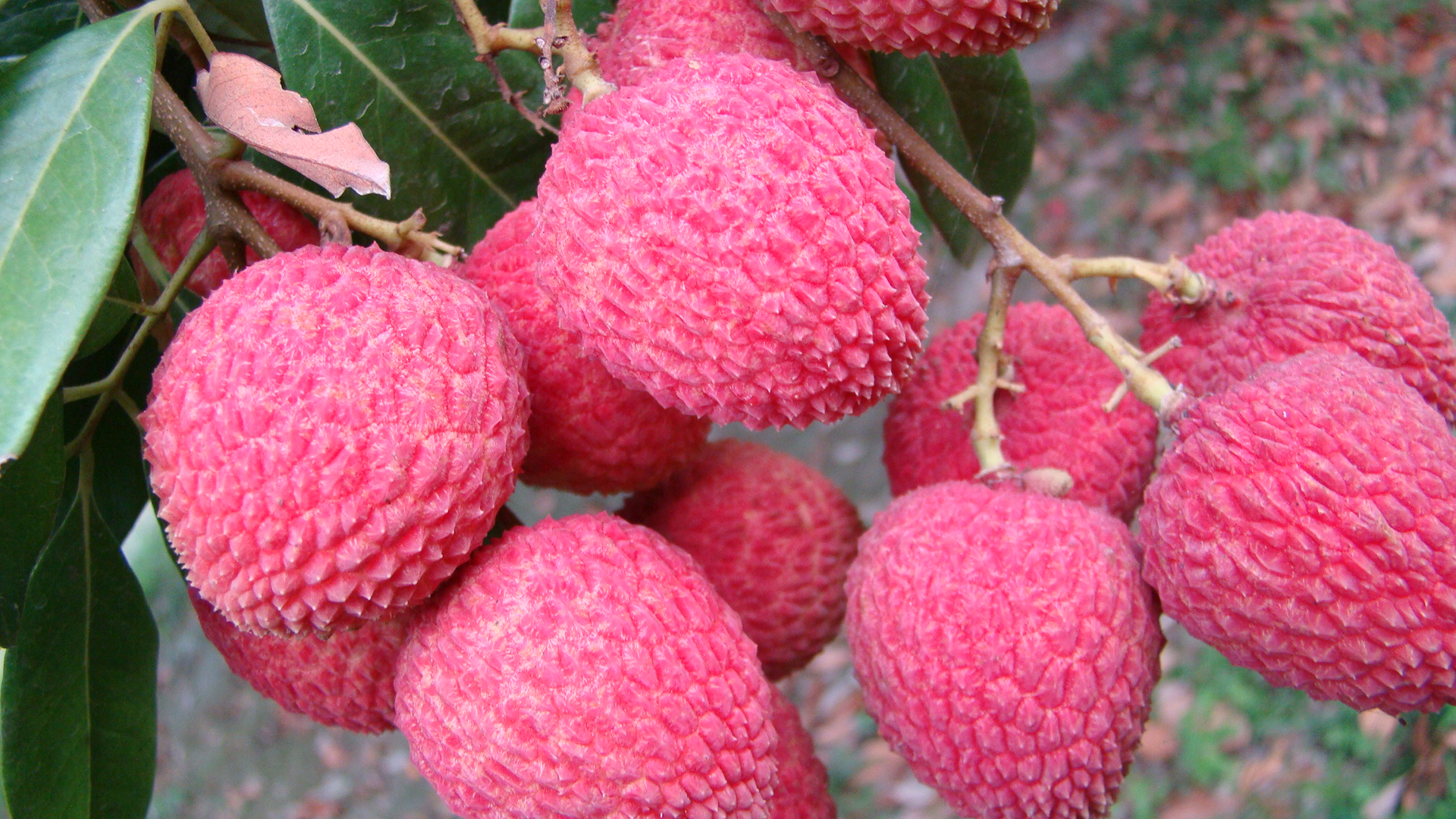
The names the sellers shouted are the names of real varieties. Banglapedia notes that the lychees grown in Bangladesh are local selections falling under two main types, deshi (local) and Bombai. The deshi type ripens early; the Bombai is larger and juicier, and follows it to market, as BSS described in Rajshahi.
In Dinajpur, growers raise many more. The Chirirbandar upazila agriculture office listed Madrazi, Bedana, Hariya Bedana, Bombai, China-3, China-2, Kathali and Mozaffari among the varieties grown there, Ajker Patrika reported. Prothom Alo reported that Biral's Bedana and Bombai lychees are in demand across the country, and that the early Madraz (Madrazi) variety is the first to reach the market each season.
China-3 is the most expensive lychee, Prothom Alo reported, at more than Tk 10 a fruit, mainly because of its large size, and growers have to wait 10 years for a tree's first crop. In the orchards of Biral, local traders told the paper, a thousand Bombai lychees cost Tk 3,000 to Tk 3,500 and a thousand Madrazi lychees Tk 1,800 to Tk 2,000; after several changes of hands, the same Bombai lychees sell in Dhaka for Tk 500 to Tk 600 a hundred. Orchard owners give 1,100 lychees for every thousand sold, and traders said that extra fruit covered the wholesalers' truck fare. Farmers in Chirirbandar told Ajker Patrika they hoped to sell Bombai lychees at Tk 3 to Tk 4 each, Bedana at Tk 8 to Tk 10 and Madrazi at Tk 2 to Tk 3.
Dinajpur's Bedana lychee is also a registered geographical indication (GI) product. BSS reported on 2 May 2025 that the Dinajpur deputy commissioner had received the GI certificate in Dhaka the previous day, at a ceremony at the Foreign Service Academy on Bailey Road marking World Intellectual Property Day. Twenty-four products were added that day, bringing Bangladesh's total to 55, among them Magura's Hazrapuri lychee and honey from the Sundarbans. The district's DAE deputy director said the department would encourage growers to expand Bedana production.
Why the price climbs on the way to Dhaka
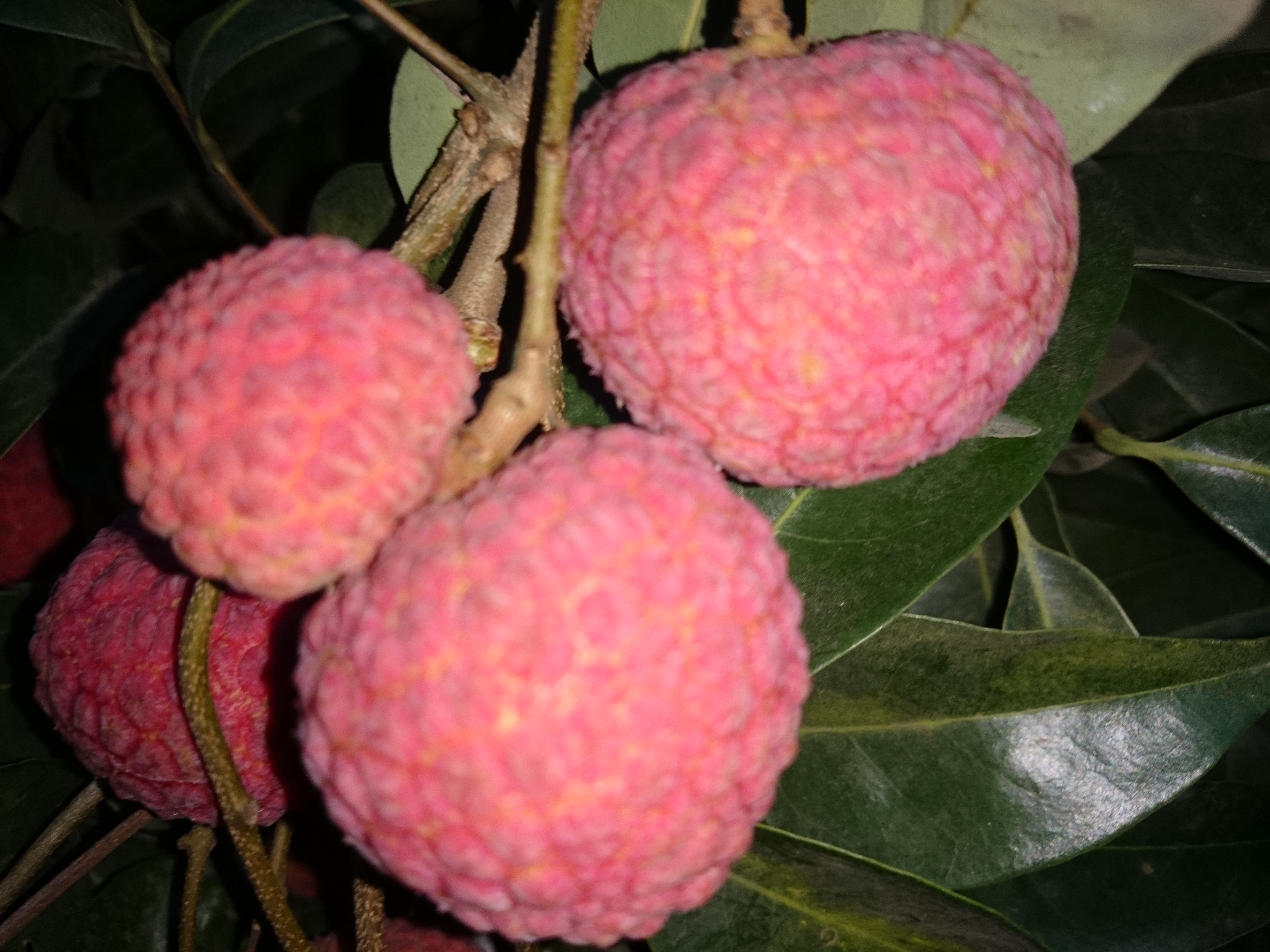
Prothom Alo's report from Dinajpur, published on 22 May, followed the lychee from the tree to the capital. In Biral, the paper found, lychees change hands several times while still on the tree, and between orchard and consumer they are sold at least eight to ten times, with the price rising at each step. One orchard of more than 45 trees in Madhabbati had been sold for Tk 3.1 lakh after flowering and resold within about two weeks for Tk 3.3 lakh. A local middleman said about 80 percent of the orchards had already changed hands several times.
A class of agents has grown up to help wholesalers from across the country buy trees and orchards. One of the largest orchard owners in Biral told the paper that agents are often paid a 1 percent commission on the sale price, and that from the first lease an orchard may change hands three to five times. In his view those sales add little to the price, because an orchard bought for Tk 1 lakh is usually resold for only Tk 20,000 to Tk 30,000 more; the commission agents in the wholesale markets, he said, were the main drivers of price increases, quoting less when the fruit is over-ripe and more when demand is high.
An agricultural economist and former research director of the Bangladesh Institute of Development Studies (BIDS) told Prothom Alo that the price rises with every change of hands, driven by uncertainty. Abroad, he said, farmers are covered by crop insurance against natural disasters; with no such system in Bangladesh, there is little scope to stop the repeated selling.
A fruit that does not keep
The lychee, Litchi chinensis, belongs to the soapberry family (Sapindaceae). Its thin, brittle, pinkish-red shell encloses the edible aril, a sweet, jelly-like pulp around a single dark-brown seed, Banglapedia explains. The tree is native to China and reached Burma and India by the end of the 17th century. It needs a warm, humid climate; dry, hot air harms the fruit, and while the tree cannot stand waterlogging, it does best in moist, deep loamy soil.
In "Fruits of Warm Climates", the horticulturist Julia Morton wrote that the lychee is native to the lowlands of Guangdong (Kwangtung) and Fujian (Fukien) provinces in southern China, where it was praised in Chinese literature from the earliest known record in 1059 AD. She noted that a crop may need picking every three to four days over three to four weeks, and that it is never harvested right after rain, as the wet fruit is very perishable.
That perishability is what the seller at Sayedabad met at the bottom of his basket. Freshly picked lychees keep their colour and quality for only three to five days at room temperature, Morton wrote. In China and India, she noted, lychees are packed in baskets or crates lined with leaves or other cushioning, the pack should not be too tight, and containers must be fairly shallow to keep the weight of the fruit from crushing the layers below.
Weather shaped the 2026 crop before it reached Dhaka. BSS reported on 21 April that in the Rajshahi region, where the DAE counted 1,701 hectares of lychee and 213,280 trees across Rajshahi, Naogaon, Natore and Chapainawabganj, intense Baishakh heat was making lychees crack on the trees. Agricultural experts attributed the cracking to sudden changes in temperature and humidity that make the skin expand and contract rapidly; the Rajshahi DAE deputy director advised growers to give regular light irrigation and keep enough moisture in the soil to limit the damage.
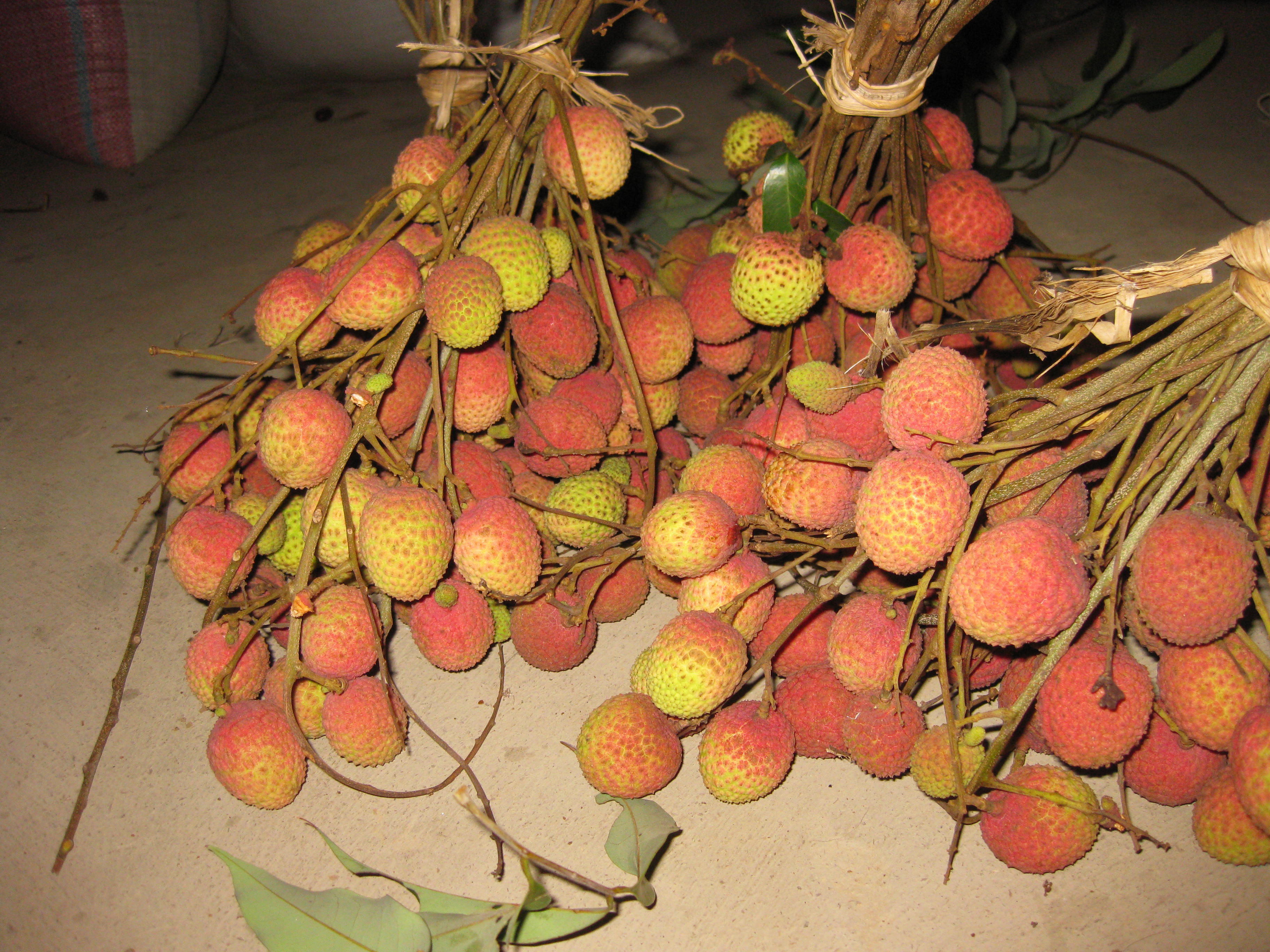
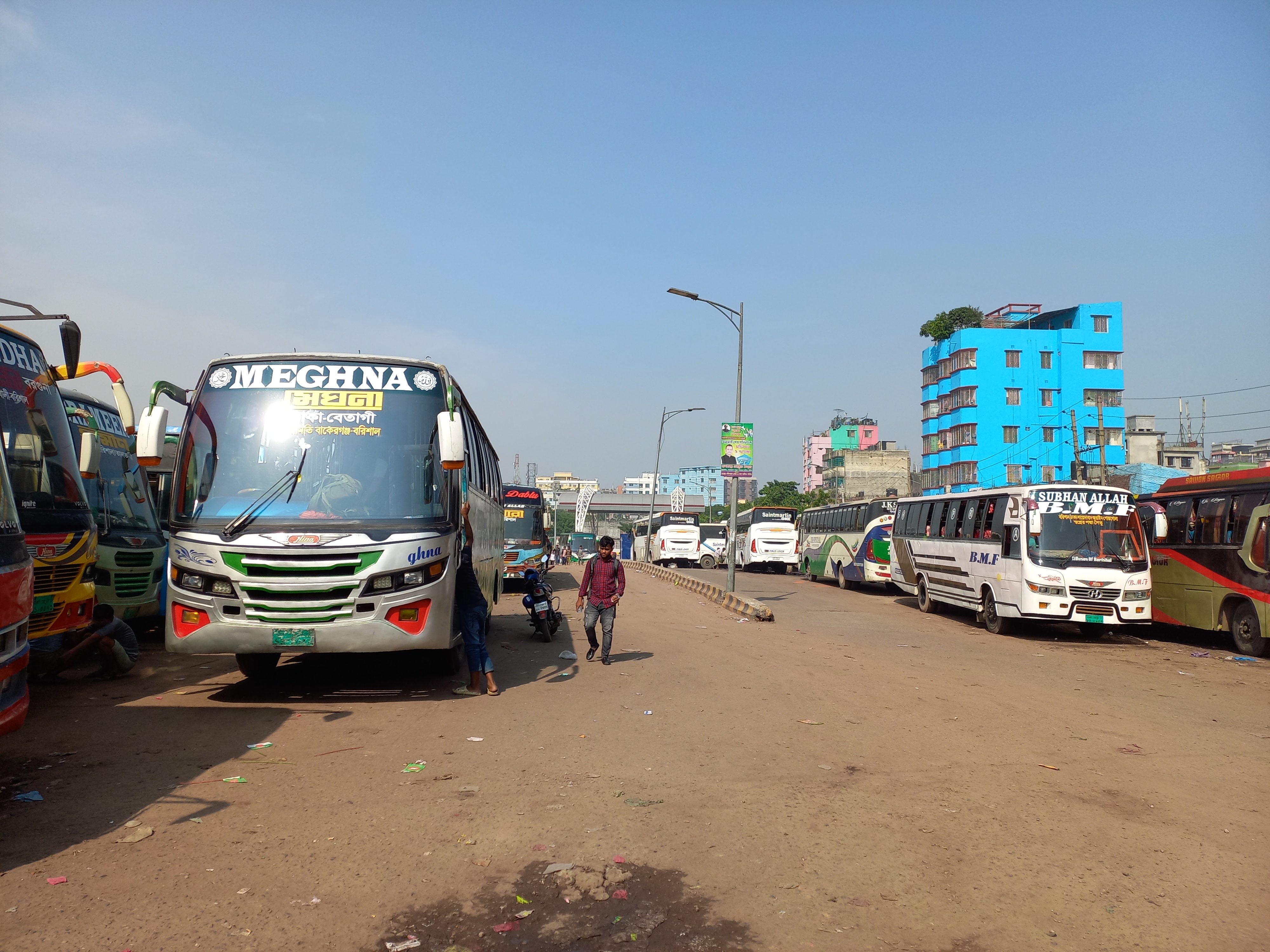
Photo: Press Information Department / Wikimedia Commons (public domain). The top picture shows people leaving Dhaka's Sayedabad Bus Terminal for the Eid-ul-Azha holiday on 14 June 2024, as background.
Sources: Jagonews24 (27 May 2026), Bangladesh Sangbad Sangstha (21 April, 3 May, 14 May, 18 May and 22 May 2026; 2 May 2025), Prothom Alo (22 May 2026), Ajker Patrika (24 May 2026), Dhaka Post (25 May 2026), Channel 24 (10 May 2026), Banglapedia, Julia F. Morton, Fruits of Warm Climates (Purdue University)
Comments
(0)