
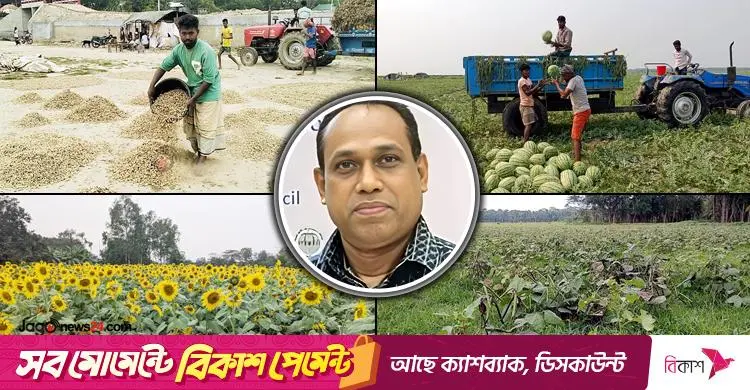
The area of saline land has grown in many parts of Bangladesh, including the coastal region. Ordinary crops do not yield well on such land, so attention must turn to salt-tolerant crops, notably groundnut, sunflower, mung bean and watermelon, which can bring saline land into use.
Groundnut
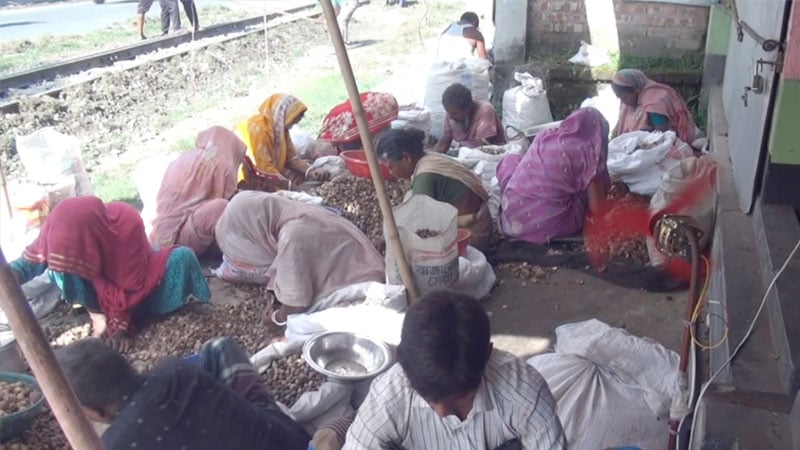
Groundnut is an oilseed and cash crop. It tolerates salt, can be grown with little water, improves soil quality and fixes nitrogen. It has high market value and demand, and there are examples of successful groundnut farming in coastal areas. Varieties: BINA Badam-4, BAU Badam-2, Dhaka-1 local variety.
Sunflower
Sunflower is a salt-tolerant oilseed crop that yields well with relatively little care and cost. It can be processed into nutritious sunflower oil, is easily grown on fallow or low-productivity land, and can withstand cyclones and waterlogging to some extent. Varieties: BARI Surjomukhi-2 and 3, Hysun-33, Parsidan-95.
Mung bean
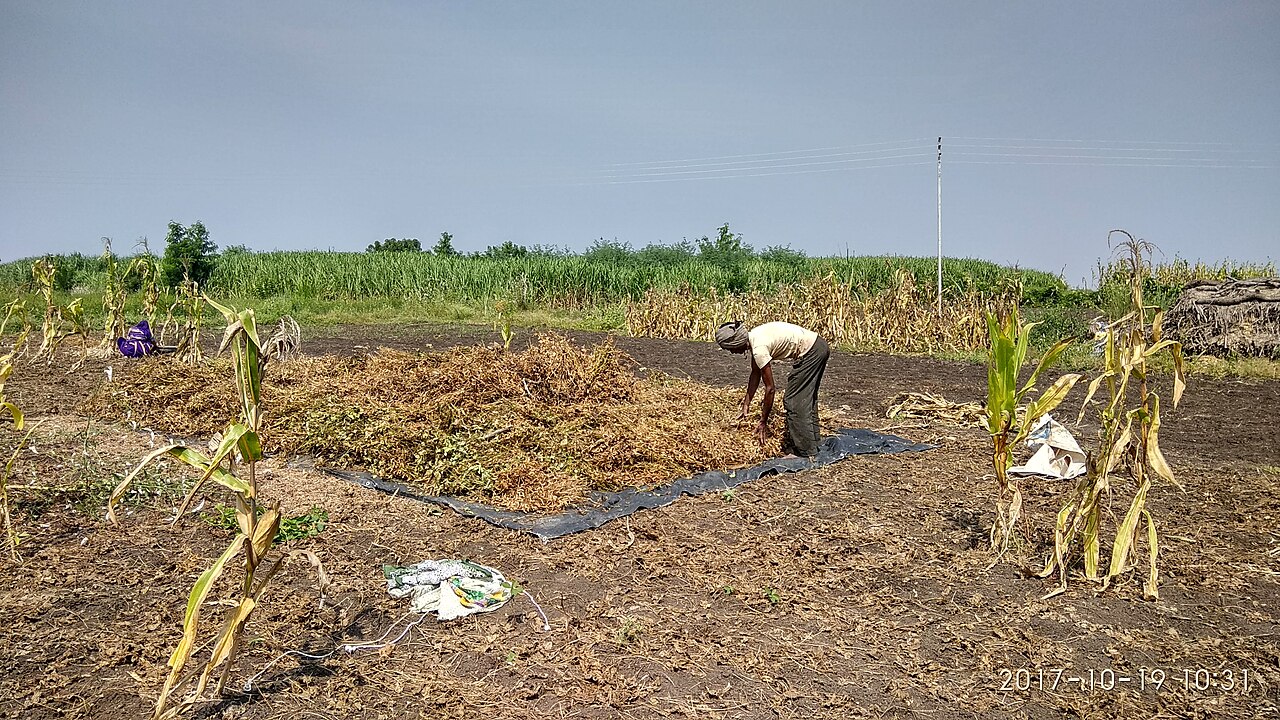
Mung bean tolerates salinity and yields quickly. As a pulse it adds nitrogen to the soil. It is highly nutritious and supports food security at low cost, and because it is grown in the dry season it puts less pressure on irrigation. High-yielding varieties such as BARImung-6 can be grown on saline land. Varieties: BARI Mung-6, 7, 8, 9.
Watermelon
Coastal saline areas have the potential for bumper watermelon harvests. It is a high-value, profitable crop that can be grown on sandy and saline land, produced at low cost with quick returns. There is demand abroad too, so there is scope for export. Varieties: Sugar Baby, Crimson Sweet, Arka Manik.
Role of the agriculture department
The progress and role of the agriculture department in coastal saline areas is an important issue. Soil salinity, waterlogging and natural disasters have challenged farming in the region, and the department has taken several steps:
- Research and development: the Bangladesh Agricultural Research Institute (BARI) and the Bangladesh Rice Research Institute (BRRI) have developed salt-tolerant varieties of rice, wheat, pulses, mustard and other crops, such as BRRI dhan67, 84 and 92.
- Crop diversification: farmers are encouraged to grow sunflower, cucumber, watermelon, various leafy and other vegetables and sweet pumpkin besides rice.
- Floating beds or step farming for vegetables in flood-prone and waterlogged areas; drip and sprinkler irrigation to save water; training in organic and salt-free fertiliser use.
- Farmer field schools to train farmers in modern cultivation, and advisory services through sub-assistant agriculture officers.
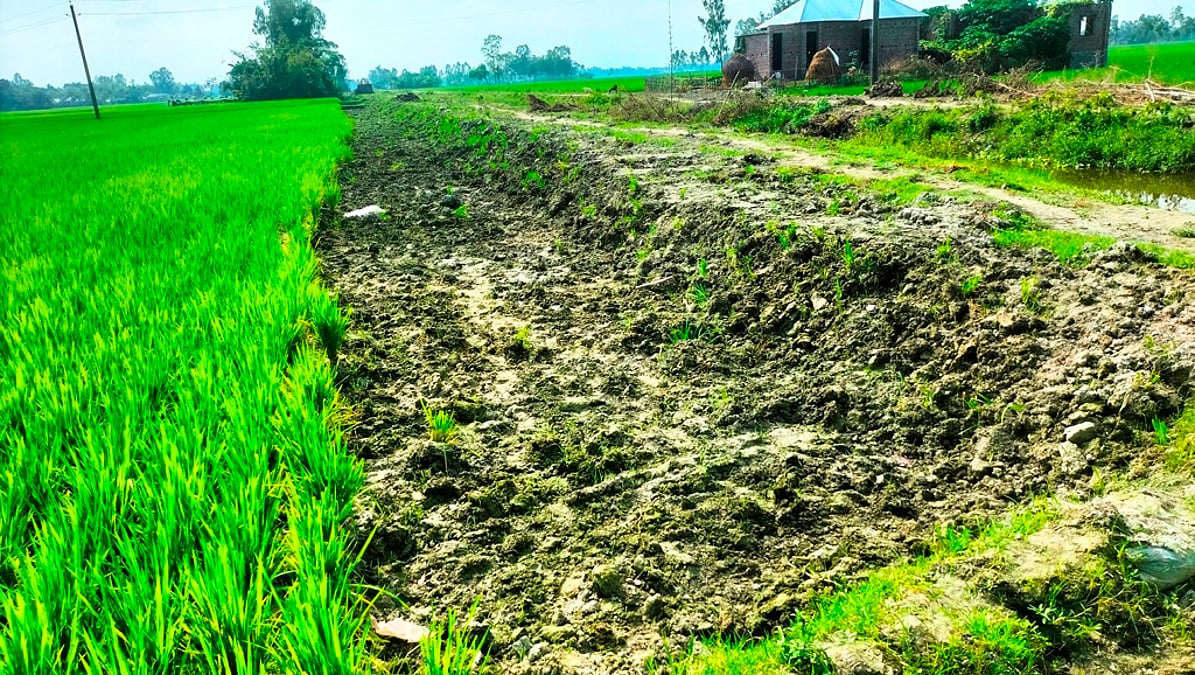
- Developing cultivable land through canal excavation and better irrigation and drainage; government subsidies on seed, fertiliser and farm machinery.
- Eco-friendly farming with organic fertiliser, and climate-resilient planning by changing farming strategies and schedules to secure production.
The department's contribution to coastal agriculture is significant. It is not limited to developing new varieties but is making the region's farming more sustainable and productive through technology transfer, farmer capacity building and climate adaptation strategies.
Challenges and solutions
A major challenge in coastal areas, including in Bangladesh, is the lack of proper water management and excess salinity in water.
On water management, the causes are unplanned farming, the filling of reservoirs, canals and wetlands, waste of water and uncoordinated water use, leading to water shortages for farming, falling groundwater levels and worsening drought. Solutions include small dams, re-excavating ponds and canals to conserve water, modern irrigation technology such as drip irrigation, and training farmers in water management.
Salinity comes from rising sea levels, saline water entering with cyclones and tidal surges, and the use of saline water for shrimp farming, causing infertile farmland, drinking water shortages and greater health risks. Solutions include developing and growing salt-tolerant varieties, harvesting rainwater for drinking, and building dams and embankments to keep saline water out. Proper water management and tackling excess salinity need a coordinated effort; the government, local people and NGOs working together can meet the challenge.
Choosing suitable salt-tolerant crops is key to making saline land productive. Groundnut, sunflower, mung bean and watermelon help improve farmers' incomes, food security and the use of such land. If this farming spreads with the support of the government and the Department of Agricultural Extension, the country's coastal agriculture will become more sustainable.
Source: Jagonews24. First published in Bengali on The Agro News.
Comments
(0)