
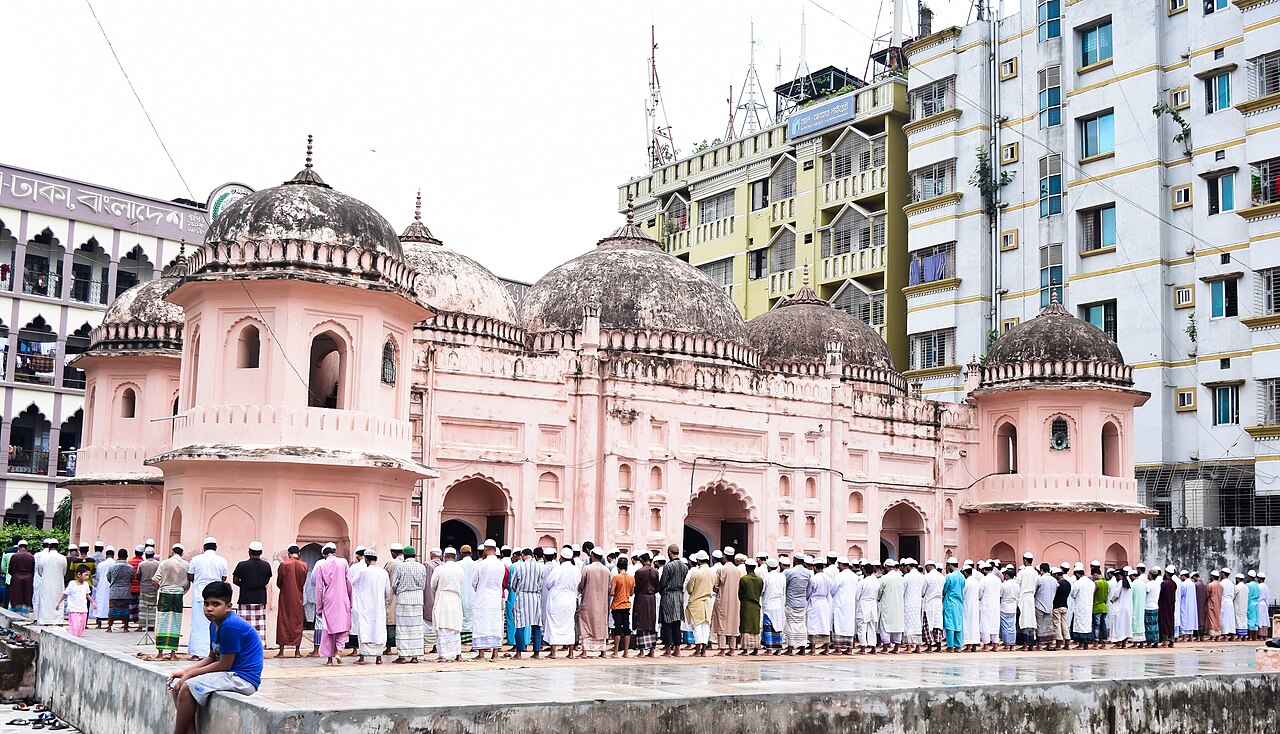
Salat al-Hajah means the prayer of need: a prayer offered to ask Allah's help with any lawful purpose. Writing on Desh Rupantor's religion page, Abrar Nayem sets out how it is prayed and the supplication that follows it.
Everyone faces difficulties in life, the writer says, and in any need one should turn first to Allah rather than to His creation. There are two ways to seek His help, prayer and patience: to pray, make the supplication, and then wait patiently rather than anxiously for the hope to be fulfilled.
The prayer has two or four rakat. It has no fixed time and may be prayed at any time of day except the three times when prayer is forbidden: sunrise, the sun's zenith and sunset. It is prayed like any other voluntary prayer, with no special rules.
The method: make wudu carefully, then pray two or four rakat of voluntary prayer with concentration. After the prayer, spend a little time praising Allah and sending blessings on the Prophet (peace be upon him), then recite the supplication.
In a hadith narrated by Abdullah ibn Abi Awfa and recorded by Tirmidhi (479), the Prophet said that whoever has a need from Allah or from any human being should perform wudu well, pray two rakat, praise Allah, send blessings on the Prophet and then say: 'La ilaha illallahul halimul karim. Subhanallahi rabbil arshil azim. Alhamdulillahi rabbil alamin. As'aluka mujibati rahmatika, wa aza'ima maghfiratika, wal ghanimata min kulli birrin, was salamata min kulli ithmin. La tada' lana dhamban illa ghafartahu, wa la hamman illa farrajtahu, wa la hajatan hiya laka ridan illa qadaitaha, ya arhamar rahimin.'
Its meaning: there is no god but Allah, the Forbearing, the Generous; glory be to Allah, Lord of the Mighty Throne; all praise is for Allah, Lord of the worlds. O Allah, I ask You for the means of Your mercy, the assurance of Your forgiveness, a share of every good deed and safety from every sin. O Most Merciful, leave no sin of ours unforgiven, no worry unrelieved, and no need that pleases You unfulfilled.
Photo: Kazi Murad Hossain / Wikimedia Commons (CC BY-SA 4.0)
Source: Desh Rupantor

Comments
(0)