
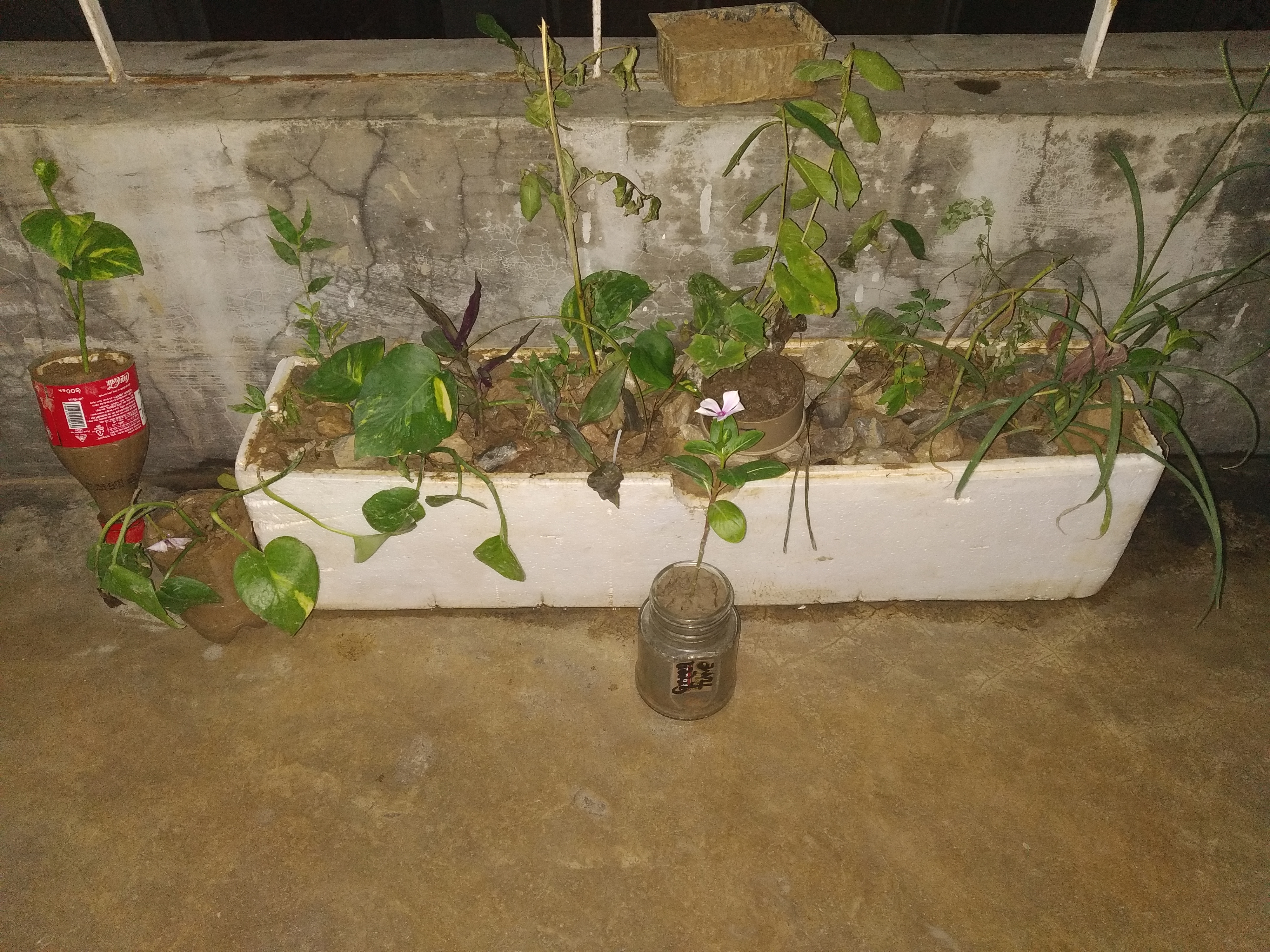
From the upper floors of almost any building in Dhaka, most of what you see is bare concrete. In December 2022 the Food and Agriculture Organization (FAO) said the capital had about 450,000 roofs covering some 4,500 hectares, most of them unused, and that a drone survey had found gardens on only 2 percent of the rooftops in the Dhaka North City Corporation area.
A grafted mango tree in a drum is one of the most rewarding things a city household can put on that concrete. In December 2024 The Agro News published a short guide for city dwellers who wanted two or four mango trees on the roof: which varieties to choose, how to prepare a drum and how to plant and look after a grafted sapling. This version keeps that guide and checks it against the Department of Agricultural Extension (DAE), the Bangladesh Agricultural Research Institute (BARI), Banglapedia and reports published up to that date.
Here you will learn why a rooftop mango is worth the effort, which varieties suit a drum, why the sapling must be grafted, how to plant it, how the DAE advises feeding and watering mango trees, which pests and diseases to watch for, and where to ask for help.
Why a mango tree belongs on a city roof
Rooftop gardening was already spreading in Dhaka well before 2024. In April 2019 The Daily Star reported a Stamford University survey of 2,700 buildings in Dhanmondi, Lalmatia, Mohakhali DOHS and Uttara, which found that 36.4 percent of the rooftops were used for gardening.
Professor Kamruzzaman, who chaired the university's environmental science department and led the study, told the paper that areas where rooftop gardening was popular stayed cooler on hot days, and that the temperature difference linked to a lack of greenery ranged from 1.8 to 5.4 degrees Celsius. In the same report Golam Maruf, a senior consultant on a DAE agro-meteorology project, said a rooftop garden of 5,000 square feet could meet a family's daily need for vegetables within a year of cultivation.
City authorities had begun to reward roof gardens. According to the same report, both Dhaka city corporations gave a 10 percent holding tax rebate for rooftop gardening in the first quarter of the 2016-17 and 2017-18 fiscal years. In December 2022 the Dhaka North mayor announced plans for a 10 percent rebate for residents practising rooftop agriculture, with the FAO helping to draw up guidelines, as the Dhaka Tribune reported.
On 14 June 2023, UNB reported, the Local Government, Rural Development and Cooperatives Minister announced a 10 percent holding tax rebate for rooftop gardening in all city corporations and municipalities, saying the decision had been taken to bring down the temperature.
Mango in Bangladesh: the king of fruits in numbers
The mango, Mangifera indica, belongs to the family Anacardiaceae. Banglapedia, the national encyclopedia, says it probably originated in the eastern part of the Indian subcontinent, a region that includes Bangladesh, Assam and Myanmar, and it is known as the king of fruits. About 100 cultivars are grown in Bangladesh, mainly in Rajshahi, Nawabganj (now Chapainawabganj) and Dinajpur, and the greater Rajshahi region has long treated mango as its main cash crop.
Banglapedia counts Fazli, Langra, Gopalbhog, Himsagar, Khirsapat, Ashwina and Lata Bombai among the elite grafted varieties. Local seedling mangoes, called deshi or guti, have no standard names and vary in quality from tree to tree.
Output has grown fast. According to DAE figures reported by The Daily Star in July 2023, Bangladesh produced about 23.5 lakh tonnes of mango in fiscal year 2021-22. About 600,000 tonnes of that, one mango in four, was Amrapali, which DAE officials said was grown in all 64 districts. Himsagar came second with 450,000 tonnes, and Runibhanga, Ashwina and Langra made up the rest of the top five.
The same report said Bangladesh ranked seventh among the world's mango producers and that researchers counted more than 72 mango varieties in the country, about half of them grown commercially. In the hill districts, mango covered about 16,000 hectares, half of it under Amrapali, according to DAE data.
Banglapedia also explains why yields in Bangladesh had long been lower than in other mango-growing countries: old and unproductive trees, poor management, weak plant protection, the use of seedling trees and indiscriminate felling. A rooftop grower who starts with a good grafted sapling of a proven variety avoids the first and fourth of those problems from the start.
Choosing a variety for the drum
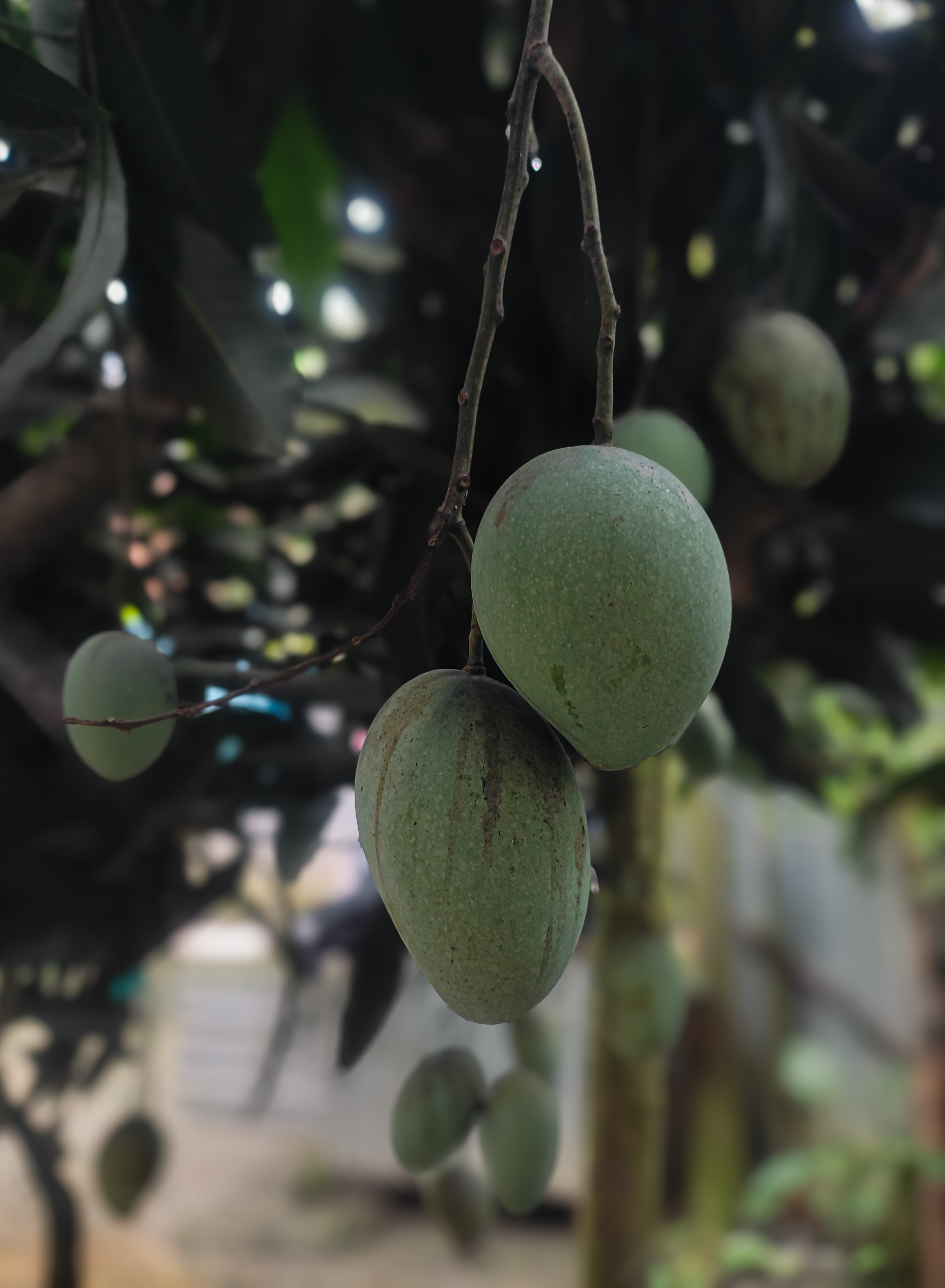
Every mango variety can be grown on a roof, the original guide said, but it is better to choose one that yields well in a container. Its first choice was BARI Aam-3, better known as Amrapali: a small tree with medium-sized, very tasty fruit that bears almost every year, which is why the guide said it should get top priority on a roof.
Amrapali was bred in India. It was developed in 1971 by Pijush Kanti Majumdar at the Indian Agricultural Research Institute in Delhi as a cross of the Dasheri and Neelum varieties, and the tree is described as a dwarf, regular bearer that carries its fruit in clusters. Prothom Alo reported in July 2023 that saplings were brought to Bangladesh around 1978 by an official of the Bangladesh Agricultural Research Council, and that BARI released the variety as BARI Aam-3 in 1996.
The same report said Amrapali scores about 26 on the Brix scale of sweetness, the highest among the common varieties, that about 72 percent of the fruit is edible, and that it is in season from mid-June to early August. Mohammad Sorof Uddin, a senior scientific officer at BARI in Gazipur, told The Daily Star that the fruit does not rot easily and stays available for a longer time in the season.
Two more traits matter for a small space. A Chapainawabganj entrepreneur, Munjer Alam, told The Daily Star that Amrapali bears fruit from the second year after planting and that its trees take up less space than other varieties, so more trees fit on less land.
There are other choices. The DAE's crop guide on its Bangladesh Agro-Meteorological Information Service (BAMIS) portal lists BARI Aam-1 to BARI Aam-9 and the FTIP BAU Aam-1, 2, 3, 9 and 10 varieties of Bangladesh Agricultural University, and notes that BAU Aam-9 and BAU Aam-10 can be planted at any time of the year. The original guide also named BAU varieties and Lata Bombai as suitable for roofs. BARI's Sorof Uddin said in July 2023 that BARI Aam-4, Kati and Banana mango were also becoming popular.
Why the sapling must be grafted
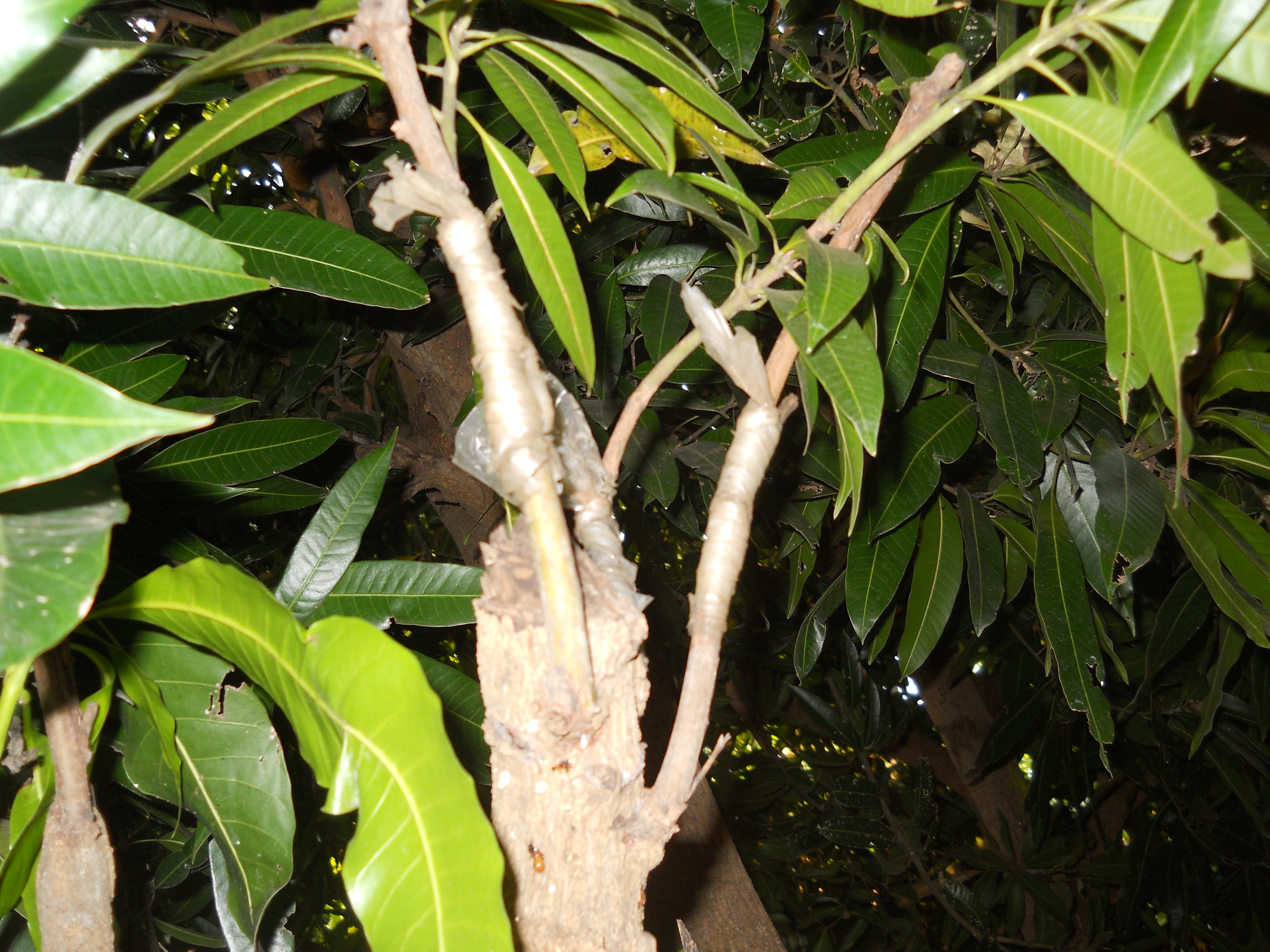
A mango grown from a stone does not come true to its parent. Banglapedia explains that vegetative propagation by grafting keeps the character of the mother plant, while rural areas still use seedlings. A grafted tree bears fruit by about its fourth year in the field, a seedling tree takes several years longer, and a productive grafted tree keeps cropping until it is about 45 years old.
For a roof this matters twice over: a grafted sapling of a known variety gives the fruit you paid for, and it bears early. The original guide asked readers to choose one healthy, strong grafted sapling for each drum.
When to plant and how to prepare the drum
The DAE's BAMIS guide gives two planting seasons for mango: Jyoishtha to Asharh (May to June) and Bhadra to Ashwin (August to September). In an orchard it recommends planting one sapling per pit, pits of 1 metre by 1 metre by 1 metre, 8 to 10 metres between trees, and planting 10 to 15 days after the pit has been filled with soil and manure.
Banglapedia notes that mango does best in deep, well-drained loam and that the ideal soil pH is between 5.5 and 7.5. On a roof the drum takes the place of the pit, so its preparation decides how well the tree will grow. The original guide's steps were these:
- Get a 20-inch coloured drum or a tub of similar size for each tree.
- Make three to five holes in the bottom of the drum so that water does not collect around the roots.
- Cover the holes with small pieces of brick so that soil is not washed out.
- Mix loam soil with cow dung, and add wood ash, bone meal and mustard oil cake together with TSP and potash fertiliser.
- Fill the drum with the mix, soak it with water and leave it for 15 days.
- Loosen the soil a little and leave it the same way for another four or five days, until it becomes crumbly.
The original guide also gave fixed amounts for each ingredient. Neither the DAE nor BARI publishes amounts for a drum, as opposed to a field pit, so the amounts are not repeated here. The upazila agriculture officer can advise how much fertiliser a drum of this size should get.
The waiting time matches the field advice: the DAE asks growers to wait 10 to 15 days after filling a pit before planting, so that the manure settles in the soil.
Planting the sapling and the first months
Once the soil is crumbly, plant the grafted sapling. The original guide's method was:
- Set the sapling upright in the middle of the drum.
- Raise the soil slightly around the base and press it down firmly by hand, so that too much water cannot enter at the base.
- Tie the young tree to a straight stick.
- Water sparingly at first and increase the water gradually.
- Keep the drum where it gets sunlight for almost the whole day.
Extension advice from elsewhere agrees on two of those points. The University of Florida's guide to growing mango in home gardens in the United States says mango trees should be planted in full sun for best growth and fruiting, and that if a young tree is staked, natural fibre string should be used rather than wire. The DAE says saplings need frequent watering to grow fast, and in a severe drought trees should get enough water in the morning and the afternoon.
The DAE advises that a sapling bent over by a hailstorm should be set upright again and tied to a stake if needed. It also advises loosening the soil around the base from time to time and removing weeds, which compete with the tree for food.
Size control is the other task on a roof. The University of Florida advises removing a few selected upper limbs back to their origin each year, which keeps the tree low and makes spraying and harvesting easier.
Feeding and watering: what the DAE advises
The DAE's BAMIS guide gives the fertiliser for each 1-metre orchard pit at planting as 22 kg of cow dung, 150 g of urea, 550 g of TSP, 300 g of MOP, 300 g of gypsum and 60 g of zinc sulphate.
For a full-grown, fruit-bearing tree it gives a yearly dose of 50 kg of cow dung, 2 kg of urea, 1 kg of TSP, 500 g of MOP, 500 g of gypsum and 25 g of zinc sulphate, applied in two instalments: the first in Jyoishtha to Asharh and the second in Ashwin.
These figures are for trees in the ground. A 20-inch drum holds far less soil, so the field amounts must not be poured into a drum. The rates show which nutrients a mango tree needs and when; the amount for a container should come from the upazila agriculture officer.
Watering changes once a tree starts to bear. The DAE advises stopping irrigation of fruiting trees from three months before the flowers appear, then watering once at the end of flowering and again when the young fruit reach the size of a pea. For saplings, by contrast, it advises frequent watering.
Flowers, pests and diseases
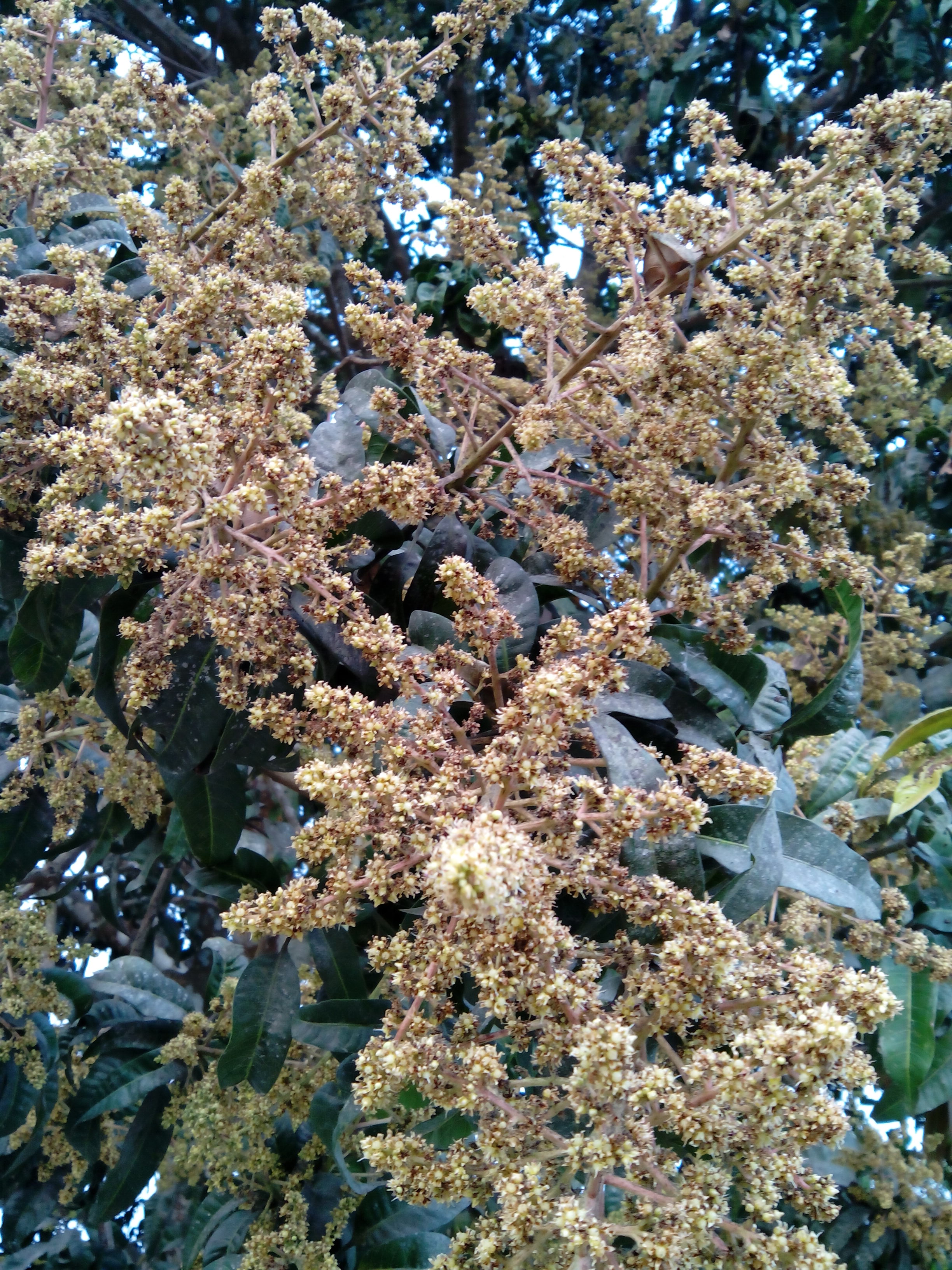
Mango flowers from January to March, Banglapedia says, and fog, rain and cloudy weather at that time harm the crop. Only about one or two flowers in a thousand develop into mature fruit, and two or three fruits on a panicle make a satisfactory crop. Mild showers help the fruit grow, but storms and hail make young fruit drop.
About three dozen insect pests attack mango from the nursery to the mature tree. Banglapedia names mango hoppers, fruit weevils, the stem borer, the shoot borer and the fruit fly as the main ones, and anthracnose, sooty mould, leaf blight, die-back, powdery mildew and bacterial leaf spot as the main diseases.
The DAE's BAMIS guide gives these controls:
- Hoppers: a cypermethrin-type insecticide at 10 ml in 10 litres of water, sprayed over the whole tree first when the flower panicles are 3 to 4 cm long and again when the fruit are pea-sized.
- Sooty mould, which follows hopper attack: a sulphur fungicide at 40 g in 10 litres of water, two or three times at 10-day intervals in the late afternoon.
- Powdery mildew: the same sulphur fungicide at 40 g in 10 litres, two or three times at intervals of five to seven days in the late afternoon.
- Anthracnose: a mancozeb-type fungicide at 20 g in 10 litres, first when the panicles are 10 to 15 cm long and again when the fruit are pea-sized.
- Fruit weevil: action before flowering, with a fenitrothion-type insecticide at 20 ml in 10 litres, two or three times at 10-day intervals.
The guide adds safety rules: read the label before use, wear protective clothing, do not smoke, eat or drink while spraying, keep runoff out of open water, and market sprayed fruit only seven to 15 days after spraying. A rooftop tree stands next to a home and often near neighbours' windows, so it is wise to ask the upazila agriculture officer before any spray.
Harvest, nutrition and where to get help
Amrapali ripens from mid-June to early August, according to Prothom Alo. The DAE describes a simple hot-water treatment for mature green mangoes: wash them in clean water, keep them in water heated to 52 to 55 degrees Celsius for exactly five minutes, take them out together, dry them and pack them. Treated this way, it says, mangoes keep 10 to 15 days longer than untreated fruit.
The DAE guide also gives the food value of 100 grams of ripe mango: 90 kilocalories, 8,300 micrograms of carotene, 78.6 grams of water, 20 grams of carbohydrate, 1 gram of protein, 0.7 grams of fat, 0.7 grams of fibre, 20 milligrams of calcium, 1.3 milligrams of iron, 41 milligrams of vitamin C and 0.1 milligrams of vitamin B1. Ripe mango is rich in vitamin A, it says.
For questions about varieties, fertiliser amounts for a drum or a pest that will not go away, the first stop is the upazila agriculture office of the DAE. The DAE's BAMIS portal publishes its crop guides, including the mango guide used here, and BARI, which released Amrapali as BARI Aam-3, is based in Gazipur.
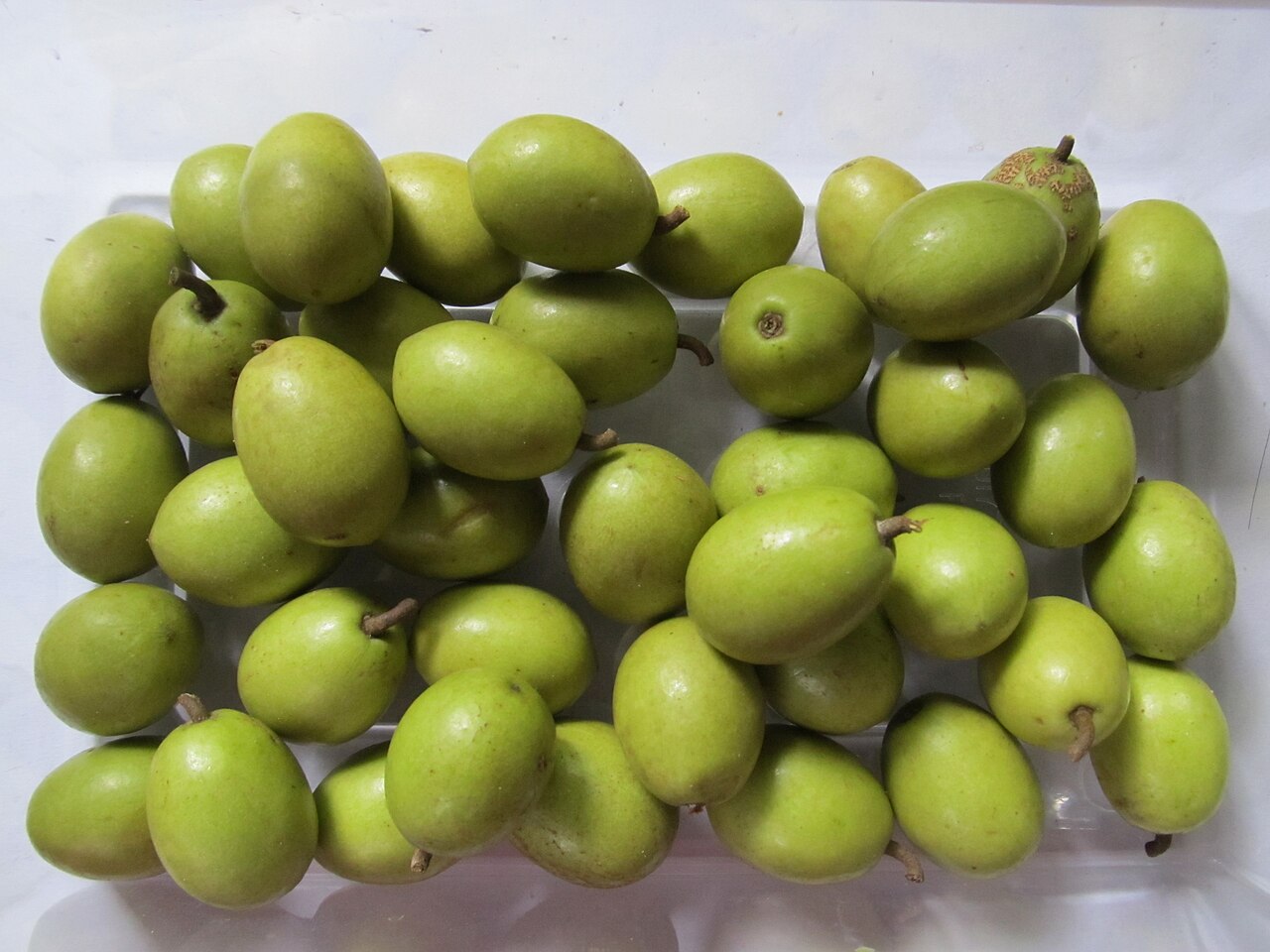
Photo: Wiki Ruhan / Wikimedia Commons (CC BY-SA 4.0)
Sources: The Agro News, Department of Agricultural Extension (BAMIS), Banglapedia, The Daily Star, Prothom Alo, Dhaka Tribune, UNB, Wikipedia, University of Florida IFAS Extension
Comments
(0)