
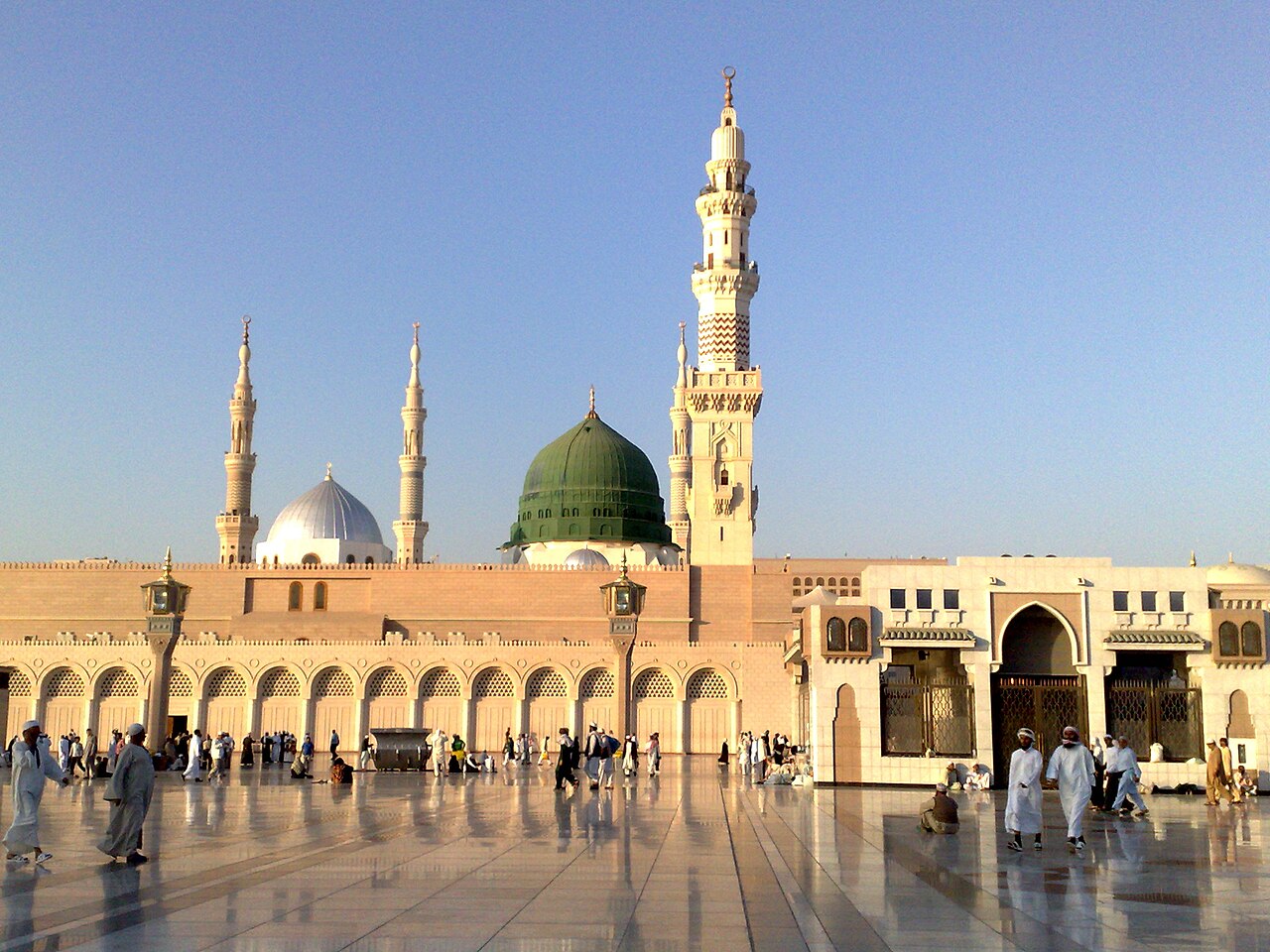
In Madinah's Masjid an-Nabawi, the area between the resting place of the Prophet Muhammad (peace be upon him) and his pulpit is called Riyadh ul Jannah, Arabic for 'garden of paradise'. Muslims around the world regard it as one of the holiest places on earth, and pilgrims performing Hajj and Umrah pray, recite the Quran and make supplication there. A Nagorik TV report sets out five facts about it.
The name comes from a well-known hadith narrated by Abu Hurayrah (may Allah be pleased with him), in which the Prophet said: 'The area between my house and my pulpit is one of the gardens of paradise, and my pulpit is over my fountain (al-Kawthar).' (Sahih al-Bukhari and Sahih Muslim) For that reason, remembrance of Allah and supplication there carry special importance.
The area has eight historic pillars, built on the very spots where palm trunks held up the roof of the mosque's first building. Riyadh ul Jannah is set apart by its distinctive green carpet.
After the Hijrah, the Prophet first prayed in Madinah in the open, in the shade of trees; later a simple structure of palm fronds and wood was built. Renovated and expanded many times under successive caliphs and rulers, that structure became today's vast Masjid an-Nabawi. The spot was also once known as Rawdat an-Nabi.
There are three main gates to Riyadh ul Jannah: Bab Jibril, Bab al-Rahmah and Bab al-Wida. Men and women are given separate set times for worship, and ordinary weekdays are less crowded. Visitors remove their shoes and make wudu before entering, and should devote themselves quietly to voluntary prayer and recitation without causing others any discomfort.
Photo: Bluemangoa2z / Wikimedia Commons (public domain); Masjid an-Nabawi
Source: Nagorik TV

Comments
(0)