
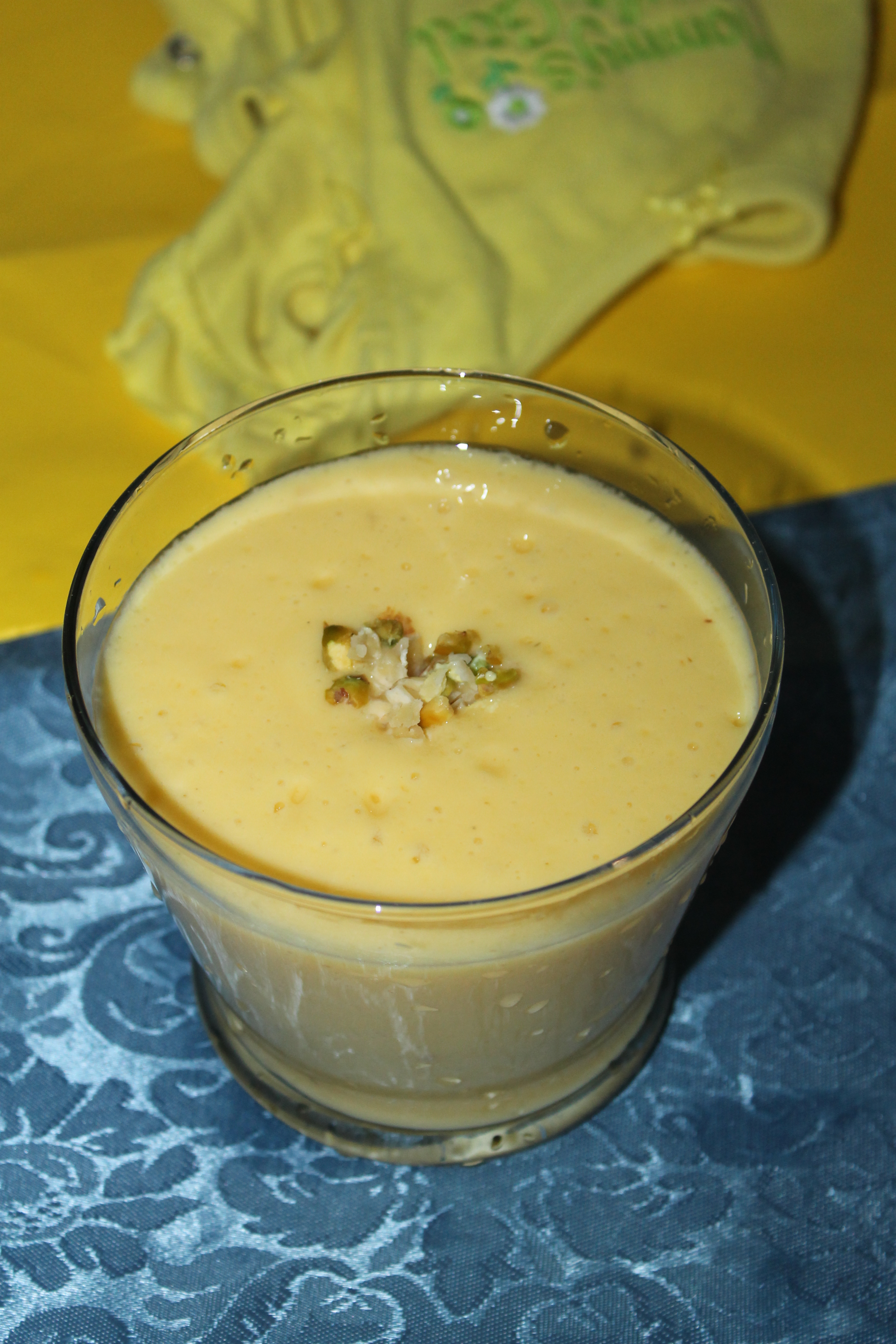
On 15 May 2025, as the first ripe mangoes of the season were reaching Bangladesh's markets during a spell of fierce heat, the lifestyle desk of Jagonews24 published a short recipe for ripe mango lassi: a cold, blended drink of yoghurt and mango, sweetened with honey or syrup instead of extra sugar, which the paper said takes no more than ten minutes to make. The recipe is set out below exactly as the paper gave it. Around it are the facts that put it in its season: what lassi is, how the 2025 mango harvest was opening in Rajshahi and Satkhira that month, what official food tables say the ingredients contain, and the cautions that health authorities attach to honey and other sweeteners.
The recipe
The drink uses five ingredients, all of them common in a Bangladeshi kitchen in summer. The quantities below are those of the original; it does not say how many glasses they make, and the yield will depend on the size of the mangoes and on how much cold water is added at the end.
Ingredients
- Yoghurt (doi): 2 cups
- Ripe mangoes: 2
- Honey or syrup: 3 tablespoons
- Ice cubes: 6
- Rose water: 1/8 tablespoon
Method
- Peel the mangoes and cut as much of the flesh away from the stones as you can.
- Put the mango flesh and all the other ingredients into a blender and blend until the mixture is smooth.
- If the mixture seems too thick, add a little cold water and blend again.
- Pour the lassi into glasses and serve.
- If you like, decorate the top with small pieces of mango or a few mint leaves before serving.
Rose water is optional, the recipe notes: if there is none in the house, or if you do not like its scent, simply leave it out. The original describes the drink as made without extra sugar, and indeed no table sugar goes into it. Its sweetness comes from the ripe mangoes and from the three tablespoons of honey or syrup. As the nutrition section below explains, the World Health Organization counts the sugars in honey and syrups as "free sugars", in the same group as the sugar added from a packet, so the drink is best seen as a sweet treat rather than a sugar-free one.
What lassi is
Lassi is a yoghurt-based drink with a smoothie-like consistency, served chilled. Encyclopedic references trace it to the Punjab region of the Indian subcontinent, where the word means yoghurt mixed with water in Punjabi and Hindi-Urdu, and where it has been called the region's best-loved summer drink. In its classic form it is made by blending yoghurt with water and spices, of which cumin and cardamom are the most common; in Punjab the yoghurt was traditionally made from buffalo milk, and the drink is traditionally served in a clay cup called a kulhar.
There are two broad families. Salty lassi is made by adding salt, black pepper and cumin to the yoghurt and water. Sweet lassi is flavoured with cardamom, rose water and saffron. Fruit lassis, of which mango lassi is the best known, are made by blending fruit such as mango or strawberry into the yoghurt mixture. The drink is counted among the dairy products of Bangladesh as well as of India and Pakistan, and in Bangla it is written লাচ্ছি (lachchi), as in the original. The Jagonews24 version sits between the sweet and the fruit styles: it keeps the rose water of a classic sweet lassi but takes its body from whole mango flesh, and instead of water it uses ice, adding cold water only if the mixture turns out too thick.
Ripe mangoes reach the market: Rajshahi's 2025 calendar
The "ripe mangoes have arrived in the market" with which the recipe opens was the news of that week. In Bangladesh's main mango districts the start of the harvest is not left to each grower: the district administrations publish a "mango calendar" that sets the first date on which each variety may be picked and sold, so that immature or adulterated fruit does not reach consumers. The Daily Star reported in May 2024 that the Rajshahi district administration had set such a calendar every year since 2015 to stop immature and adulterated mangoes reaching the market, with upazila executive officers monitoring orchards and markets and empowered to take legal action against anyone who broke it.
For 2025, The Daily Ittefaq reported, the Rajshahi district administration published its calendar on 7 May after a meeting on mango transport, marketing and harvesting with agriculture officials, growers, traders and transporters, held to ensure safe, toxin-free and mature mangoes. Selling mangoes before 15 May was banned. The schedule was as follows:
- 15 May: all guti (local, seedling-grown) mangoes
- 20 May: Gopalbhog
- 25 May: Ranipasand and Lakshmanbhog
- 30 May: Himsagar, also called Khirsapat
- 10 June: Langra and Banana Mango
- 15 June: Amrapali and Fazli
- 5 July: BARI Aam-4
- 10 July: Ashwina
- 15 July: Gourmati
- All year: Katimon and BARI Aam-11, which can be harvested in any season
The start date was the same as in 2024 (15 May), later than in 2023, when picking began on 4 May, and in 2022, when it began on 13 May. The administration said that if a disaster struck, growers could pick early with the permission of the upazila nirbahi officers. According to the figures given at the meeting, mangoes had been grown on 19,603 hectares in the district that season, with an expected total production of 260,006 tonnes and expected sales of about Tk 1,695 crore.
A date in the calendar is a floor, not a promise that ripe fruit will be on sale. In 2023, Prothom Alo found that two days after the official 4 May start no ripe guti mangoes were on sale in Rajshahi's local markets: growers said the fruit had not yet ripened, the date had been set on the basis of a single early variety in Bagha, and the big mango market at Baneshwar in Puthia upazila expected ripe guti mangoes only about ten days later.
Satkhira, where the season starts first
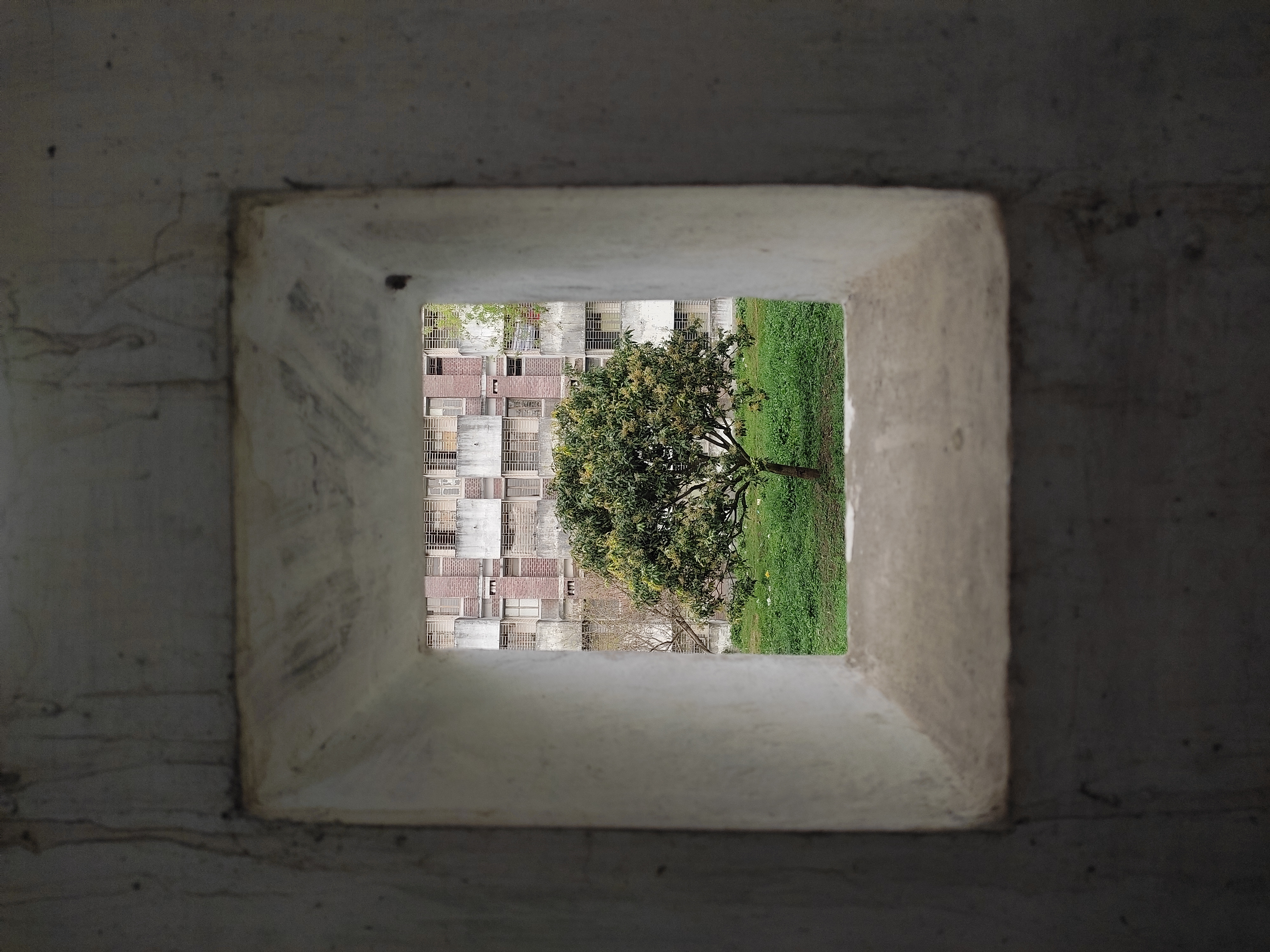
In the south-west, Satkhira's mangoes ripen earlier than those of the rest of the country. The district's deputy director of the Department of Agricultural Extension (DAE) told Prothom Alo on 14 May 2025 that because of the soil and weather the trees there blossom earlier and the fruit ripens earlier than elsewhere. Under that year's calendar, Gobindabhog, Golapkhas, Baishakhi and other local varieties could be picked from 5 May; Himsagar had been set for 20 May and Langra for 25 May, Desh Rupantor reported.
On the evening of 14 May 2025, after a meeting with growers and upazila agriculture officers, the Satkhira deputy commissioner brought the Himsagar date forward by five days, to Thursday 15 May, the day this recipe appeared, saying the fruit had begun to ripen earlier than in other years; the other dates were left unchanged. At the same meeting the DAE gave the season's figures: 13,100 growers had planted mangoes in 5,299 large and small orchards on 4,135 hectares, the production target was 62,800 tonnes, Himsagar was grown on about a quarter of that land, and the export target for Himsagar was 70 tonnes.
Desh Rupantor reported on the morning of 15 May that the early ripening had followed intense heat, that growers said ripe fruit was dropping from the trees, and that many had picked before the set date. At the Sultanpur market in Satkhira town on the night of 14 May, it found Himsagar selling at Tk 2,000 to 2,200 a maund; growers said they could have got Tk 3,200 to 3,500 had they been able to sell on time. Some traders told the paper they believed pressure from profit-seeking traders had pushed the administration into the change. The DAE deputy director said the claim that Himsagar had ripened was not entirely correct, because not all trees ripen at once, but that the calendar had been changed under pressure from all sides. The deputy commissioner said the main aim was to deliver safe mangoes to consumers, and that the administration would take action under the law against anyone who tried to ripen raw mangoes artificially and sell them.
The 2025 season was running ahead of 2024's. In 2024, The Daily Star reported, Satkhira's calendar opened on 9 May with Gopalbhog, Bombai, Golapkhas, Baishakhi and other local varieties, followed by Gobindabhog on 11 May, Himsagar on 22 May, Langra on 29 May and Amrapali on 10 June.
Bangladesh's mango crop
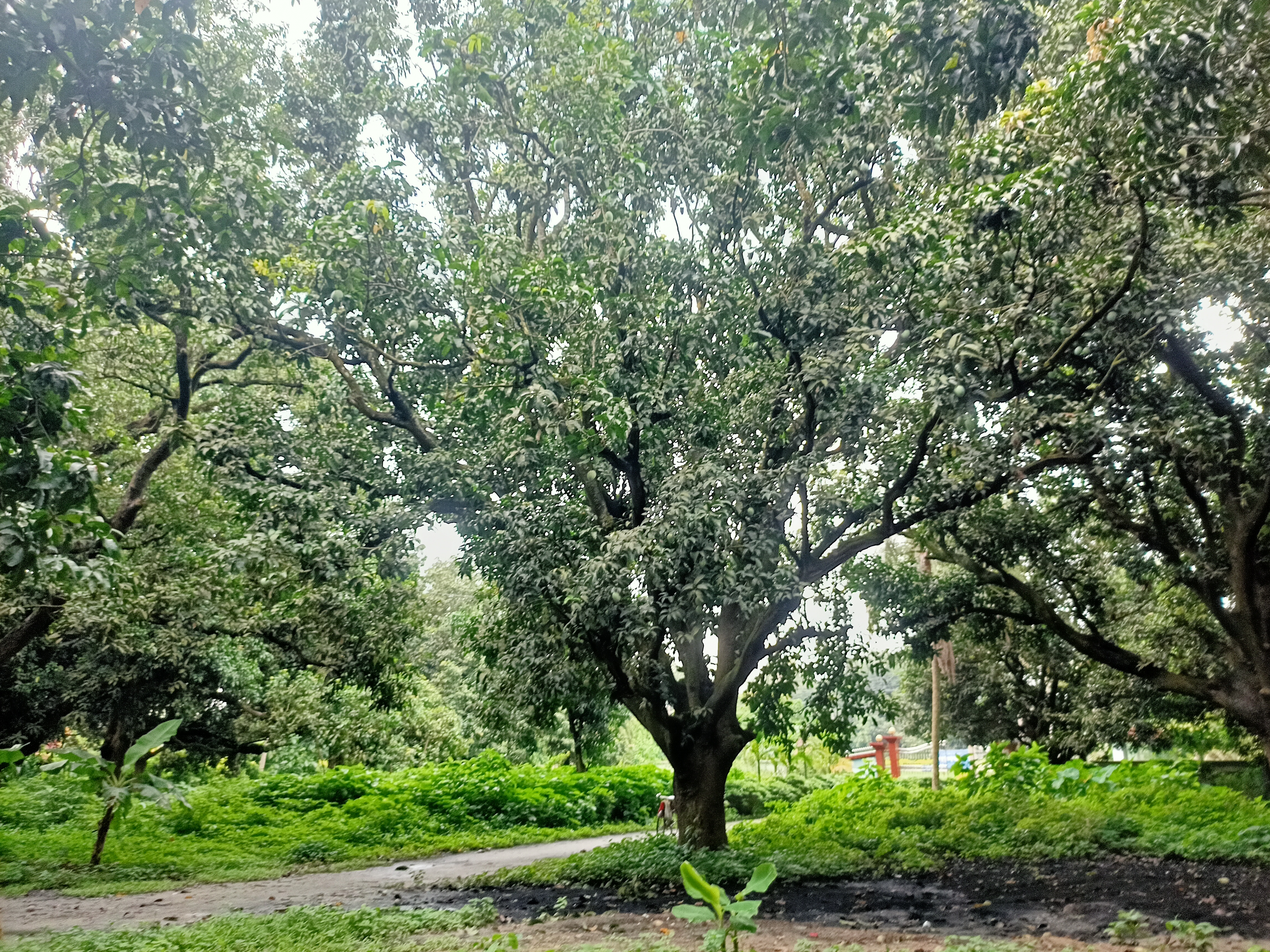
The mango, Mangifera indica, of the family Anacardiaceae, is according to some authorities indigenous to the eastern part of the Indian subcontinent, including Bangladesh, Assam and Myanmar, Banglapedia notes. One of its Sanskrit names, am, meant stored food or provisions, and the English word mango came from Tamil through the Portuguese manga. Bangladesh grows nearly 100 cultivars, which fall into two groups: elite varieties propagated by grafting, such as Fazli, Langra, Gopalbhog, Himsagar, Khirsapat, Ashwina, Lakshmanbhog and Mohanbhog, and local seedling trees known as deshi or guti mangoes, which have no recognised varietal names and whose taste is not assured. That is the "guti" that opens every Rajshahi calendar. Grafted trees begin to bear in their fourth year. The Bangladesh Agricultural Research Institute (BARI) runs mango research at centres in Rajshahi, Chapainawabganj and Joydebpur, and its varieties, such as BARI Aam-4 and BARI Aam-11, appear in the calendars.
By official estimates the crop had grown large. In July 2023 Prothom Alo reported that the DAE expected national production that year to reach about 2.45 million tonnes, from trees on about two lakh hectares, close to two crore trees in all; the Bangladesh Bureau of Statistics (BBS), which counts differently, put annual production at around 1.2 million tonnes. Both agencies showed output rising every year. Naogaon had overtaken Rajshahi and Chapainawabganj as the largest producing district, Amrapali had become the most widely grown variety, and new varieties such as BARI Aam-4, BARI Aam-11, King of Chakapat, Banana Mango, Taiwan Green and Miyazaki were being planted, while sales of saplings of the year-round Katimon were rising fast. DAE officials said a mature tree bears fruit for 50 to 60 years, and that producing a kilogram of mangoes cost about Tk 20 in 2023. The same report noted that, according to the BBS Household Income and Expenditure Survey 2022, a person in Bangladesh ate on average 95.4 grams of fruit a day in 2022, against 44.7 grams in 2010. Mangoes come to market from about mid-May and remain until August.
Several of the country's mangoes carry geographical indication (GI) status, which marks a product's qualities as tied to its place of origin. Khirsapat (Himsagar) of Chapainawabganj received its GI certificate in January 2019, after an application filed in 2017 by BARI on behalf of the district's growers; it was Bangladesh's third GI product after Jamdani and hilsa. Fazli mango of Rajshahi and Chapainawabganj was also registered, and on 25 June 2023 the Department of Patents, Designs and Trademarks issued certificates for the Langra and Ashwina mangoes of Chapainawabganj, at the same time as for the yoghurt of Bogura.
Doi, the base of the drink
The other main ingredient, doi, is a staple of Bengali food. Its best-known home, Bogura, often dubbed the capital of yoghurt, produced an average of 50 tonnes of yoghurt a day in about 400 factories of various sizes, The Business Standard reported in July 2023 when Bogura's yoghurt received its GI certificate, and demand doubles during festivals such as Eid. The recipe simply says yoghurt; it does not say whether to use plain sour doi or sweetened doi, and the choice will change how sweet the finished drink is.
What the ingredients contain
The figures below are from the United States Department of Agriculture's food composition database, FoodData Central, for every 100 grams of each ingredient. They describe the ingredients, not a claim about the finished drink.
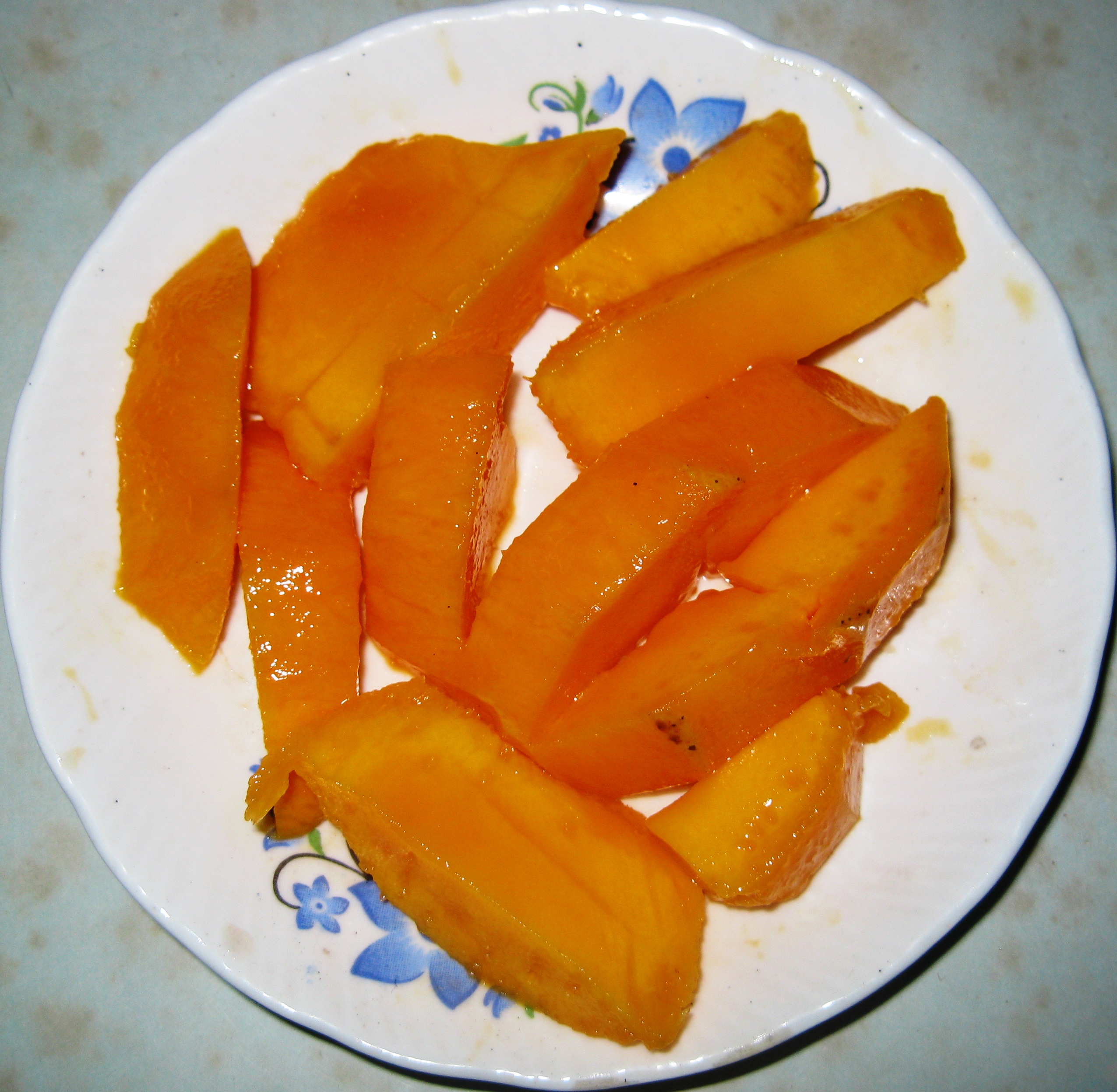
- Fresh mango (raw, uncooked): 60 kilocalories, 83.5 g water, 15 g carbohydrate of which 13.7 g sugars, 1.6 g dietary fibre, 0.8 g protein, 36.4 mg vitamin C, 54 micrograms of vitamin A (RAE), 43 micrograms of folate and 168 mg potassium. The database lists a cup of mango pieces as 165 g.
- Plain whole-milk yoghurt: 61 kilocalories, 3.5 g protein, 3.3 g fat, 4.7 g sugars (the milk's own sugar) and 121 mg calcium.
- Honey: 304 kilocalories and 82.4 g carbohydrate, of which 82.1 g sugars. The database lists a tablespoon of honey as 21 g.
In its 2015 guideline on sugars, the World Health Organization recommends that adults and children keep their intake of free sugars below 10 per cent of total energy, and says a further reduction to below 5 per cent, roughly 25 grams or six teaspoons a day, would bring additional benefits. Free sugars, in the WHO's definition, are sugars added to foods and drinks by the manufacturer, the cook or the consumer, together with the sugars naturally present in honey, syrups and fruit juices. The guideline does not apply to the sugars in fresh fruit or the sugars naturally present in milk, because there is no reported evidence of harm from them. In this lassi, then, the sugars of the mango flesh and the yoghurt fall outside the limit, while the honey or syrup counts towards it.
Honey carries one further caution. The UK's National Health Service advises that honey should not be given to a child until the child is over one year old, because it can occasionally contain bacteria that produce toxins in a baby's intestines and cause infant botulism, a very serious illness; for babies the drink should be made without it. Anyone who has diabetes or who has been told to limit sugar or calories should ask their doctor whether, and how much of, a sweet drink like this suits them.
Keeping the drink safe
A blended drink is not cooked, so it is only as safe as what goes into it. The World Health Organization's Five Keys to Safer Food sum up the rules: keep clean, separate raw and cooked, cook thoroughly, keep food at safe temperatures, and use safe water and raw materials. For a lassi that means clean hands, a clean blender and glasses, ice and any added water made from safe drinking water, and serving the drink cold and promptly. It also means choosing sound, properly ripe mangoes. The harvest calendars exist for that reason: as the Satkhira deputy commissioner told Desh Rupantor in May 2025, the aim is for safe mangoes to reach consumers, and the administration warned of legal action against anyone ripening raw mangoes artificially for sale.
Photo: Nithyasrm / Wikimedia Commons (CC BY-SA 4.0)
Sources: Jagonews24, The Daily Ittefaq, Prothom Alo, Desh Rupantor, The Daily Star, The Business Standard, Banglapedia, USDA FoodData Central, World Health Organization (WHO), National Health Service (NHS), Wikipedia

Comments
(0)