
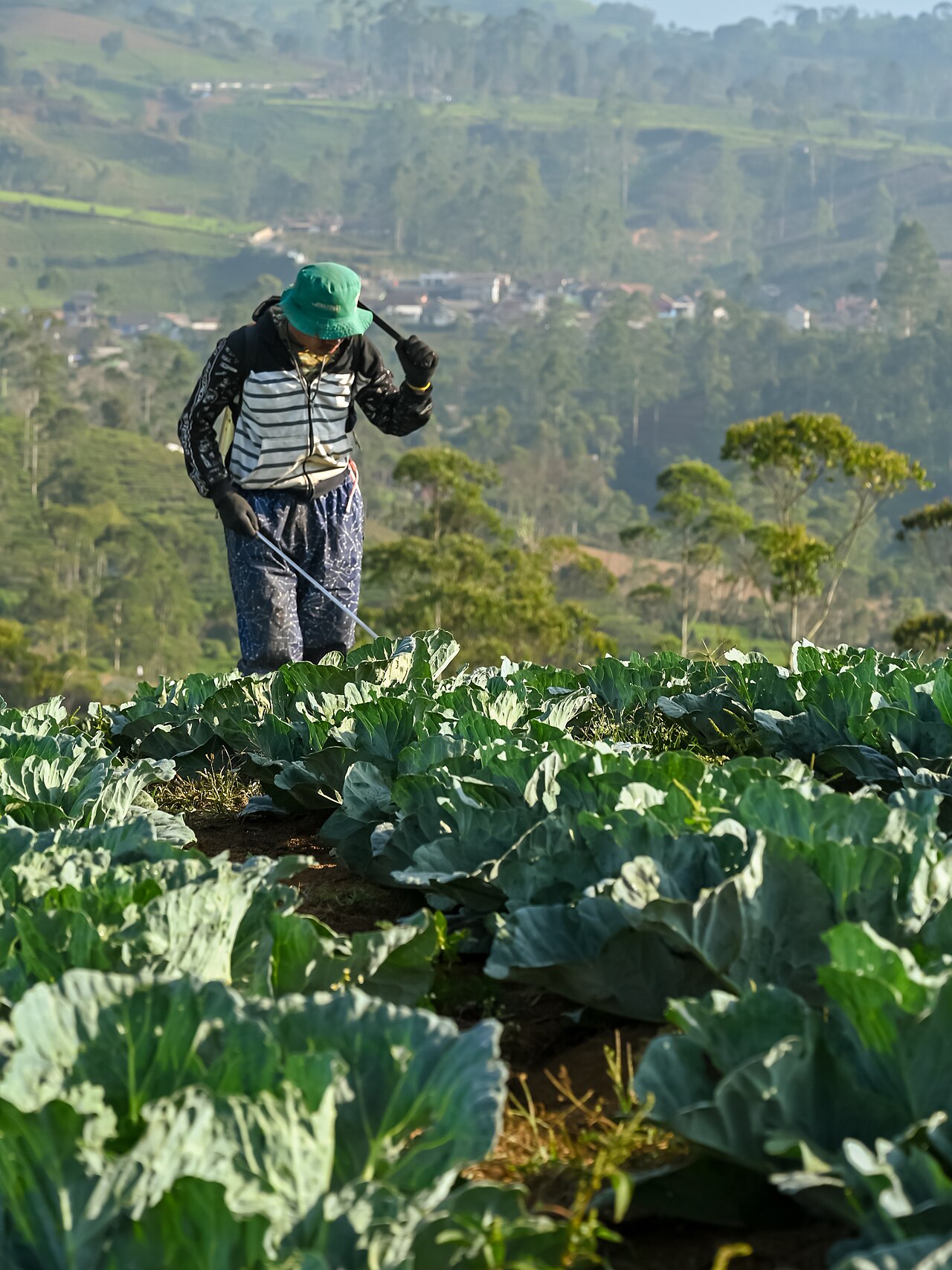
The light is still grey over the mango orchard. At the edge of the trees a grower works the lever of the sprayer on his back, and a fine mist drifts from the nozzle and settles over the leaves. It is one of the most familiar sights in rural Bangladesh, and one of the most consequential. Looking after an orchard is not only about picking fruit; it is about keeping the trees healthy and free of the insects and fungi that would otherwise ruin a season. The right sprayer, used at the right time and in the right way, makes that protection far less of a struggle, and the reward is fruit of better quality and a bigger harvest.
Same chemical, different result: why the equipment matters
Many growers complain that they bought a good pesticide, sprayed it, and the pests stayed. Often the chemical was not the problem; the spraying was. A sprayer's job is to break liquid into droplets and deliver them where they are needed. Droplets that are too large do not stick to the leaf; they roll off and fall to the ground. Droplets that are too fine float away on the air into the neighbouring pond, a house or someone else's field. Either way the money is spent and the tree is not protected.
Fruit trees make the problem harder. Rice or vegetables sit low and open; mango, lychee, guava and jackfruit are tall, dense and spreading. The spray may coat the outer leaves while the inner leaves, the flower clusters and the young fruit are missed, and that is exactly where insects and fungus hide. Choosing a sprayer for an orchard therefore means thinking about the height of the trees, the density of the canopy and the size of the orchard.
Matching the sprayer to the orchard
Three broad kinds of sprayer are on the market, and each has its place. The sensible choice between a hand sprayer, a knapsack sprayer and a power sprayer depends on the size and kind of orchard.
A hand sprayer is a small bottle-type unit held in one hand. For a few trees, a lemon or guava in the yard, or fruit trees in tubs on a rooftop garden, it is enough. City gardeners growing malta, orange, pomegranate or mango in containers on their roofs will find it the most practical tool: cheap, compact, and suited to mixing small quantities, which means less waste.
Rooftop spraying needs some extra care. A roof is open and windy, and close by are a neighbour's windows, washing on the line or a water tank. Check that the air is still, move potted trees to a corner before spraying if you can, and try low-risk options such as neem oil or soapy water first. Never use the same bottle for pesticide one day and plain water the next; keep a separate, labelled bottle for chemicals.
A knapsack sprayer is carried on the back. One hand pumps a lever to build pressure in the tank; the other aims a lance at the tree. It is the standard tool for small and medium orchards and the sprayer most often seen in the Bangladeshi countryside. An extension lance lets the operator reach the upper branches of medium-sized trees.
A power sprayer runs on an engine or a motor. It builds far more pressure and throws the spray much further and higher. In a large commercial orchard with hundreds of old mango trees, finishing every tree on time with a hand-pumped unit is close to impossible; a power sprayer saves both time and labour there. It costs more, needs fuel and should be run by trained hands.
- A few trees or a rooftop garden: hand sprayer
- Small to medium orchard: knapsack sprayer
- Large commercial orchard and tall old trees: power sprayer
A few checks are worth making at the time of purchase. Fill the tank with water in the shop to see whether it is sturdy, whether the lid seals tightly and whether anything leaks. Look for a filter at the tank opening and in the line, because without one dirt gets in and the nozzle keeps blocking. Wide, padded straps make long hours of work far less tiring. Ask whether spare nozzles and washers come with it and whether parts will be available later. A cheap, poorly made sprayer looks like a saving at first, but between leaking chemical on the operator's back and patchy coverage in the orchard it usually ends up costing more.
The nozzle: a small part with a big job
The smallest part of the sprayer may be the most important. The nozzle is the tip of the lance where the liquid leaves and breaks into droplets. Together with the sprayer's output, the nozzle decides where on the tree the chemical ends up and how much of it arrives.
The Food and Agriculture Organization of the United Nations (FAO), in its guidelines on agricultural sprayers, sets out the difference clearly. Hollow cone nozzles swirl the liquid into a ring of fine droplets that give good cover on foliage, especially the outer parts of a canopy; they are the usual choice for insecticides and fungicides. Flat fan nozzles give a flat, even sheet of coarser droplets suited to flat surfaces, and are used mainly for herbicides on soil and weeds. The FAO guidance also says a knapsack sprayer should come with at least one nozzle suited to herbicides and one suited to insecticides and fungicides.
The lesson is that one nozzle cannot do every job. A fungicide wants a fine mist; a foliar feed can go on as a coarser spray. Keeping different nozzles for different trees, and for different jobs on the same tree, is good practice. A worn or partly blocked nozzle changes droplet size and makes coverage patchy, so nozzles should be taken off and checked regularly and replaced when worn. Fine droplets also drift further, so on a day when a fine nozzle is in use the wind deserves extra attention.
When to spray: morning and late afternoon
Choose the morning or the hour before evening, when it is cool. In the midday sun a good part of each droplet evaporates before it reaches the leaf. In the heat the leaf's pores close, so a foliar feed is poorly absorbed, and some products can scorch leaves in strong sunlight. Early and late in the day the air is usually still, which also cuts the risk of drift.
The weather forecast matters as much as the clock. On a windy day much of the spray blows away instead of landing on the tree. If rain falls soon after spraying, it washes the chemical off the leaves and the whole cost is wasted. When rain threatens, it is better to wait.
Fruit trees add a timetable of their own: the tree's life cycle. Take mango. Agricultural specialists in Bangladesh advise spraying against the mango hopper after the flower clusters appear but before the flowers open. Spraying when the clusters are in full bloom is to be avoided, because that is when bees and many other useful insects visit the orchard and pollinate the flowers. Spray at the wrong moment and it is the helpers that die, and fewer fruit set. The right equipment needs the right timing.
Measuring the dose
When mixing an insecticide, a fungicide or a foliar fertiliser, follow the instructions on the label exactly. Many people believe a little extra will work a little better. The opposite is true. An overdose can scorch leaves, leave poisonous residues on the fruit and, repeated season after season, help pests develop resistance. An underdose leaves pests alive and wastes money.
A few habits keep the dose right. Keep a dedicated measuring cup or spoon, never a kitchen utensil. Fill the tank half-way with water, add the measured product, then top up and stir well. Before mixing two products together, check the labels to see whether they can be combined.
It also pays to know how much liquid the sprayer actually puts out, a step called calibration. A practical method is to fill the tank with a measured amount of water, spray a few trees at a normal walking pace and see how much was used. From that the grower can work out how many litres of mix the whole orchard needs, and avoid having leftover mix to dispose of.
One more point is often forgotten: the waiting period before harvest. Every chemical label states how many days must pass between the last spray and picking. Ignoring it to rush fruit to market puts residues on the consumer's plate. Respecting that interval is part of the grower's job.
Covering every part of the tree
Even coverage means the spray reaching every part of the tree. The underside of the leaf matters as much as the top, because many insects and fungi live there. Walk round the tree and spray from all sides, not from one.
In a dense canopy the spray has trouble getting past the outer leaves. Push the nozzle a little way into the canopy and move it slowly from top to bottom. Holding it in one place too long makes the liquid drip from the leaves, which is waste. Stop when the leaves look wet and glossy, before they start to drip.
Pruning helps here. A regularly pruned tree lets light and air into its centre, and lets the spray in too, with far less effort. The same amount of chemical does more work.
What needs spraying, and what can replace it
Orchards call for a sprayer mainly for a handful of problems. In mango, the hopper sucks sap from the flower clusters at flowering time, and the clusters dry up and drop. In damp weather a fungal disease called anthracnose leaves black spots on leaves, flowers and fruit; sometimes a white powdery coat appears on the flowers, the disease known as powdery mildew. Guava, jujube and lychee suffer from fruit borers and fungal attacks too. In each case, the right product at the right time, delivered with the right equipment, prevents much of the damage.
Spraying is not the only answer, though. The agriculture authorities have long promoted integrated pest management, which means using the least harmful methods first and chemicals last, only when needed. Pheromone traps for fruit flies, a clean orchard floor, fallen rotten fruit collected and buried, and, in mango, wrapping each fruit in a special paper bag once it has grown: these methods have spread among Bangladesh's mango growers and cut the number of sprays. And when a spray is unavoidable, doing it well with the right equipment matters even more, because every spray then has to count.
Safety first
Any discussion of spraying has to include the person holding the lance. Pesticides can harm the body through the lungs, the skin and the eyes, so a few rules should be followed every time.
- Wear a mask over nose and mouth, rubber gloves, eye protection, a long-sleeved shirt and long trousers.
- Never spray into the wind; let the wind carry the spray away from you.
- Do not eat, drink or smoke while spraying.
- Never blow through a blocked nozzle; clear it with water or a soft brush.
- After the job, wash hands and face with soap and change your clothes.
- Keep children and livestock away from the sprayed area.
Bangladesh regulates the import, sale and use of pesticides under the Pesticide Act 2018, which covers registration, labelling and safe handling. Whatever the law says, safety in the field ultimately depends on the care of the person doing the spraying.
Looking after the equipment
Clean the sprayer after every use and store it properly so it lasts. When the job is done, put clean water in the tank and spray it through a few times to rinse the hose and nozzle. Residue left in the tank can damage the next crop, especially if a herbicide was used and the next spray goes onto fruit trees. Empty the rinse water on a bare corner of land, never near a pond, canal or tube well.
After cleaning, turn the sprayer upside down to dry. Check the rubber washers, the filter and the nozzle, and replace anything cracked or worn. Store the sprayer in the shade, somewhere dry and out of children's reach; left in strong sun, plastic tanks and hoses turn brittle quickly. Empty pesticide bottles are dangerous if reused; rinse them, puncture them and dispose of them safely.
What the right sprayer gives back
The first return is protection from disease. Trees are shielded from insects and fungus, and the fruit keeps its quality. Clean, well-formed fruit fetches a good price; blemished or insect-damaged fruit has to be sold cheap.
The second is yield. Timely protection and foliar feeding keep the tree supplied with nutrients, so fewer flower clusters drop and more young fruit hold on. Because the dose is right, less chemical is needed, and more is produced for less money.
The third is labour and time. A better sprayer covers the whole orchard in far less time, and makes it much less work to give each tree what it needs. In the busy season, when workers are hard to find, the saving is significant.
The fourth is the environment. The right dose stops chemical waste; less drifts on the air or runs into the soil. The orchard's soil, the water nearby, and the useful insects and birds are all safer, and the orchard stays healthier.
Practical tips for growers
- Use different nozzles for different trees.
- Where you can, prefer natural or organic pesticides and organic liquid feeds.
- Check the sprayer's performance several times a year: is the pressure right, is anything leaking, does the nozzle spray evenly?
- Train the people who use the sprayer, so they work skilfully and safely.
- Keep a notebook of which product went on which trees, at what dose and on what date; it will be a great help next season.
For training and advice, growers can contact their upazila agriculture office or the sub-assistant agriculture officer in their union. Field staff of the Department of Agricultural Extension advise on which product to use against which disease, and when.
The next generation: automated sprayers and drones
Advanced spraying equipment has opened new possibilities for agriculture. Automated and drone sprayers are expected to push the sector further, lowering the cost of growing fruit and raising its quality. Some modern machines sense where a tree stands and release spray only towards it, not into the gaps. Drones can reach the tops of tall trees and steep, awkward orchards in a short time.
However advanced the technology becomes, the basic rules do not change: the right droplet, the right dose, the right time and the right place. Follow those four and an ordinary knapsack sprayer does excellent work. Ignore them and the most expensive machine is only a way of wasting money.
Healthy trees, a profitable orchard
The right sprayer, used well, keeps an orchard free of disease and its fruit well nourished and of high quality. Choosing equipment to fit the orchard, changing nozzles for the job, spraying measured doses evenly in the cool of the day, protecting yourself and cleaning the kit afterwards: once those habits take hold, costs fall and income rises. The grower in the misty mango orchard at dawn is holding the key to the whole season's harvest.
Photo: A farmer spraying with a knapsack sprayer, Doyanmoto / Wikimedia Commons (CC BY-SA 4.0)
Comments
(0)