
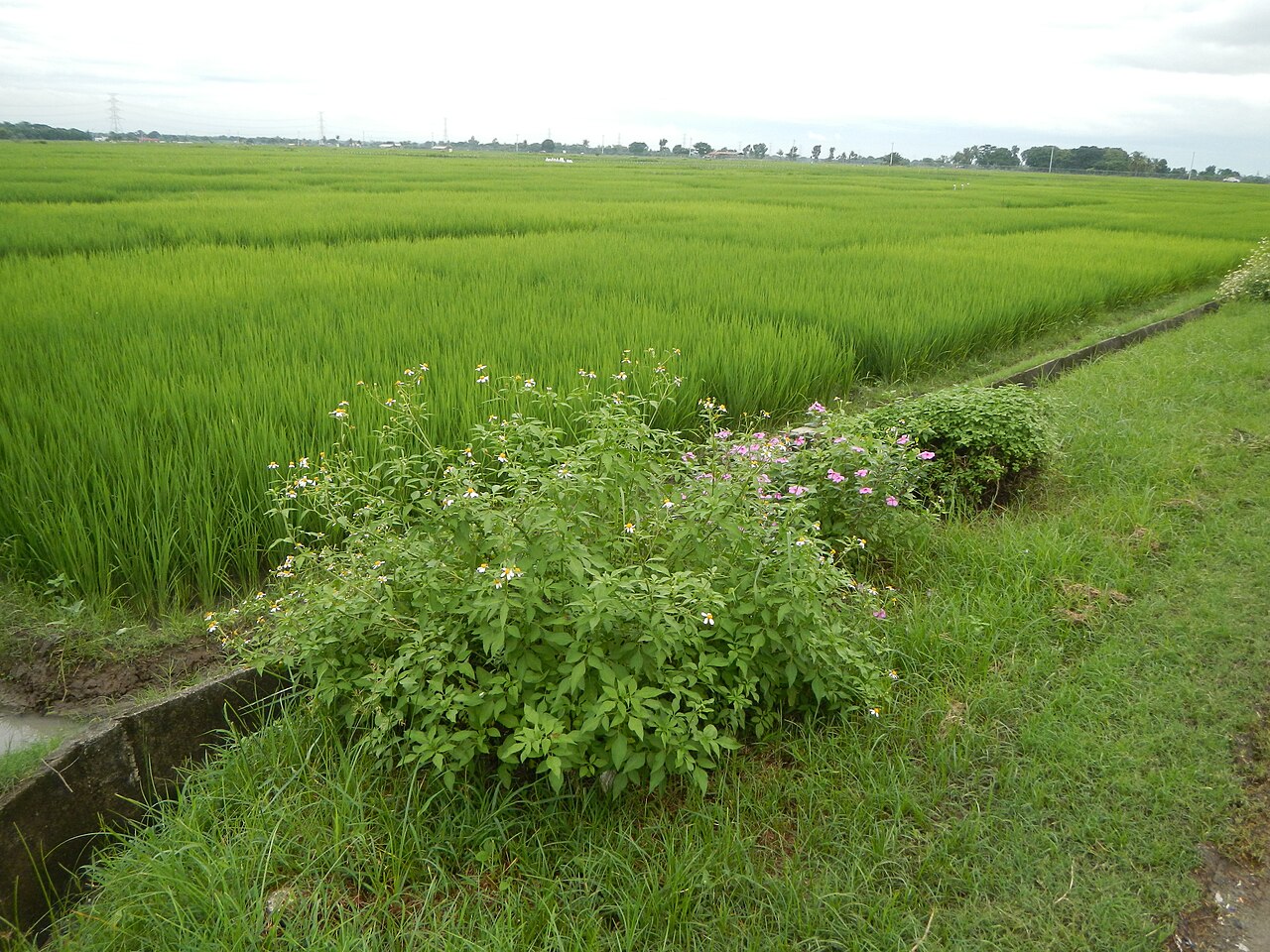
Rice farmers can roughly halve the methane from their paddies by letting fields dry out from time to time, and can cut it further by combining that with deeper urea placement, balanced fertiliser and lower-emitting varieties, according to a review led by Kyungpook National University in South Korea and published in Rice Science, the journal of the China National Rice Research Institute.
The review, by Prof. Kyung-Min Kim and colleagues from Oman, China and South Korea's National Institute of Crop Science, gathers decades of field and lab studies rather than reporting a new trial. Rice paddies release an estimated 30 to 50 million tonnes of methane a year, 8 to 12 percent of all human-caused methane, the authors note, citing the IPCC.
Standing water of 5 to 10 cm starves the soil of oxygen, letting methane-producing microbes take over; the rice plant then vents an estimated 80 to 90 percent of field emissions through air channels in its roots and stems. Methane production rises 2.5 to 3.5 times for every 10°C between 15°C and 30°C, a warning for warming rice belts.
Water management gives the largest gains. Under alternate wetting and drying (AWD), water may drop to 15 cm below the soil surface before re-flooding, except for a week either side of flowering. Studies in the review found methane cuts of 60 to 87 percent in California with stable or higher yields, and a meta-analysis found AWD cut the combined warming effect of methane and nitrous oxide by 46.9 percent. The authors flag trade-offs: in one Italian trial AWD cut methane by 97 percent but yields fell by a third and nitrous oxide rose fivefold.
Fertiliser is the second lever. Burying urea 7 to 10 cm deep cut methane by 24.6 percent in one global estimate; ammonium sulphate cut emissions by 23 to 36 percent; balanced nitrogen, phosphorus and potassium cut them by 48 percent compared with nitrogen alone. Biochar results are mixed. High-yielding, early-maturing and japonica varieties generally emit less.
The authors conclude that no single practice is enough, and call for smart irrigation with soil moisture sensors, remote sensing and automated water control, together with precision nutrient management. They warn that most evidence is tied to one region or method and that scaling up is hardest where smallholders grow most of the world's rice, which includes South Asia.
Photo: Judgefloro / Wikimedia Commons (CC BY-SA 4.0)
Source: Global Agriculture

Comments
(0)