
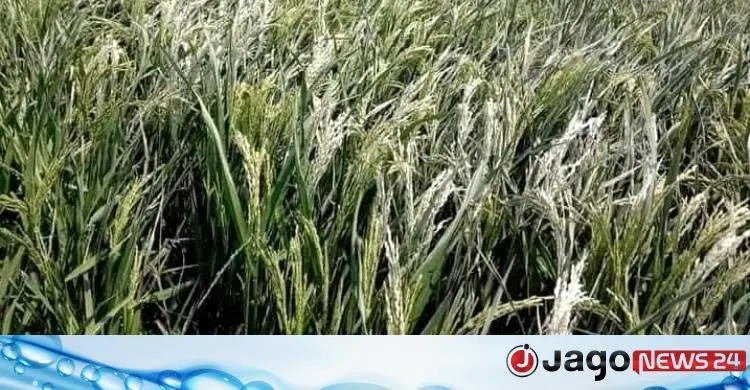
Bangladesh is an agricultural country, and rice is the foundation of its food security. Most farmers depend on growing rice for their living. In recent years, however, temperatures have been rising abnormally because of climate change, with serious effects on rice production. In the boro season in particular, high temperatures are disrupting critical stages such as growth, flowering, pollination and grain formation, raising the risk of empty grains, scorched plants and lower yields.
Why heat harms rice
Every stage of the rice plant's life cycle depends on a particular temperature range. In general, 20-30 degrees Celsius is the most suitable temperature for rice, and within this range the plant grows and develops normally. When the temperature goes beyond it, the plant's physiological functions are disrupted. Temperatures of 35 degrees Celsius or more are especially harmful.
One of the main causes of empty grains is excessive heat during flowering and pollination. If the daytime temperature at this stage reaches 35 degrees Celsius or above, pollination is hindered and the grains do not fill, leaving many empty grains on the panicle and causing farmers heavy losses. Likewise, if the night temperature stays above 28 degrees Celsius, the plant's respiration increases and its stored energy is used up quickly, which hampers grain filling and cuts the yield.
Late transplanting is another important cause. Many farmers plant seedlings after the recommended time for various reasons, so that flowering and grain filling fall in the intense heat of the Bengali months of Chaitra and Baishakh. This multiplies the risk of heat damage. Stormy winds and dry weather further disrupt pollination.
Local conditions also matter. Temperatures are relatively higher in fields near brick kilns, and the heat and smoke from the kilns harm rice plants. The plants get scorched, the leaves change colour and the grains become bitter or poorly developed, so production falls considerably.
What farmers should do
In this situation farmers need to take some effective steps. First, planting at the right time is vital. If 40-45-day-old seedlings are transplanted within the month of Kartik, flowering takes place in a relatively cooler period and much of the harm from high temperatures can be avoided.
Second, farmers should choose short-duration and heat-tolerant rice varieties. Agricultural research institutes have developed varieties able to withstand high temperatures, and using them lets farmers get good yields at lower risk.
Third, keeping enough water in the field is very important. Standing water of 2-5 centimetres keeps the soil temperature somewhat under control and reduces the effect of heat on the plants. If the field dries out around midday, the temperature rises quickly, which is harmful, so regular irrigation must be ensured.
Fourth, potash fertiliser plays an important role in raising the plant's heat tolerance. Potash strengthens the plant's cells and increases its water-holding capacity, helping it cope with heat stress. Used in the correct dose, it keeps the plant healthy and improves grain filling.
Fifth, setting up brick kilns on cropland must be controlled. Kilns next to farmland should be relocated, or new ones should not be approved, and the authorities concerned need to act strictly on this.
Climate change has created new challenges for rice farming. Meeting them requires greater awareness among farmers, the use of the right technology and timely decisions, along with coordinated efforts by the Department of Agricultural Extension (DAE), research institutes and policymakers.
High temperature is a major threat to rice production, but with proper planning and management much of the damage can be reduced. Only through timely decisions by farmers and the adoption of modern farming technology can this challenge be met and the country's food security ensured.
Source: Jagonews24. First published in Bengali on The Agro News.


Comments
(0)