
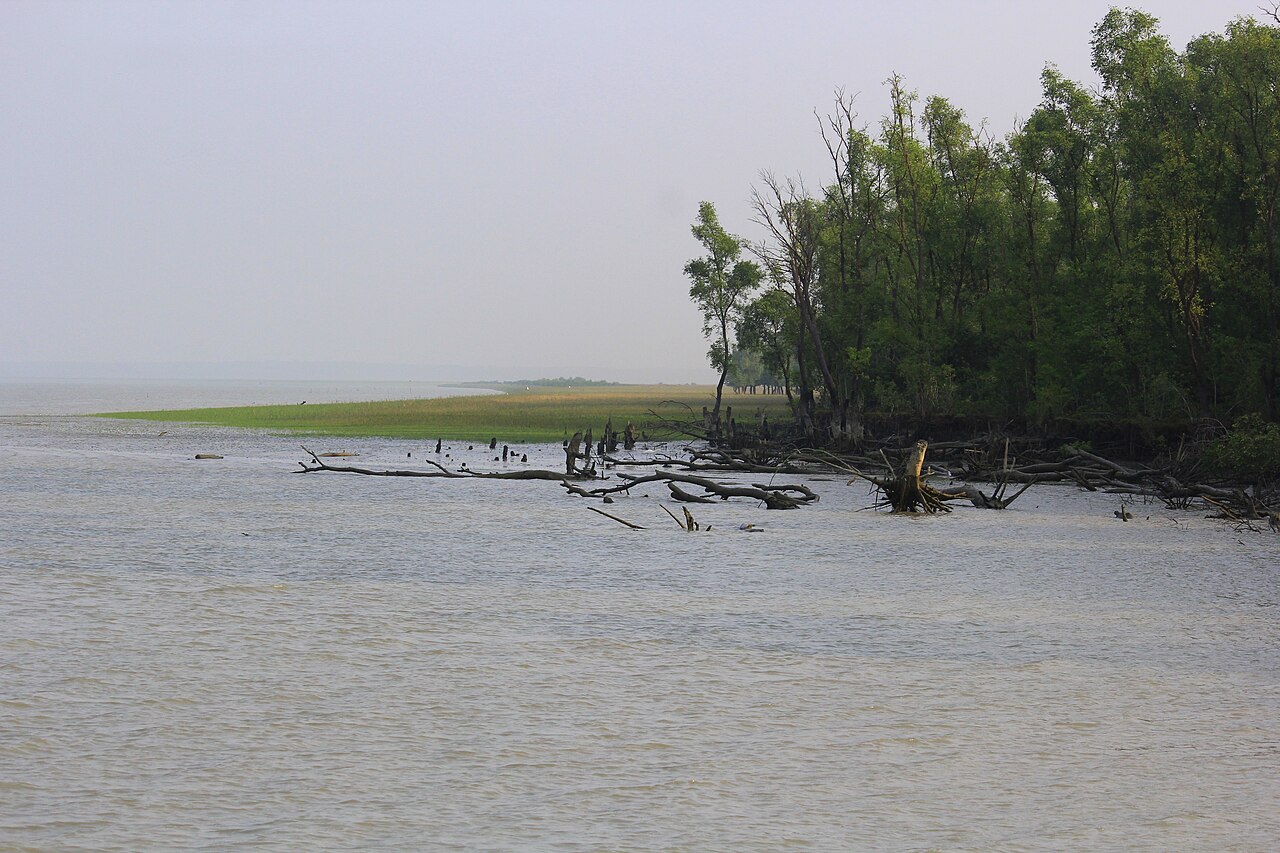
Aggressive shrimp farming in the 1980s destroyed the Chakaria Sundarbans in Cox's Bazar, once the country's second largest mangrove forest. In a column in Prothom Alo, writer and journalist Khalilullah, the paper's climate project manager, argues that bringing it back is essential to coping with cyclones and climate change. The views are the writer's own.
He writes that the forest covered about 21,102 acres in the 1950s, of which 18,508 acres were later declared reserved forest. Leasing began in 1977, and a 1985 shrimp farming policy allowing any forest land suitable for shrimp to be leased hastened its destruction. Today a single sundari tree survives. In 1926 James Cowan listed 53 plant species in the forest.
There is some hope. Citing Prothom Alo's reporting, he notes that 80,000 baen (Avicennia) trees planted by an NGO on 25 acres along the Badarkhali channel have survived well, and 40,000 more were planted on another 25 acres in June. Quoting Sheikh Faridul Islam, the state minister for environment, he writes that 4,000 acres are still recorded as Forest Department land despite the leases, and recovering them is the first goal.
Shrimp farming and mangroves can coexist, he argues, in what is known as silvofishery. Citing discussants at a Prothom Alo round table, he writes that rising temperatures kill 64 per cent of shrimp under current methods, while keeping mangroves in the ponds cuts that to 50 per cent, a result found in trials on 100 hectares in Paikgachha, Khulna. The chief conservator of forests advised doing this outside the natural Sundarbans, and the writer sees Chakaria as the right place.
At a minimum of 150 tonnes of carbon per hectare, he calculates, the roughly 8,498 hectares of the Chakaria Sundarbans could have held 1,274,700 tonnes of carbon. Citing researchers, he argues that the death toll of the 1991 cyclone would have been far lower had the forest stood.
Among the obstacles he lists the reluctance of leaseholders, embankments around polders and shrimp ponds blocking tidal flow, soil degraded by years of salt and shrimp farming, the international shrimp market and tree felling for industry at Maheshkhali and Matarbari. First the forest's ecosystem must be restored, he writes, after which the mangrove can regenerate itself; what it needs most is political will.
Photo: Ashis Kumar Datta / Wikimedia Commons (CC BY-SA 4.0); coastal forest at Char Kukri Mukri, illustrative
Source: Prothom Alo



Comments
(0)