
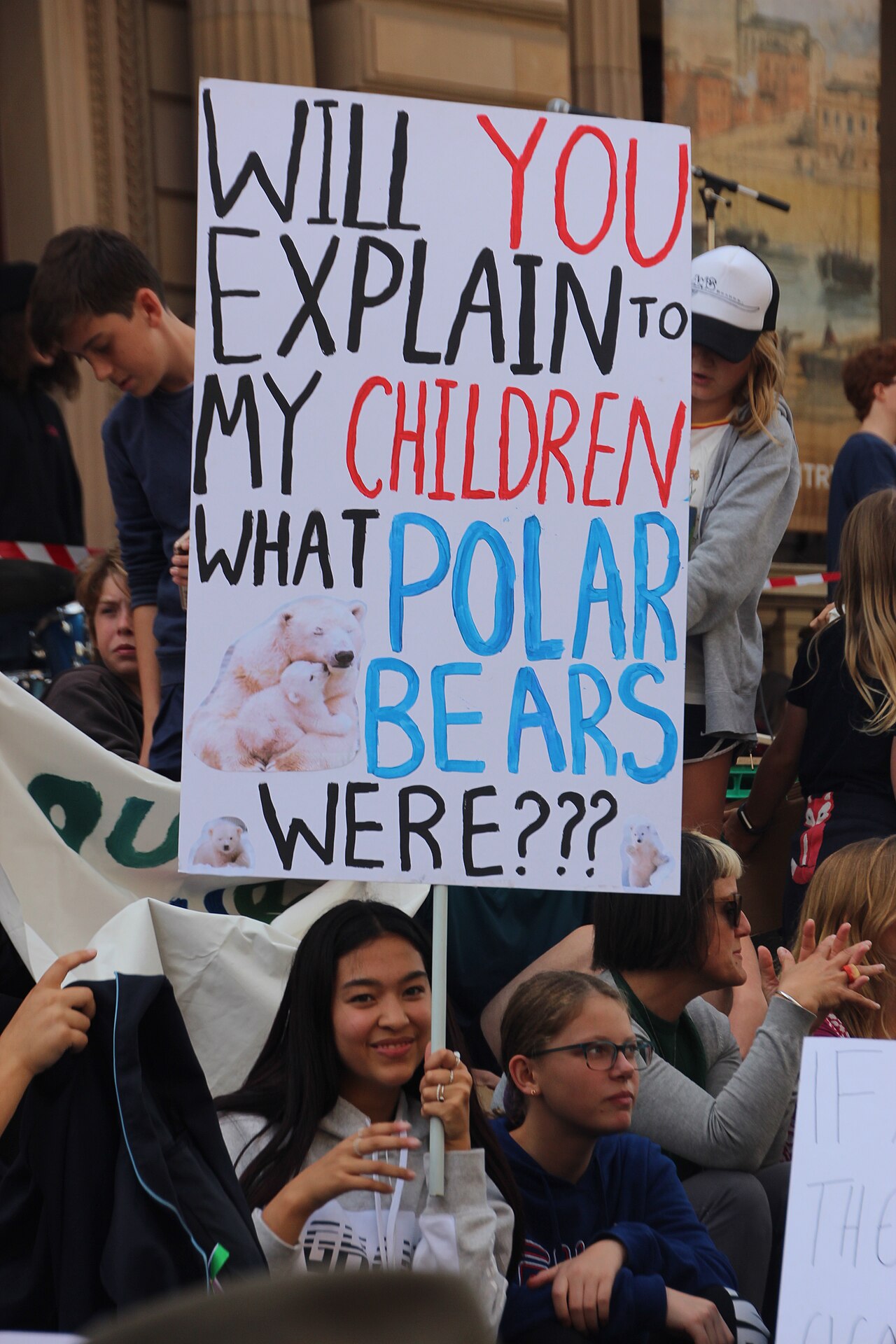
Climate change is usually counted in degrees, emissions and economic losses, but it is also taking something harder to measure: people's sense that the future is certain. That is the argument of Shruti Sharma, associate professor and head of the Department of Management Studies at TERI School of Advanced Studies in India, in a column for Down To Earth. She writes as a teacher of climate risk and resilience, and as a parent.
She starts from an image that places people at every stage of life, from pregnancy to old age, inside a ring of climate hazards: rising temperatures, air pollution, floods, droughts, storms, wildfires, sea-level rise and salinisation. For a child, she writes, extreme heat can mean sleepless nights, disrupted schooling or no outdoor play; for an adolescent, climate change can become a question of what kind of future they are growing into; and parents, expected to make the future feel safe, increasingly ask whether each heatwave or flood will become normal for their children.
Sharma cites a multinational study of 388 adults in 44 countries in which 83.5 per cent had lived through at least one extreme climate event in the preceding five years. Those exposed reported higher levels of climate anxiety, and disruption to everyday functioning was the strongest predictor of it.
The burden, she argues, is not shared equally. One family can leave a flood-prone area and another has nowhere to go; one household can afford cooling while another struggles to pay its electricity bill; one student has psychological support and another lacks basic healthcare. For that reason she calls climate mental health a question of climate justice.
She also questions how climate change is taught. Students must be told the truth, she writes, but if every lesson ends in catastrophe and frightening projections come without pathways for action, young people lose their sense of agency. Hope, in her definition, is not denial of the science but the belief that choices still matter when the outcome is uncertain.
Planners speak of resilient cities, infrastructure, agriculture and economies, Sharma writes, and perhaps they should also speak of resilient minds: leaving children not only clean air, safe water and stable ecosystems, but the capacity to hope, to recover, and to understand risk. The views are the writer's own.
Photo: Takver / Wikimedia Commons (CC BY-SA 2.0)
Source: Down To Earth


Comments
(0)