
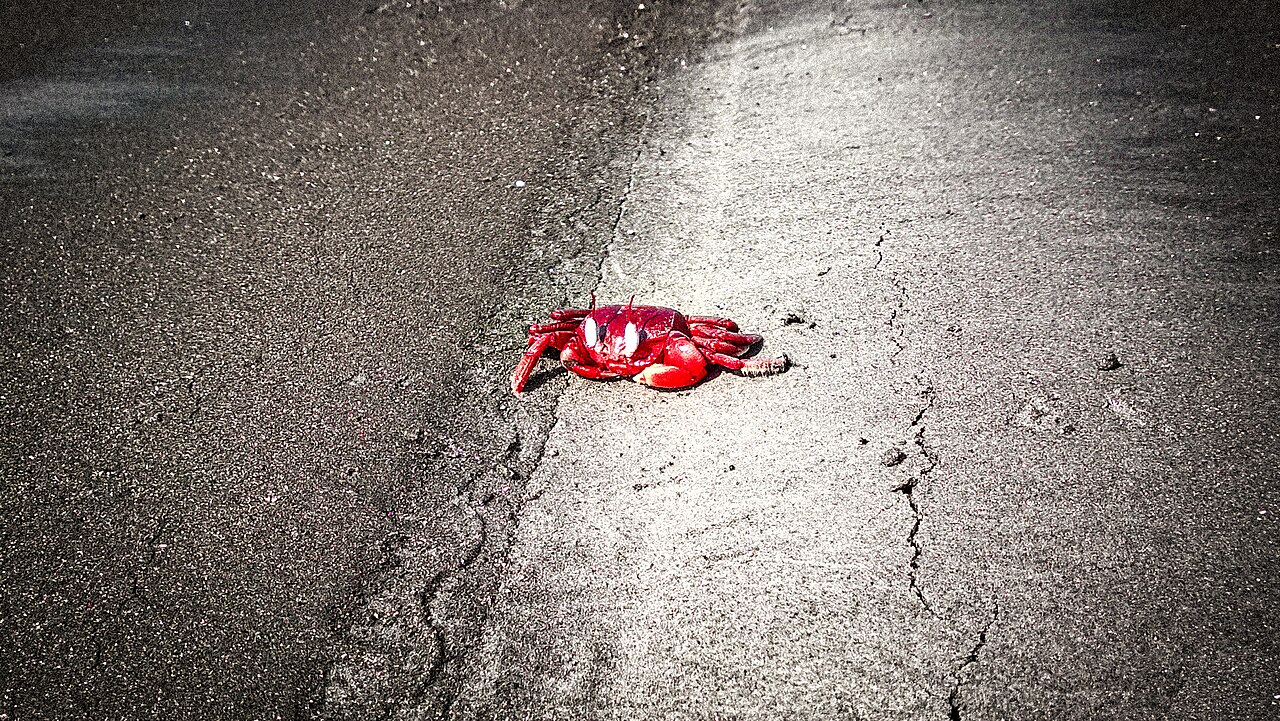
Controlling where people walk and giving a little protection is enough to safeguard red crab habitat on Kuakata beach, a new study has found. Banglavision's Patuakhali correspondent reports that the research, published in the international journal Regional Studies in Marine Science, found red crab burrows about 19 times denser in protected areas than in unprotected ones.
The researchers surveyed the density and features of red crab burrows at Lemburban, Char Gangamati and Char Bijoy in Kuakata and recorded 6,575 burrows in all. Md. Bakhtiar Rahman, a research assistant with the Sustho Sagar project, said old burrows were sampled and inactive ones left out of the count. The main reason for the higher density in protected areas, he said, is that there are fewer people and less disturbance there.
The researchers recommend controlling access to sensitive parts of the beach, marking set paths for tourists, better waste management and regular monitoring, with local people and tourism businesses involved.
Professor Dr. Md. Rajib Sarker of the Fisheries Biology and Genetics department at Patuakhali Science and Technology University said red crabs help recycle nutrients and balance the food web by eating dead organic matter and small animals. He called for long-term research on seasonal changes in burrow density, tourist pressure, vehicles, waste, breeding seasons, the survival of young crabs and the effects of pollution.
Ruman Imtiaz Tushar, president of the Tour Operators Association of Kuakata (TOAK), said many tourists injure crabs, sometimes fatally, while trying to take pictures with them, and that some auto-rickshaw drivers take visitors to the beaches promising photos with a crab in hand. He called for more guarding at Lemburban, Gangamati and Char Bijoy and for tourists to be told about the crabs' importance at the start of their visit.
Forest Department Mohipur range officer A K M Moniruzzaman said the state of red crab habitat in these areas is now satisfactory. Fences put up earlier were damaged by tides and waves, and new fencing is now being installed. Yasin Sadek, Kalapara assistant commissioner (land) and administrator of Kuakata municipality, said the departments concerned and local people must work together to inform tourists and stop people catching and disturbing the crabs.
Photo: Hemel / Wikimedia Commons (CC BY-SA 4.0)
Source: Banglavision

Comments
(0)