
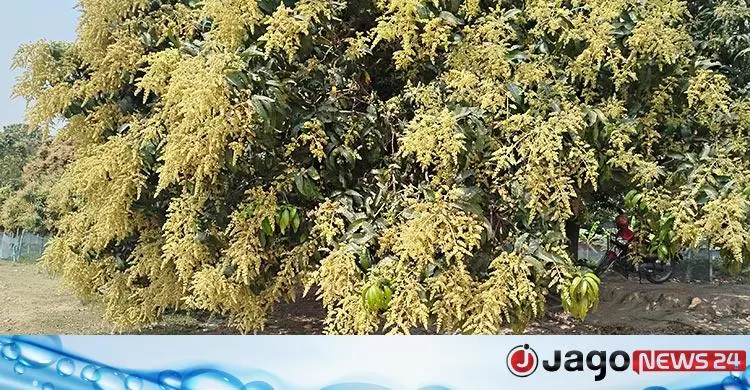
The area under mango orchards has fallen in Rajshahi and Chapainawabganj, districts famous for mangoes. Hoping for quicker and higher income, farmers are digging up orchards and paddy land to make fish ponds, raising fears of a major change in land use in the two districts.
Figures from the Department of Agricultural Extension show that Rajshahi district had 19,603 hectares of mango orchards in the 2024-25 fiscal year, falling by 541 hectares to 19,062 hectares in 2025-26.
Agriculture officials say the district now has about 37 lakh mango trees, of which about 60 percent have flowered so far this season.
Orchard area has also fallen in Chapainawabganj, regarded as the country's main mango-producing district. Orchards covered 37,487 hectares in 2025-26, against 37,504 hectares in 2024-25. The district now has 92.4 lakh mango trees, about 70 percent of which have flowered this season.
Why farmers are switching
Agriculture officials and farmers blame the rapid expansion of fish farming for the decline, as farmers expect faster and surer profits than from mangoes. Mango growing is risky because of erratic weather, pest attacks and price swings, but fish farming does not carry those risks.
Bangladesh Bureau of Statistics data show that between 2015 and 2023, net cropped land in Rajshahi district alone fell by 16,159 hectares, while inland water bodies grew from 15,044 hectares to 24,498 hectares over the same period.
Farmers say rising input costs, labour shortages, inadequate cold storage and unpredictable yields have made mango growing increasingly risky, pushing them towards fish farming.
Shahidul Hossain, a mango farmer in Bagha upazila of Rajshahi, said: "A decade ago, applying fertiliser and pesticide once a year was usually enough for mangoes. But now, because of climate change, pests and diseases have increased, and farmers have been forced to spray twice as much pesticide. As a result production costs have gone up and profits have fallen."
Nasir Ali, a fish farmer in Paba upazila, said: "Fish farming is 10-15 times more profitable than traditional rice and mango farming. That is why most of our orchards have now been turned into ponds."
In Naogaon district, however, mango cultivation has risen slightly, from 30,300 hectares last year to 30,310 hectares this year.
Warning over soil and food security
Warning about the trend, Professor Mostafizur Rahman, chairman of the Department of Agronomy and Agricultural Extension at Rajshahi University, said excessive pond digging is changing soil structure and drainage patterns, which will make it hard to restore the land to orchards or crops in future.
He added that such practices disrupt the natural recycling of soil nutrients and, by permanently altering fertile land, could threaten long-term food security.
Source: Jagonews24. First published in Bengali on The Agro News.


Comments
(0)