
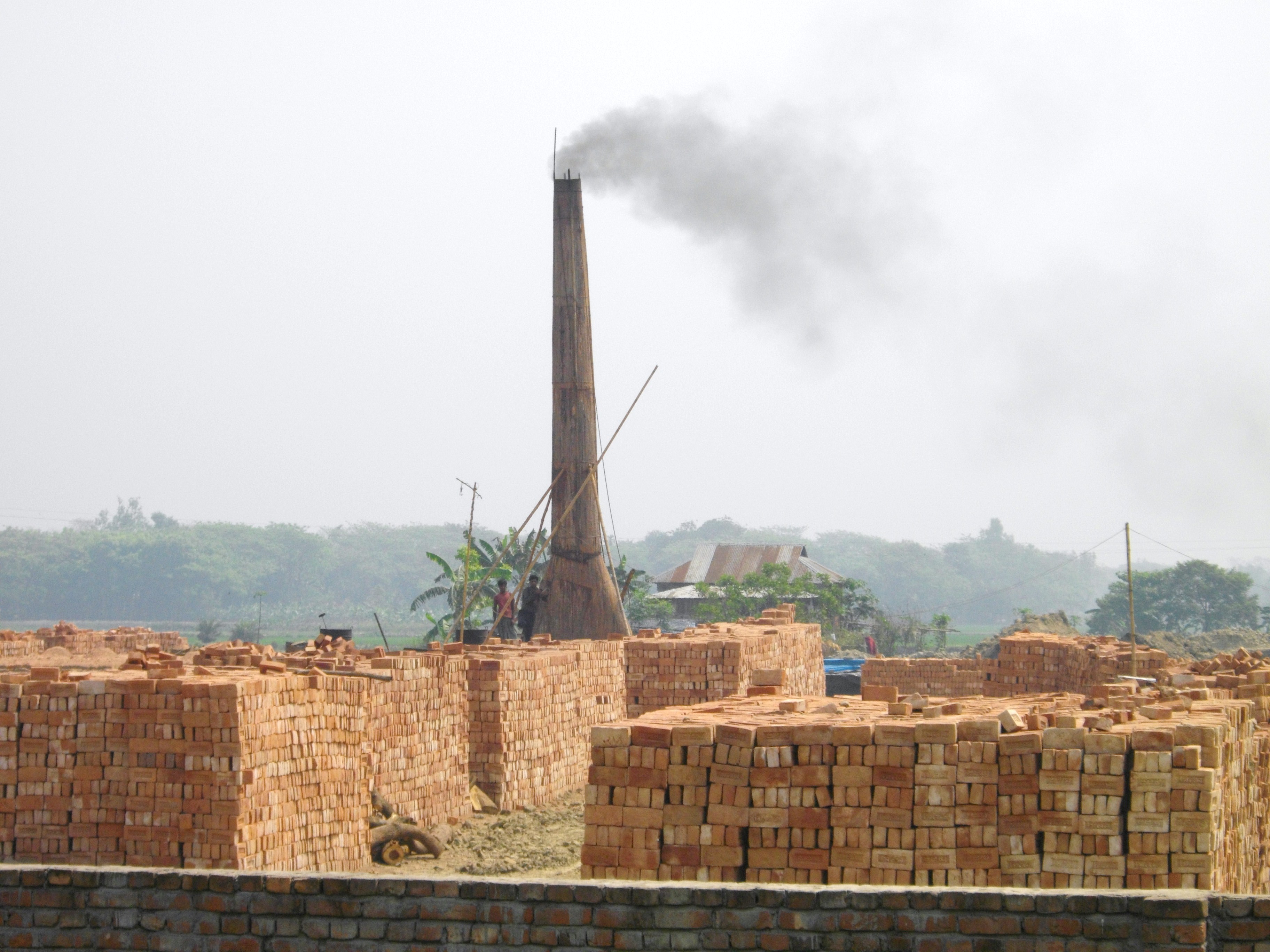
Farmers in Rajibpur (Char Rajibpur) upazila of Kurigram district alleged in late April 2026 that toxic smoke from a brick kiln had ruined paddy on about 40 bighas of land in the upazila's Sluice Gate area, and that at least 45 farmers had suffered losses. Jagonews24's Kurigram correspondent reported the allegation in a story published early on 26 April 2026. The kiln's owner denied it and said hot wind may have caused the damage. An assistant director of the Department of Environment in Kurigram explained how gas released from a kiln's firing chamber can harm nearby crops, and the upazila administration said it had not yet received a complaint but would investigate if one came.
What the farmers alleged
According to the affected farmers, the trouble began on the night of 20 April 2026. They said a heavy discharge of smoke came out of the kiln that night, and that afterwards the paddy plants on the farmland around it were scorched. The damage, they said, was not limited to paddy: fruit trees and clumps of bamboo around their homesteads were also harmed by the smoke. The report put the affected area at about 40 bighas and the number of farmers who had suffered a loss at no fewer than 45. It did not carry an estimate of the loss in money or tonnes, and no assessment by the agriculture office was quoted.
Abdus Salam, a local farmer, said he had grown paddy on 25 bighas. He had visited the field the day before the incident and seen nothing wrong; when he came back the next day, he said, almost all of the crop had been ruined, and he was now facing a heavy financial loss. He also alleged that when he went to ask the kiln for compensation, the people on the kiln's side were uncooperative and behaved badly towards him.
Another farmer, Shahid Mia, said he believed the smoke had come from extra coal burnt at the end of the kiln season, and that this was what had damaged their crops. A third farmer, Abdul Aziz, made the same allegation. He said he had farmed for many years but had never before seen damage of this kind, and that it would be hard for the farmers to make good the loss.
When the report was published, none of these claims had been examined by an inquiry. They are the farmers' account of what happened, and the owner of the kiln disputed them.
The kiln owner's denial and the officials' response
The kiln's owner, Rafiqul Islam Mukul, rejected the allegation. "The chimney of my brick kiln is 100 feet high, and besides, I have not been burning bricks for the past week," he told the reporter. "So the damage may have been caused by intense hot wind, not by smoke."
Md Rezaul Karim, assistant director of the Department of Environment's Kurigram district office, did not say what had caused the damage in Rajibpur. He described instead how a kiln can harm the land around it. Gas collects in the firing chamber of a brick kiln, he said. When the burning of bricks stops and the mouth of the firing chamber is opened, that gas escapes into the open, and the cropland and surroundings on the side where it is released can suffer extensive damage. For that reason, he said, before letting the gas out of the firing chamber, kiln operators must first check whether there are crops on the land nearby, and only then release it.
Sayekul Hasan Khan, the acting Upazila Nirbahi Officer (UNO) of Rajibpur, who also serves as the upazila's assistant commissioner (land), said that no complaint had yet been received from the farmers. If one were received, he said, it would be investigated and the necessary action taken.
The environment officer's explanation does not turn on whether bricks were being fired that particular week. By his account, a kiln that has stopped burning can still release gas when its chamber is opened. The owner's statement that he had not burnt bricks for a week and the farmers' statement that extra coal had been burnt at the end of the season both place the event at the close of the kiln's working season; the report did not settle which account was right.
Char Rajibpur, a small upazila on the Brahmaputra
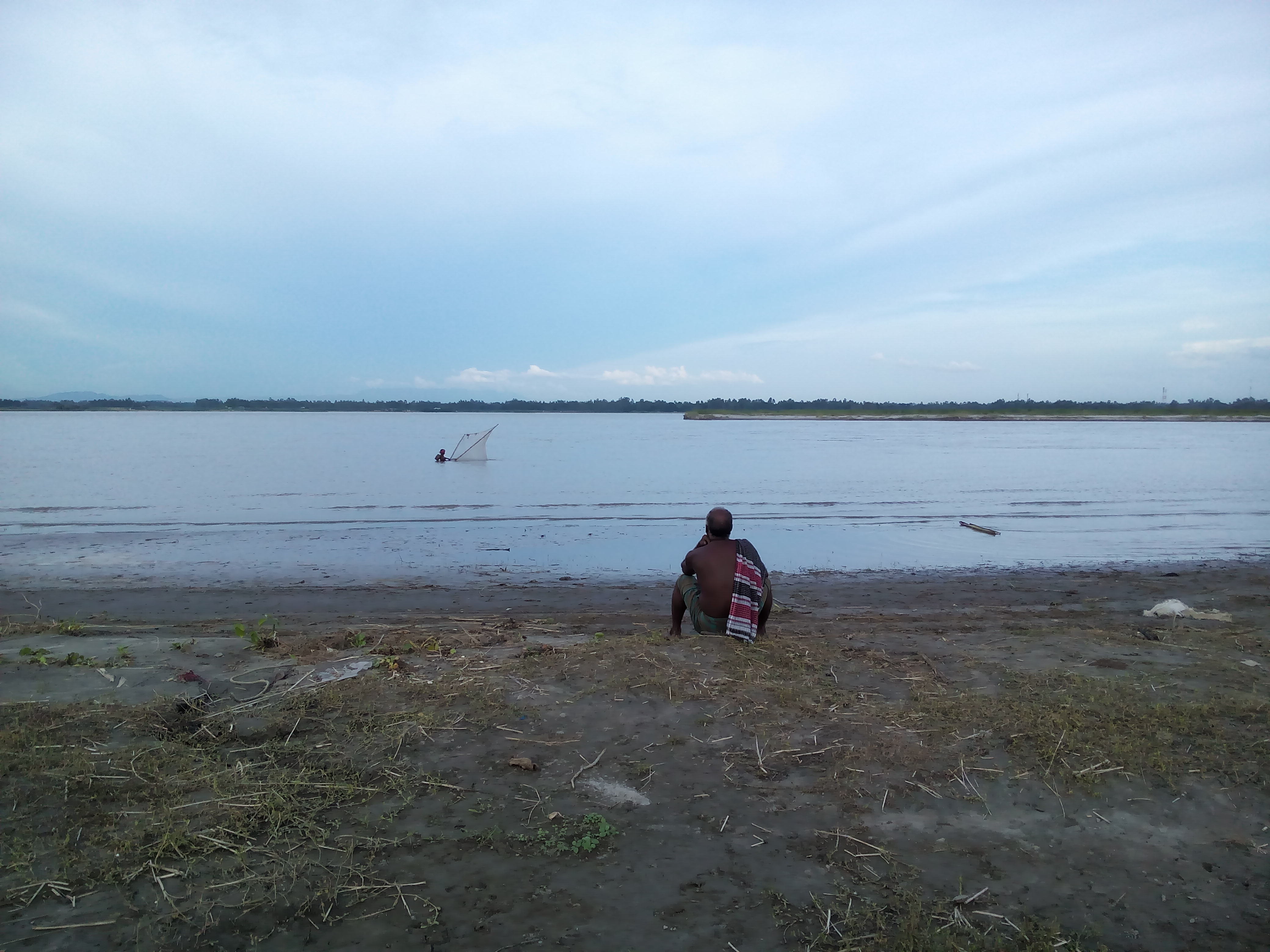
Char Rajibpur is the smallest of Kurigram's nine upazilas, with an area of 111.03 square kilometres, according to Banglapedia, the national encyclopedia published by the Asiatic Society of Bangladesh. The Brahmaputra river bounds it on the north, south and west, Raumari and Chilmari upazilas lie to its north, Dewanganj and Gaibandha Sadar upazilas to its south, and Banglapedia gives India as its neighbour on the east. Its main rivers are the Brahmaputra, the Halhali and the Jinjiram.
The upazila has three unions, Kodailkati, Char Rajibpur and Mohanganj, with 26 mouzas and 99 villages. The 2011 population census of the Bangladesh Bureau of Statistics counted 73,373 people there. Char Rajibpur was formed as a thana in 1977 and became an upazila on 1 August 1983.
Farming is the backbone of the local economy. Banglapedia, drawing on the census, gives agriculture as the main source of income for 77.76 per cent of households, against 70.41 per cent for Kurigram district as a whole. It records 41.83 per cent of the upazila's households as landless. Its main crops are paddy, jute, mustard, black gram, groundnut, china (proso millet) and kaun (foxtail millet); its main fruits are mango, jackfruit, betel nut, black plum (jam), banana and watermelon. Paddy, jute, molasses and groundnut are listed among its main exports, and bamboo work is one of its cottage industries.
Kurigram district, of which Rajibpur is part, covers 2,245.04 square kilometres in Rangpur division. Banglapedia lists the Brahmaputra, Jamuna, Dharla, Dudhkumar and Tista among its main rivers. Within Bangladesh, the encyclopedia notes, the Brahmaputra is a braided river with numerous islands, known locally as chars.
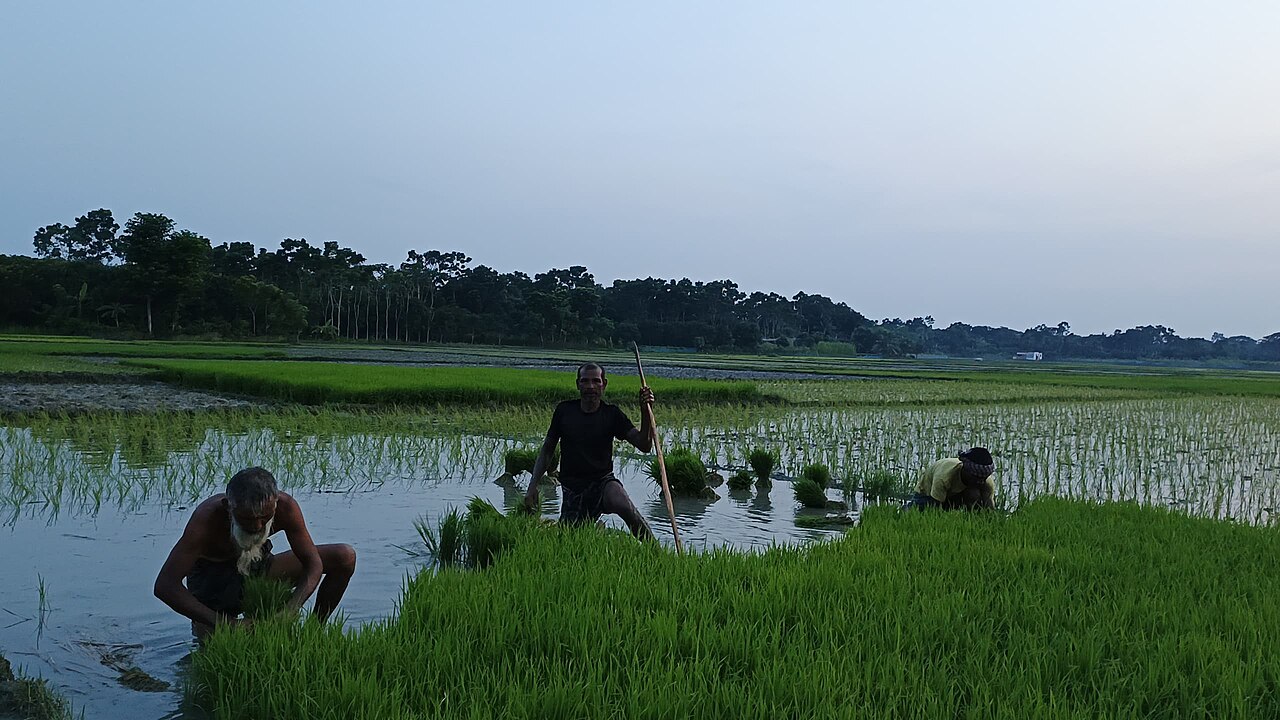
Paddy in the field in late April
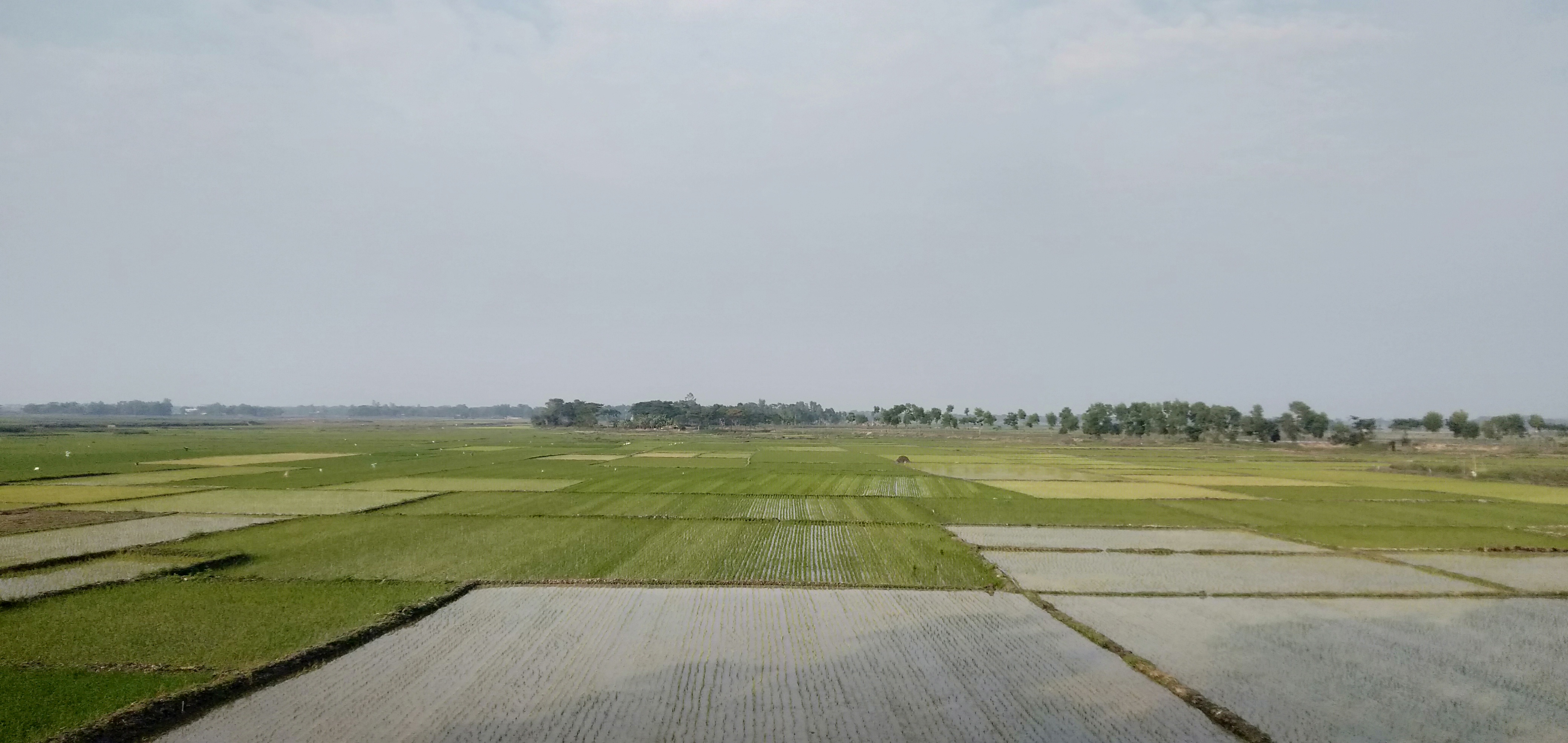
The report did not name the season or variety of the paddy that farmers said was damaged. Banglapedia's entry on rice explains that Bangladesh grows rice in three seasons, aus, aman and boro, and gives March to May as the boro cropping period. It lists the harvest of local boro varieties in April and May and of high-yielding boro in May and June. By that calendar, paddy standing in a field in late April belongs to the boro season, the crop that is irrigated through the dry months. Banglapedia also notes that boro, though grown on less land than aman, leads the country's rice output.
The Rangpur agricultural region, which includes Kurigram, had a large boro target for the 2025-26 season. Bangladesh Sangbad Sangstha (BSS) reported on 16 February 2026, citing the Department of Agricultural Extension (DAE), that the government had set a record target of producing 2,308,715 tonnes of boro rice (3,463,672 tonnes of paddy) from 509,094 hectares across the region's eight districts. Of that area, 230,316 hectares were to be under hybrid boro, 277,753 hectares under high-yielding varieties and 1,025 hectares under local varieties. By that date farmers had transplanted seedlings on 331,118 hectares, or 65.04 per cent of the target.
Md Sirajul Islam, additional director of the DAE in the Rangpur region, told BSS that the targets were expected to be exceeded in Rangpur, Gaibandha, Kurigram, Nilphamari and Lalmonirhat districts. BSS also reported that seedlings had already been planted in low-lying land, chars and riverside areas, and that farmers were tending the crop so as to harvest it before the monsoon. In an area like Char Rajibpur, where most families live off the land, a boro crop lost just weeks before harvest is a loss of the season's main income.
Kiln gas or hot wind: what is known about each
The two explanations offered in Rajibpur, kiln emissions and hot wind, are both known causes of crop damage in Bangladesh. Banglapedia's entry on air pollution names brick kilns and cooking stoves as the principal sources of emissions in rural areas, and lists brick kilns first among the industrial sources that produce smoke, fumes, gases and dust.
Officials have pointed before to the coal burnt in kilns. In May 2013, when kiln smoke was blamed for damage to boro paddy and maize in Aditmari upazila of neighbouring Lalmonirhat, the UNO there told The Daily Star that the damage might be due to the burning of high-sulphur coal imported from India, which gives off poisonous sulphur dioxide as it burns.
Peer-reviewed research from elsewhere in South Asia has also measured the effects of kiln emissions on crops and soil. A 2015 study in the journal Food Science & Nutrition compared cabbage, French bean and brinjal grown near brick kilns in Budgam district of Jammu and Kashmir, India, with the same vegetables from a control site, and found the biochemical values of all three significantly different near the kilns. A 2022 study in PLoS One of farmland near brick kilns in Bhimber district of Azad Jammu and Kashmir, Pakistan, found high concentrations of lead and chromium in soil around the kilns, which its authors linked to the burning of coal and rubber tyres as fuel, and found soil fertility features inversely related to distance from the kilns.
Heat, the explanation the kiln owner gave, is also a recognised hazard for boro at this time of year. On 4 April 2021 a nor'wester that came with hot, gusty winds damaged paddy on thousands of hectares in central, central-east and northwest districts, the Dhaka Tribune reported on 22 April 2021. Bangladesh Rice Research Institute (BRRI) plant physiologist Md Sazzadur Rahman told the paper that the 4 April heatwave had triggered several hours of hot wind during the night. In a Thomson Reuters Foundation report of 28 May 2021, BRRI said more than 36 districts were affected when temperatures reached as high as 36 degrees Celsius for two consecutive days, and DAE figures put the rice partly or completely destroyed at more than 68,000 hectares, affecting more than 300,000 farmers, with estimated losses of 3.3 billion taka.
In the same report, Romij Uddin, an agronomy professor at Bangladesh Agricultural University, explained that the heat had struck the plants at flowering, when rice self-pollinates, and that high temperatures at that stage may cause sterility. BRRI was then developing heat-tolerant lines that, Sazzadur Rahman said, would tolerate daytime temperatures of up to 38 degrees Celsius.
Which of the two caused the loss in Rajibpur could only be judged by an inspection of the fields and the kiln. The Jagonews24 report carried no such finding, and the environment officer's remarks described a general risk rather than a conclusion about this kiln.
What the brick kiln law says
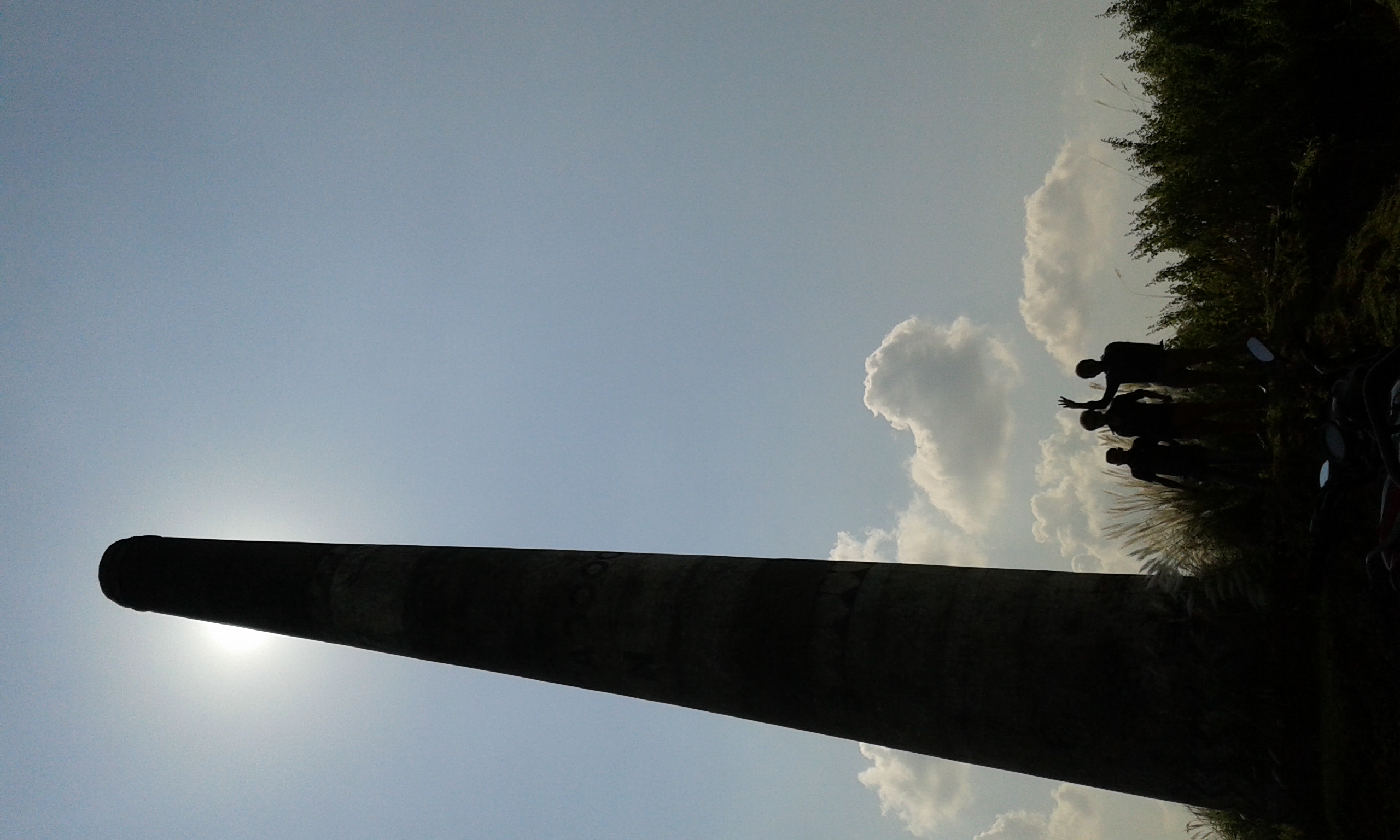
Brick kilns in Bangladesh are governed by the Brick Manufacturing and Kiln Establishment (Control) Act, 2013 (Act No. 59 of 2013), which took effect on 1 July 2014 and was amended in 2019 by Act No. 1 of 2019. The official text on the government's laws portal sets out the rules that applied in April 2026, among them:
- No one may set up a kiln or make bricks without a licence from the deputy commissioner of the district where the kiln stands (section 4), and an application for that licence cannot be made without an environmental clearance issued under the Environment Conservation Act, 1995 (section 9).
- Topsoil from agricultural land, hills or hillocks may not be cut for use as brick material (section 5), and firewood may not be burnt as fuel (section 6).
- Coal containing more sulphur, ash, mercury or similar elements than the set standard may not be imported and burnt in a kiln (section 7); the penalty is a fine of up to 1 lakh taka (section 17).
- Gaseous emissions and liquid waste from a kiln must stay within the standards of the environment conservation rules (section 7A); breaking this carries up to one year in prison, a fine of up to 1 lakh taka, or both (section 17A).
- No kiln may be set up on agricultural land, which the Act defines as land used for farm production more than once a year, nor in residential areas, upazila headquarters, forests, gardens, wetlands, ecologically critical areas or degraded airsheds (section 8(1)); nor within one kilometre of such a prohibited area (section 8(3)). Setting up a kiln in a prohibited area carries up to five years in prison or a fine of up to 5 lakh taka, or both (section 18).
The Act gives the deputy commissioner power to suspend a kiln's licence immediately for up to 90 days and halt its work if the kiln threatens the environment and public health of the surrounding area, and, after hearing the owner, to cancel the licence (section 11). Each district has an inquiry committee headed by an additional deputy commissioner, with the UNO, the upazila health officer and the upazila agriculture officer among its members and a Department of Environment officer as member-secretary (section 12). The deputy commissioner, the UNO and officers of the district environment office may enter and inspect any kiln at any time without notice (section 13), and offences under the Act may be tried on the spot by a mobile court (section 19).
The Jagonews24 report did not say whether the Rajibpur kiln held a licence, how far it stood from the fields, or what coal it burnt. Those are the points such an inquiry would examine if, as the acting UNO said, a complaint were filed.
Kilns and farmland in Kurigram and the northern districts
The Rajibpur complaint came against a background of repeated reports about kilns on or near farmland in the north. In April 2022, the Department of Environment's deputy director in Rangpur told The Daily Star that 130 of the 170 brick kilns in Lalmonirhat and Kurigram were operating without any approval, and that a list of the illegal kilns had been given to the local administration for drives against them.
On 6 January 2026, The Daily Star's Bangla edition reported, citing the Department of Environment, that at least 595 kilns in Lalmonirhat, Kurigram, Gaibandha and Rangpur districts were using fertile topsoil from cropland to make bricks. In the week before, local administrations had fined 12 kilns a total of 15 lakh taka for this in those four districts, with drives in Kurigram's Phulbari, Nageshwari and Ulipur upazilas among others. A senior scientific officer of the Soil Resource Development Institute in Rangpur told the paper that topsoil holds the most organic matter and microbes, and that once removed, land takes more than a decade to regain its fertility. Rezaul Karim, the same Kurigram assistant director of the Department of Environment, said then that the local administration had been informed and that fines were being imposed in different places.
Earlier complaints of kiln smoke damaging crops in the region
Complaints like Rajibpur's have been reported in the region for more than a decade. On 17 May 2013 The Daily Star reported that toxic gas from two brick kilns had damaged boro paddy on about 230 acres in Badarganj and Kaunia upazilas of Rangpur. The Kaunia upazila agriculture officer said he had visited the area and found boro on at least 80 acres totally damaged, the owner of the kiln concerned said he would compensate the farmers, and the Rangpur deputy commissioner said he had asked the owners of both kilns to do so. In Badarganj, the paper reported, mango, jackfruit and litchi trees were also affected. In the same report, about 60 farmers in Aditmari, Lalmonirhat, demanded compensation after flying ash and smoke from a kiln damaged boro and maize.
On 26 April 2022, The Daily Star's Bangla edition reported farmers' allegations that toxic smoke from two kilns had dried up boro paddy on 400 bighas: 350 bighas in Karnapur village of Lalmonirhat Sadar and 50 bighas in Balabari Kisamatbanu village of Chilmari upazila in Kurigram, which borders Rajibpur on the north. The farmers said the leaves of mango, jackfruit, litchi, coconut and betel nut trees had turned brown, and they had applied to the upazila administration to have the kilns moved away from the cropland. The kiln owners said that if their smoke had damaged crops, the farmers would be compensated. The DAE's deputy director in Lalmonirhat said the crops had been damaged by the kiln's toxic smoke and that agriculture officers had visited and reported to the upazila administration, and the UNOs of both upazilas said they had visited, received the farmers' complaints and were taking the necessary steps.
In those earlier cases, upazila agriculture offices visited the fields and listed the affected farmers. In Rajibpur, by the time the report was published, no complaint had yet reached the upazila administration, and the farmers' allegation and the owner's denial stood side by side.
Photo: Faizul Latif Chowdhury / Wikimedia Commons (CC BY-SA 3.0)
Sources: Jagonews24 (26 April 2026), Banglapedia (Asiatic Society of Bangladesh), Brick Manufacturing and Kiln Establishment (Control) Act, 2013 (bdlaws.minlaw.gov.bd), Bangladesh Sangbad Sangstha (16 February 2026), The Daily Star (17 May 2013), The Daily Star Bangla (26 April 2022 and 6 January 2026), Dhaka Tribune (22 April 2021), Thomson Reuters Foundation via BusinessLIVE (28 May 2021), Food Science & Nutrition (2015), PLoS One (2022)
Comments
(0)