
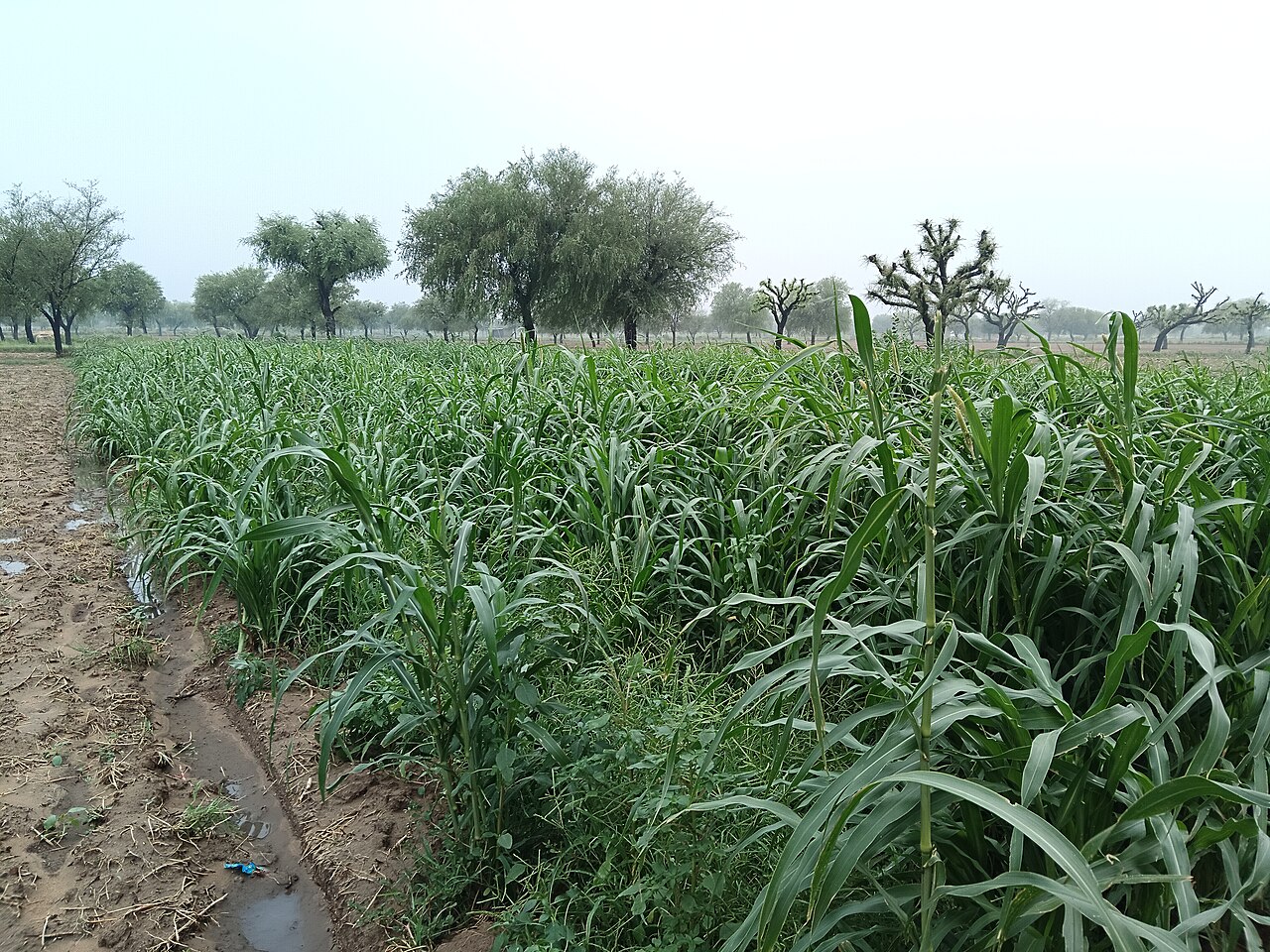
New state estimates from Rajasthan show how unevenly this year's weak monsoon is hitting India's kharif crops, Global Agriculture reported: bajra and guar output are set to fall in the dry west, while groundnut rises where farmers had water.
Bajra (pearl millet) output is projected at about 4.94 million tonnes this kharif season, down from 5.37 million tonnes last year, as the sown area shrank from 4.35 million to 3.96 million hectares. Guar, the cluster bean grown widely in the state's arid west, is expected to fall to 1.79 million tonnes from 1.97 million on a similarly reduced area.
Groundnut goes the other way, rising to 2.82 million tonnes from 2.12 million tonnes as farmers in better-watered pockets planted more. Jaipur guar trader Ramotar Khandelwal said roughly half the state faced a severe rainfall deficit this year and parts of western Rajasthan received almost no rain. State officials said the figures are provisional while mandi arrivals are still being counted.
The national picture is also tight. The farm ministry's 2026-27 foodgrain target of 373.93 million tonnes is about 2.63 million tonnes below last year's estimated output, and kharif sowing in mid-September was 1.6 million hectares lower than a year earlier, mostly because Karnataka, Telangana and Andhra Pradesh planted less paddy. Officials are urging farmers in low-rainfall areas to move from paddy to pulses and oilseeds.
The World Meteorological Organization says El Niño is firmly established and expected to last through February 2027. The India Drought Monitor at IIT Gandhinagar found just over half the country dry or in drought by mid-September, and Maharashtra has declared 265 of its 358 blocks drought-hit.
Photo: Herovaclicks / Wikimedia Commons (CC BY 4.0)
Source: Global Agriculture

Comments
(0)