
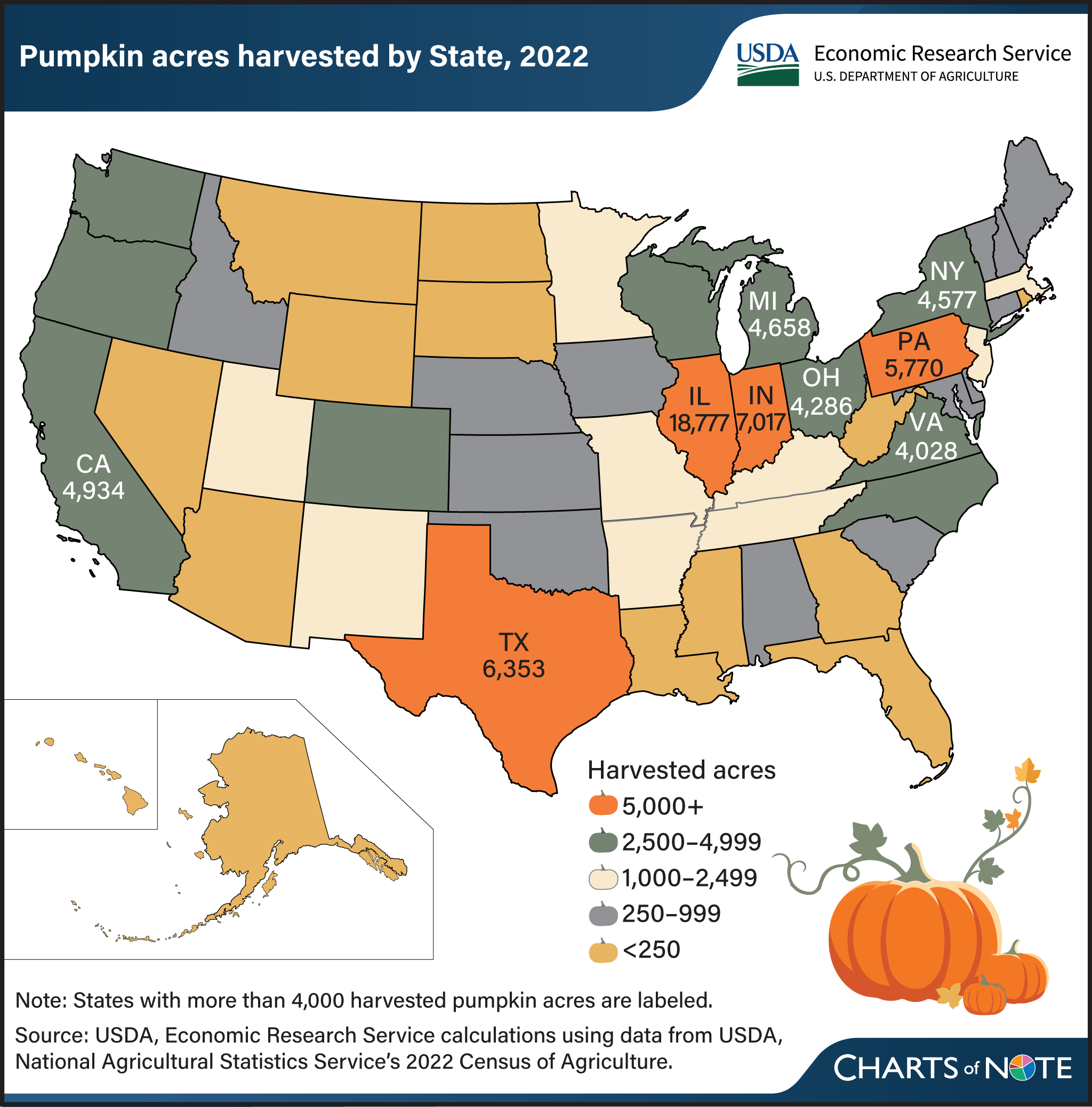
Pumpkins are grown in every one of the 50 US states and were harvested from more than 99,000 acres on about 15,000 farms, according to a chart published by the USDA Economic Research Service (ERS) ahead of Halloween.
The figures come from the 2022 Census of Agriculture, the latest comprehensive count, published by USDA's National Agricultural Statistics Service (NASS). Illinois farmers harvested the largest area, nearly 18,800 acres, or 19% of the US total. Indiana came second with about 7,000 acres (7%), and Texas third with about 6,400 acres (6%).
Most of the crop is not grown for the kitchen. Pumpkins on 85% of the harvested area are intended for the fresh or ornamental market, which includes pumpkins sold as seasonal decoration, for jack-o'-lantern carving and for eating fresh.
The rest of the acreage grows processing pumpkins, which go into canned and pureed products such as pie fillings, soups and other prepared foods. Unlike fresh-market pumpkins, which are grown across the country, processing pumpkins are concentrated near canning plants, and Illinois is the top producer of those as well.
The chart, by ERS economist Wilma V. Davis, points readers to the agency's Vegetables and Pulses Outlook of April 2026 and its Vegetables and Pulses Yearbook Tables and Commodity Highlights, both updated in September 2026.
Source: USDA Economic Research Service


Comments
(0)