
As a boy, the Prophet Muhammad (pbuh) grazed his family's sheep at a place near Mecca called Ajyad, or Jiyad, as he himself recalled in the hadith. In the twelfth part of Prothom Alo's religion-page series 'Lands of the Seerah', Muhammad Tajammul Haque traces the history of this pasture, the Prophet's years as a shepherd and what the place looks like now.
In a narration in Musnad Ahmad (hadith 11508), Abu Sa'id al-Khudri says owners of camels and of goats were boasting in front of the Prophet. He told them that pride and arrogance belong to the owners of camels, and calm and dignity to the owners of goats. He added that Moses was sent as a prophet while herding his family's goats, and that he too had herded his family's goats at Jiyad. In Sahih al-Bukhari (hadith 2262), the Prophet says God sent no prophet who did not herd sheep; asked whether he had too, he said yes, he had herded sheep 'for qararit' in Mecca.
The writer explains that qararit has two readings: a coin, meaning he grazed the people of Mecca's flocks for pay, or a place in Mecca. Mustafa al-Bugha, a well-known commentator on Sahih al-Bukhari, identifies it as Jiyad, next to Mecca. A recollection of the Prophet recorded in Abu Nu'aym al-Isfahani's Dala'il al-Nubuwwah also places his shepherd years where upper and lower Mecca meet, which is exactly where Jiyad lies.
Ajyad is very close to the Kaaba. When the Quraysh rebuilt the Kaaba in the Prophet's youth, the article notes, he carried stones from Ajyad. Jiyad and Ajyad share the root jayd, meaning excellent; in an account from Ikrimah ibn Khalid al-Makhzumi, a man of the Jurhum tribe said the place was called Ajyad because their finest horses grazed there.
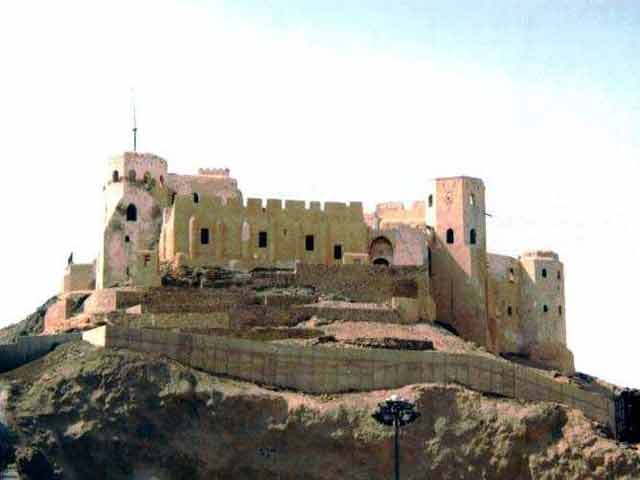
The place has changed. To guard the Kaaba against Bedouin raids and enemies, the Ottomans built Ajyad Fortress on Bulbul hill in 1780. It was demolished in 2002, and under a Saudi royal decree the Mecca Clock Tower complex for pilgrims rose on the site. The area's Ajyad Hospital was moved elsewhere in 2009. A few old buildings, among them Mabna al-Hamidiyya and the King Abdulaziz endowment building, still stand.
Photo: Ajyad Fortress before its demolition, Halis Ak / Wikimedia Commons (CC BY 3.0)
Source: Prothom Alo

Comments
(0)