
Muslims, Christians, Jews, Hindus and Buddhists all belong to one people as human beings. As the children of Adam and Hawa (AS), all people have equal rights and dignity before Allah. No religion supports forcing anyone. Islam's ideal for protecting communal harmony is lofty, and it shows in the Prophet Muhammad's (PBUH) conduct and attitude towards non-Muslims.
Islam guarantees the freedom of every religion: no one will stop anyone from practising their faith. Verses of the Quran were also revealed forbidding mockery of other religions. Allah says: "Do not insult those they (the idolaters) call upon besides Allah, lest they insult Allah in ignorance, out of hostility." (Surah An'am: 108)
If a Muslim's neighbour is a non-Muslim, it is essential to look after his rights too; this is part of the rights of a neighbour. Allah declares: "Allah does not forbid you from being kind and just to those who have not fought you over religion or driven you from your homes. Allah loves the just." (Surah Mumtahina: 8)
Equality in the Farewell Sermon
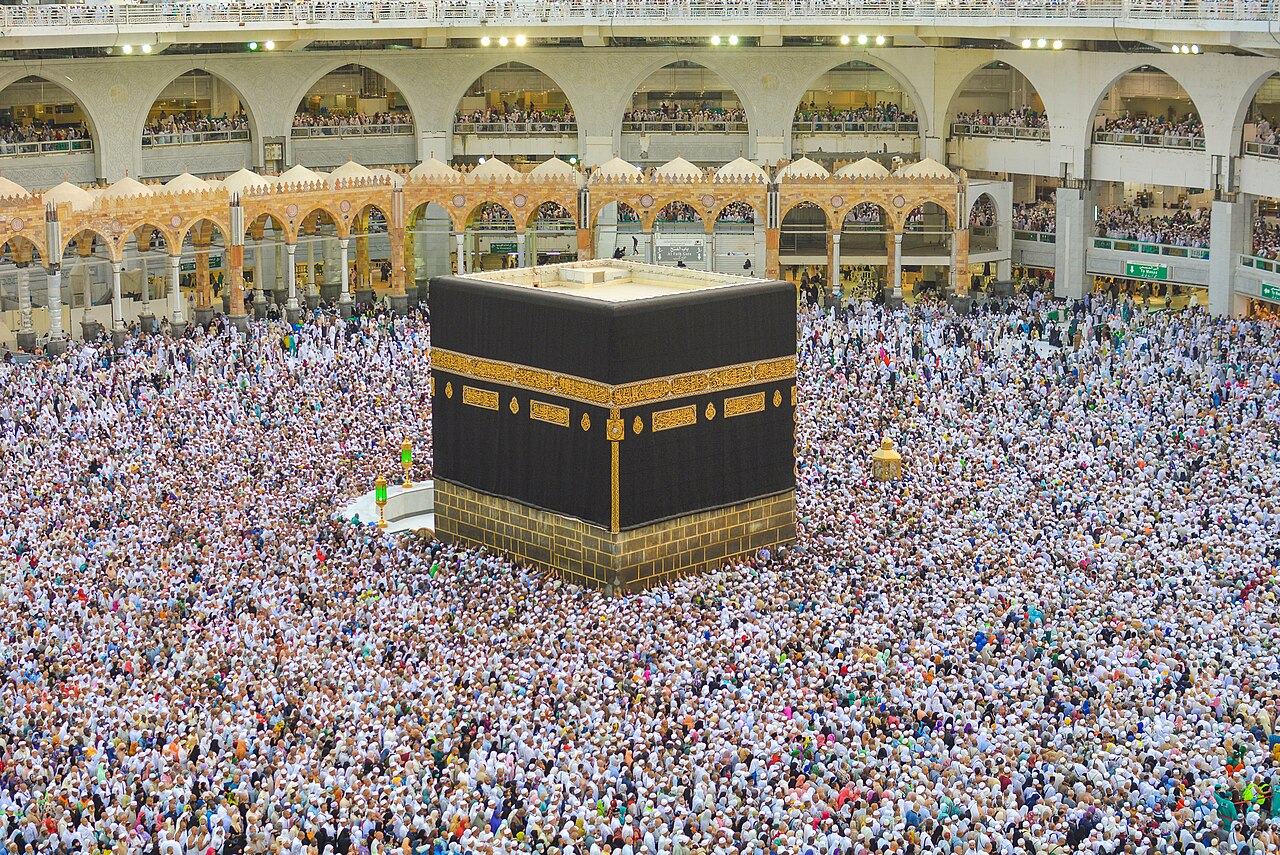
This is clear from the historic sermon of the Farewell Hajj, in which the Prophet declared: "O people, your Lord is one and your forefather is one. An Arab is in no way superior to a non-Arab, nor a non-Arab to an Arab. A white person is not superior to a black person, nor a black person to a white. Superiority will be judged by taqwa, by how far a person has fulfilled the rights of Allah and of His servants. The most honoured of you before Allah is the most righteous." (Bayhaqi)
So people's worth cannot be judged by race, capitalism, social status or lineage. Divisions of nation, religion, colour and lineage exist only so that people may know one another and benefit from each other's character and qualities. Allah says: "O mankind, We created you from a male and a female and made you peoples and tribes so that you may know one another." (Surah Hujurat: 13)
A person's conduct and surroundings match his standing. Since Allah has praised the Prophet so highly and described so many of his qualities, his conduct towards non-Muslims is a model for the Muslim ummah. The qualities Allah declared in the Quran include:
- "We have raised high your mention." (Surah Alam Nashrah: 4)
- "We have sent you as a mercy to the worlds." (Surah Anbiya: 107)
- "We have sent you to all humanity as a bearer of good news and a warner, but most people do not know." (Surah Saba: 28)
For these reasons Allah sent the Prophet into the world with the finest character as the messenger of humanity's liberation, and declared: "And (O Prophet) you are surely of a sublime character." What, then, was the example of the one who received such testimony from Allah himself in protecting communal harmony?
The rights of non-Muslims
The Prophet was generous to people. He wronged no one on grounds of religion, colour, nation or community, did injustice to no one, and did not like anyone to be wronged. He even instructed his whole ummah that no one should wrong another and everyone should treat others well.
His example in protecting communal harmony was unmatched. To protect the rights of people of other faiths, he declared that if a Muslim wronged a non-Muslim, he himself would stand on the non-Muslim's side on the Day of Judgement. The hadith records:
- Sufyan ibn Salim narrates that the Prophet said: "Know that if a Muslim oppresses a non-Muslim citizen, violates any of his rights or takes any of his belongings or property by force, I will stand against him on the side of the non-Muslim in Allah's court on the Day of Resurrection." (Abu Dawud)
- Abu Bakr narrates that the Prophet declared: "Whoever unjustly kills a non-Muslim, Allah will forbid Paradise to him." (Musnad Ahmad)
- The Prophet forbade wronging anyone, even if the wronged person is a non-Muslim. He said: "Beware the curse of the oppressed, even if he is a disbeliever, for there is no veil between him and Allah," meaning his curse too is quickly answered. (Musnad Ahmad)
- Warning sternly, the Prophet said: "Whoever kills a non-Muslim under treaty will not even smell the fragrance of Paradise, though its fragrance can be smelt from a distance of forty years." (Bukhari)
- He also said: "Beware! Whoever oppresses a non-Muslim citizen under treaty, gives him less than his due, burdens him beyond his capacity or takes his property by force, I will be his opponent on the Day of Resurrection." (Abu Dawud)
What must be done to protect communal harmony
The Prophet gave clear guidance for protecting communal harmony: no Muslim should unjustly lay hands on a non-Muslim's life or property. Rather, non-Muslims must be treated well, and the lofty ideals and beauty of Islam and the Muslims must be shown to them. He also spelt out how to behave towards non-Muslims:
- Asma narrates: "My mother, who was not a Muslim, came to me. I asked the Prophet whether I should treat her well. He said: 'Yes.'" (Bukhari)
- Once the bier of a Jew was carried past the Prophet and he stood up out of respect for it. Jabir said, "O Messenger of Allah, it is the bier of a Jew!" The Prophet replied: "Was he not a human being?" (Bukhari)
Non-Muslim citizens of the Islamic state of Madinah
When the Prophet migrated from Makkah to Madinah he proclaimed the Charter of Madinah, in which protecting communal harmony and the rights and security of minorities featured as notable clauses.
At that time Muslims, Jews and the Aws and Khazraj, 12 sub-tribes in all, lived in Madinah. Amid the extreme factional strife of Islam's early days, all groups, communities and peoples, whatever their faith, lived together peacefully under the Charter, which established the new Islamic state of Madinah as an unmatched example before the world.
Through the historic Charter, the Prophet, the bearer of peace, built a firm bond of goodwill, harmony, equality and friendship among all, regardless of religion, colour, nation or community, setting a unique example of an ideal welfare state. It stated:
All tribes and communities that signed the Charter would enjoy equal rights in the state of Madinah.
Every religious community would keep its freedom and right to practise its own religion.
No one would attack anyone.
If any community in the pact (Muslim or of another faith) was attacked by an outside enemy, all would jointly help it and repel the enemy.
Any crime committed by a citizen would be treated as his personal crime.
The Charter of Madinah is a shining example of peaceful coexistence among people of many religions, nations, groups and communities. After it was signed, the long-running infighting among the tribes of the time ended and a peaceful society, free of anarchy and rich in human values, was established.
Islam also does not forbid caring for a sick non-Muslim neighbour; on the contrary, visiting a sick non-Muslim is Sunnah. The Prophet himself visited sick non-Muslim neighbours, cared for them and gently invited them to faith. Anas narrates that a Jewish boy used to serve the Prophet. When he fell ill, the Prophet went to see him, sat by his head and told him to accept Islam. The boy looked at his father, who said, "Obey Abul Qasim," and he accepted Islam. The Prophet left saying: "Praise be to Allah, who saved him from the Fire." (Bukhari)
The Prophet honoured human beings as the best of creation, whether Muslim or non-Muslim, disbeliever, Jew or Christian. He was the liberator of humanity; in establishing justice and fairness he showed no partiality to anyone, made no compromise with wrong, and did not unjustly take a Muslim's side. He was the symbol of justice. As a person he was generous and kind to all, and alert to the rights of every neighbour, Muslim or non-Muslim.
The Muslim ummah should therefore spread the Prophet's generous policy and example of communal harmony around the world and present the lofty ideals of Islam and of the Prophet everywhere, so that they reach all people, Muslim and non-Muslim.
May Allah grant the Muslim ummah the ability to follow the Prophet's guidance in dealing with non-Muslims and to act properly on the hadith. Ameen.
Source: Jagonews24. First published in Bengali on The Agro News.
Comments
(0)