
A child who will not listen, has no interest in studies and is constantly irritable leaves many parents torn: discipline pushes the child away, leniency lets them drift. Writing on Prothom Alo's religion page, Islamic scholar, writer and programmer Abdullahil Baqi sets out seven lessons from the life of the Prophet Muhammad (peace be upon him). His starting point is that children watch behaviour more than they heed advice and copy it without realising, so parents must be an example in word and deed. He cites Surah As-Saff, verses 2-3, which call it hateful to Allah to say what one does not do.
The first lesson is to apply learning to life: practise gratitude and good use of time rather than leaving them on the page, and build the habit of going to the mosque from an early age. He quotes the hadith in Sunan Abu Dawud (495) telling parents to instruct children in prayer from the age of seven. The second is to build confidence by removing fear and feelings of inferiority with positive words; in Sahih al-Bukhari (691) the Prophet tells believers to make things easy, not hard, and to give good news rather than drive people away.
Third, correct mistakes indirectly, since a public scolding wounds self-respect. Aisha (may Allah be pleased with her) reported that when the Prophet heard of someone's wrongdoing he would not name them but would ask, "What is wrong with people that they do such things?" (Sunan Abu Dawud, 4788). Fourth, admit your own mistakes and be humble; this raises a parent in the child's eyes, and hadith in Sahih Muslim (2588, 2594) praise humility and gentleness.
Fifth, keep your word. Abdullah ibn Amir related that when his mother called him promising to give him something, the Prophet asked what she meant to give; when she said dates, he told her that had she given nothing, it would have been recorded as a lie (Sunan Abu Dawud, 4991). Sahih al-Bukhari (2587) also tells parents to be just between their children.
Sixth, teach the Prophet's short but profound counsel, such as the advice he gave the young Abdullah ibn Abbas as they walked together (Sunan al-Tirmidhi, 2516). Seventh, turn everyday moments into lessons: when the boy Umar ibn Abi Salamah ate from all sides of the dish, the Prophet taught him to say Bismillah, eat with his right hand and take from what was in front of him (Sahih al-Bukhari, 5376).
An ideal guardian, the writer concludes, does not merely pass on information but lights a lamp in the child's heart; the next generation should be shaped by knowledge and good conduct rather than by harshness. The views are the writer's own.
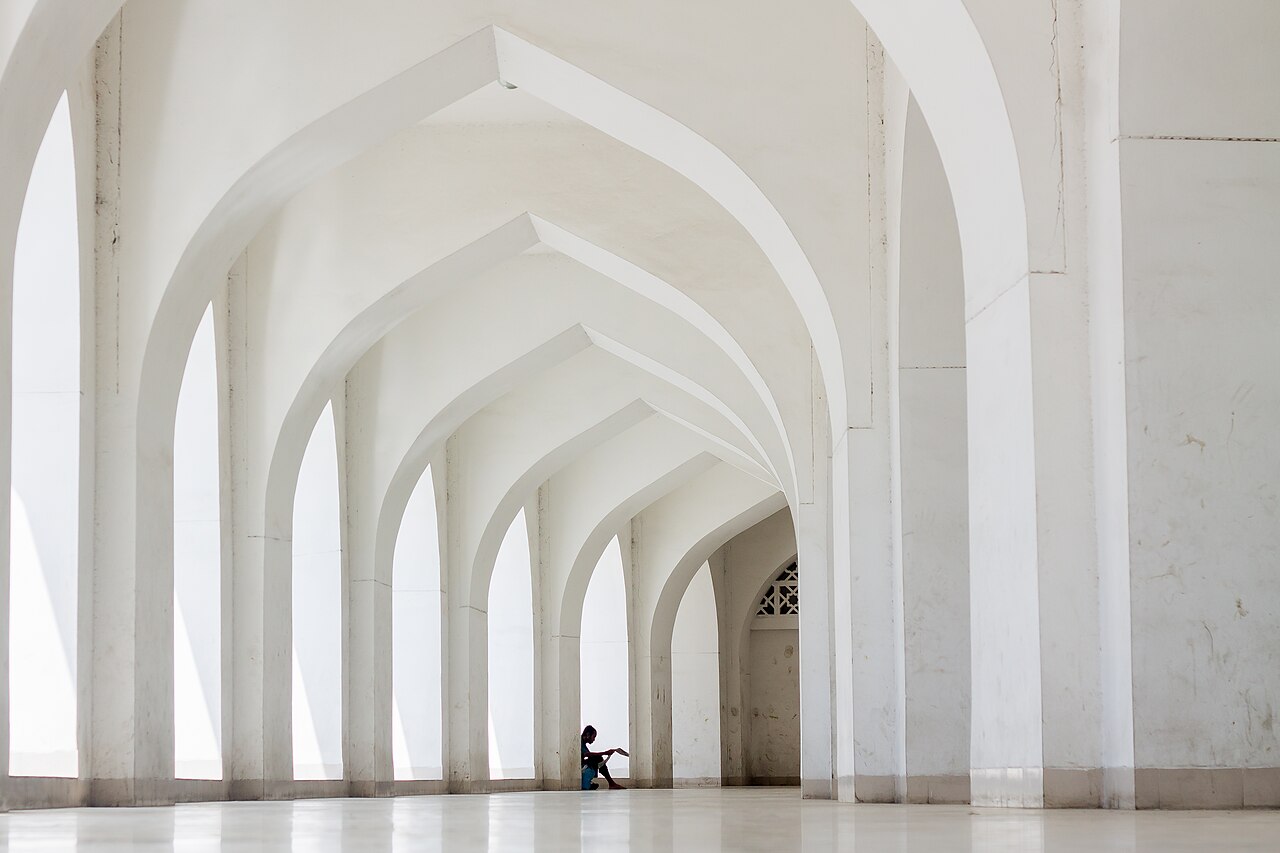
Photo: Jubair1985 / Wikimedia Commons (CC BY-SA 4.0)
Source: Prothom Alo


Comments
(0)