
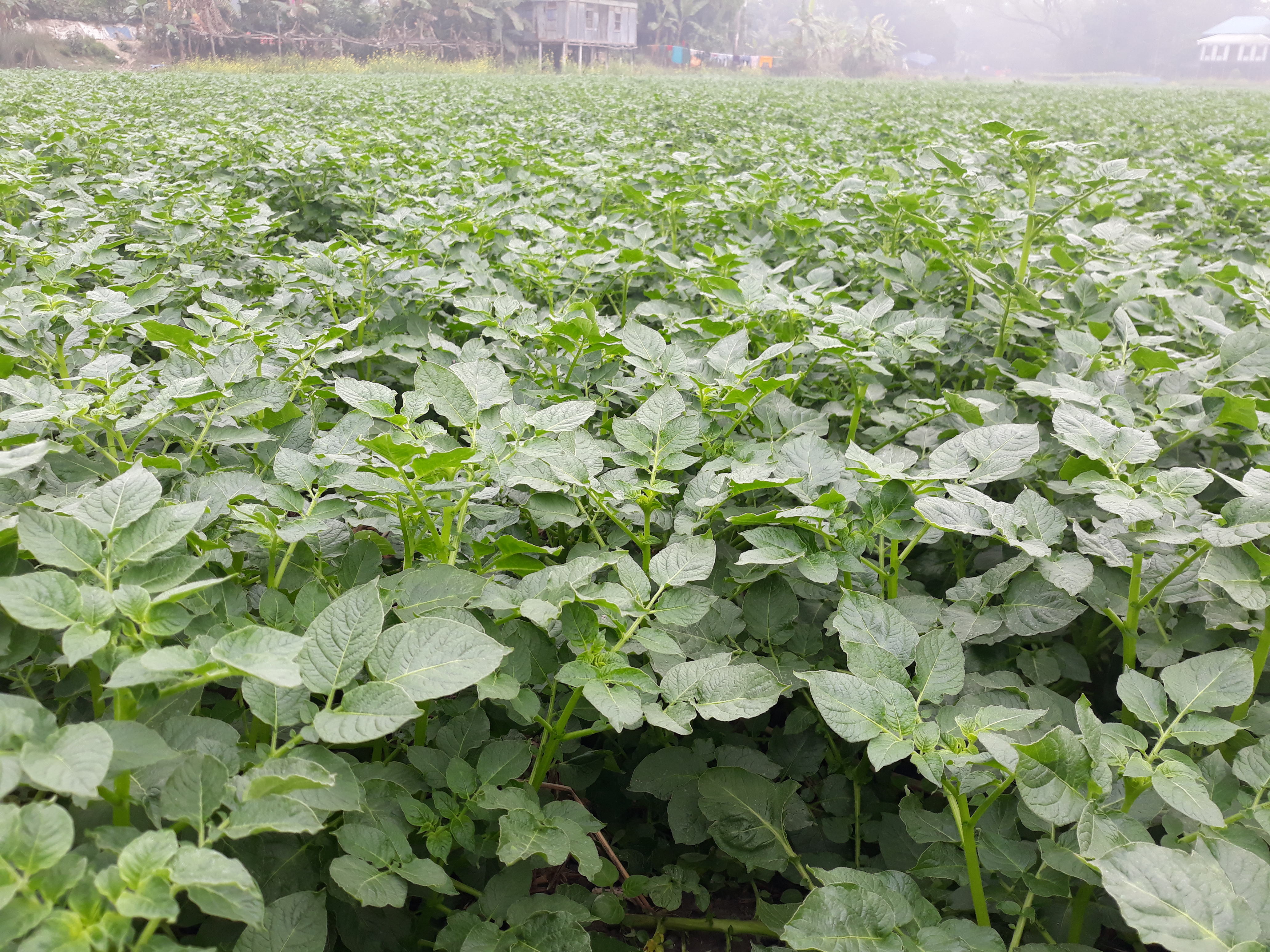
On 11 February 2026, as potato fields across Bangladesh were nearing the lifting season, Jagonews24 published a practical guide on when and how to harvest the crop. Its central advice was that, depending on the variety, potatoes are ready to lift some 85 to 95 days or 100 to 120 days after planting, usually between January and March, while early varieties can be lifted in 70 to 80 days. The guide added that lifting the crop on a sunny day, while the soil is dry and two to three weeks after the plants have died, gives the tubers firm skins and lets them keep for a long time. This report sets out that guidance and places it beside what the Bangladesh Agricultural Research Institute (BARI), the International Potato Center (CIP), Banglapedia and other research and extension sources had published by then on harvesting, skin set, handling and storage.
The potato season in Bangladesh
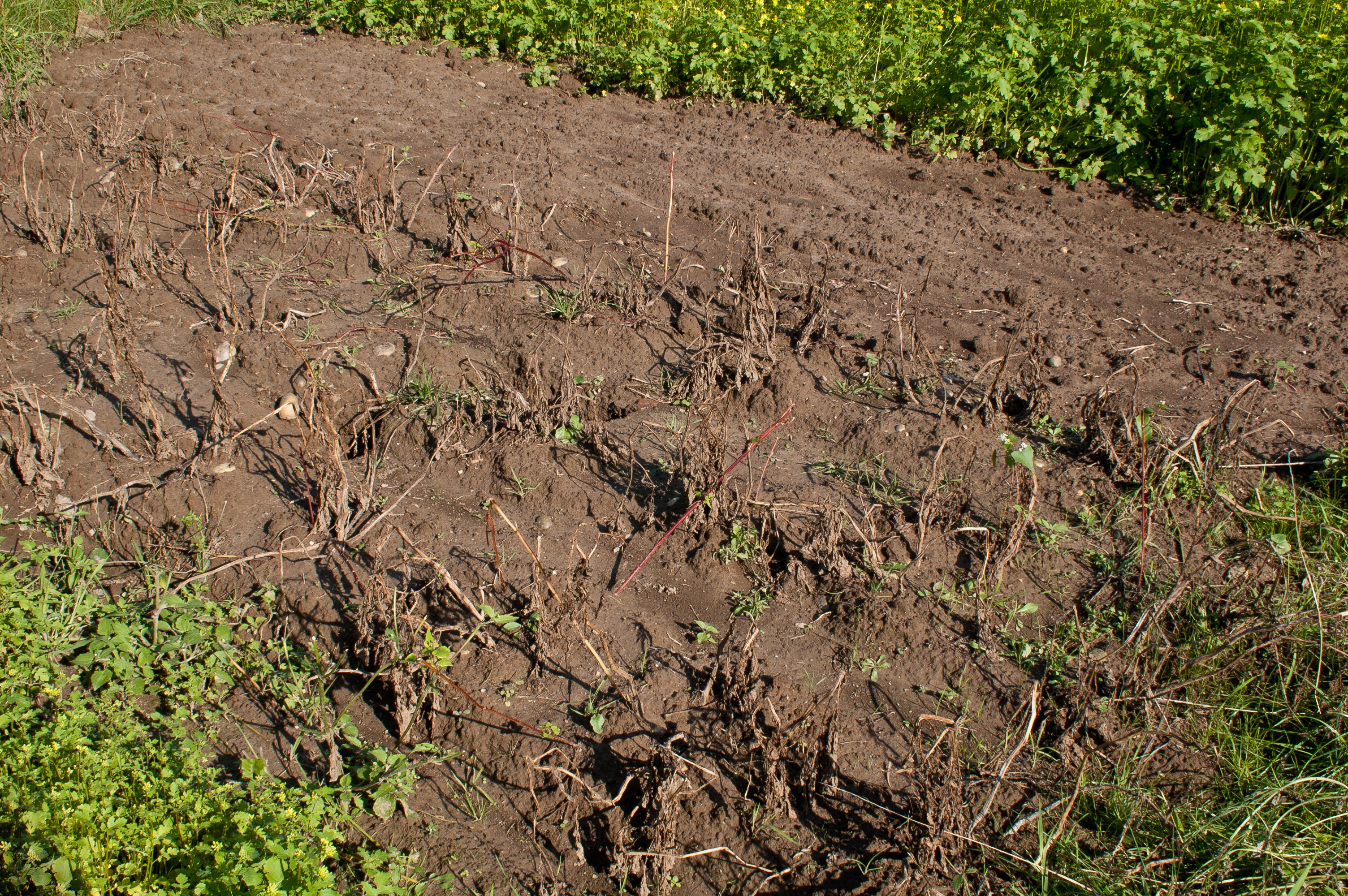
Potato is a winter crop in Bangladesh. Banglapedia, the national encyclopedia published by the Asiatic Society of Bangladesh, describes it as widely cultivated in all the districts of the country during winter, and names the first fortnight of November as the right time for planting. In some areas, it notes, farmers plant even in October so that they can harvest early. According to the same entry, most varieties are harvested in Bangladesh during February and March, and the tubers are usually collected by hand, with a spade or similar tools.
Other sources give a similar calendar. A country report that BARI's Farm Machinery and Postharvest Process Engineering Division presented at an Asian and Pacific workshop on potato mechanisation in Kunming, China, in June 2016 gave the potato growing period in Bangladesh as mid-October to mid-March, with an average temperature of 15 to 25 degrees Celsius, and described rice-potato-maize as a cropping system in which the crop is grown. The Daily Star's Bengali edition, reporting on the potato market in May 2025, wrote that potatoes are generally planted between October and November and lifted between February and April.
The guide's harvest window of January to March therefore fits the national pattern: early plantings and early varieties come out first, and the bulk of the crop is dug in February and March. Because planting dates differ by several weeks from one district to another, and even between neighbouring fields, the number of days since planting is a more useful guide for a single field than the calendar month.
Banglapedia also explains why the way potatoes are dug and handled matters to the people who eat them. The tuber is rich in carbohydrates or starch and is a good source of protein, vitamin C, the B vitamins, potassium, phosphorus and iron. Most of the minerals and protein, the encyclopedia notes, are concentrated in a thin layer just beneath the skin, and the skin itself is a source of food fibre. A tuber that is cut, skinned or bruised in the field therefore loses quality as well as keeping time.
How to tell that the crop is ready
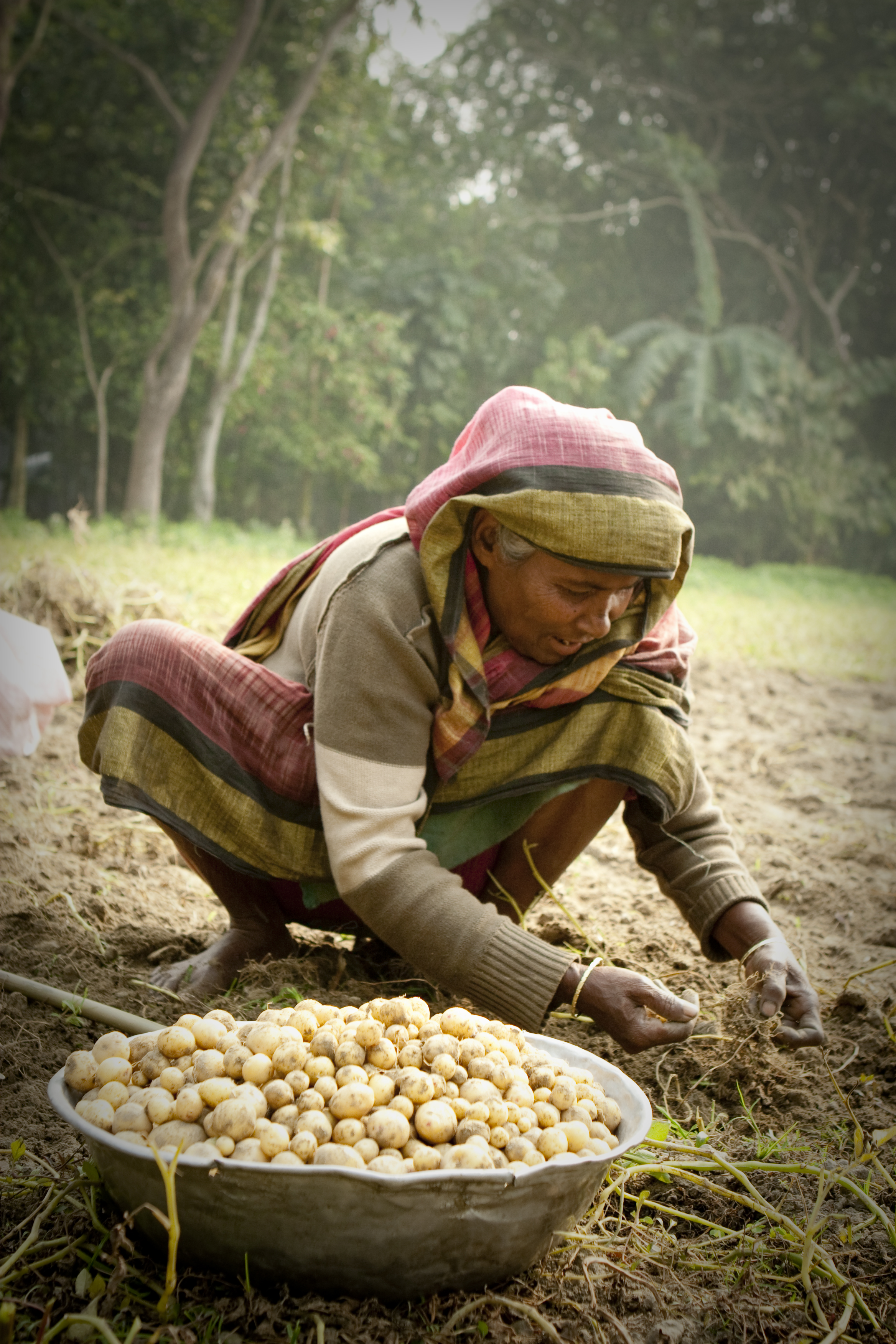
The Jagonews24 guide gave the condition of the plants as the first sign. When the potato plants have died completely, turned yellow or brown and collapsed onto the soil, it said, the crop is ready to harvest. Banglapedia describes the same process: as the plants mature and the tubers are fully formed, the leaves gradually turn yellowish and then brownish, and finally the plants die. It is always better, the encyclopedia says, to harvest the crop after these signs are evident in the field.
The number of days to maturity depends on the variety. The guide's figures were 85 to 95 days for some varieties and 100 to 120 days for others, with early varieties ready in 70 to 80 days. Because the crop in one district may be planted in October and in another in late November, a farmer judging a field should count from that field's own planting date and then look at the plants, rather than wait for a fixed date.
The plants dying back is the start of the process, not its end. The guide advised waiting two to three weeks after the plants have died before digging, because during that time the potato skin hardens, which it called essential for storage. CIP, the CGIAR research centre for potato and other root and tuber crops, gives a simple field test in its 2020 good-practice poster on rooted apical cuttings of potato, prepared by P. Wauters and M. Parker: the skin is hardened if it does not slip easily when a tuber is rubbed between the thumb and index finger. Digging up a few plants and rubbing the tubers in this way shows whether the rest of the field is ready.
Why a firm skin matters for storage
A newly formed potato has a thin skin that loses water easily and scuffs off under light pressure. Research on this point goes back decades. In a 1982 paper in Canadian Agricultural Engineering, G. C. Misener of Agriculture Canada's research station at Fredericton, New Brunswick, wrote that much of the weight a potato loses through moisture loss over the whole storage period is lost during the first weeks, or even days, after harvest. He attributed this to a thin and water-permeable skin, and to the cuts and bruises caused by harvesting and transport. The same paper noted that how easily tubers are damaged at harvest depends on how mature they are.
This is the reasoning behind the Jagonews24 guide's two to three week wait. A potato left in the ground after the plant has died is still protected by the soil while its skin thickens and sets. CIP's poster gives the same kind of interval for seed tubers: once the above-ground part of the crop has been destroyed, it recommends leaving the tubers in the soil for 10 to 14 days before harvesting, so that the skin hardens for better storage, transport and protection against post-harvest diseases.
A firm skin also helps a tuber recover from the small wounds that harvesting always causes. Extension guidance from Utah State University's vegetable guide describes curing as the healing of cuts and bruises. It says curing is fastest in storage with high humidity, about 95 per cent, with tubers held at 50 to 60 degrees Fahrenheit and with good ventilation, and that these conditions should be kept for two to three weeks at the start of storage so that the wounds form a protective layer. Such controlled conditions are found in commercial stores rather than in a farmhouse, but the principle is the same for every farmer: the less a tuber is wounded at harvest, the less it has to heal.
Cutting or pulling the haulm before harvest
The guide's last sign was a practical step rather than a natural one. Cutting the above-ground part of the plants, the haulm, seven to ten days before harvest, it said, toughens the skins of the potatoes. Removing the haulm in this way stops the tubers growing and starts the skin-setting process on a date the farmer chooses, rather than waiting for the plants to die on their own.
Misener's 1982 paper lists the reasons why potato growers kill or remove the haulm before harvest: it reduces the amount of vine material and makes harvesting easier, it reduces losses from late blight tuber rot, it reduces the spread of disease such as leaf roll virus carried by aphids, it controls tuber size, and it reduces skinning and other damage to the tubers during harvest. In his three-year study on seed potatoes of two varieties, the interval between killing the vines and harvesting proved important. A gap of two to two and a half weeks between vine killing and harvest was needed before chemical and mechanical methods significantly reduced weight loss in storage, and of the methods tested, pulling the vines appeared to be the most effective when weight loss in storage was considered.
Researchers at BARI's Tuber Crops Research Centre at Joydebpur, Gazipur, have studied the timing of haulm removal for the seed crop in Bangladesh. In a paper in the Bangladesh Journal of Agricultural Research in September 2009, A. A. Mahmud and colleagues reported trials with five cultivars, Cardinal, Multa, Ailsa, Heera and Dheera, at the Seed Potato Production Farm at Debiganj in Panchagarh during the 1996-97 and 1997-98 seasons. Dehaulming 70 days after planting gave the most seed-size tubers, 19.75 tonnes per hectare, which was statistically identical to dehaulming at 75 days (19.56 tonnes per hectare) and at 80 days (18.69 tonnes per hectare). The lowest seed tuber yield came from dehaulming at 65 days. Among the cultivars, Heera performed best overall in that study.
CIP's poster, written for seed multiplication, recommends dehaulming when at least 75 per cent of the crop has reached the desired size, which for seed tubers it gives as the size of a chicken egg. It notes that cutting the haulm by hand increases the risk of pest and disease infection, and describes destroying it instead with a contact herbicide. Extension guidance from Utah State University also warns that very rapid vine desiccation, whether chemical or mechanical, can cause discolouration at the stem end of the tubers. This report gives no chemical name or dose: which haulm-killing product, if any, is suitable, and at what rate, should be asked of the upazila agriculture officer of the Department of Agricultural Extension (DAE), and any product used must follow its label.
Soil, weather and the time of day
The Jagonews24 guide stressed the state of the soil. Potatoes should be lifted while the soil is dry, it said, because lifting them from wet soil brings a risk of rot. It also advised against harvesting on foggy or cloudy days, and named the morning of a bright, sunny day as the best time.
CIP's poster gives closely related advice. It recommends harvesting when it is not raining, and says tubers can be removed directly when the soil is not wet and does not stick to them. When soil does stick to the tubers, it advises leaving them on the ground for a few hours so that the soil dries out and falls off, and then sorting the tubers immediately.
Temperature at harvest also matters. Utah State University's guide notes that cold tubers bruise easily during harvest, and that harvest timing should be adjusted to the weather. In Bangladesh, the main harvest falls in February and March, as the winter ends; choosing a dry, bright morning, as the guide suggests, avoids digging in soil that is still wet from fog or dew.
Misener's list of reasons for removing the haulm before harvest included reducing losses from late blight tuber rot. Taking the haulm off well before digging, as the Jagonews24 guide advised, is one of the steps Misener listed for reducing that loss.
Lifting the crop without cutting or bruising
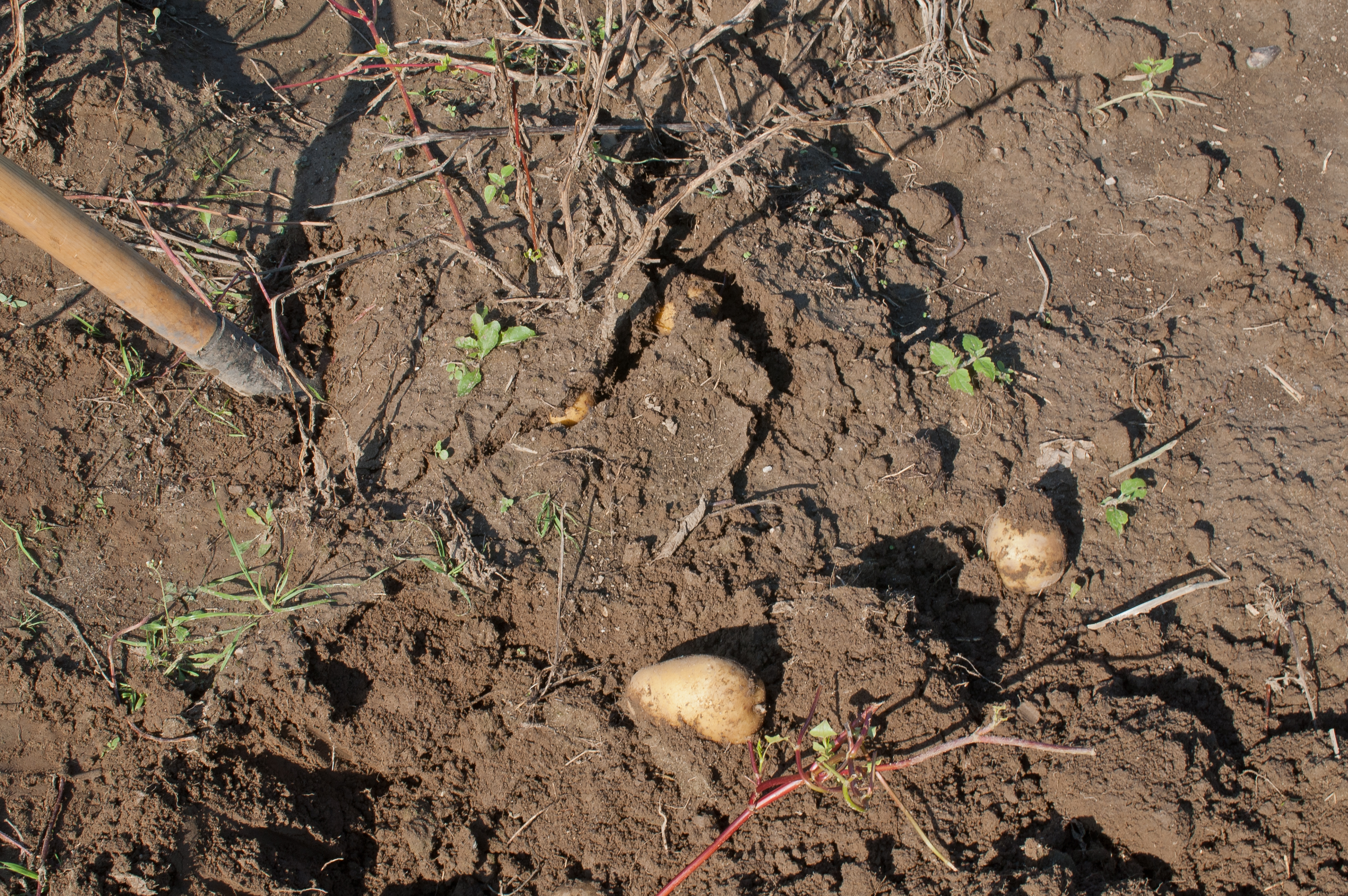
The guide's instruction for the harvest itself was simple: dig the soil carefully, taking care that the potatoes are not cut by the spade or the plough, and make sure the tubers are not cut or bruised during the harvest. Cuts and bruises, Misener's 1982 paper noted, are one of the main reasons why newly harvested potatoes lose moisture in storage.
Most potatoes in Bangladesh are still dug by hand. BARI's 2016 country report on potato mechanisation compared a power tiller driven potato harvester developed at the institute with conventional harvesting. Manual harvesting needed 60 man-days per hectare against 21 with the machine, and the cost of harvesting came to Tk 17,100 per hectare by the conventional method against Tk 8,357 with the harvester. The report put the saving at 51 per cent in cost and 65 per cent in labour, with a capacity of 1.2 hectares a day. It also noted that adoption of such machines had been very slow, and listed a lack of small, affordable planters and harvesters suited to small, fragmented land as a major constraint.
The same report estimated a need for 2,000 small potato harvesters, and named Munshiganj, Rajshahi, Joypurhat, Bogura, Rangpur, Dinajpur, Nilphamari, Lalmonirhat, Jashore, Panchagarh, Thakurgaon and Cumilla as suitable potato-growing districts for such machinery.
Whether a crop is dug by hand or by machine, extension guidance on handling is the same. Utah State University's guide recommends that potatoes should not be dropped more than four to six inches, and that equipment surfaces should be padded. It also lists managing fertiliser and irrigation late in the season, and killing the vines in good time to ensure skin set, among the ways to reduce bruising.
After lifting: shade, not sun
Once the potatoes are out of the ground, the guide advised drying them in the shade rather than leaving them in the sun, and moving them home or to a safe place as quickly as possible after harvest.
There is a health reason as well as a storage reason for keeping potatoes out of the light. MedlinePlus, the consumer health service of the United States National Library of Medicine, names solanine as the poisonous substance in the potato plant and says it is found throughout the plant, particularly in green potatoes and new sprouts. It advises against eating green or spoiled potatoes and says sprouts should be discarded, and notes that the symptoms of poisoning, which are mainly in the stomach and intestines, can appear 8 to 10 hours after eating. Anyone who feels unwell after eating green potatoes or sprouts should see a doctor.
How potatoes are kept after harvest makes a large difference to how much of the crop survives. A storage trial run by CIP with the Horticulture Innovation Lab at the University of California, Davis, with funding from USAID Bangladesh, compared traditional short-term storage in farmers' homes, ambient storage rooms designed by BARI, commercial cold stores and small cool rooms, in Jashore, Faridpur, Barishal and Patuakhali districts in 2013. After two months, potatoes stored in household conditions had lost 25 per cent of their weight and those in ambient storage 15 per cent, while potatoes in the commercial cold store had lost 2 per cent, mostly in the first two weeks, which the project linked to curing and cooling. Because of the high temperatures and humidity in household and ambient storage, sprouting started within a week, while no significant sprouting occurred in the commercial cold stores.
Storage capacity and the scale of the crop
The guide appeared at a time when potato growers had faced storage shortages and low prices. According to figures from the Department of Agricultural Extension reported by The Daily Star's Bengali edition on 15 February 2025, potatoes were grown on a record 5 lakh 24 thousand hectares in the 2024-25 season, 15 per cent more than the year before. The department put the previous season's production at close to 1.09 crore tonnes, against an annual national demand of about 90 lakh tonnes. The same report said the government estimated that around 30 per cent of production is lost because of the lack of cold storage facilities, and that the department put the cost of producing a kilogram of potatoes that season at Tk 15, against Tk 13 the year before.
Cold storage has grown but not kept pace with production. Banglapedia records an installed cold storage capacity of about 22,00,000 tonnes in the country, and notes that most small farmers kept potatoes, particularly local varieties, at home by indigenous methods, with substantial losses from dehydration, pests and disease. BARI's 2016 report counted 382 potato cold storages, holding about 25 to 30 per cent of the crop.
Regional figures show the same gap. The Business Standard's Bengali edition reported on 9 April 2025 that the Bogura and Rajshahi agricultural regions produce 3,580,191 tonnes of potatoes, while the region's 107 cold storages can hold only 1,889,820 tonnes, so that farmers keep the rest by traditional methods. The Bogura deputy commissioner told the paper that potatoes were being stored that season on 67 wooden and bamboo platforms (machas) in the district, each able to hold 35 tonnes.
Munshiganj, the country's third-largest potato-producing district according to a report by the national news agency BSS on 30 January 2026, shows the scale of the season the guide was written for. The district office of the Department of Agricultural Extension set a target of 34,655 hectares for the 2025-26 season, and potatoes were planted on 34,660 hectares. The production target was 1,045,195 tonnes. In the previous season, the district had grown potatoes on 34,758 hectares and harvested nearly 12 lakh tonnes. The report added that 6,783 hectares in the district had been planted that season with potatoes suitable for export.
Varieties and the research behind them
The guide's range of harvest dates reflects the variety of potatoes grown in Bangladesh. Banglapedia divides them broadly into local and high-yielding varieties. It counts about 27 local varieties, which it says are not strictly native but were brought to the region long ago and are still grown for their taste and cooking quality despite low yields. Among them are Sheel Bilatee, mostly grown in Rangpur, Lal Sheel in Bogura, Lal Pakri in Dinajpur, Bogura and Sirajganj, and Dohajari in the Chattogram area.
Among high-yielding varieties, Banglapedia names Cardinal, an oblong, reddish variety introduced from the Netherlands, Diamant, another Dutch variety with pale yellow tubers, and Kufri Sindhuri, a red, round variety from India. It notes that BARI's Tuber Crops Research Centre, since its founding in 1977, has collected many new varieties from the International Potato Center in Peru and other sources for testing under Bangladesh conditions, and that BARI established a seed potato farm at Debiganj in Panchagarh. BARI's 2016 report put the number of potato varieties developed by the centre at about 70, and said that only about 5 per cent of the seed used came from quality sources, with the remaining 95 per cent of low quality, produced by farmers themselves.
Because each variety matures at its own pace, the safest guide for a particular field is the variety's stated maturity period together with the signs in the field: yellowing and dying plants, a two to three week wait, and skins that do not rub off. Farmers unsure of their variety's maturity, or of whether and how to remove the haulm, can ask their upazila agriculture officer.
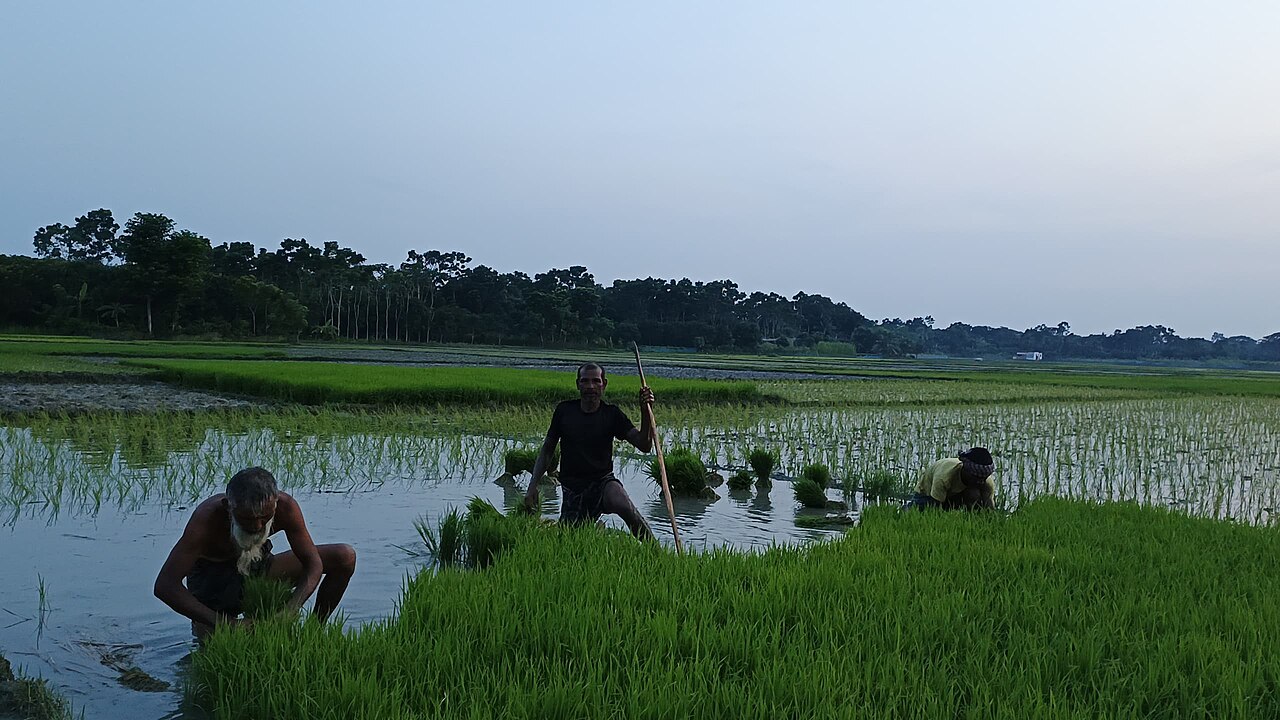
Photo: কুউ পুলক / Wikimedia Commons (CC BY-SA 4.0)
Sources: Jagonews24, Banglapedia (Asiatic Society of Bangladesh), Bangladesh Agricultural Research Institute (BARI), Bangladesh Journal of Agricultural Research, International Potato Center (CIP), Canadian Agricultural Engineering, Horticulture Innovation Lab (University of California, Davis), Utah State University Extension, MedlinePlus (US National Library of Medicine), The Daily Star Bangla, The Business Standard Bangla, BSS
Comments
(0)