
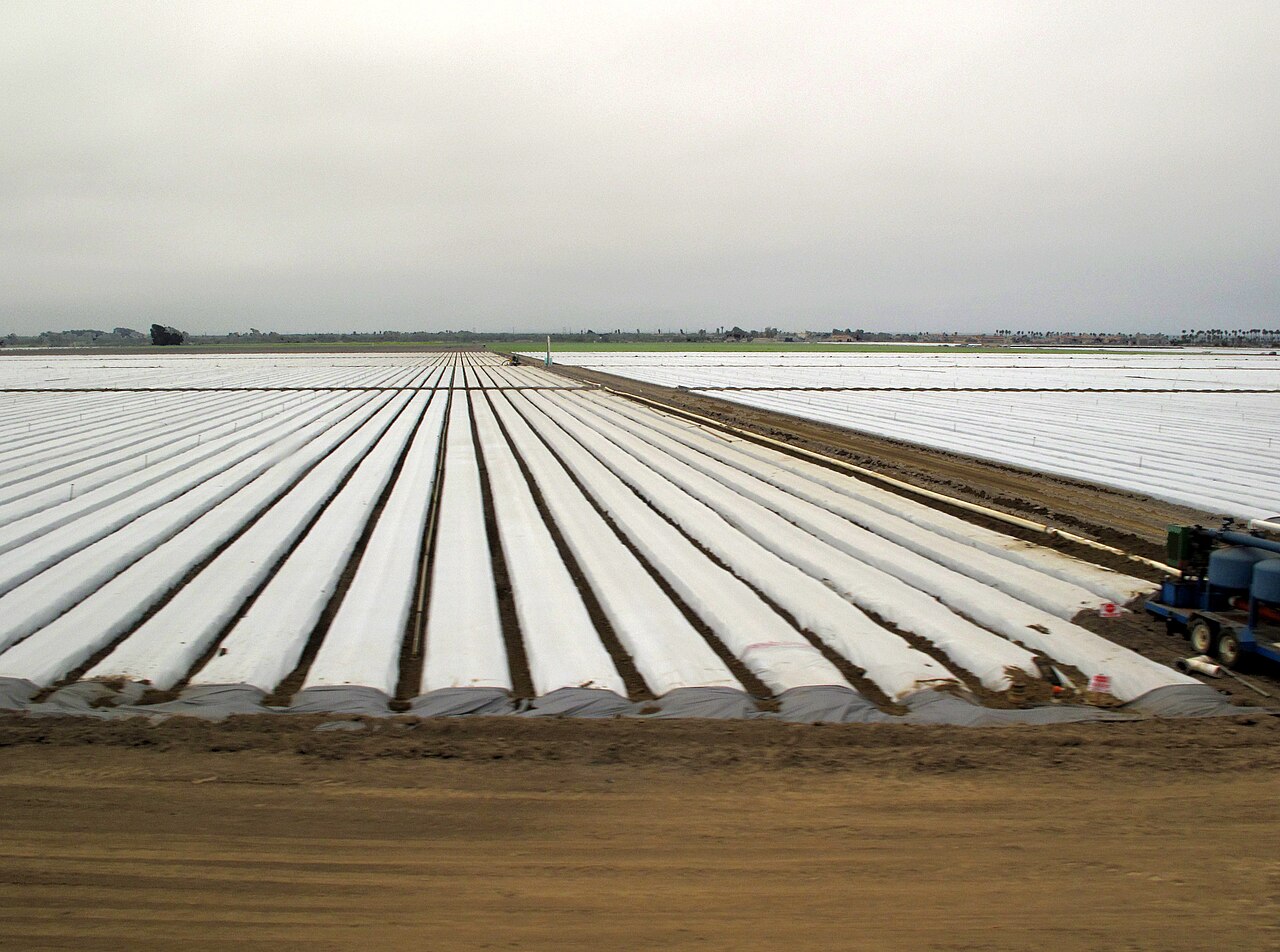
A textile cover laid directly over strawberry plants helped them produce up to 3.56 times as much fruit as uncovered plants in tunnel field trials at North Carolina State University, with no harm to plant health, ScienceDaily reports from a university release. The researchers say the fabric could also reduce pesticide and water use.
The fabric, called Plant Armor, has a three-dimensional knitted structure that forms a barrier insects cannot get through, while its layers still let sunlight, rain and air reach the plants. The trials found it did not reduce the light available to the plants or harm relative humidity.
"We expected that Plant Armor's seemingly opaque fabric would lead to an increase in vegetative biomass at the expense of fruiting," said Gabriel Olawuyi, a graduate research assistant at NC State and lead author of the paper. "However, we found the fabric did not impede access to light at all, and fruit production increased significantly."
Across three growing seasons the cover produced a steady warming effect. Olawuyi said this helped the plants build up the accumulated heat, measured as growing degree-days, that they need to move through each stage of development, so covered plants reached fruiting earlier than uncovered ones. Because the fabric physically stops insects from feeding, it could also cut the amount of conventional pesticide needed.
The idea began far from farming, in research on making military uniforms resistant to mosquito bites and body armour more comfortable. "Then, through trial and error, we arrive at a product which could triple the output of strawberry farms here in North Carolina," said co-author R. Michael Roe, a distinguished professor at NC State.
The study, "Knitted 3-D, Porous Textile Cover to Enhance Strawberry Fruit Production and Prevent Insect Feeding," is published in the journal Agriculture. The work was funded by the North Carolina Agricultural Foundation and the USDA National Institute of Food and Agriculture. The fabric is patented by NC State and licensed for commercial development.
Photo: Downtowngal / Wikimedia Commons (CC BY-SA 3.0)
Source: ScienceDaily, Agriculture & Food

Comments
(0)