
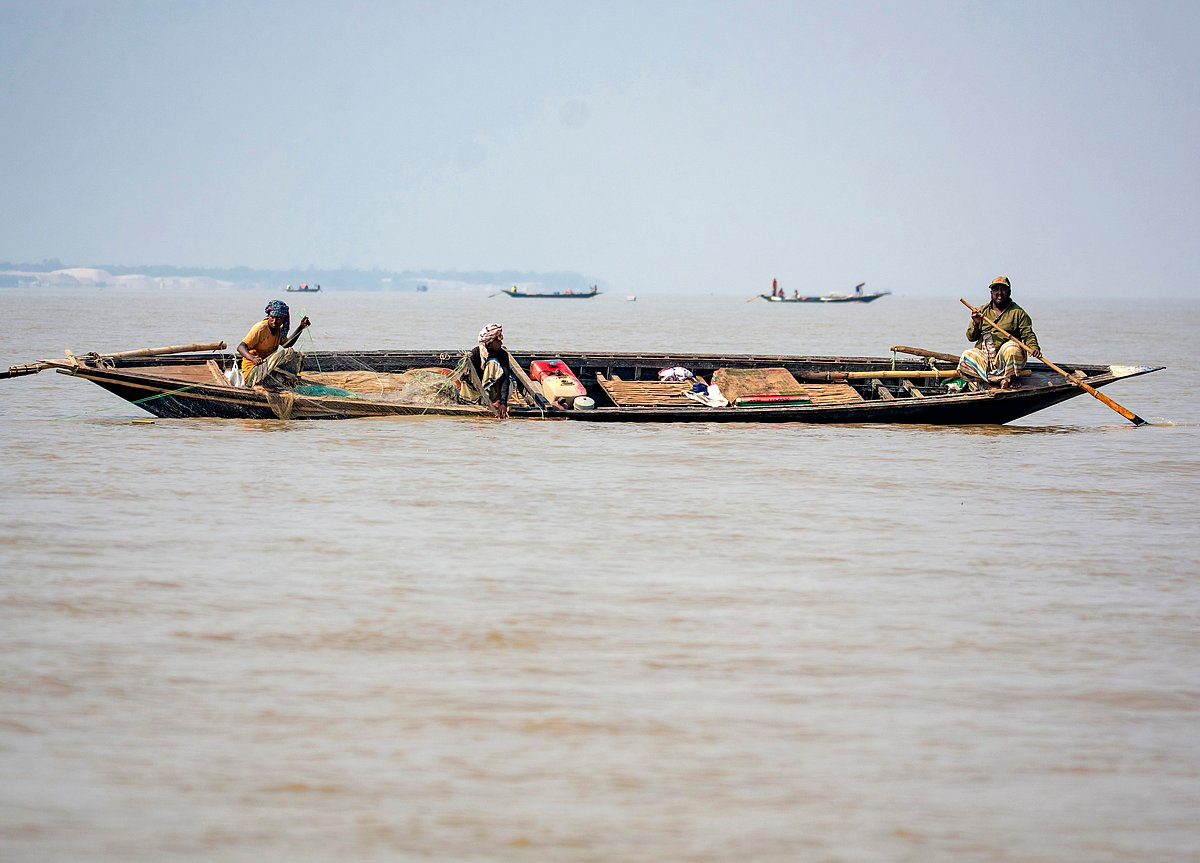
Why does the same species taste so different when it is caught in the Padma or the Meghna rather than at sea or in another river? Researchers at Chittagong University's Institute of Marine Sciences studied the question some years ago, and their findings appeared in an article in the journal Nature. The secret, they concluded, lies not in the fish but in what it eats and where.
Hilsa is essentially a sea fish that returns to fresh water to spawn, swimming for hours against the current. The journey demands energy, and the energy comes from food. Where the Padma and Meghna meet the sea, Himalayan meltwater and silt from two great basins make the water exceptionally rich in nutrients, which in turn breed vast quantities of plankton — hilsa's favourite food. Feeding heavily on its way up to the estuary, the fish lays down fat; the fat softens the flesh and produces the famous aroma.
By the researchers' estimate, only about 2 per cent of the hilsa landed in Bangladesh comes directly from the Padma, and those fish are smaller. Most of the large, flavoursome hilsa are caught in the Meghna basin, especially near Chandpur where the two rivers merge; much of what is sold as 'Padma hilsa' is in fact Meghna estuary fish. Some fisheries scientists say there is little scientific difference between the two rivers' hilsa, since both belong to one ecosystem.
Not every river's hilsa is equal, though. Researchers at Gazipur Agricultural University recently compared hilsa from the Meghna and the Tentulia and found the Tentulia fish in some respects even better. The river's name, in other words, tells you little; water quality, the diversity of food and the strength of the current together decide how good an area's hilsa will taste.
Timing matters too. Fish caught from August to November are considered the best in nutrition and taste, because the body is preparing to spawn and fat reserves peak. At sea, with less food around, the fish carries less fat and tastes plainer; the change begins only when it passes from salt water into fresh.
For fishermen and traders the implication is plain: hilsa from plankton-rich estuary water in the roe season commands the highest prices, and protecting that water is the condition for keeping both the flavour and the price.
Source: Prothom Alo

Comments
(0)