
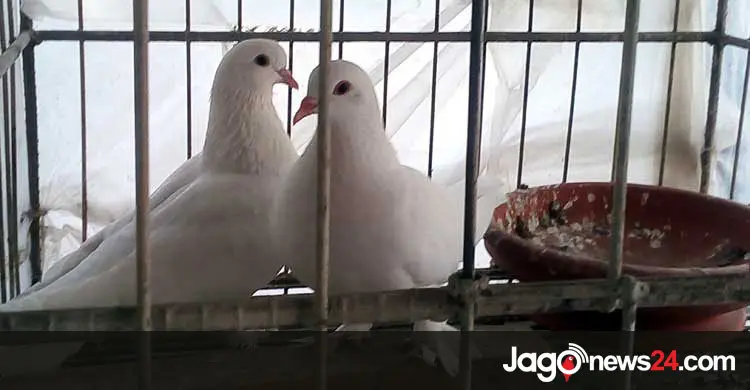
The pigeon is one of the most common domestic birds. Its meat is very tasty and relatively high in protein. Many keep pigeons as a hobby, and some have started rearing them commercially because it is very profitable. A pair of improved-breed pigeons sells for anywhere from Tk 2,000 to nearly Tk 1 lakh.
Lifespan and breeding
Each pair consists of a male and a female, and pigeons can live for 20-30 years. They lay eggs, and both male and female sit on them to hatch the chicks, which emerge after about 18 days of incubation. One pair produces 10-12 pairs of chicks a year, and the young start laying at 5-6 months of age.
Advantages
Pigeons tame easily and cost little to keep. Disease is relatively rare. Squabs are ready to eat or sell within four weeks. Pigeons can be kept in a small space, and feed costs are very low if they are kept free-range. Pigeon meat is also highly nutritious.
Housing and management
Pigeons can be kept free-range or in cages. They live happily in houses made of bamboo or wood, and even in a basket tied under the corner of a village house's roof. The hatching rate is about 98% and eggs take about 18 days to hatch. Pigeons naturally produce milk to feed their chicks, containing 70% water, 17.5% protein, 10% fat and 2.5% minerals. Body weight is usually 400-500 grams and body temperature 38.8-40 degrees Celsius.
Breeds
There are more than 100 pigeon breeds in the country, and some foreign pigeons are also seen now. Breeds include Gola, Goli, Mayurpankhi, Fantail, Tumbler, Lotan, Lahori, King, Jacobin, Mukhi, Sirazi, Gribaj and Chandan.
Feed
Pigeon feed should contain the right amounts of protein, fat, carbohydrate, vitamins and minerals. A pigeon usually eats 30-50 grams of feed a day and drinks 30-60 millilitres of water a day in winter and 60-100 ml in summer.
Grain is the pigeon's main food: wheat, maize, barley, peas, grass pea, mustard, rice, paddy, pulses and so on.
Commercial feed is mixed with bone meal, limestone or oyster shell powder, a vitamin or amino acid premix, salt and the like.
Disease and vaccination
Pigeons suffer relatively little disease. The common ones are Ranikhet and pox, and they can also be attacked by parasites. Vaccines must be given on time and biosecurity followed. Regular balanced feed and enough light and air keep disease down.
Pigeons have been used since ancient times, when they also carried letters. Demand for pigeons is still high, and pigeon meat is considered a fine diet for the sick. Rearing improved breeds is changing many people's fortunes; some in villages and towns have become self-reliant through pigeon rearing, and it could play a remarkable role in tackling unemployment.
Source: Jagonews24. First published in Bengali on The Agro News.

Comments
(0)