
Pieter van Kesteren, who died on 30 September 2026, spent more than four decades in vegetable seeds, and his career, Seed World Europe argues in a long profile by editorial director Marcel Bruins, is a first-person record of how the modern global seed trade was built. He shared his recollections with the magazine in the weeks before his death.
He joined Sluis Brothers in Enkhuizen in the Netherlands in June 1962, not out of interest in seeds but for the chance to travel. "The actual interest in seeds came later," he recalled. He went on to estimate that he flew about four million miles in his working life.
From 1965 he worked across Hungary, Czechoslovakia, Poland, East Germany, Romania, Bulgaria, Yugoslavia and the Soviet Union, where state bodies controlled seed imports. In 1970 he and his Hungarian colleague Otto Hernadi planted hundreds of Royal Sluis varieties at Tordas, near Budapest, as a "living catalogue" for specialists who could not travel to trials in the West. The business that followed, under a ten-year agreement, reached tens of millions of Dutch guilders. In 1973 he joined a Dutch trade mission to China, where visitors crowded round pelleted lettuce seed splitting open as it germinated.
In 1978 he moved to Salinas, California, to build Royal Sluis America. Its first big activity was custom pelleting of lettuce seed with the Splitkote coating, which breaks apart as the seed takes up water. The Harkins Road plant opened in April 1979, and within five years the company had about 150 staff. Combined with priming and precision planting, Splitkote became highly influential in US lettuce production in the 1980s, and the seed treatment work later became Incotec.
He also saw a downside: "The farmers who could afford better seeds and technology had a huge advantage over others who did not."
After 32 years at Royal Sluis, which was bought by Petoseed and then became part of Seminis, he helped Nunhems take over Sunseeds in 1997, joined the board of its holding company in 1999 and became CEO of Nunza in 2003, when Nunhems had about 1,000 staff and turnover of around US$200 million. Ownership passed from Hoechst through Aventis to Bayer, and in 2018 BASF bought Bayer's vegetable seed business. Under his watch Nunhems was organised around global crop teams rather than countries.
His advice to today's much larger seed companies was about freedom: "If you micromanage people, you stifle creativity and risk losing to your competitors."
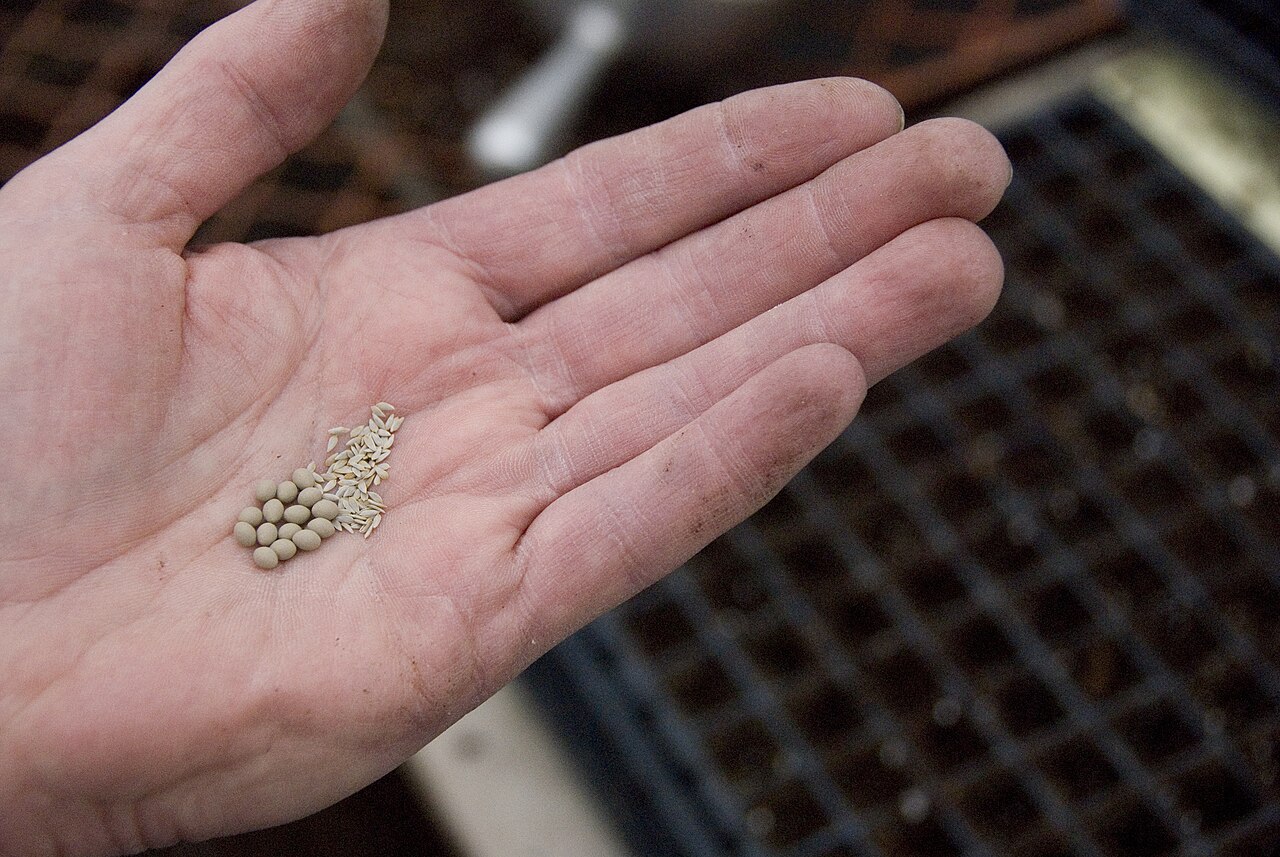
Photo: Dwight Sipler / Wikimedia Commons (CC BY 2.0)
Source: Seed World Europe

Comments
(0)