
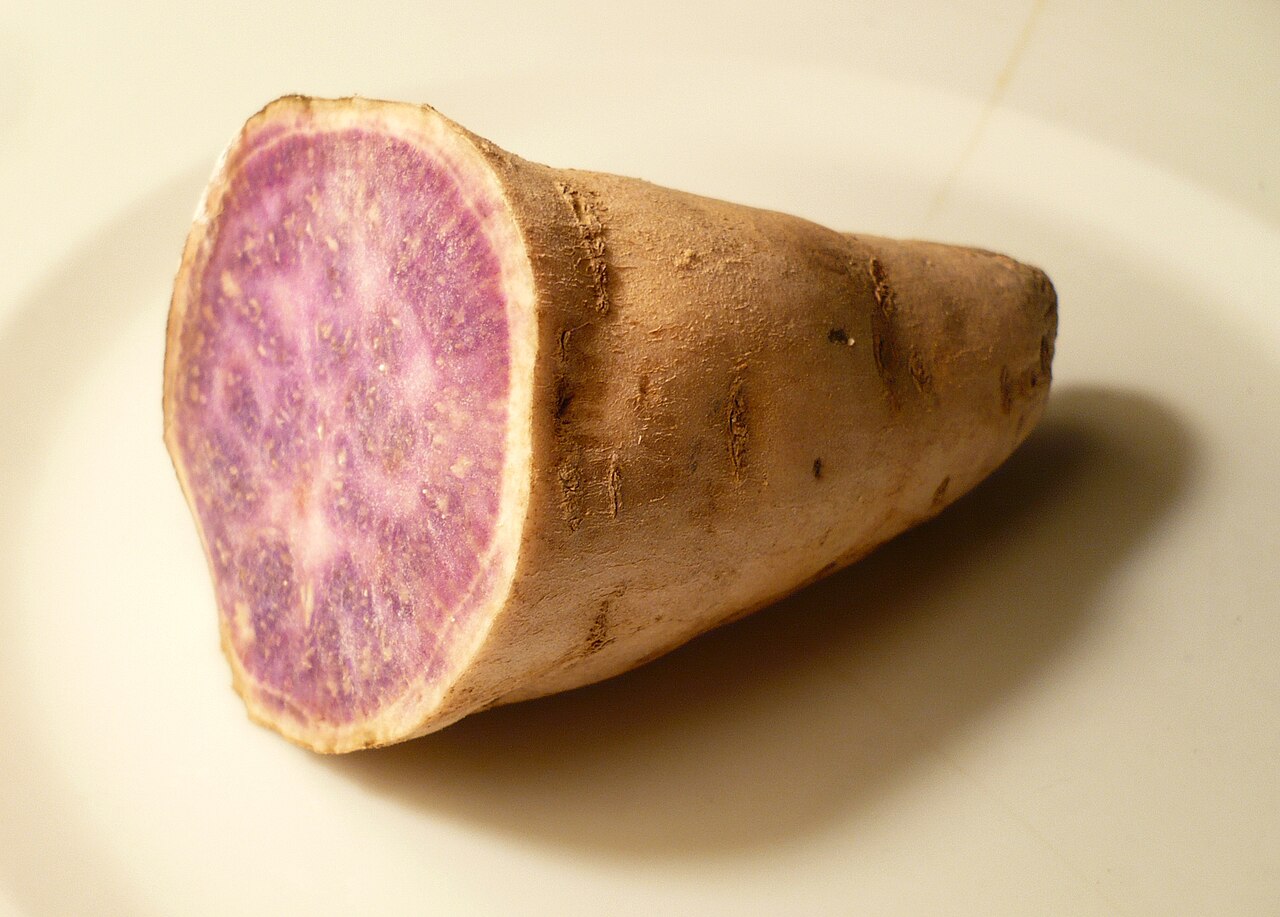
The Philippines, the world's leading producer of ube, has indefinitely suspended exports of the fresh purple yam just as global demand for it soars, FoodNavigator reports. The Department of Agriculture said the ban will keep scarce planting material in the country while it expands production and turns the crop into a bigger export earner.
Because new ube plants are grown from existing tubers, every tuber shipped abroad is planting material lost. "We severely lack planting material ourselves and we don't want to export it to countries that could use Philippine ube varieties to compete with us," said Agriculture Secretary Francisco Tiu Laurel Jr.
Production is small and falling. A 2026 report from the US Department of Agriculture's Foreign Agricultural Service put Philippine ube output below 12,500 tonnes in 2025, down from 14,150 tonnes in 2021, citing post-harvest losses from poor infrastructure and fragmented farms, but saw significant room for expansion. The global ube market was worth $455.3 million in 2024 and could reach $943.6 million by 2035, according to Transparency Market Research; Filipino ube goes mainly to the United States, the United Kingdom, Italy and the Middle East.
The suspension covers fresh ube and planting material, not processed products such as ube powder, said Alonzo Nieves, founder of the supplier Philippine Ube, who has had at least ten buyers ask whether they would be cut off. Part of the shortage comes from a secondary market in planting stock, he said, as so many new growers compete with food buyers and processors for the same tubers. Ube may become more expensive and harder to get until supplies recover.
Nieves argues that supply, processing and demand must grow together, since farmers will expand only if someone will process and buy the extra crop. He also says much of the "ube" sold abroad is purple sweet potato or dye, which takes demand away from real growers; buyers should ask for the species, the full formulation, where it was grown and batch-level traceability. Industry members have formed the United Ube PH Association to work with the government, and President Ferdinand Marcos Jr has approved a P300 million budget for the ube industry in 2027.
Photo: Badagnani / Wikimedia Commons (CC BY 3.0)
Source: FoodNavigator

Comments
(0)