
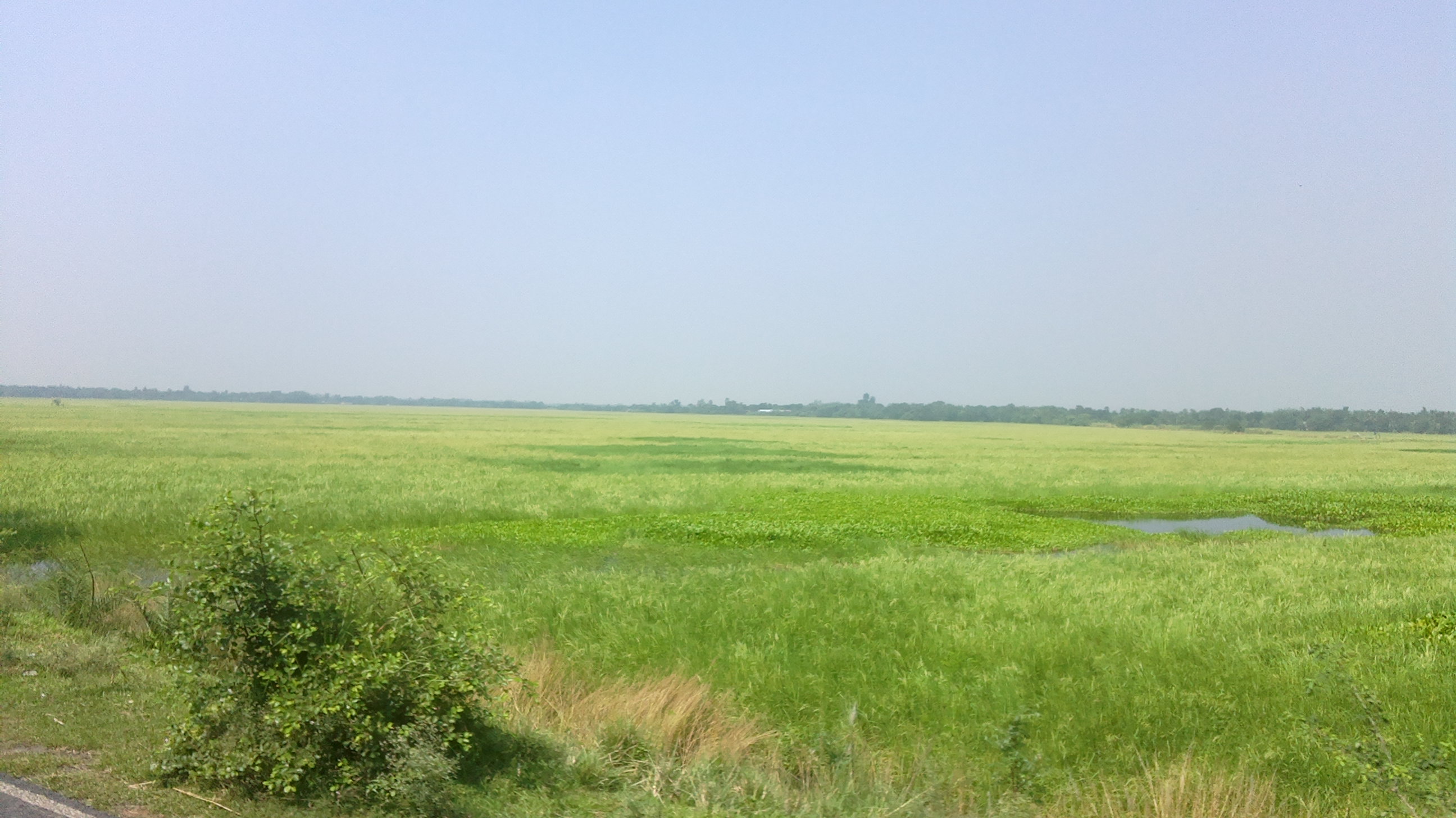
In March 2017, farmers in Sirajganj district, including the Chalan Beel area long known as one of the country's granaries, were turning in growing numbers to two ways of controlling crop pests that need no pesticide. One is perching: setting tree branches and bamboo sticks in the fields so that birds can sit on them and pick off insects. The other is the light trap: a lamp lit in the field in the evening, with a basin of soapy water beneath it into which the insects fall. Jagonews24's Sirajganj correspondent reported on 12 March 2017 that the district's agriculture extension office had brought about 56,890 hectares of its target area under perching and had set up 425 light traps.
The report explained why farmers needed them. From the time fertiliser is applied, it said, transplanted Aman, Irri-Boro and other crops in the district come under attack from a range of harmful insects, among them the brown planthopper (known locally as "current poka"), the leaf roller, the case worm and the stem borer. To save their crops, farmers had long relied on pesticides along with other measures. By early 2017, the report said, many were setting the chemicals aside in favour of the simpler, environmentally friendly methods.
What the extension office reported
According to the Department of Agricultural Extension (DAE), the report said, work on both dead perching and live perching had already been taken up on a per-bigha basis. To carry it out, the sub-assistant agriculture officers posted in each union of the district were working directly with farmers. Banglapedia, drawing on the 2011 census of the Bangladesh Bureau of Statistics (BBS), lists 82 unions in Sirajganj's nine upazilas, so the field staff concerned were spread across the whole district.
Of the district's overall target, about 56,890 hectares had been brought under perching, and 425 light traps had been installed, the report said, citing the extension office. With these methods, it added, farmers were destroying insects and insect eggs at low cost using local materials, without harming the environment. The figures are the extension office's own, as the report gave them; the report did not say how the area was measured or what the full target was.
The farmers interviewed described how they had learned the methods. The agriculture office, they said, raised awareness from time to time through courtyard meetings (uthan baithak), small gatherings held in a farmer's yard, at which officials explained how to set branches and bamboo sticks in the fields and how to light a trap in the evening.
What the farmers said
Sharecroppers Amjad Hossain, Rahim and Bakkar of Panchthakuri in Sirajganj Sadar upazila, and many others with them, told the correspondent that the agriculture office had made them aware of perching, that is, pushing branches and bamboo sticks into the field, and of using a light trap in the field around dusk. Following that advice, they said, they had protected their land from harmful insects and had gained a great deal.
Anwar Hossain, a marginal farmer of Bahuli, said that when branches are pushed into a field, birds sit on them and eat the insects that damage the crop. In this way, he said, farmers could protect their crops from harmful insects very easily and without pesticide.
Alhaj Ali, a farmer of Manikchar village in Talam union of Tarash upazila, said that the method protects a crop from harmful insects without pesticide. He had used it in the previous season too, he said, and having benefited, was using it again.
How perching and light traps work
Humayun Kabir, a sub-assistant agriculture officer of the DAE in Tarash upazila, explained that birds sit on the branches set in the cropland and eat the harmful insects and their eggs. As a result, he said, pesticide would no longer be needed, and higher yields would be possible at lower cost.
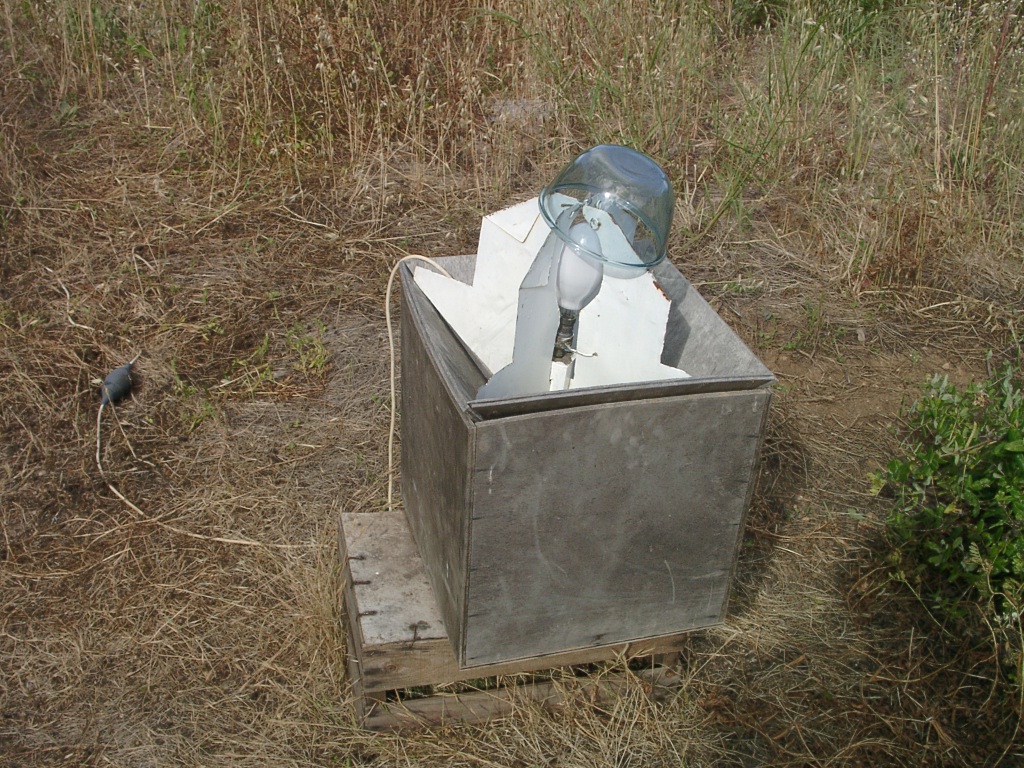
Md. Anwar Hossain Khan, additional deputy director (crops) of the DAE in Sirajganj, described both methods. Perching, he said, means setting branches inside a field so that birds get the chance to eat the moths. For a light trap, an electric or battery-powered bulb is fixed to a pole in the field and kept lit in the evening, and a basin filled with soapy water is placed beneath it. Drawn by the light, the crop's harmful insects gather there, fall into the basin and die. In this way the insects can be controlled easily, he said, and the methods do the environment no harm.
Researchers describe perching in similar terms. In a study published in Frontiers in Environmental Science on 31 March 2016, scientists from Bangabandhu Sheikh Mujibur Rahman Agricultural University, the Bangladesh Rice Research Institute (BRRI) and other institutions defined perching as placing bamboo poles with branches in rice fields to serve as resting places for predatory birds. They gave the standard spacing for perching poles as 10 metres by 10 metres and set the poles on an east-west line to lessen wind damage and make them easier for birds to see.
The light trap is also a monitoring tool. The International Rice Research Institute (IRRI), in its Rice Knowledge Bank fact sheet on planthoppers, advises using light traps (for example, an electric bulb or kerosene lamp near a light-coloured wall or over a pan of water) at night when rice is prone to planthopper attack. If the trap is inundated with hundreds of brown planthoppers, IRRI says, that is a signal to check the seedbed or field immediately and to scout every day for the next few weeks. IRRI also advises against placing the lights near seedbeds or fields, and notes that a farmer who checks the crop daily anyway does not need one.
Bangladeshi extension officers have used the trap in the same way. Reporting from Mymensingh in October 2012, The Daily Star described farmers setting light traps at night with a lantern, a charger light or an electric bulb, with a pot of water mixed with detergent or kerosene beneath. DAE officials there said the traps were used to find out which harmful insect was present, so that farmers could take the control measure suited to that pest instead of spraying the whole field indiscriminately.
The pests in Sirajganj's rice fields
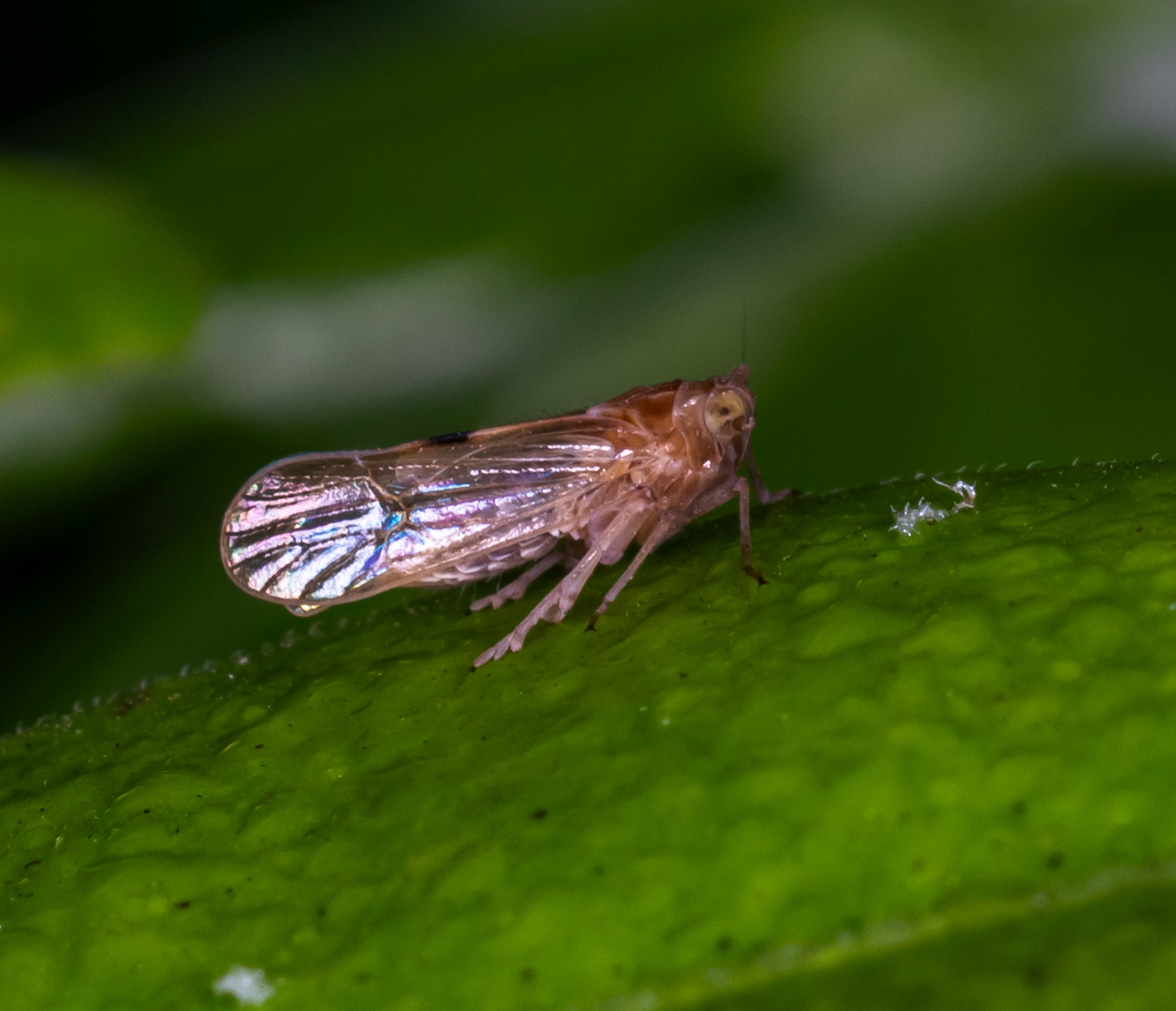
The brown planthopper, Nilaparvata lugens, is one of the most serious rice pests in the region. Banglapedia describes the adult as light or dark brown and about 3 mm long, with piercing and sucking mouthparts; adults and nymphs suck sap from the base of the rice plant. It was definitely recorded as a rice pest in Bangladesh in 1969, Banglapedia says, and heavy infestations cause "hopperburn", in which patches of the crop dry out. It also carries the virus that causes grassy stunt disease. IRRI notes that at high densities crop loss may reach 100 percent, and that outbreaks often follow when pesticides destroy the planthopper's natural enemies, such as water striders, mirid bugs, spiders and egg parasitoids.
The leaf roller, which IRRI calls the rice leaffolder (Cnaphalocrocis medinalis), is a caterpillar that folds a rice leaf around itself, binds the edges with silk and feeds inside, leaving white streaks on the blade. IRRI says heavy fertiliser use encourages it, and that early-season insecticide spraying against it brings little or no return while disrupting the natural enemies that keep secondary pests such as planthoppers in check.
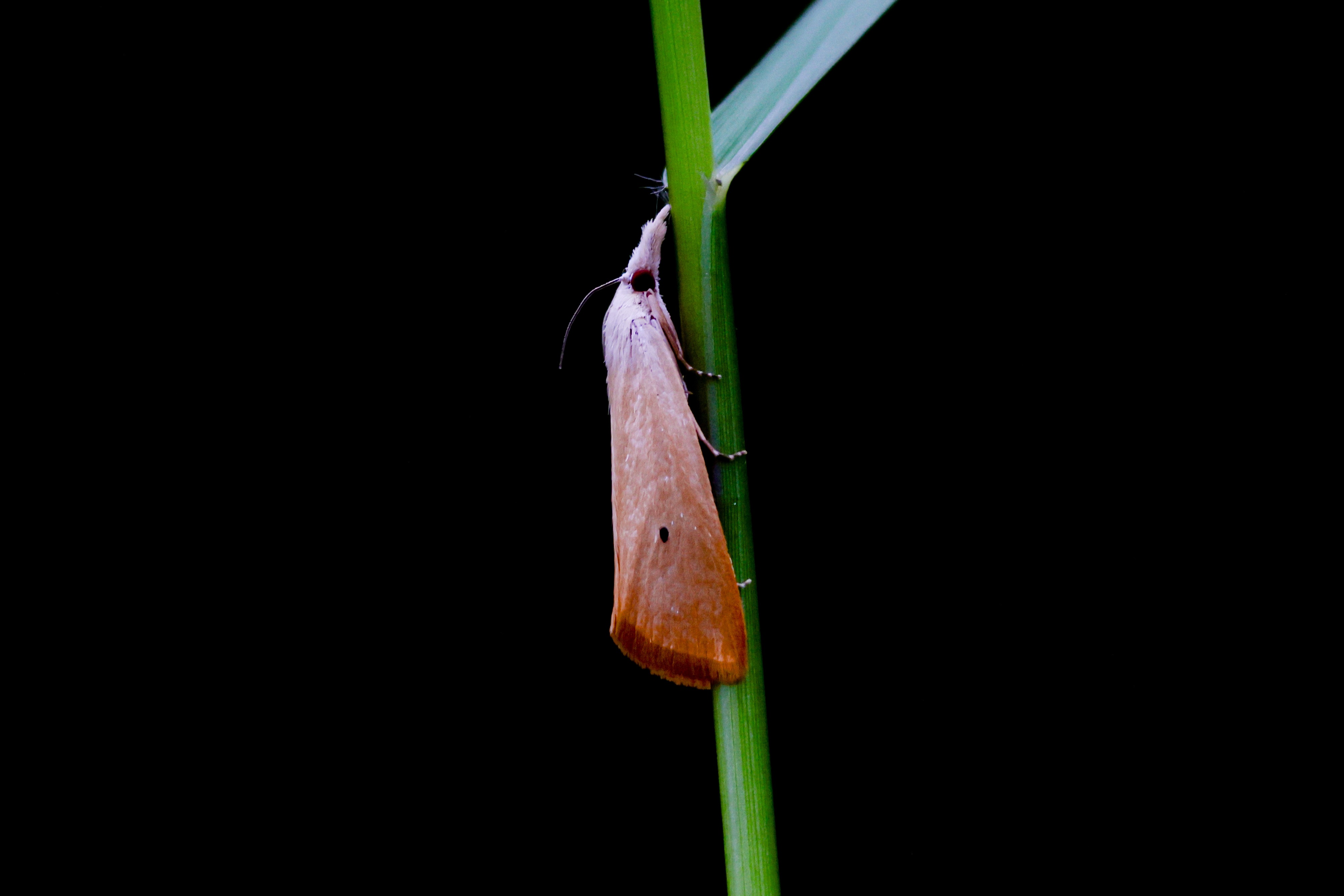
The case worm (Nymphula depunctalis) cuts off leaf tips to build a case in which the larva floats on the water by day before crawling back to feed, leaving leaves cut at right angles as if with scissors. According to IRRI, the adults are nocturnal and are attracted to light traps, and birds are among the natural enemies that feed on them.
Stem borers, majra poka in Bengali, are moth caterpillars that tunnel into the stem. Banglapedia lists the yellow stem borer, dark-headed stem borer, pale-headed stem borer and pink stem borer as the main species attacking rice in Bangladesh. Their damage shows as "dead hearts", in which the central shoot dries, and as whiteheads, panicles with empty grains. IRRI states that yellow stem borer damage can cause about 20 percent yield loss in early-planted rice and 80 percent in late-planted crops, and lists birds, dragonflies and spiders among the stem borers' natural enemies.
The report's remark that attacks begin after fertiliser is applied matches IRRI's guidance: the institute names excessive nitrogen among the conditions that favour planthoppers, leaffolders and stem borers alike.
What the research showed
BRRI's entomologists had tested these methods on farmers' fields shortly before the Sirajganj report. In a paper published in the Bangladesh Rice Journal in November 2015, a team from the institute's Entomology Division described trials in farmers' fields at Pirganj and Taraganj in Rangpur district during the T. Aman and Boro seasons of 2012 to 2014, carried out under the Integrated Agricultural Productivity Project. Each field was divided between routine (prophylactic) insecticide use, perching plus sweeping with insecticide only when needed, perching alone, and the farmer's own practice.
Pest numbers stayed below the economic threshold level in all the trials, and there was no significant difference in infestation among the treatments. Natural enemies such as spiders, ladybird beetles, dragonflies, damselflies, carabid beetles and staphylinid beetles were found at both sites, but some were missing where insecticide had been used continuously. Plots where insecticide was applied five times gave no yield advantage over those where only perching and sweeping were done, while the farmers' own plots gave significantly lower yields. The authors concluded that farmers could avoid continuous or indiscriminate insecticide use, saving production costs and protecting the environment.
The same paper put the chemical burden in figures: during 2011 and 2012, it said, about 20,000 to 24,000 tonnes of formulated insecticide (1,900 to 2,400 tonnes of active ingredient) were used in Bangladesh each year, more than half of it against rice pests, citing the Bangladesh Crop Protection Association. It also noted that Bangladesh harvested over 11.6 million hectares of rice and produced 34 million tonnes of milled rice in 2012, citing IRRI.
The 2016 study in Frontiers in Environmental Science, carried out in Boro seasons of 2011-12 and 2012-13 at three sites in the Barisal region with the variety BRRI dhan29, found the lowest levels of dead hearts and whiteheads in plots managed with integrated methods (egg-mass collection, sweeping, perching and insecticide only at the economic threshold). Those plots yielded 7.3 to 7.5 tonnes a hectare, against 6.28 to 7.02 tonnes in the other treatments. The paper cites the DAE (2011) as recording 266 insect species in rice ecosystems and lists the methods the department recommends against the yellow stem borer: light trapping, hand-picking egg masses, sweeping, perching, resistant varieties, natural enemies and insecticide applied only at the economic threshold level.
Integrated pest management in Bangladesh
Perching and light traps are part of integrated pest management (IPM), which Banglapedia defines as a system that uses all suitable techniques in as compatible a way as possible to keep pest populations below the level that causes economic injury. Bangladesh joined the FAO Inter-country IPM programme in 1981. Between 1982 and 1988 IPM existed mostly as demonstrations; in 1988 a full-time FAO IPM expert was posted to the country, and from 1988 to 1995 the programme gave practical field training to 2,257 extension workers, 407 NGO officers and 4,550 farmers, with the DAE. Banglapedia records that trained farmers were able to manage their rice with less pesticide than their neighbours, and that later projects were supported by FAO, UNDP, ADB and DANIDA.
According to the 2015 BRRI paper, the DAE's Plant Protection Wing runs IPM through farmers' field schools, and BRRI's entomologists have recommended several IPM techniques for rice that the DAE is expected to spread among farmers. Banglapedia notes that pesticides remained the most common method among Bangladeshi farmers because they were easy to buy and quick to act, which is why the extension service has worked to show farmers alternatives in their own fields.
Earlier reports from other districts
Sirajganj was not the first district to report the methods spreading. In Mymensingh, The Daily Star reported in October 2012 that around 2,500 light traps had been set up in 510 blocks under 12 upazilas during that Aman season. The DAE's deputy director there said the programme had been introduced over the past few years and had reduced indiscriminate use of pesticides by 50 percent, while the Muktagachha upazila agriculture officer said farmers in 43 blocks under 10 unions had not needed any pesticide that year.
In Bogra, a district bordering Sirajganj to the north, The Daily Star reported in September 2016 that the light trap and perching systems introduced by the DAE in T-Aman fields were gaining popularity in 12 upazilas. Local agriculture officials said the crop had been attacked by majra poka (stem borer), gandhi poka (rice bug), chungi poka (case worm) and grasshoppers, and that fields were freed of the insects after farmers began using the two methods. The DAE's deputy director in Bogra said farmers had benefited from them for five years and that the department was encouraging them through meetings, leaflets, field monitoring and field days. A local pesticide trader told the paper that his sales had fallen since the methods came into use.
Sirajganj and the Chalan Beel
Sirajganj, in Rajshahi division, covers 2,402.05 square kilometres and had a population of 3,097,489 at the 2011 census, according to Banglapedia. It was made a subdivision of Pabna district in 1885 and became a district in 1984. Its main rivers are the Jamuna, Ichamati, Baral and Hurasagar, and agriculture is the main source of income for 51.14 percent of its households. Sirajganj Sadar upazila, home of the Panchthakuri farmers, grows paddy, jute, wheat, sugarcane, potato, mustard and vegetables, among other crops.
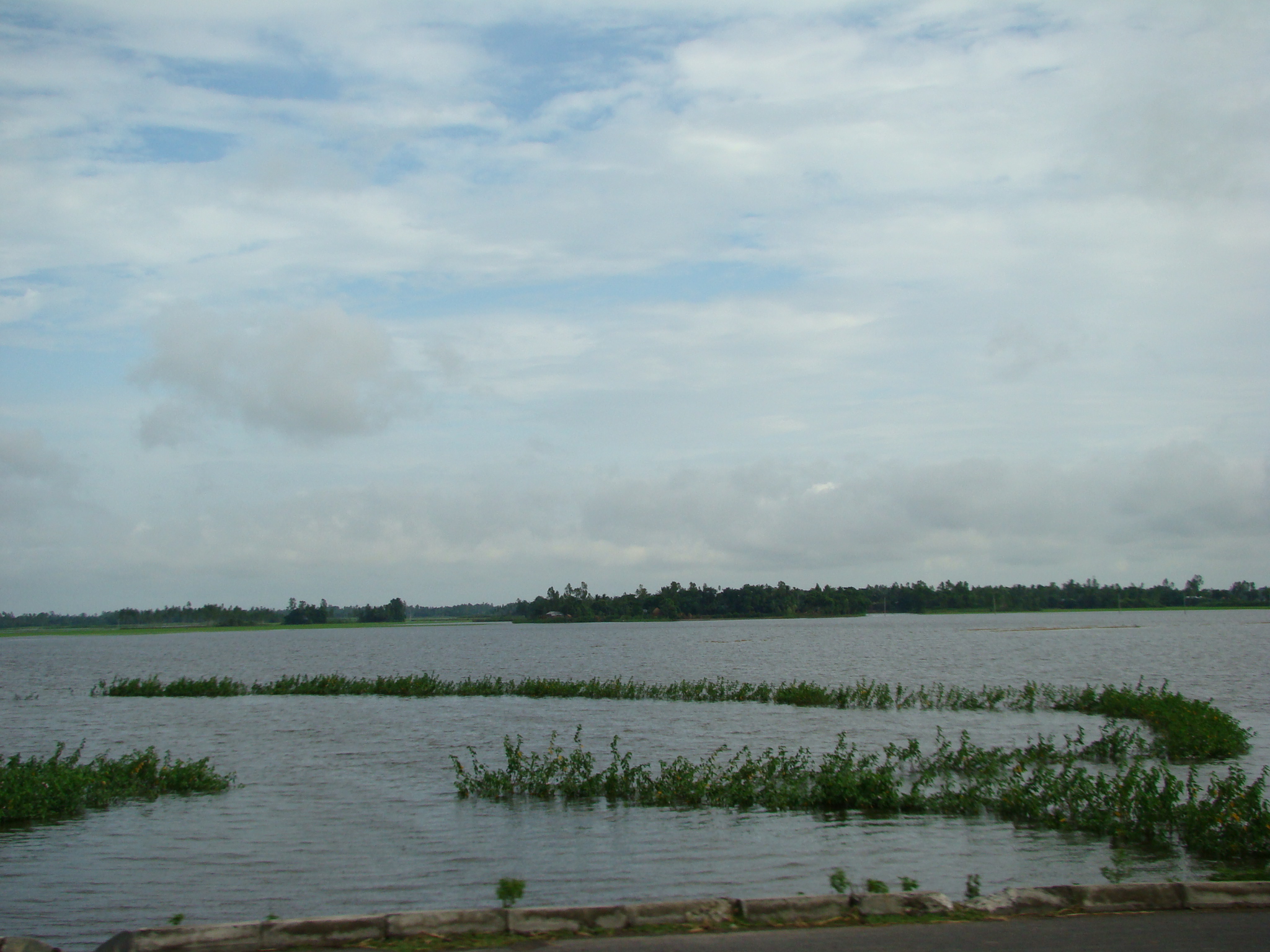
The Chalan Beel, which the report called a granary, is the largest beel in Bangladesh: a chain of depressions linked by channels that in the rainy season form one sheet of water covering about 368 square kilometres across Rajshahi, Pabna, Sirajganj and Natore districts, according to Banglapedia. About 10 percent of its area lies in Tarash upazila. In the dry season most of the smaller beels dry up and the outlying lands are planted with Boro and high-yielding rice; in the wet season the shallow edges carry deep-water Aman rice and jute.
Tarash upazila, where Alhaj Ali farms, covers 300.07 square kilometres in eight unions, among them Talam. Agriculture is the main source of income for 84.75 percent of its households, Banglapedia says, and its main crops are paddy, wheat, mustard, maize, pulses, onion and garlic.
Photo: George achik / Wikimedia Commons (CC BY-SA 4.0)
Sources: Jagonews24, Banglapedia, Bangladesh Rice Journal (BRRI), Frontiers in Environmental Science, IRRI Rice Knowledge Bank, The Daily Star
Comments
(0)