
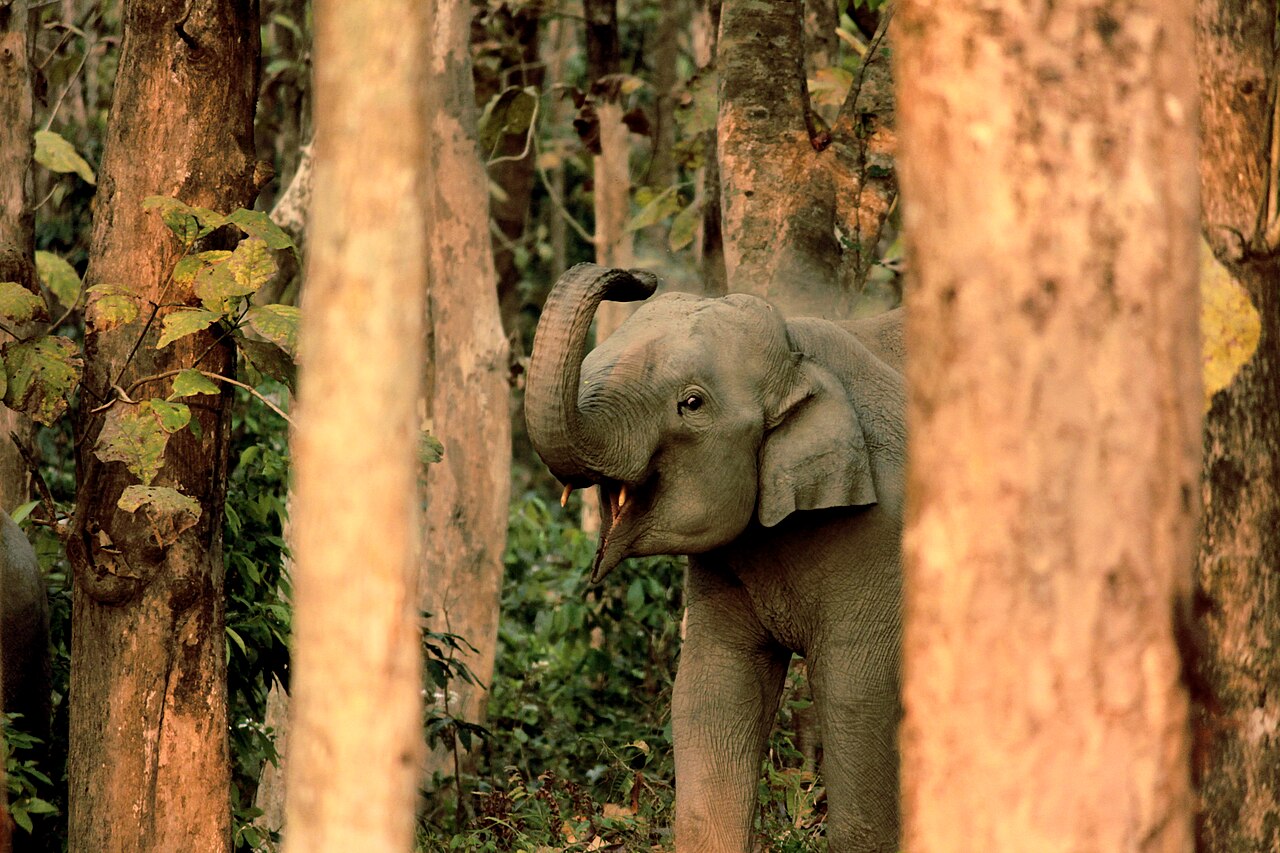
Premganj char, also called Jaliapara, is a sandbar settlement on the Teesta about 15 kilometres from Jalpaiguri town in West Bengal. The district's disaster plan lists it as a highly vulnerable charland. Its farmers live with floods, erosion and, since about 2018, wild elephants that come for their crops.
Avijan Saha, a researcher with the conservation group Airavat Trust who has studied the area for more than a decade, says a group of 15 or 16 elephants from the nearby Baikunthapur forest began foraging on the char around 2018. The char is not a traditional elephant corridor, but the animals found its fields. He estimates that about 100 elephants now enter Jaliapara each season. Many are maljurias, groups of male elephants that explore new ground for food.
The visits follow the crops. Maize, grown from about March or April to June, draws the most elephants, and May and June are the busiest months. Paddy starts around September and brings them back, though more scattered, because paddy plots are spread out while maize grows in continuous blocks. Residents keep watch from a makeshift tower with searchlights and bang drums and metal tins, but cannot stop large groups. "During the corn season, we can't sleep out of fear. This year, they fully broke down two of our houses," said Haricharan Roy, 58. Saha says there has been no serious retaliation against the animals; a few deaths in the past came from elephants eating pesticides.
The land itself moves. Chars are sand and silt left by the river, and they grow, shift or vanish. The 2023 glacial lake outburst flood from South Lhonak Lake in Sikkim killed large numbers of fish and badly damaged potato and pea crops, turning soil to marsh. "It is slowly improving. With more cultivation cycles, the soil gets better," said Budharu Muhammed, 57, a fisher, boat-maker and farmer with 15 bighas, roughly five acres, on the char.
No one legally owns these sandbars. Longtime residents lease plots, usually for a season, to migrants from the Sundarbans, Cooch Behar, Burdwan and elsewhere. Saha puts a seasonal lease at around 5,000 to 7,000 rupees a bigha; a tenant who cannot pay may hand over part of the harvest. Potatoes, maize and sometimes paddy are grown. Bijay Barman, 76, from Sitalkuchi, said a flood this year wiped out the paddy his family had put 22,000 rupees and their own labour into.
Because their occupation is not recognised, char farmers get no compensation for crop lost to elephants or floods, and migrants' identity papers still carry their home addresses, so some miss pensions. Eklabya Sharma of ATREE says dams, barrages, sediment and the loss of forest cover upstream have made chars less stable and less fertile than they once were.
Photo: M.Swarnali / Wikimedia Commons (CC BY-SA 4.0)
Source: Mongabay India

Comments
(0)