
India's 178 major reservoirs lost 5.07 billion cubic metres (BCM) of water in the week to 12 November 2026, leaving them at 63.25% of their usable capacity, according to the Central Water Commission's weekly report. They held 116.854 BCM, down from 121.926 BCM on 5 November.
That is 29.65% less than the 166.101 BCM stored a year earlier and 19.86% below the normal of 145.811 BCM. Against a total usable capacity of 184.762 BCM, storage is 49.247 BCM short of last year and 28.957 BCM short of normal.
The south is worst off. Its 50 major reservoirs hold 22.206 BCM, 39.74% of their 55.879 BCM capacity and 46.89% below normal. Andhra Pradesh's seven reservoirs are at 27.54% (3.432 BCM), Telangana's eight at 33.49% (3.269 BCM) and Tamil Nadu's nine at 36.28% (1.720 BCM). Karnataka's 19 are at 44.89%; Kerala's seven, at 65.55%, are better placed.
In the north, the 11 reservoirs of Himachal Pradesh, Punjab and Rajasthan hold 10.948 BCM, 55.19% of capacity and 24.82% below normal; Punjab's storage is 27.12% below normal. In the west, Maharashtra's 38 reservoirs are at 71.63% but 19.26% below normal, and the state declared 305 talukas in 33 districts drought-hit on 14 October. Gujarat's 19 reservoirs are at 74.60%, 6.82% below normal, with Devbhoomi Dwarka, Porbandar, Jamnagar and Kutch declared drought-hit.
Eastern India's 31 reservoirs are at 75.04%, only 2.43% below normal, but the picture varies: Assam is at 36.58%, Bihar 46.87%, Meghalaya 48.59% and West Bengal 47.14%, while Odisha (81.60%) and Tripura (84.29%) are fuller.
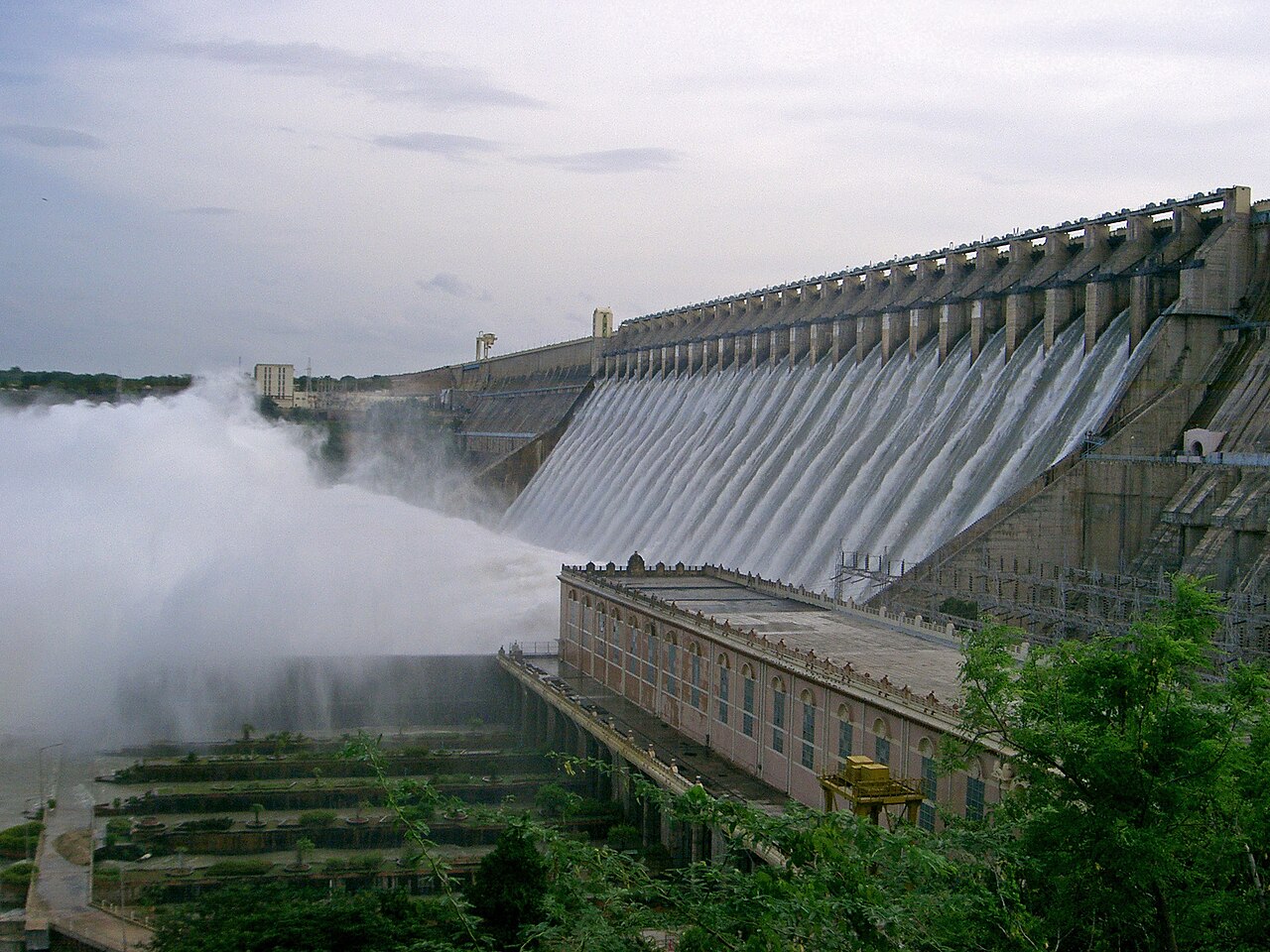
Photo: Sumanthk / Wikimedia Commons (Public domain). The picture shows the Nagarjuna Sagar dam on the Andhra Pradesh-Telangana border.
Source: Down To Earth

Comments
(0)