
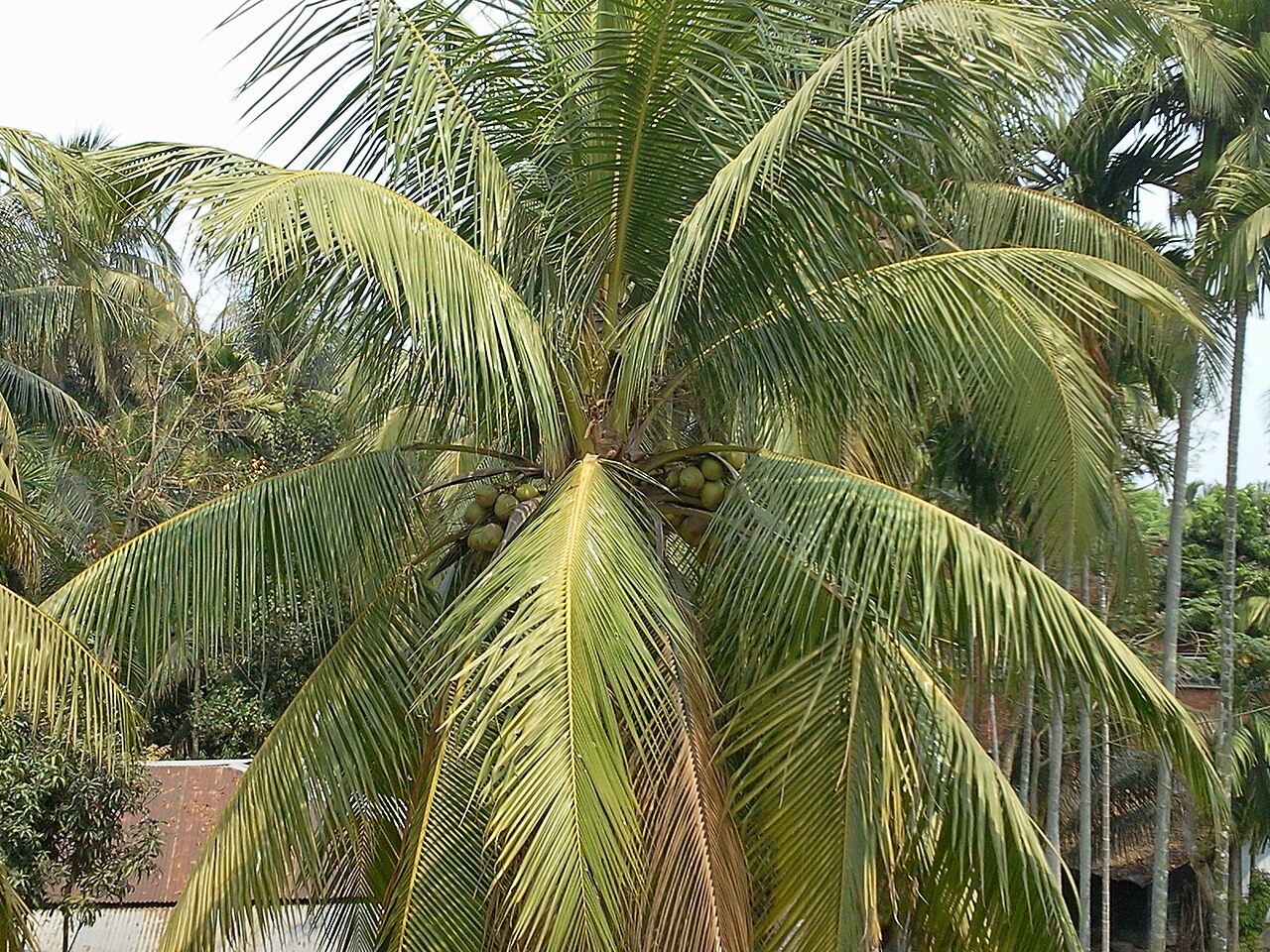
Researchers at Bangladesh Agricultural University (BAU) say they have recorded a whitefly species, Paraleyrodes pseudonaranjae, in Bangladesh for the first time. Found on coconut palms in Mymensingh, the insect was identified through field surveys, examination of its body structure and genetic analysis by DNA barcoding.
The study was carried out by Professor Dr Gopal Das and Professor Dr Mohammad Tofazzal Hossain Howlader of BAU's entomology department, with master's students Md Sohel Rana and Mohammad Mahir Uddin. Funded and supported by the Krishi Gobeshona Foundation (KGF), the paper has been published in the international journal Phytoparasitica.
Whiteflies on coconut palms were monitored at five sites in Mymensingh in June and December 2025. The new species made up 6.40 to 14.60 percent of the whiteflies found in June, rising to 27.40 to 36.40 percent in December. The researchers say the rise suggests the species is spreading locally, though its effect on coconut production is not yet clear.
Two other species, the rugose spiralling whitefly and Bondar's nesting whitefly, were found on the same palms. As the new species increased, the rugose spiralling whitefly declined, which the researchers think may point to competition between them, though this is not confirmed. DNA barcoding showed a 99 to 100 percent genetic match between the Bangladeshi samples and the same species recorded in India and China; how it reached Bangladesh is not known.
Professor Howlader said coconut is one of the country's main cash crops and new pests are a growing concern for growers. He advises regular checks of the undersides of coconut leaves, surveys in affected areas and expert identification of suspect insects; stronger plant quarantine for nurseries and the movement of seedlings; farmer awareness; and environment-friendly integrated pest management and biological control rather than pesticides used without verification. "Not panic, but quick identification, regular monitoring and coordinated action are the effective way to deal with the possible risk from the new whitefly," he said.
The researchers say more work is needed on the species' spread, life cycle and possible effect on coconut output, and call for long-term surveys and monitoring in coconut-growing areas and for institutions to work together on environment-friendly control methods.
Reported by Barta24's BAU correspondent.
Photo: Coconuts on the tree, Muminur Rahman / Wikimedia Commons (CC BY-SA 3.0)
Source: Barta24
Comments
(0)