
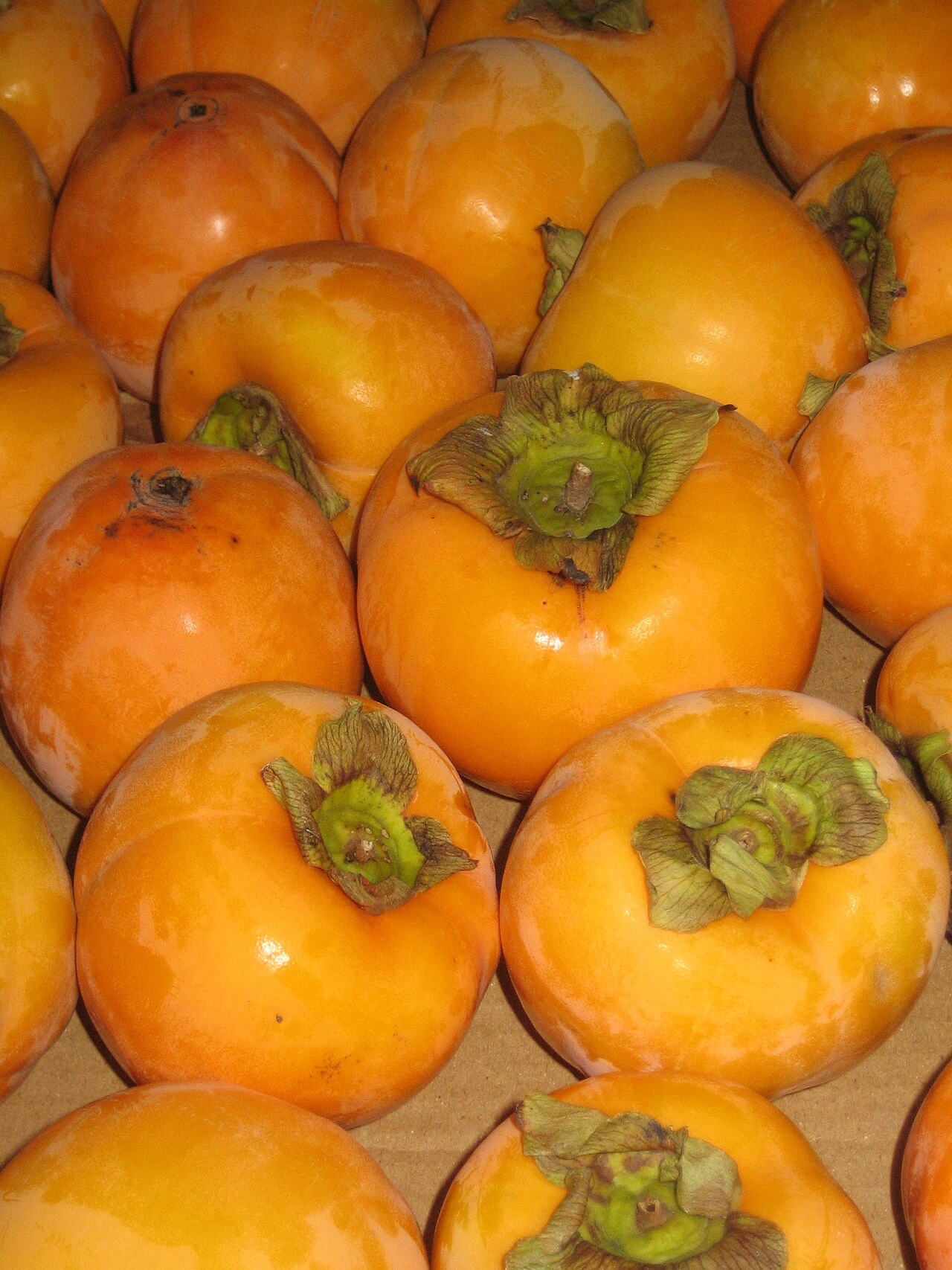
At Baliadanga village in Kaliganj upazila, Jhenaidah, agri-entrepreneur Ashraf Hossain Swapon has planted an orchard of persimmon, a popular Japanese fruit, on about one bigha. From a distance the orange and yellowish fruit looks like tomatoes; this year five of his six varieties have borne fruit.
Swapon first planted 80 seedlings two years ago and later another 100. The orchard has Fuyu, Sweet Taikawasi, Jiro, Chicken Heart, Big Mopan and Hachiya varieties. Drawn by the fruit's colour, sweetness and lack of astringency, he turned to growing it commercially, and he says most of his fruit is non-astringent. Nobody in the area had grown persimmon before, so people come to see the orchard every day.
Swapon says persimmons now sell for about Tk 1,500 a kilo in supermarkets around the country. Astringent varieties were grown first in Bangladesh, he says, but interest is now turning to non-astringent ones, and new growers who taste his fruit are pleased with it.
He also gave the basics: about 120 seedlings can be planted on a bigha, care is much like any other orchard, but good yields need more organic fertiliser.
Kamruzzaman, deputy director of the Department of Agricultural Extension in Jhenaidah, said a few entrepreneurs are growing persimmon in Kotchandpur, Maheshpur and Kaliganj, though he does not know the details of the varieties. No government work on developing or extending persimmon varieties has started yet; growers bring in seedlings from various sources at home and abroad, and the department gives them technical advice.
Reported by Tipu Sultan, Kaliganj (Jhenaidah), for Amar Desh.
Photo: Persimmon (kaki) fruit (illustrative), Slo-Silvija / Wikimedia Commons (public domain)
Source: Amar Desh

Comments
(0)