
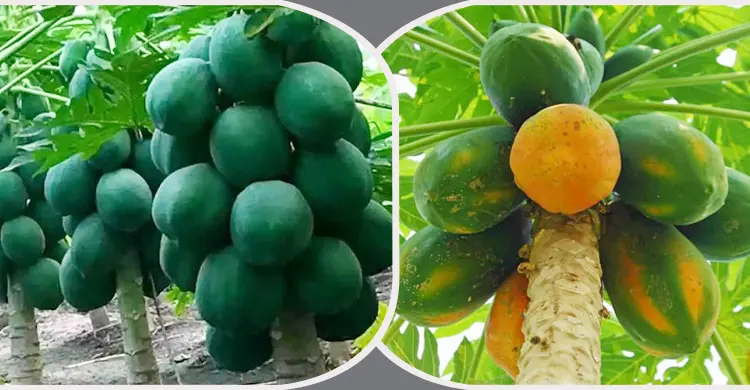
Papaya is a hugely popular fruit in Bangladesh and is also valued everywhere as a vegetable. It has many medicinal qualities too. Because it is profitable, many people now grow papaya commercially, but farmers are not getting good yields because they do not follow modern methods. Growing papaya the modern way can double the yield.
Papaya is grown commercially in Rajshahi, Natore, Pabna, Jashore and other parts of the country. The highly nutritious fruit helps the body resist disease. It is a short-duration crop and does not need much space; a few trees in the yard can supply vegetables and fruit all year round.
The Shahi variety
The Bangladesh Agricultural Research Institute (BARI) developed a high-yielding variety named Shahi in 1992. It is a unisexual variety. The plant grows 1.6 to 2 metres tall and bears fruit from very low on the stem. The fruit is oval and weighs 800 to 1,000 grams, with 500 to 550 seeds per fruit. The flesh is deep orange to red, very sweet and tasty. Each plant bears 40 to 60 fruits, and the variety is suitable for cultivation everywhere in the country.
Land, beds and seedlings
Papaya cannot tolerate waterlogging at all, so the land chosen must be free of waterlogging and have irrigation facilities. The land should be prepared well with repeated ploughing and laddering. A bed system is best for quick drainage, with a drain 30 centimetres wide and 20 centimetres deep between two beds. Each bed, including the drain, should be 2 metres wide and as long as the land allows.
Papaya seedlings can be raised in seedbeds or in polythene bags. In a seedbed, seeds are sown 3 to 4 centimetres deep in rows 10 to 15 centimetres apart. Seedlings emerge 15 to 20 days after sowing and are ready for transplanting after 40 to 50 days.
If pits are dug 2.2 metres apart and three seedlings are planted in each, 7,500 seedlings are needed per hectare, and 2,500 plants will remain in the end. Producing that many healthy seedlings takes 400 to 500 grams of seed, though 100 to 150 grams is enough for hybrid papaya.
Pits should be dug 2 metres apart along the middle of the bed 15 to 20 days before transplanting. Each pit should receive 15 kg of rotted cow dung, 500 g of TSP, 250 g of gypsum, 20 g of boric acid and 20 g of zinc sulphate, mixed well with the soil. The pit is then filled with the fertilised soil and irrigated.
When and how to plant
For success with improved papaya cultivation, seeds are sown and seedlings raised in the Bengali months of Ashwin and Poush. Seedlings are ready for transplanting 40 to 50 days after sowing, that is, in Magh and Falgun.
Before planting, the soil in the pit should be turned over thoroughly. Three seedlings are planted in each pit in a triangle, 30 centimetres apart. Removing the open leaves of seedbed-grown seedlings before planting reduces seedling deaths and helps them establish quickly.
For seedlings raised in polybags, the bag must be removed very carefully so that the ball of soil does not break. Late afternoon is the best time for planting. Care should be taken that the base of the seedling does not go deeper than it was in the seedbed or polybag.
Fertiliser and care
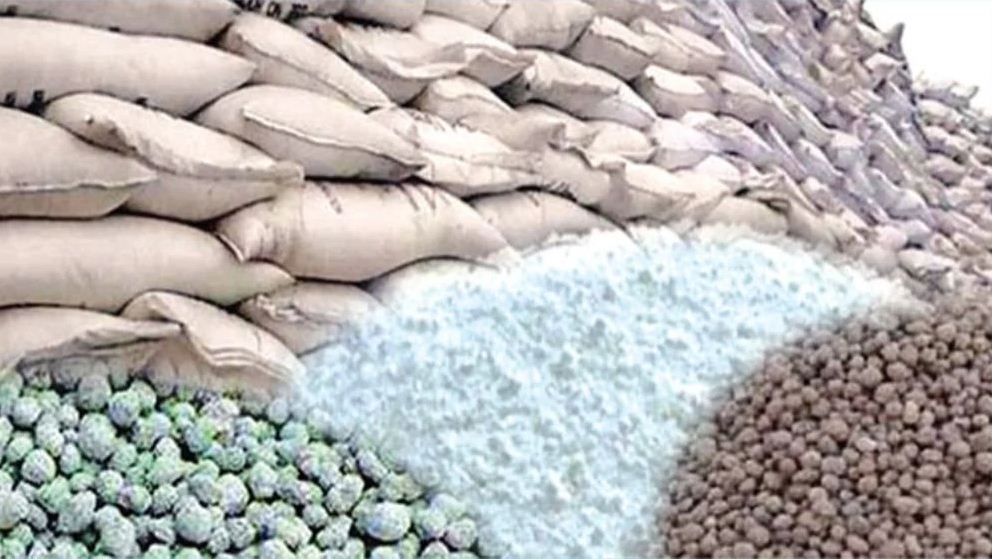
For a good yield, balanced doses of fertiliser must be applied on time. Each plant needs 450 to 500 grams of urea and 450 to 500 grams of MOP. Once a month has passed after planting, 50 g of urea and 50 g of MOP should be applied per plant every month, and this dose should be doubled once the plants flower. If the soil lacks moisture, it should be irrigated.
Anyone who wants success from improved papaya cultivation must pay full attention to care. The field must always be kept weed-free, and during the monsoon care is needed not to loosen the soil too much while weeding. In the dry season, water as needed, and keep good drainage so that irrigation and rain water do not stand in the field.
When the plants flower 3 to 4 months after planting, one healthy female plant should be kept in each pit and the rest cut down. For proper pollination and fruit set, however, at least 5 per cent male plants must be kept in different parts of the orchard.
In most papaya varieties, several flowers come from one leaf axil and set fruit. Once the fruits have grown a little, the best fruit in each axil should be kept and the rest removed. Papayas borne in the second and later years are crowded together, cannot grow properly and lose their shape, so the small fruits should be thinned out.
Source: Jagonews24. First published in Bengali on The Agro News.
Comments
(0)