
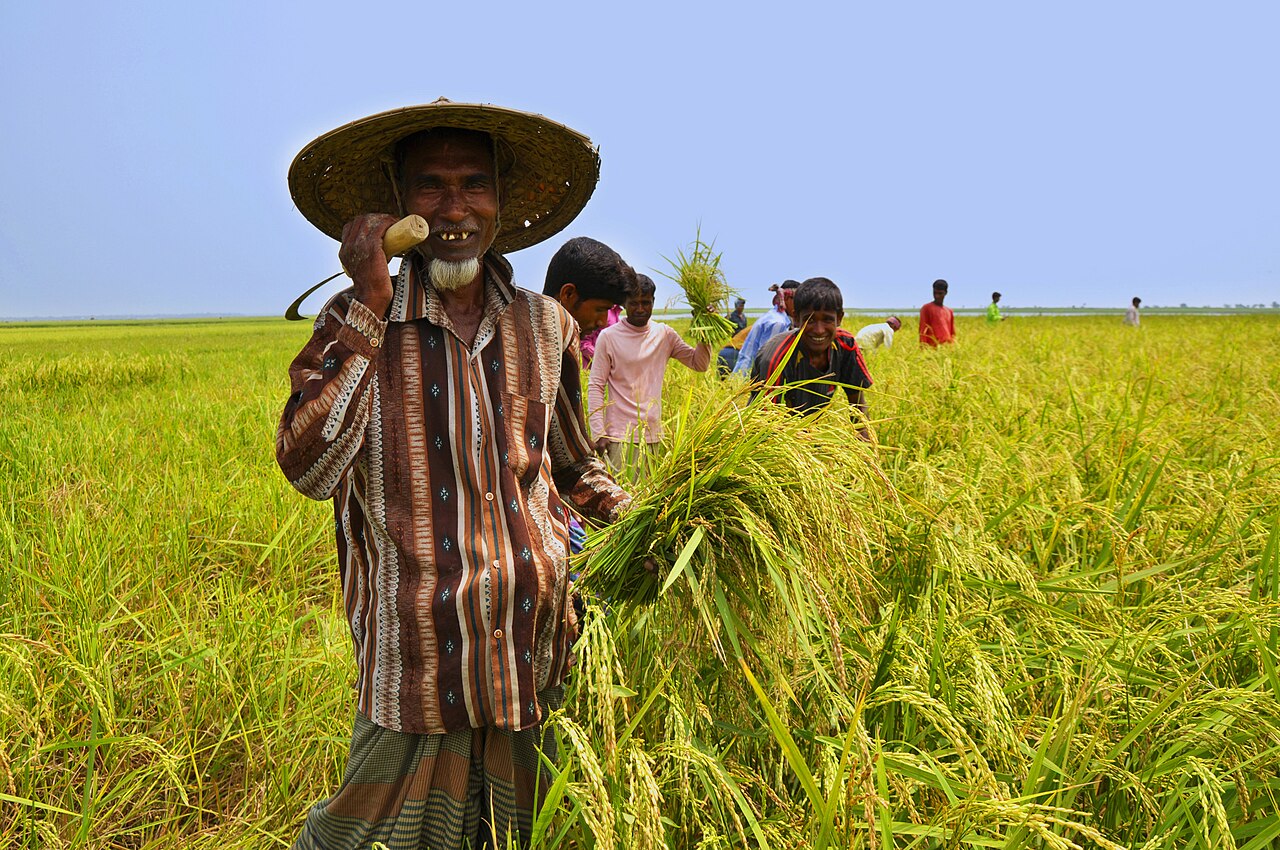
Panchabrihi is a way of harvesting rice again and again from plants set out only once. Its developer, the scientist Abed Chowdhury, told Dhantara, the farm page of Desh Rupantor, that on his field the same plants yielded 8 tonnes of boro rice a hectare, then 6 tonnes of aus and then another 5 tonnes of aus. That is 19 tonnes of grain, which he says an ordinary rice plant does not give in a whole year.
Conventional rice must be ploughed and replanted every season; Panchabrihi saves that cost, and the second and third crops need very little fertiliser, he said. The idea came from watching mango, jackfruit and lychee trees bear fruit every year. China has a method called ratooning, but what sets Panchabrihi apart, he said, is that it keeps yielding.
With the climate changing, he believes the varieties most needed will tolerate drought, heat and salinity. With electricity and fuel in short supply, he has also bred a rice that grows in the shade beneath solar panels. He calls it Chhayabrihi, and it is now on trial. He also urged a return to flood-tolerant and deepwater rice.
On food security, he said Bangladesh's average rice yield is 4 tonnes a hectare; raising it to 8 tonnes would free half the land for other uses, and the government should put more money into research on raising yields. He cited a village in Vietnam where fields are farmed as a cooperative and each owner receives grain in proportion to the land contributed.
The country's greatest strength, in his view, is the farmland it still has and a climate suited to rice; its greatest weakness is failing to use that strength. He warned that farmland is vanishing as villages turn into small towns. "If farmland disappears, who will give us this paddy and rice?" he asked.
Chowdhury made his name at 23 by discovering a new gene involved in genetic recombination and has also worked on fatherless (apomictic) seed. Panchabrihi and Chhayabrihi came from the research he began after leaving institutional science and returning to the village. For farmers, several seasons' harvest from one planting could mean lower costs for ploughing, seedlings and labour. The interview was conducted by Enam-uz-Zaman.
Photo: Balaram Mahalder / Wikimedia Commons (CC BY-SA 3.0)
Source: Desh Rupantor
Comments
(0)