
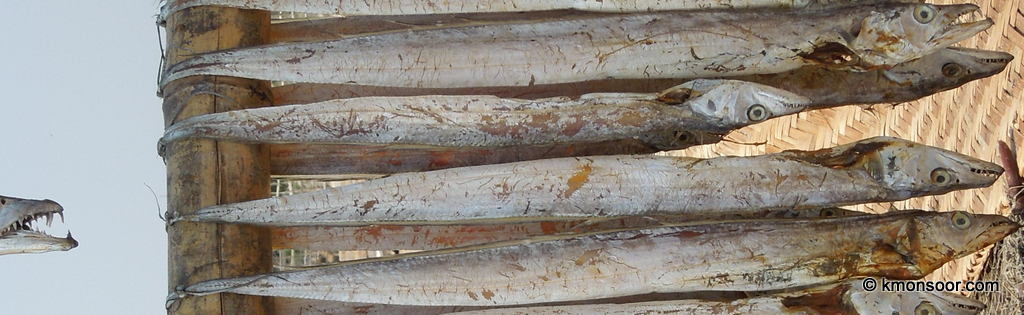
Pabna's dried fish season has run into a shortage of fish. The district set a target of about 200 tonnes of shutki, worth roughly Tk 18 crore, from more than a hundred drying yards this season. But fishers are not netting enough fish in the rivers, canals and beels, so many yards stand empty and their workers sit idle.
Traders say 200 tonnes of dried fish needs about 600 tonnes of fresh catch, since three kilograms of fresh fish dry down to one kilogram. With supply this thin, they expect output to fall up to 30 percent below target. At the start of the season they built their yards on advances (dadon) from large traders and paid local fishers and fish traders in advance, so the shortfall has left yard owners deeply worried.
Pabna has 16 rivers and 212 beels. The largest, Gazna Beel, spreads across Sujanagar upazila and is made up of 15 beels and 7 rivers. Masjidpara village in Sujanagar is known as the "shutki village": nearly every household there works in the dried fish trade. This year Kajalkura, Ghughudah, Muktarhar, Sonai, Jamaidah and other beels and rivers are also yielding far less fish than expected.
The yards dry a long list of indigenous species, among them puti, kholse, chela, tengra, koi, magur, shing, batashi, prawns, taki, baim, boal, shol and gajar. The product is sorted into A, B and C grades. A-grade shutki is processed and exported to the United States, the United Kingdom, Canada, Malaysia, Saudi Arabia, Qatar and other countries, mostly for the Bangladeshi diaspora; B and C grades sell at good prices in Dinajpur, Saidpur, Rangpur, Rajshahi, Khulna, Dhaka, Narayanganj and Chattogram.
Producer Jamal Uddin said that although freshwater dried fish is in strong demand at home and abroad, the fisheries department pays the trade little attention. Without access to bank loans, producers borrow from moneylenders at high interest, and if the fish are not tended on time they spoil and the capital is lost. Traders also point to the lack of proper storage and processing facilities.
Trader Md Faruk Sheikh said more than a thousand families in Pabna make dried fish. Men and women working the yards as day labourers earn Tk 550 to Tk 750 a day, so a thin catch means less work and less income for them.
Pabna District Fisheries Officer Dipak Kumar Paul said the district had set a target of 200 tonnes of dried fish, but with too few fish in the rivers there is real doubt that it will be met.
Reported by Krishi Shomoy's Pabna correspondent.
Photo: Dried fish processing (Bangladesh), Kmonsoor / Wikimedia Commons (CC BY-SA 3.0)
Source: Krishi Shomoy

Comments
(0)