
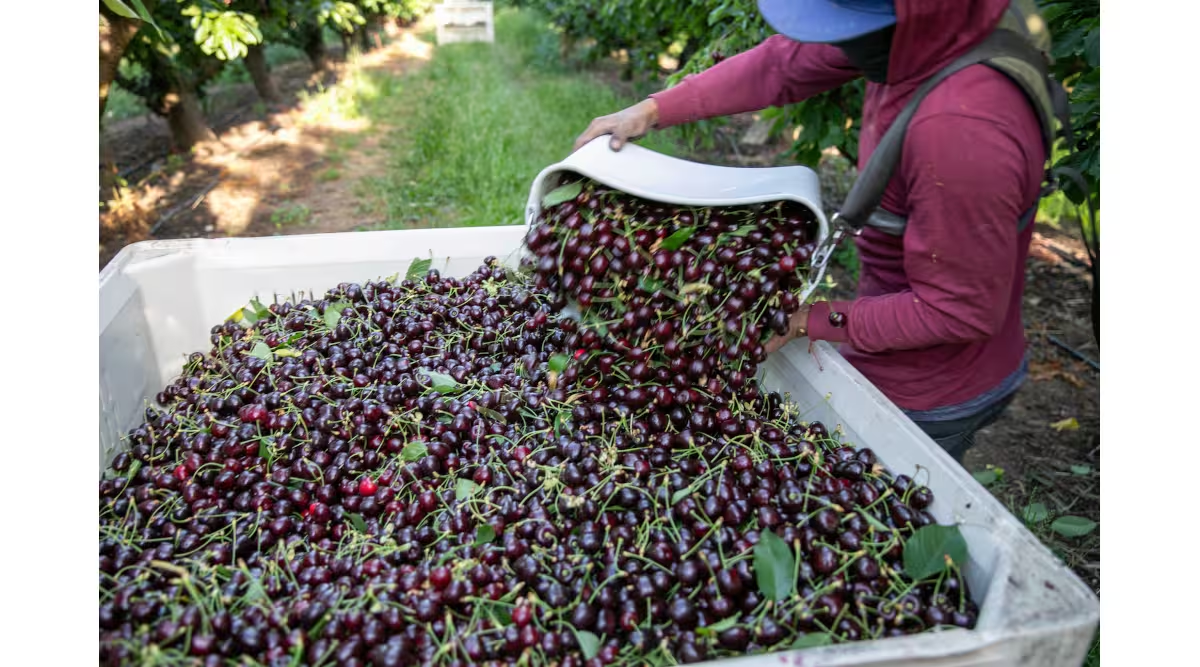
Sweet cherry growers in Oregon and Washington are closing the books on another disappointing harvest. As packing-house settlements begin to arrive, preliminary revenue reports show many farms netting only a few cents above what it cost to grow the fruit, Oregon Public Broadcasting reported this week.
"Last year we were really in the red. Now our eyeballs are just peeking over the surface of the water in terms of profitability," said Ian Chandler, a grower in Wasco County who chairs the Oregon Sweet Cherry Commission. Growers, he said, are price takers: what they earn is whatever the packing houses say the market will bear.
The 2025 season was a bust for several reasons. Aggressive immigration enforcement kept many migrant farmworkers from following the harvest north from California into Oregon and Washington, the country's three biggest cherry states. By the time enough crews arrived, the picking window for some varieties had closed and fruit was left to rot. At the same time a glut at the peak of the season flooded grocery stores and pushed prices down.
This year growers had enough workers, but only after unusual pre-harvest planning to reassure crews, most of them Latino or Hispanic, that it was safe to travel. "To explain to them why our country at this particular time is going after them specifically for no true reason other than politics ... is hard," Chandler said.
Oregon's sweet cherry production was forecast to fall 24 percent this season. That helped little for the roughly 95 percent of growers whose fruit ripens in the same mid-season window as everyone else's, said Tiffany Davis, business manager at K&K Land and Management, a labour contractor for orchards based in The Dalles. Only growers with early or late varieties, selling when supply is short, tend to profit.
Some farms will not know their final returns until at least November, when packing houses send the last cheques. "The problem is we're having to carry debt forward year after year and we're going backwards," Chandler said. Davis put it more bluntly: growers are waiting for a year that makes up for the losses, "and it's just not happening."
Reporting by Alejandro Figueroa, Oregon Public Broadcasting, via Morning Ag Clips.
Source: Morning Ag Clips

Comments
(0)