
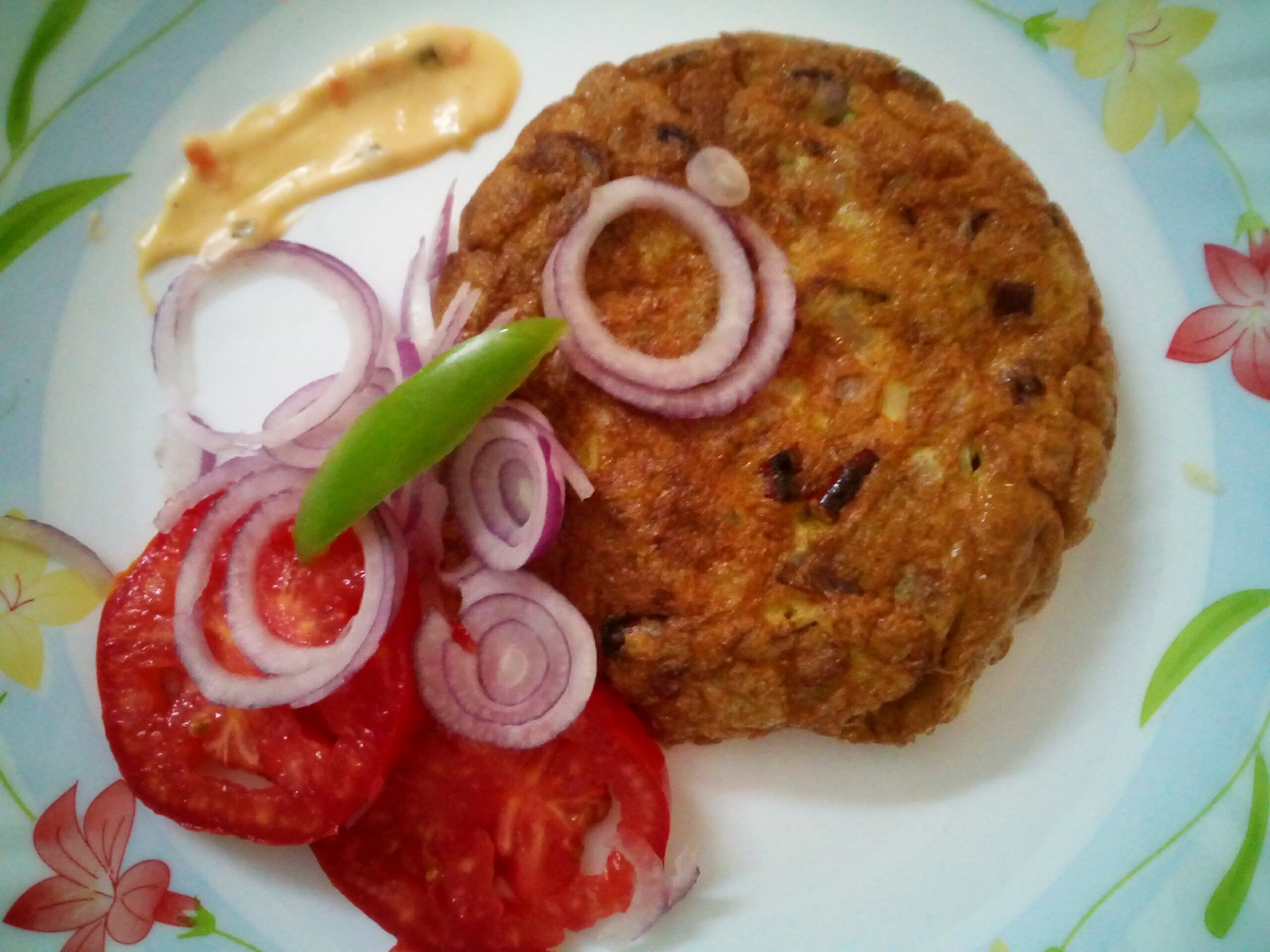
On the evening of 10 March 2026, during Ramadan, the lifestyle desk of the Bangladeshi news site Jagonews24 published a recipe for a vegetable oats omelette, offered as a lighter and more nutritious dish for the iftar table. The recipe mixes two eggs with a cup of oats and chopped onion, tomato, coriander leaves and green chilli, seasons the batter with turmeric, dried chilli powder and salt, leaves it to rest so the oats soften, and fries it in soybean oil until both sides are golden.
The paper's case for the dish was simple. Many people eat too much fried food at iftar and feel heavy or uncomfortable afterwards, it wrote, so a light but nourishing item deserves a place on the table, and an omelette of eggs, oats and vegetables brings protein and fibre together in one dish. This report gives the recipe as it was published, sets out its steps as a list, and adds what health and food-safety authorities had said, up to that date, about eggs, oats, vegetables, cooking oil and eating well during the month of fasting.
Ramadan 2026 and the iftar table in Bangladesh
Ramadan of the Hijri year 1447 began in Bangladesh on a Thursday, after the National Moon Sighting Committee, meeting in the conference room of the Islamic Foundation at Baitul Mukarram National Mosque in Dhaka on the evening of Wednesday 18 February 2026, announced that the new moon had been seen. The Dhaka Tribune reported that evening that the crescent had been sighted in Netrokona, Sirajganj and Cox's Bazar districts. From then on Muslims across the country fasted from dawn to sunset and broke the fast each evening with iftar, often the most elaborate meal of the day.
The Bangladeshi iftar table is known for its fried snacks, and that is the habit the Jagonews24 recipe set out to soften. When the World Health Organization's office in Bangladesh published advice on staying healthy during Ramadan in May 2018, it observed that people get together to break the fast with rich, high-calorie food and that some are less physically active during the month, so attention to nutrition helps people stay healthy and avoid weight gain. It named the local favourites directly, advising people to limit fatty and especially fried food such as shinggara, piaju, pakora, samosa and fries, as well as fatty meats and pastry made with added margarine, and to choose white meat rather than red, lean cuts, and to trim away visible fat.
That WHO guidance, adapted from a 2012 WHO Eastern Mediterranean Region guide to promoting a healthy diet, set out eight practical points in all. Breaking the fast with dates was described as a traditional and healthy way to begin iftar, because dates are an excellent source of fibre. Sehri, the pre-dawn meal, should be light and include vegetables, carbohydrates such as whole-grain rice or whole-wheat bread, and protein-rich food such as skinless chicken breast, and it should not be skipped, because it gives energy for the whole day until iftar. People were advised to stay hydrated with adequate water and with water-rich foods such as homemade soup, vegetables and fruit, among them cucumber, lettuce, tomato and watermelon, during both sehri and iftar.
The remaining points dealt with sugar, salt, speed and activity. WHO advised limiting sugars at iftar, especially sweet foods and drinks such as cakes, misti or milk-based desserts, fizzy soft drinks and fruit juices; avoiding foods high in salt, such as processed meat, beef or chicken salami and sausages, pickles, salty cheeses and sauces; eating slowly, because large amounts of food taken quickly may cause heartburn and discomfort; and staying active in the evening, for example with brisk walking. Jagonews24's point about heaviness after fried food is in line with WHO's caution about fried items and about eating too fast. The omelette is itself pan-fried, so it is not free of oil; what it adds, compared with a plate of fritters, is eggs, oats and fresh vegetables in one dish.
The recipe as Jagonews24 published it
The ingredients and method below are those of the original recipe, with nothing added to the quantities. The recipe does not say how many people it serves or how long the frying takes, and those details are not guessed here.
Ingredients
- Oats: 1 cup
- Chopped onion: 2 tablespoons
- Chopped tomato: 1 tablespoon
- Chopped coriander leaves: 2 tablespoons
- Chopped green chilli: 1 teaspoon
- Eggs: 2
- Soybean oil: 50 grams
- Turmeric powder: a pinch
- Dried chilli powder: half a teaspoon
- Salt: to taste
Method
- Put the chopped onion, tomato, coriander leaves and green chilli in a bowl with the turmeric powder, dried chilli powder and salt.
- Break the two eggs into the bowl and mix all the ingredients well.
- Add the oats, stir again, and leave the mixture for about 10 minutes so that the oats soften.
- Heat the oil in a frying pan, pour in the batter and fry it over a medium flame.
- When one side is done, turn it over carefully and fry the other side.
- Take it off the heat when both sides are golden, and serve it hot, with tomato sauce or salad if you like.
Because the oats make this a thick omelette, the check that matters most is the one food-safety authorities give for every egg dish, set out further below: the egg should be cooked until it is firm all the way through, including in the centre.
The omelette: an old dish in many kitchens
An omelette, in the words of the Wikipedia reference entry on the dish, is made from eggs, usually chicken eggs, fried with butter or oil in a frying pan. The same entry records the belief that omelettes originated in ancient Persia, and cites a history of breakfast which says that early omelettes were nearly indistinguishable from kookoo sabzi, a Persian herb-and-egg dish it compares to a frittata.
The French word itself came into use in the mid-16th century, according to the food historian Alan Davidson as quoted there. Earlier forms are older still: the versions alumelle and alumete appear in the Ménagier de Paris, a household book written in 1393, while the writer Rabelais mentions an homelaicte d'oeufs and the agronomist Olivier de Serres uses the form amelette.
In South Asia the omelette is usually seasoned rather than plain. The Parsi pora, for example, is described in the same entry as made from eggs, onion, tomato, green chillies and coriander leaves, which is very close to the vegetable base of the Jagonews24 recipe. What the Bengali recipe adds is oats, soaked in the beaten egg until they soften, which turns the omelette into something closer to a thick egg-and-grain pancake, and turmeric and dried chilli powder, two spices found in most Bangladeshi kitchens.
What the eggs bring: the USDA figures
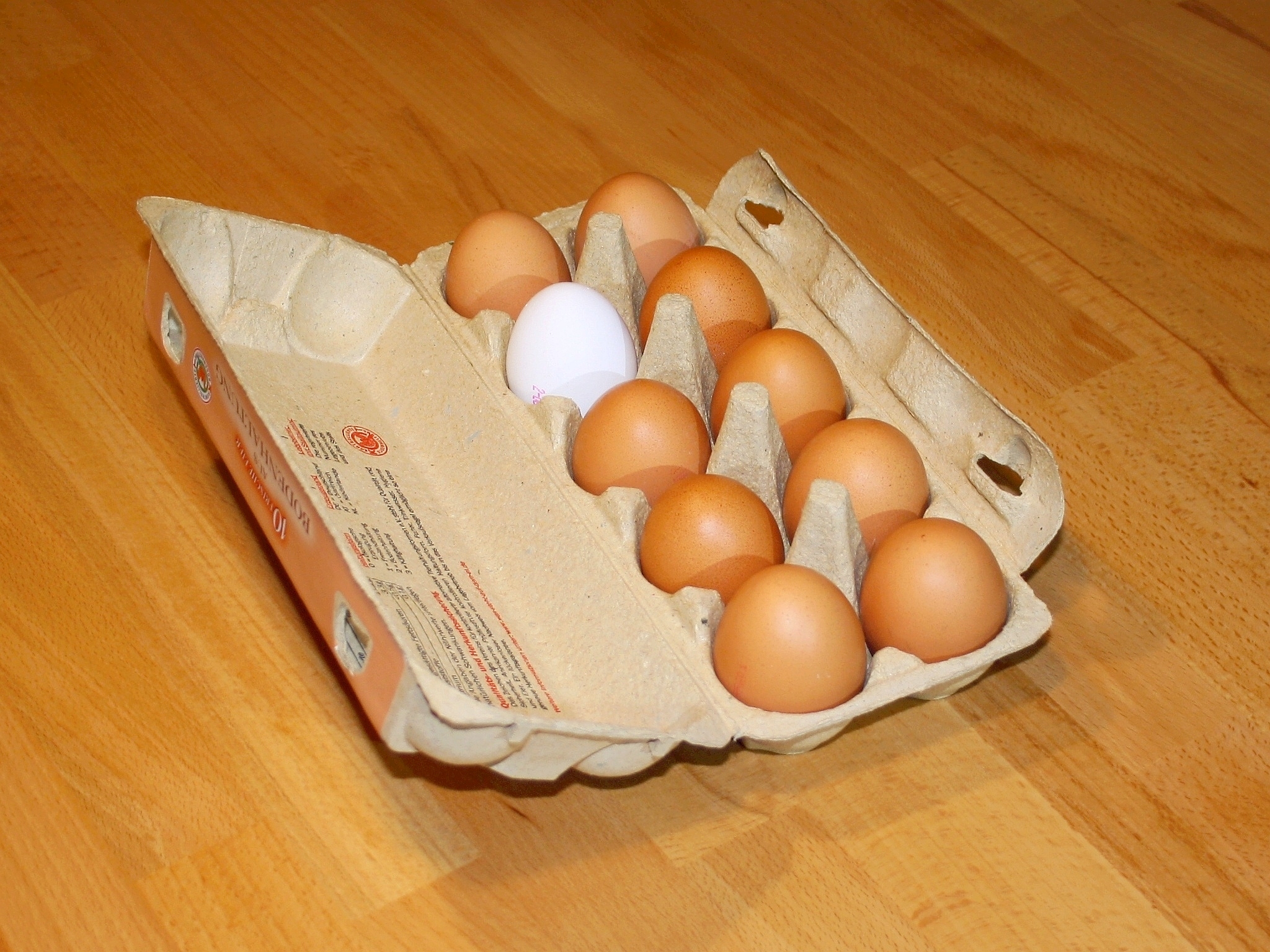
The U.S. Department of Agriculture's FoodData Central database, in its SR Legacy table published in April 2019, lists the composition of whole raw chicken egg per 100 grams as 143 kilocalories, 12.6 grams of protein, 9.51 grams of fat, 0.72 grams of carbohydrate and 76.2 grams of water. Eggs contain no dietary fibre, which is why the original recipe paired them with oats.
The same entry shows why eggs are counted as a nutrient-dense food. Per 100 grams it lists 294 milligrams of choline, 0.89 micrograms of vitamin B12, 2.0 micrograms of vitamin D, 160 micrograms of vitamin A as retinol activity equivalents, 47 micrograms of folate, 30.7 micrograms of selenium, 1.75 milligrams of iron, 1.29 milligrams of zinc and 503 micrograms of the yellow pigments lutein and zeaxanthin. It also lists 372 milligrams of cholesterol and 142 milligrams of sodium.
The Nutrition Source of the Harvard T.H. Chan School of Public Health, in a page last reviewed in August 2020, explains how to read those numbers. One large egg yolk has about 200 milligrams of cholesterol, which makes eggs one of the richest sources of dietary cholesterol, and an egg has about 5 grams of fat, mostly monounsaturated and polyunsaturated. The page lists eggs as a source of protein, choline, biotin, vitamin A, lutein and zeaxanthin. It notes that for most people dietary cholesterol has a smaller effect on blood cholesterol than the overall mix of fats in the diet, and that two large cohort studies, of nearly 40,000 men and more than 80,000 women, found that up to one egg a day was not associated with an increased risk of heart disease in healthy people.
The same page also sets out the caution. In those studies heart disease risk was higher among people with diabetes who ate one or more eggs a day, and for people with both diabetes and heart disease it suggests limiting egg yolks to no more than three a week. People who have trouble controlling their cholesterol may choose egg whites instead of yolks. It stresses, too, what eggs are eaten with: eggs with salsa and whole-wheat toast are very different from eggs with sausage, fried potatoes and white toast. The Jagonews24 recipe uses two whole eggs, and suggests salad as one of its two accompaniments.
Oats and the vegetables in the batter
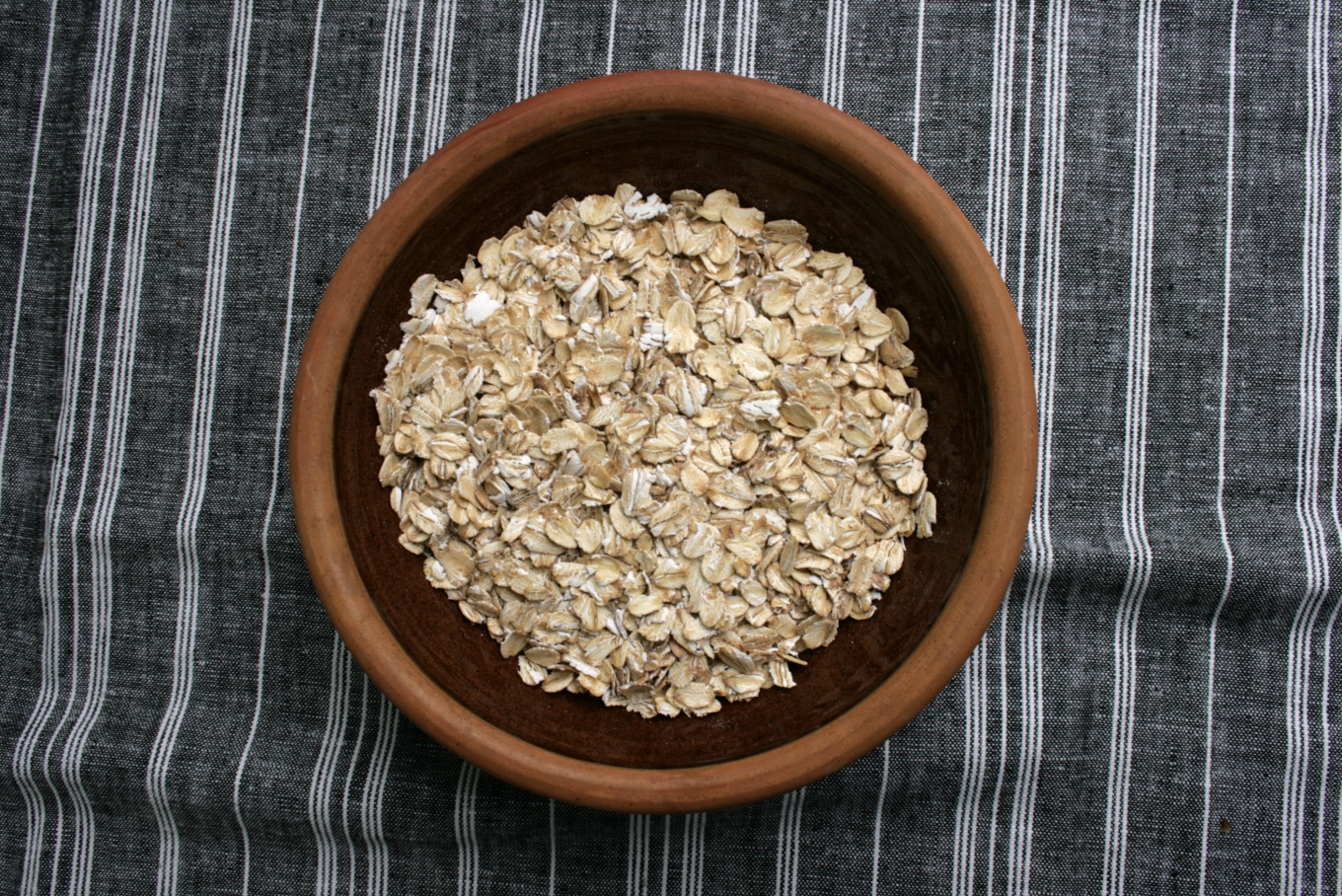
Oats are what set this omelette apart. USDA FoodData Central lists regular and quick oats, dry and not fortified, at 379 kilocalories per 100 grams, with 13.2 grams of protein, 6.52 grams of fat, 67.7 grams of carbohydrate, 10.1 grams of dietary fibre, 4.25 milligrams of iron and 138 milligrams of magnesium. Oats therefore supply the fibre that eggs lack, which is the protein-and-fibre pairing the original recipe pointed to.
Part of the fibre in oats is beta-glucan, a soluble fibre. The U.S. Food and Drug Administration allows a health claim for it under its food regulations (21 CFR 101.81): soluble fibre from whole oat sources such as oat bran, rolled oats and whole oat flour, as part of a diet low in saturated fat and cholesterol, may reduce the risk of heart disease. The regulation ties the claim to at least 3 grams of beta-glucan soluble fibre a day, and requires a food that carries it to provide at least 0.75 grams of soluble fibre per customary serving. The claim concerns a daily pattern of eating over time, not the effect of a single dish.
The vegetables are used in small amounts, but each is a familiar crop in Bangladesh. Banglapedia, the national encyclopedia, describes onion (Allium cepa) as a bulbous herb that possibly originated in Western Asia; it is grown in all districts of the country, Faridpur is the largest producer, its pungency comes from a volatile oil, allyl-propyl disulphide, and the Bangladesh Agricultural Research Institute (BARI) has released a variety called BARI Piaj-1. Tomato, native to tropical America, is eaten fresh or cooked in salads, soups, chutney and sauces, and BARI has developed several varieties, among them BARI Tomato-4 and BARI Tomato-5, that can also be grown in the warm season.
Coriander (Coriandrum sativum), native to the Mediterranean, is widely cultivated in Bangladesh as a winter crop sown in October and November, and Banglapedia notes that the young plants are used in chutney, sauces, curries and soups. Turmeric, taken from the plant's rhizome, and chilli, a fruit, are among the spices Banglapedia lists as commonly cultivated in Bangladesh, along with ginger, garlic, onion and coriander.
USDA figures per 100 grams show what the fresh vegetables contribute. Raw ripe tomato contains 94.5 grams of water, 13.7 milligrams of vitamin C and 2,570 micrograms of the red pigment lycopene; raw onion contains 89.1 grams of water and 1.7 grams of fibre; raw coriander leaves carry 27 milligrams of vitamin C, 337 micrograms of vitamin A and 310 micrograms of vitamin K; and raw green chilli is listed at 242 milligrams of vitamin C. A recipe that uses a tablespoon or two of each adds only small amounts of these nutrients, but the vegetables bring flavour, colour and some water to the dish. WHO's healthy diet fact sheet, updated on 26 January 2026, advises everyone older than 10 years to eat at least 400 grams of fruit and vegetables a day, and the salad the recipe suggests serving alongside is a simple way to add to that.
The oil, the salt and the frying
The recipe calls for 50 grams of soybean oil for the pan. USDA FoodData Central lists soybean salad or cooking oil at 884 kilocalories per 100 grams, all of it fat: 15.6 grams saturated, 22.8 grams monounsaturated and 57.7 grams polyunsaturated. Banglapedia describes the soybean (Glycine max) as a bushy leguminous plant that probably originated in China, whose seeds yield an edible oil; its cultivation in Bangladesh, mainly in Noakhali and Feni, began in 1978.
WHO's healthy diet fact sheet advises adults to keep total fat to 30 per cent or less of daily energy intake, with no more than 10 per cent from saturated fat and no more than 1 per cent from trans fat. It names unsaturated fat, found in fish, avocado and nuts and in sunflower, soybean, canola and olive oils, as preferable to saturated fat, and among the ways to cut fat it suggests steaming or boiling instead of frying when cooking. The recipe's choice of soybean oil fits the first of those points. How much of the 50 grams ends up in the omelette depends on the pan and the cook, since the recipe gives the oil for frying rather than an amount absorbed.
The recipe leaves salt to taste. WHO advises adults to limit salt to less than 5 grams a day, which it links to 2 grams of sodium, and the 2018 Ramadan advice from its Bangladesh office warned specifically against salty foods during the month, naming processed meats, pickles, salty cheeses and sauces. The original suggests serving the omelette with tomato sauce or salad. WHO's fact sheet also advises limiting free sugars to less than 10 per cent of total energy intake, which bears on the sweet drinks and desserts often served at the same meal.
Handling and cooking eggs safely
Eggs are safe to eat when they are handled and cooked properly. The U.S. Food and Drug Administration warns that fresh eggs, even those with clean, uncracked shells, may contain Salmonella bacteria that can cause foodborne illness, and the labels it requires on egg cartons tell consumers to keep eggs refrigerated, cook eggs until the yolks are firm, and cook foods containing eggs thoroughly. Its consumer advice, in a page whose content was current as of 5 March 2024, sets out these steps:
- Buy eggs only if they are sold from a refrigerator or refrigerated case, and open the carton to check that the eggs are clean and the shells are not cracked.
- Store eggs promptly in a clean refrigerator at a temperature of 40 degrees Fahrenheit or below, checked with a refrigerator thermometer.
- Wash hands, utensils, equipment and work surfaces with hot, soapy water before and after they come into contact with raw eggs.
- Cook eggs until both the yolk and the white are firm; casseroles and other dishes containing eggs should be cooked to 160 degrees Fahrenheit, checked with a food thermometer.
The FDA notes that some people are at greater risk of severe illness from Salmonella: children, older adults, pregnant women and people with weakened immune systems. WHO's Five Keys to Safer Food, published in 2006, make the same points in general form for every kitchen: keep clean, separate raw and cooked food, cook thoroughly, keep food at safe temperatures, and use safe water and raw materials. For a thick omelette made with soaked oats, cooking thoroughly means that no liquid egg should remain in the centre when it is cut.
Eggs in Bangladesh: what the official figures say
Eggs are part of daily meals in Bangladesh far beyond Ramadan, and the country's official figures come from the Department of Livestock Services (DLS) under the Ministry of Fisheries and Livestock, which publishes them each year in a summary titled Livestock Economy at a Glance. Its 2023-24 edition put egg production in fiscal year 2023-24 at 2,374.97 crore eggs, up from 1,099.52 crore in 2014-15 and 2,337.63 crore in 2022-23.
The same tables set that output against need. The DLS estimated demand at 1,809.60 crore eggs, or 104 eggs per person a year, and reported availability of 135.09 eggs per person a year, based on an estimated population of 17 crore 58 lakh in July 2023. It counted 3,277.77 lakh chickens and 682.61 lakh ducks in 2023-24, and put livestock's provisional share of agricultural GDP for that year at 16.33 per cent.
Fasting with a health condition: when to ask a doctor
Not everyone is in a position to fast, and diet advice for the month has to allow for that. The International Diabetes Federation (IDF) and the Diabetes and Ramadan (DaR) International Alliance, in Diabetes and Ramadan: Practical Guidelines 2021, published in the journal Diabetes Research and Clinical Practice, note that people with some illnesses and serious medical conditions, including some people with diabetes, can be exempted from fasting, but that many fast anyway. They stress that people with diabetes who fast should be given appropriate guidance and receive proper care, and their update covers fasting with type 1 diabetes, the management of diabetes in older people and in pregnant women, the effect of Ramadan on mental wellbeing and the risk of complications.
The sources above carry specific points for particular groups: Harvard's advice on egg yolks for people with diabetes and heart disease, the FDA's list of people at greater risk from Salmonella, and WHO's limits on fat, salt and sugar for everyone. Anyone with diabetes, heart disease, high blood pressure or a food allergy, and anyone who is pregnant, should talk to a doctor or a registered dietitian before fasting or before making a dish like this a regular part of iftar or sehri.
Photo: Saileshpat / Wikimedia Commons (CC BY-SA 4.0)
Sources: Jagonews24, Dhaka Tribune, World Health Organization (Bangladesh office, Staying Healthy During Ramadan, 2018; Healthy diet fact sheet; Five Keys to Safer Food), U.S. Department of Agriculture (FoodData Central), U.S. Food and Drug Administration (egg safety; 21 CFR 101.81), Harvard T.H. Chan School of Public Health (The Nutrition Source), Department of Livestock Services (Livestock Economy at a Glance 2023-24), International Diabetes Federation and DaR International Alliance (Diabetes and Ramadan: Practical Guidelines 2021), Banglapedia, Wikipedia


Comments
(0)