
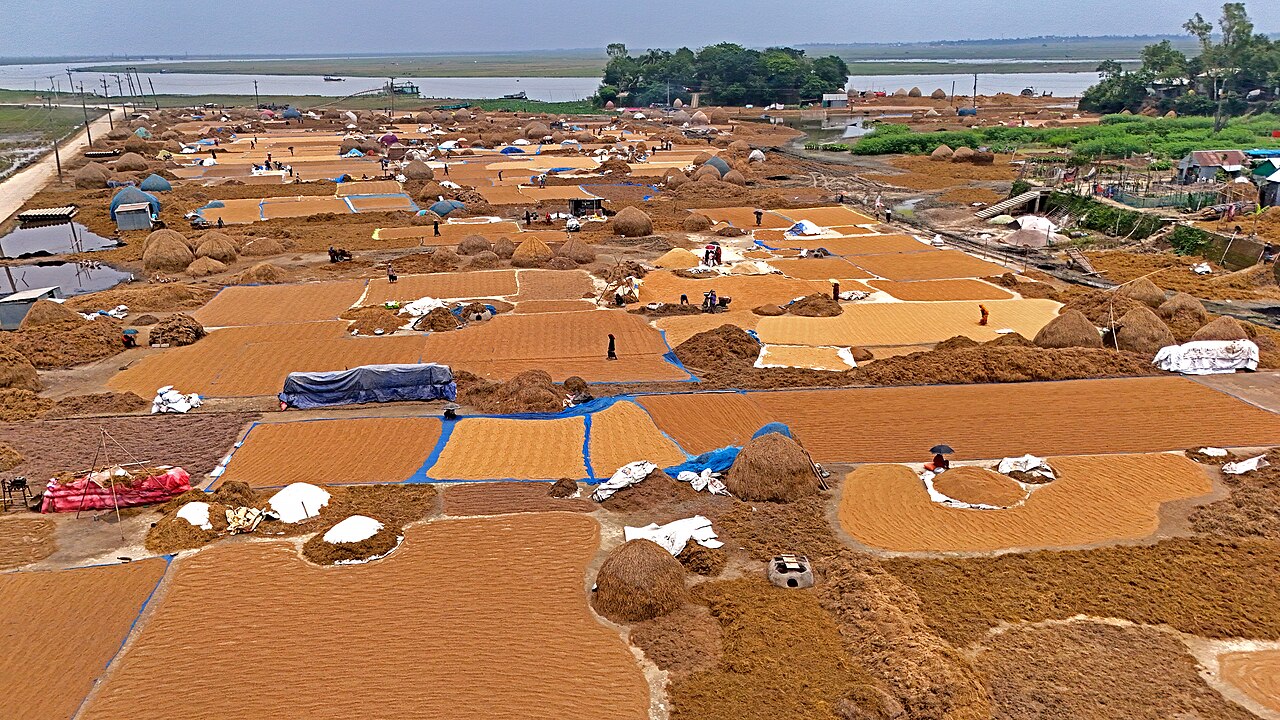
Harvesting of early aman rice has begun in northern Bangladesh, and farmers are preparing the land for early winter crops. Yields are the same as before, but higher prices for fertiliser, diesel, pesticide and labour have raised production costs by Tk 1,800 to Tk 2,000 a bigha this year, BSS reports.
Farmers say early aman is planted in mid-June, soon after the boro harvest, and cut a month ahead of the regular aman, in October. Early winter vegetables follow, then boro.
Shafiar Rahman, who farms on a Teesta char at Mohipur in Rangpur, planted five bigha; three bigha yielded 47 maunds and the other two will be cut in a week. Early varieties yield 2-3 maunds a bigha less, he said, at 16 to 18 maunds, and his cost per bigha has risen from Tk 12,000 last year to Tk 14,000. After the harvest he will plant cauliflower, carrot, aubergine and coriander.
Adilur Rahman of Kulaghat, Lalmonirhat Sadar, spent Tk 87,000 on six bigha of early aman, against Tk 71,000 on the same land last year. "The yield is good this time, but I am frustrated by the higher production cost," he said. In his area early aman harvesting continues until the second week of October.
According to the Department of Agricultural Extension, aman was planted on 621,550 hectares in the Rangpur region's five districts, Kurigram, Lalmonirhat, Rangpur, Gaibandha and Nilphamari, with a rice target of 2,001,391 tonnes; early varieties cover 33,000 hectares.
Abu Bakar Saiful Islam, additional director of the department in Rangpur, told BSS that early aman on high land will be harvested until mid-October and the main aman harvest will begin in early November. With little flooding this year the early crop met expectations, he said, and farmers follow it with maize, potatoes, vegetables and other winter crops.
Photo: Momo Mustafa / Wikimedia Commons (CC BY-SA 4.0)
Source: BSS

Comments
(0)