
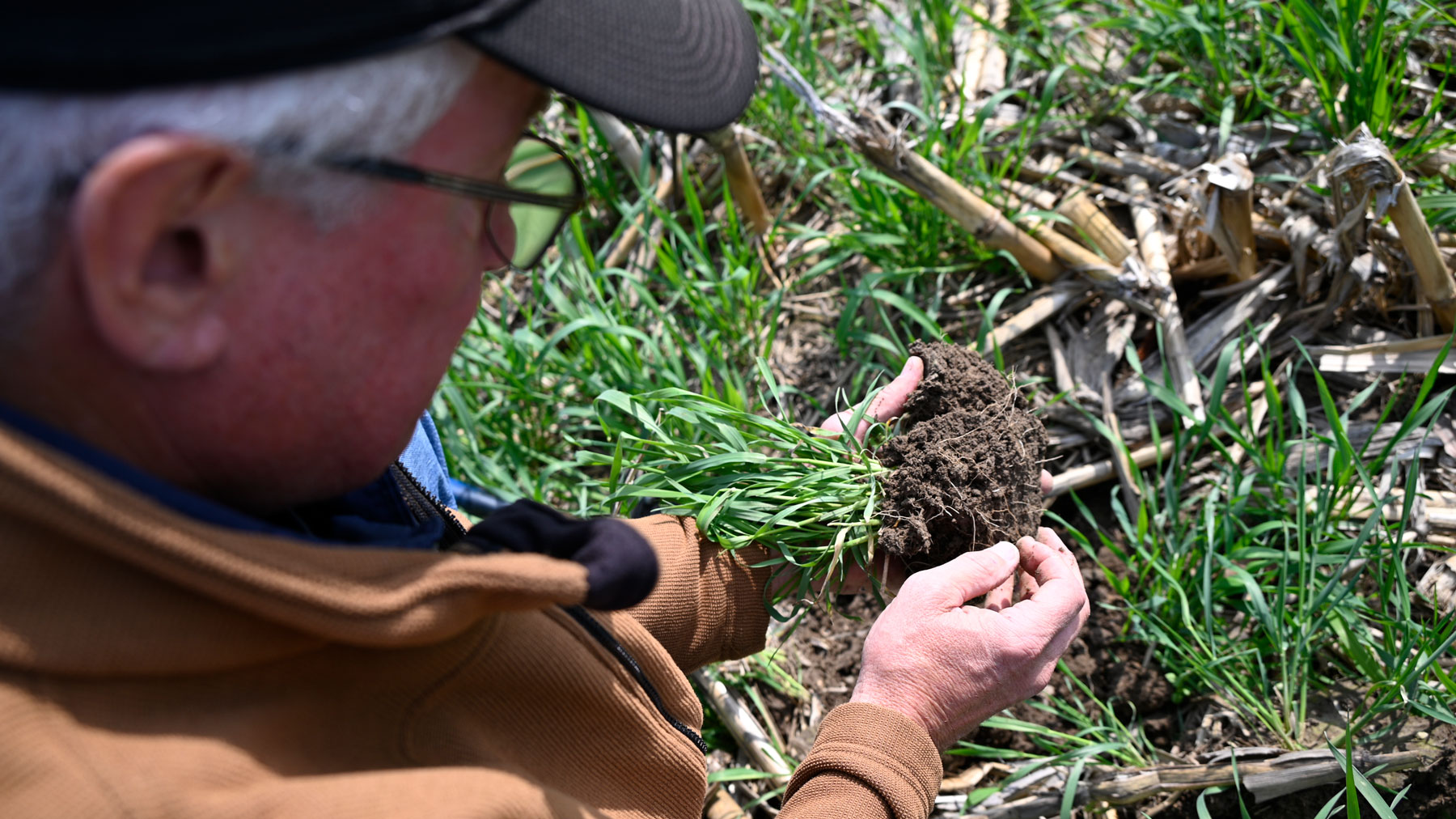
Farmers who hesitate to give up tillage because they fear a yield drag are working from old information, according to Amanda Kautz, state soil health specialist with the Natural Resources Conservation Service in Indiana. Writing for Farm Progress on behalf of the Indiana Conservation Partnership, she says the penalty probably was real during the first push for no-till in the 1980s and early 1990s, when growers knew little about soil biology, but the risk today is far lower.
The yield loss, she explains, comes from an imbalance in soil life. Tilled ground favours short-lived bacteria that multiply after every pass, eat organic matter and release carbon dioxide, then die back, leaving little activity. Soil that has been tilled for years cannot switch overnight to breaking down a heavy blanket of residue, so residue piles up and nutrients stop cycling. Her rule of thumb: if crop residue is still lying around after three years, the biology is not working.
Going straight from full tillage to no-till with nothing else changed is, in her words, the surest way to see a drop in yield. The alternative is to prepare the soil first. Cover crops build structure and organic matter through their roots, feed soil organisms through the off-season and protect the surface from erosion, creating the habitat that no-till later depends on.
Nutrient management matters just as much. As soil organisms digest the extra residue they draw on available nitrogen, and a crop's seedlings can be left short early in the season. Where the residue has a high carbon-to-nitrogen ratio — mature cereal rye or an excess of cornstalks — Kautz recommends adding more nitrogen at planting. She notes that what some growers took for allelopathy from cover crops was in many cases simply a nitrogen shortage caused by that residue.
Even where a small drag does appear, she urges farmers to judge the switch on return on investment rather than the highest bushel count, since fuel, labour and machinery costs fall with fewer passes. The gains in water infiltration and water-holding capacity are hard to price, she adds, but they build resilience for the years when the weather turns.
Source: Farm Progress

Comments
(0)